

Best Coffee for Studying and Focus: How to Choose Your Cup
What if the best coffee for studying and focus isn't the strongest cup on your desk, but the one that fits your rhythm? A study session might begin with the familiar sound of beans grinding, but caffeine affects everyone differently, and a late cup can interfere with sleep. It's worth looking beyond bold roast names and promises of laser-sharp concentration. No bean is a magic fix.
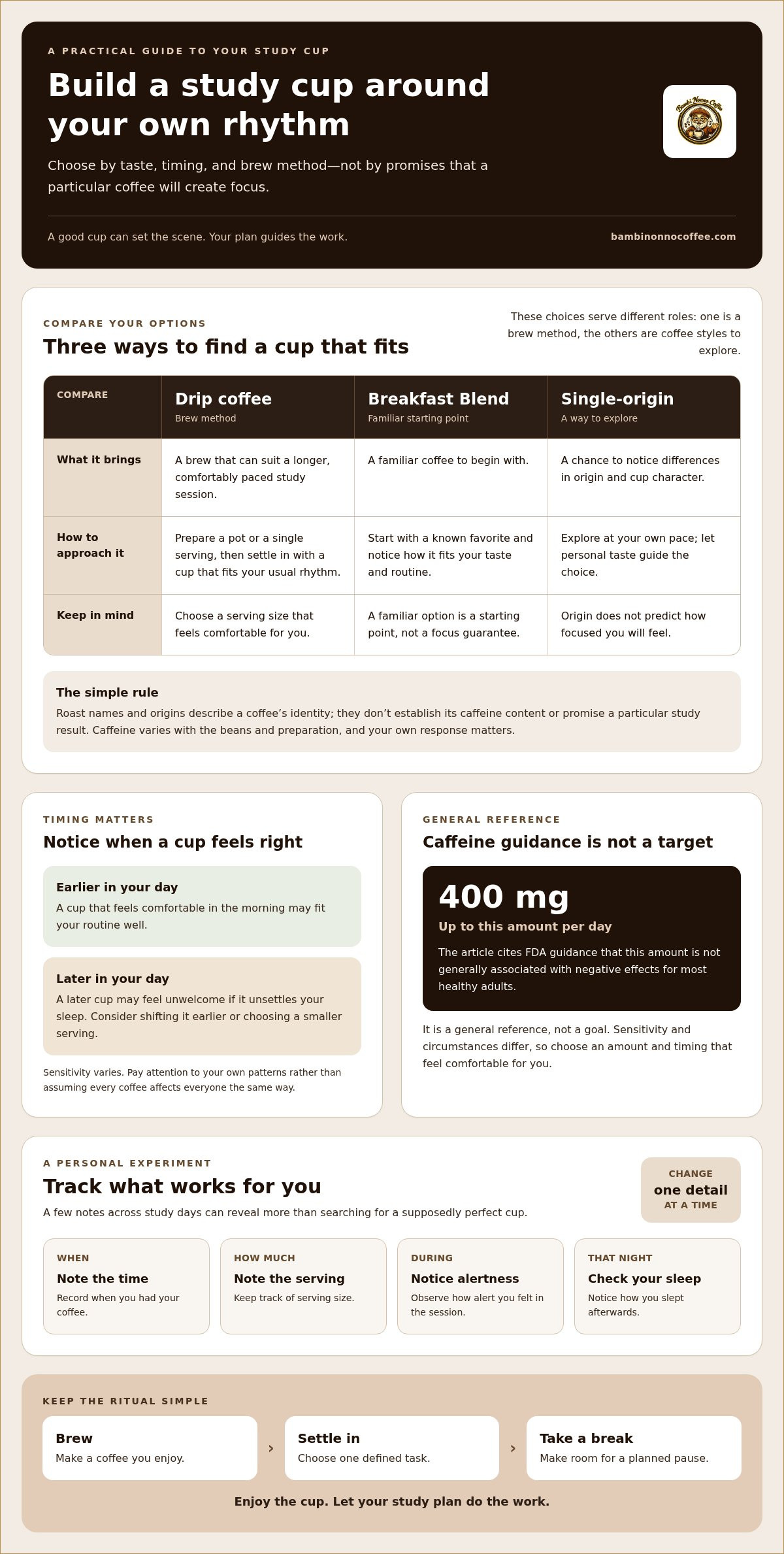
Choosing a study-friendly cup can be simple and personal. Consider when you'll drink it, how you like to brew it, and how caffeine usually affects you. Then choose a coffee you enjoy, whether that's Breakfast Blend or a single-origin coffee. Coffee can bring a comforting pause and a familiar start to your routine, but your plan, breaks, and sleep habits matter too.
Key Takeaways
- The best coffee for studying and focus is a personal fit, not a guaranteed concentration aid. Notice how caffeine affects your alertness and your sleep.
- Choose your cup by taste, timing, brewing method, and serving size rather than assuming roast or origin determines caffeine content.
- Explore familiar options like Breakfast Blend or try a single-origin coffee to discover which cup you enjoy brewing and drinking.
- Make coffee part of a repeatable study routine: prepare a cup, settle into one defined task, and take a planned break.
How caffeine and your study routine shape the best coffee for focus
The best coffee for studying and focus is the cup that fits your routine, taste, and response to caffeine. It may help you feel more alert for a while, but that isn't the same as guaranteed concentration, stronger learning, or better results. A comfortable ritual can set the scene for study. The coffee itself can't do the work for you.
Caffeine acts on the central nervous system and can influence wakefulness and alertness. The details depend on the person and the amount consumed. For an overview of caffeine's effects on the central nervous system, see the background information here.
Pair coffee with a clear task rather than expecting the cup to create focus on its own. Before brewing, decide what you want to work on. As you settle in, notice whether the coffee feels comfortable. Caffeine may support alertness, while your study plan guides the work.
When coffee fits a study session without disrupting your routine
Consider when you plan to study, how caffeine usually affects you, and when you want to sleep. A cup that feels comfortable in the morning may feel unwelcome later in the day. Sensitivity varies, so pay attention to your own patterns rather than assuming a particular roast or coffee will affect everyone the same way.
To spot those patterns, jot down when you had coffee, the serving size, how alert you felt during your session, and how you slept that night. Repeat the notes across a few study days, changing one detail at a time. This gives you a clearer sense of what suits you than chasing a supposedly perfect cup. If coffee seems to unsettle your sleep, try shifting it earlier or choosing a smaller serving next time.
How to choose coffee for studying by taste, timing, and brew method
Make the choice in a few steps: start with a coffee you enjoy, consider when you'll drink it, then pick a brew method and serving size that feel comfortable. This keeps your decision grounded in flavor and routine, not claims that a particular bean guarantees better concentration.
Roast names and origins tell you something about a coffee's identity, but they don't establish its caffeine content or predict how focused you'll feel. Caffeine varies with the beans and preparation, and your own response matters too. The FDA's guidance on a safe amount of caffeine says up to 400 milligrams a day is not generally associated with negative effects for most healthy adults. That's a general reference, not a target. Sensitivity and circumstances differ.
Match your study coffee to the way you like to brew
Drip coffee can suit a longer, comfortably paced study session. Prepare a pot or a single serving, then settle in with a cup that fits your usual rhythm. For brewing pointers, explore a coffee brewing guide.
Breakfast Blend is a familiar place to start, while single-origin coffees let you explore differences in origin and cup character. Choose by taste rather than assuming one option will improve focus. Browse the single-origin coffee selection and see which coffees you'd most enjoy brewing.
Match the serving size to the time of day and your caffeine sensitivity. If you're unsure, start with less and observe how it feels during your session and later that evening.
Build a steady study ritual with coffee you genuinely enjoy
A study ritual doesn't need to be elaborate. Before you sit down, prepare a coffee you like, set out what you need, and choose one defined task. Decide when you'll pause, too. A little intention can make the session feel more settled. The ritual is about enjoyment and consistency, not proof of improved academic performance.
The best coffee for studying and focus is one you can enjoy as part of your own routine. Notice the aroma as it brews, the warmth of the cup, and whether the serving feels comfortable. Those details can make the start of a study session feel familiar and inviting, though they don't guarantee concentration or learning.
Choose a coffee ritual you can return to
Bambi Nonno Coffee offers small-batch coffees to explore as part of a daily routine. Start with Breakfast Blend, then try different coffees over time and discover which you most enjoy preparing. Let personal taste guide you instead of expecting a particular coffee to change your study performance.
Keep the routine simple: brew, settle in with a clear task, then step away for a planned break. For a useful experiment, change just one variable at a time, such as the coffee, brew method, serving size, or time you drink it. Notice what feels comfortable, including how the routine fits your sleep. Keep what works for you and let the rest go.
Explore the single-origin coffees or start with Breakfast Blend to find a cup you enjoy bringing to your study routine.
Make your next study cup your own
The best coffee for studying and focus isn't a magic bean. It's a cup you enjoy, brewed in a way that fits your routine and timed with care for your caffeine sensitivity and sleep. Start with a clear study task, take a planned break, and adjust one coffee variable at a time until the ritual feels comfortable.
Bambi Nonno Coffee offers small-batch roasted coffees, including Breakfast Blend, with responsible sourcing from high-altitude forests. Coffee orders within the United States ship free. Choose for the taste and brewing experience you enjoy, rather than promises of results coffee can't guarantee.
Share what you love in a study-session coffee, and let's talk. Your next favorite cup may begin with a small experiment.
Frequently Asked Questions
Does coffee actually help you focus while studying?
Coffee can temporarily increase alertness, which may make a study session feel easier to start, but it can't guarantee sustained focus, comprehension, or better learning. Your response depends on your caffeine sensitivity, serving size, and timing. Treat coffee as one part of a study routine, alongside a clear task and breaks, rather than a shortcut to concentration.
What kind of coffee is best for studying?
The best coffee for studying and focus is one you enjoy, can brew consistently, and can fit into your caffeine routine. Start with a familiar option like Breakfast Blend, or explore a single-origin coffee to compare cup character. Choose by taste and preparation preference, not by claims that a particular coffee guarantees concentration.
Is dark roast coffee better for focus than light roast?
No roast level is a reliable shortcut to better focus. Dark and light roast describe differences in roasting, but the roast name alone doesn't tell you how much caffeine is in your serving or how you'll respond. Choose the roast you enjoy, then pay attention to brew method, serving size, and how the cup fits your routine.
When should I drink coffee before studying?
Choose a time that suits your caffeine sensitivity and usual sleep schedule. Try having coffee before settling into your task, then observe how alert you feel and whether it affects sleep. Responses vary, so there's no single ideal lead time for everyone. The American Academy of Sleep Medicine recommends avoiding caffeine at least six hours before bedtime to help prevent sleep disruption.