

Best Way to Store Coffee Beans: Keep Their Flavor Fresh
What should you do with coffee beans once the bag is open? The best way to store coffee beans isn’t a shelf full of special gear. If the aroma fades before you finish a bag, you’re not alone. Conflicting advice about canisters and freezing can make a simple coffee ritual feel complicated.
A few steady habits can help your beans stay expressive for longer. This guide explains how to protect whole beans from air, light, heat, and moisture, then choose a setup that suits your space and brewing pace. You’ll also learn when freezing may help, how to avoid repeated exposure, and how to choose a bag size that works for you. The goal is fresh-tasting coffee, without making storage another chore.
Key Takeaways
- The best way to store coffee beans is to limit exposure to air, light, heat, and moisture so their aroma and flavor stay expressive.
- Keep beans sealed in a cool, dry cupboard. An opaque airtight container can help if the original bag doesn’t block light or seal well.
- Freezing may suit beans you won’t use soon. Portion them before freezing and avoid repeated thawing and refreezing.
- Choose a bag size that matches your brewing pace, then check the roast information and aroma when you open it.
The Best Way to Store Coffee Beans Starts With Protecting Their Freshness
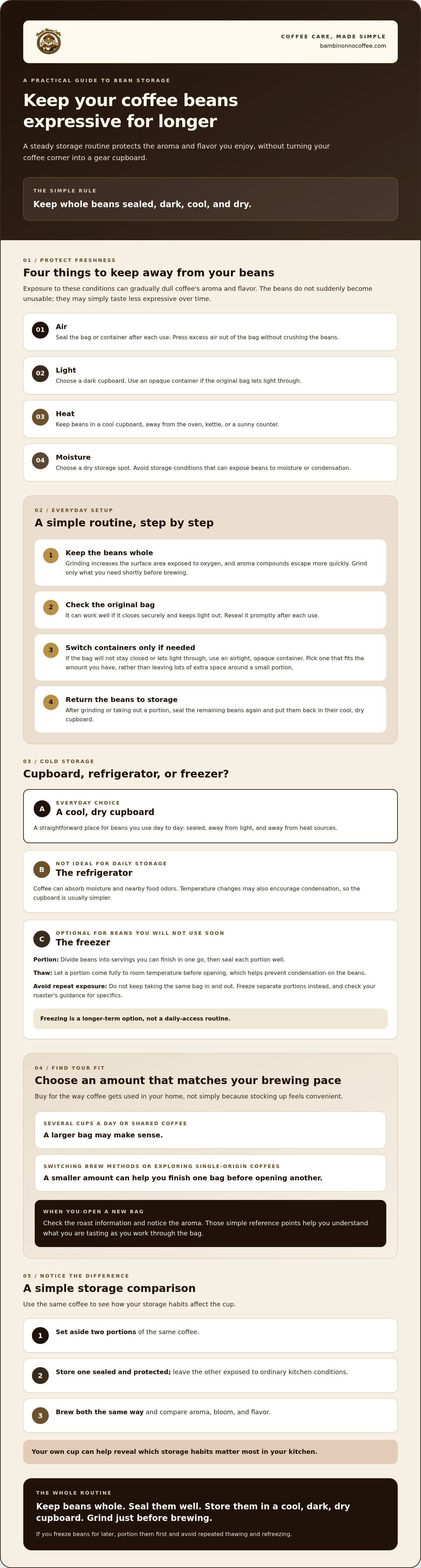
The best way to store coffee beans is to limit their exposure to air, light, heat, and moisture. These conditions gradually dull aroma and flavor, so a cup may taste flatter or less expressive over time. The beans don’t suddenly become unusable; they simply lose some of the qualities that made them enjoyable to brew.
Keep coffee beans sealed, dark, cool, and dry to help preserve their aroma and flavor. That’s the foundation of a good storage routine. For a broader overview of containers and storage approaches, Coffee bean storage offers useful background.
Why whole beans stay more aromatic than pre-ground coffee
Grinding breaks beans into smaller particles, increasing the surface area exposed to oxygen. Aroma compounds escape more quickly, so pre-ground coffee can lose more of its original fragrance before brewing. Keep beans whole and grind only what you need shortly before brewing, a practical recommendation also made by Serious Eats. Notice the aroma as you grind and brew, then seal the remaining beans again promptly.
For more on how roast and freshness shape the cup, explore our coffee articles. One straightforward habit helps: grind just before brewing, then return the remaining beans to a well-sealed bag or container.
How to Store Coffee Beans Day to Day and When Freezing Helps
For everyday storage, keep the routine simple. Seal the beans, block the light, then place them in a cool, dry cupboard away from the oven, kettle, or a sunny counter. The National Coffee Association guidelines also emphasize protecting coffee from air, moisture, heat, and light.
The original bag can work well if it closes securely and keeps light out. Press out excess air without crushing the beans, then reseal the bag after each use. If it won’t stay closed or lets light through, transfer the beans to an airtight, opaque container. Choose a container that fits the amount you have, rather than leaving a large amount of extra space around a small portion.
Should you keep coffee beans in the fridge or freezer?
The refrigerator isn’t ideal for daily storage. Coffee can absorb moisture and nearby food odors, while temperature changes may encourage condensation. A cupboard is usually the simpler everyday choice.
Freezing is optional and may be useful for beans you won’t use for a while. Divide them into portions you can finish in one go, seal each portion well, and freeze it. Let a portion come fully to room temperature before opening it, which helps prevent condensation on the beans. Check your roaster’s guidance for specifics, especially if the coffee is still in its original packaging.
Freezer storage is a longer-term option, not a daily-access routine. Avoid taking the same bag in and out repeatedly; freeze separate portions instead. Match each portion to how you brew, whether that’s one cup or coffee for a shared morning. This keeps the portions you haven’t thawed sealed until you need them.
Build a Coffee Bean Storage Routine Around How You Brew
Set up storage around the way coffee actually gets used in your home. If you brew several cups a day or share coffee with family, a larger bag may make sense. If you switch between brewing methods or enjoy trying different single-origin coffees, a smaller amount can help you finish one bag before opening another. Buy for your household’s brewing pace, not simply because stocking up feels convenient.
Pair fresher beans with a storage habit you can keep
When you open a new bag, check its roast information and notice the aroma. These simple reference points help you understand what you’re tasting as you work through the bag. Bambi Nonno Coffee offers small-batch roasted coffees, including Breakfast Blend and single-origin options. Whatever you choose, a consistent storage routine helps you get to know the coffee in your cup.
If you’re deciding how much coffee to order and how often, consider your household’s brewing pace alongside delivery frequency. A coffee subscription service guide can help you think through that balance. The National Coffee Association guidelines offer a useful reference for storage basics, but your setup can stay uncomplicated.
To see how your storage habits affect the cup, compare two portions of the same coffee. Keep one sealed and protected, and leave the other exposed to ordinary kitchen conditions. Brew both the same way and compare their aroma, bloom, and flavor. This simple comparison can help you identify which habits matter most in your kitchen and make the best way to store coffee beans feel practical rather than prescriptive.
Make Freshness Part of Your Coffee Ritual
The best way to store coffee beans is a routine you can maintain: protect them from air, light, heat, and moisture, and choose an amount that suits how quickly you brew. Grind just before brewing, and consider freezing only the beans you won’t use for a while, sealed in separate portions.
Pay attention to the roast information and aroma when you open each bag. Those small observations can help you find the storage habits that preserve the flavors you enjoy, whether you’re brewing a familiar blend or exploring a single-origin coffee. Bambi Nonno Coffee’s small-batch selection includes blends and single-origin coffees for your next cup.
Have a question about choosing or storing your coffee? Get in touch with us.
Frequently Asked Questions
What is the best container for storing coffee beans?
The best way to store coffee beans is in an airtight, opaque container that limits exposure to oxygen and light. The original bag can work if it has a one-way valve, is intact, and reseals securely after opening. If it doesn’t close well or lets light through, move the beans to an airtight, light-blocking container and keep it in a cool, dry cupboard.
Should coffee beans be stored in the refrigerator or freezer?
Skip the refrigerator for everyday storage. Its humidity and food odors can affect coffee’s aroma and flavor. Freezing is an option for beans you won’t use for a while: seal them in portions, thaw each portion fully before opening, and avoid repeated thawing and refreezing. Keep the portion you’re using at room temperature in your usual storage spot.
How long do coffee beans stay fresh after opening?
There isn’t one freshness timeline that fits every bag. The roast, packaging, storage conditions, and how often you open the bag all influence how the beans taste over time. Check the roast information when you open a new bag, then notice its aroma and how the flavor develops in your cup. A duller aroma can signal fading freshness, but it doesn’t mean the beans are unusable.
Can you freeze coffee beans in their original bag?
You can freeze beans in their original bag if the seal is secure and the bag remains intact, but check the roaster’s storage guidance first. If you’re unsure about the seal, divide the beans into tightly sealed portions before freezing. Thaw a portion completely while it’s still sealed, then open it once it reaches room temperature to help prevent condensation.