

Coffee to Help With Productivity: Build a Focus-Friendly Coffee Ritual
What if the best coffee to help with productivity isn't the strongest cup, but the one that fits your day? Coffee can make you feel more alert, which may help you settle into a task. But it isn't a shortcut to concentration, and more isn't always better. Your timing, sensitivity, and sleep all shape how a cup feels.
If you've wondered whether coffee supports focus or just brings a brief boost, you're not alone. The answer is personal, and a thoughtful ritual can be more useful than a one-size-fits-all rule. This guide looks at how caffeine may relate to alertness, why timing and sleep matter, and how to notice your own response. Use those observations to shape a flexible routine around a coffee you enjoy, whether that's a familiar Breakfast Blend or another favorite. No cup can guarantee a productive day, but a repeatable ritual can give your work block a clear starting point.
Key Takeaways
- Think of coffee to help with productivity as one part of your work routine, not a promise of better output.
- Try a consistent coffee ritual during a chosen work block and notice how your focus and comfort feel.
- Keep brief notes on coffee timing and sleep to spot patterns that suit your own routine.
- Make brewing a calm transition into work, choosing a coffee you enjoy, such as Breakfast Blend.
Can Coffee Help With Productivity? What It May or May Not Do
Coffee may support alertness for some people, but it can't guarantee productive work. Caffeine can temporarily make you feel more awake, which may help you start a task or stay engaged. Still, feeling a lift doesn't automatically mean your work is clearer, more accurate, or finished sooner. Coffee to help with productivity is best understood as one possible part of your routine, not a promise of results.
Why coffee can feel helpful, and why responses differ
Caffeine acts on the brain's adenosine receptors. Adenosine is involved in signaling tiredness, and caffeine can temporarily block that signal, making you feel more alert. For an overview of the effects of caffeine on cognitive performance, including wakefulness and concentration, see the linked reference.
Feeling more awake isn't the same as producing better work. Caffeine may affect alertness and attention, while your output still depends on sleep, task clarity, skills, and your individual response.
Your response can vary with sensitivity, regular caffeine use, timing, and how well you've slept. The same cup may feel welcome one morning and uncomfortable another. If you're tired after a short night, coffee may make you feel more awake without replacing the rest your body needs. And if a task is vague, a temporary lift won't tell you what to do next.
Notice your own pattern rather than chasing a universal rule. Pay attention to whether coffee leaves you comfortably alert or restless, and whether its timing seems to affect your sleep. Those observations can help you decide whether, and when, a cup belongs in your workday.
How to Make Coffee Part of a More Focused Work Routine
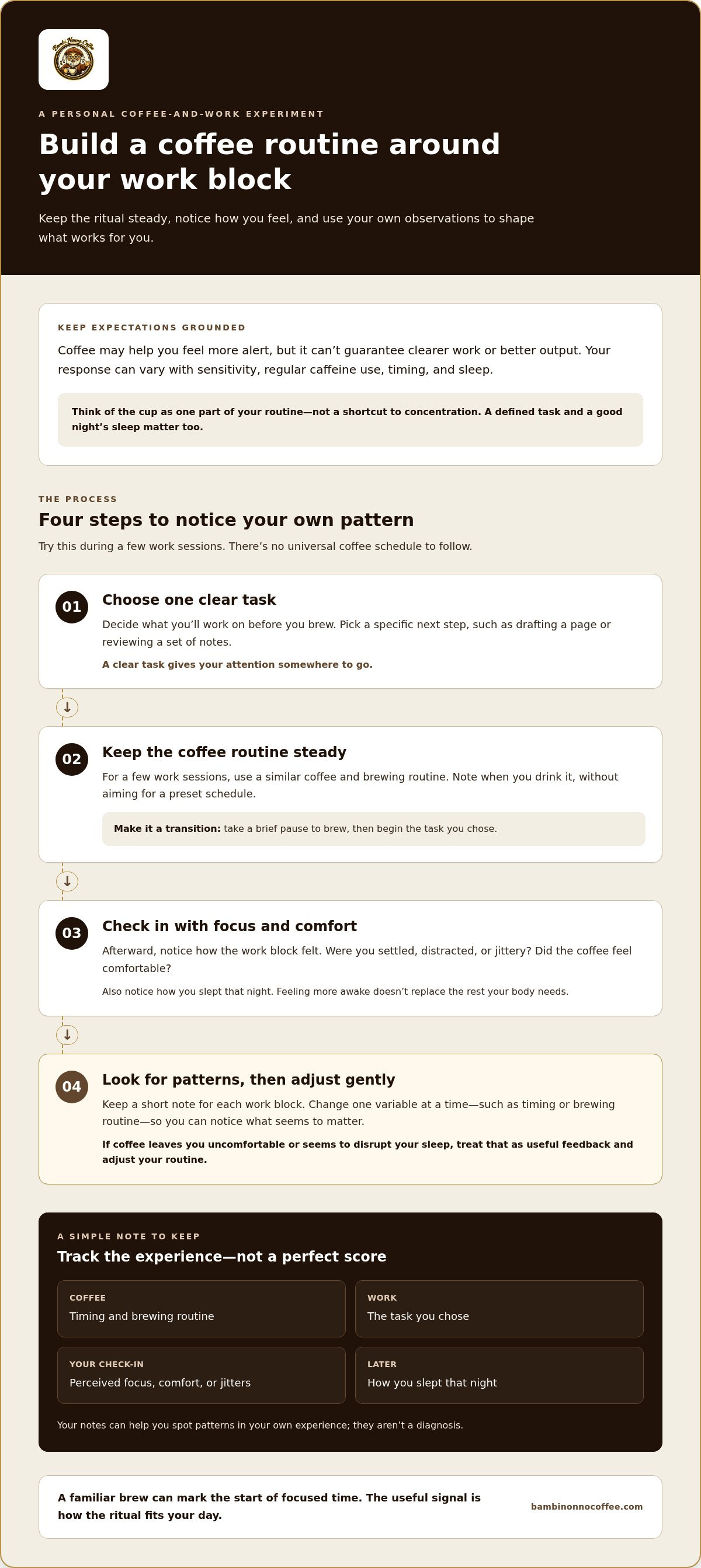
A useful coffee routine is one you can observe, not a rule borrowed from someone else. Try this simple experiment during a work block:
- 1. Choose one task. Decide what you'll work on before you brew, such as drafting a page or reviewing a set of notes. A defined next step gives your attention somewhere specific to go.
- 2. Keep the routine steady. For a few work sessions, use a similar coffee and brewing routine. Note when you drink it, without aiming for a universal schedule.
- 3. Check in afterward. Note your focus and comfort. Did you feel settled, distracted, or jittery? Also notice how you slept that night.
Give yourself a brief pause to brew and transition into the task. The cup can mark the beginning of focused time, but a clear next step and a short break when you need one do more to structure your work than coffee alone. For a refresher on the brewing ritual, revisit Drip Coffee: A Guide to the Art and Ritual of Your Daily Brew.
A simple way to notice what works for you
Keep a short note with the coffee timing, task, perceived focus, any jitters, and that night's sleep. The Harvard T.H. Chan School of Public Health explains caffeine's effects on alertness and energy, while also discussing its potential to affect sleep. Your notes can help you spot patterns in your own experience, not diagnose a health issue.
Change one variable at a time, such as the timing or brewing routine, so you can tell what seems to matter. If coffee to help with productivity leaves you uncomfortable or disrupts your sleep, treat that as useful feedback and adjust your routine.
Choose a Coffee Ritual You'll Want to Return To
A focus-friendly ritual doesn't need to be elaborate. Choose a coffee you enjoy, give the brewing a little attention, then name the task you're about to begin. That small sequence can create a calmer transition from the rest of your day into work. The value is in creating a familiar moment, not promising that a particular cup will make you more productive.
Breakfast Blend is one coffee you could make part of that routine. Let your own preferences guide how you prepare and enjoy it rather than expecting a specific caffeine level or work effect. As you brew, notice the aroma, the bloom if you're making pour-over, and how the finished cup feels to you. These are details of your experience, not guarantees about the coffee.
Let curiosity guide your next cup
Try a simple experiment: for a few work sessions, keep your preparation familiar and begin with one clearly chosen task. Notice which parts of the ritual you look forward to, and whether the cup feels enjoyable and comfortable. If caffeine seems to affect your sleep or leaves you feeling uneasy, the potential negative effects of caffeine are worth understanding as you shape a routine that suits you.
For more on the care and curiosity behind specialty coffee, explore What is Specialty Coffee? A Guide to the Craft and the Ritual. Then try one small change in your next coffee ritual, such as setting your work intention before the first sip. If you'd like to talk with us about finding a coffee ritual that feels like yours, we'd be glad to hear what you're exploring.
Make Your Next Coffee Break a Fresh Starting Point
Coffee to help with productivity is best approached as a personal ritual, not a promise of better work. A cup may help you feel more alert, but sleep, the task in front of you, and your own response matter too. Keep the routine simple: choose a coffee you enjoy, set a clear intention, and notice how you feel during the work block and later that night.
That kind of curiosity can turn an ordinary brew into a calmer transition into your day. Breakfast Blend is one coffee to explore as part of your routine. Bambi Nonno Coffee offers small-batch roasted coffee and focuses on responsible sourcing, bringing care to the cup without claiming it can guarantee focus.
Try one small adjustment with your next brew and see what feels right for you. Explore Bambi Nonno Coffee's Breakfast Blend and find a coffee that fits the ritual you want to return to. If you'd like to share what you're looking for in a daily coffee ritual, talk with us about finding your coffee ritual. A thoughtful cup and a clear next step are a good place to begin.
Frequently Asked Questions
Is coffee good for productivity?
Coffee may support productivity if caffeine helps you feel more alert, but it can't guarantee better work. Your results still depend on factors such as sleep, the task you're doing, and how you respond to caffeine. Treat coffee to help with productivity as a personal experiment: notice whether a cup helps you settle into work or leaves you feeling uncomfortable.
How does coffee affect focus?
Caffeine can temporarily increase alertness by interfering with signals in the brain associated with tiredness. That may make it easier to feel awake and direct your attention, but feeling focused doesn't necessarily mean you'll do a task more accurately or quickly. A clear next step matters too. Notice whether coffee helps you stay with one task or makes you restless or distracted.
When should I drink coffee for work?
There's no single best time that suits everyone. Pay attention to when you drink coffee, how alert you feel during your work, and whether it seems to affect your sleep later. Try keeping the timing consistent while you observe your response, then adjust if needed. Avoid relying on a universal schedule or assuming that coffee can make up for insufficient sleep.
Can coffee make it harder to be productive?
Yes, for some people coffee can feel counterproductive if it brings jitters, restlessness, or discomfort, or if its timing interferes with sleep. Those effects can make it harder to focus or feel rested the next day. Sensitivity differs, so notice your own pattern. If a cup doesn't feel good, consider changing your routine or skipping it before a demanding work block.