

Colombian Coffee Beans: Terroir, Flavor Profile, and Brewing Guide
A bag labeled Supremo tells you the physical size of a seed, but it says almost nothing about how it will actually taste in your cup. If you have ever brewed Colombian coffee beans hoping for juicy sweetness only to end up with muted bitterness, you aren't alone. It's easy to feel lost in commercial grading terms that reveal very little about genuine cup quality.
You shouldn't need a professional tasting lab to enjoy the crisp fruit and comforting caramel notes Colombia is famous for. Real depth comes down to high-altitude terroir, small-batch roasting, and the simple ritual of mindful extraction. Ahead, we will explore the microclimates shaping each harvest, untangle roast levels, and show you how to dial in clean, balanced sweetness across your favorite brew gear.
Key Takeaways
- Discover how steep Andean elevations and volcanic soils develop the nuanced balance and sparkling acidity of genuine Colombian coffee beans.
- Learn why bean size classifications like Supremo or Excelso do not tell the whole story when it comes to true cup complexity.
- Master the exact brew ratios, grind sizes, and water temperatures needed to pull out rich caramel and stone fruit notes instead of harsh bitterness.
- Protect delicate aromatics by understanding the role of fresh small-batch roasting and proper whole-bean kitchen storage.
What Gives Colombian Coffee Beans Their Celebrated Cup Profile?
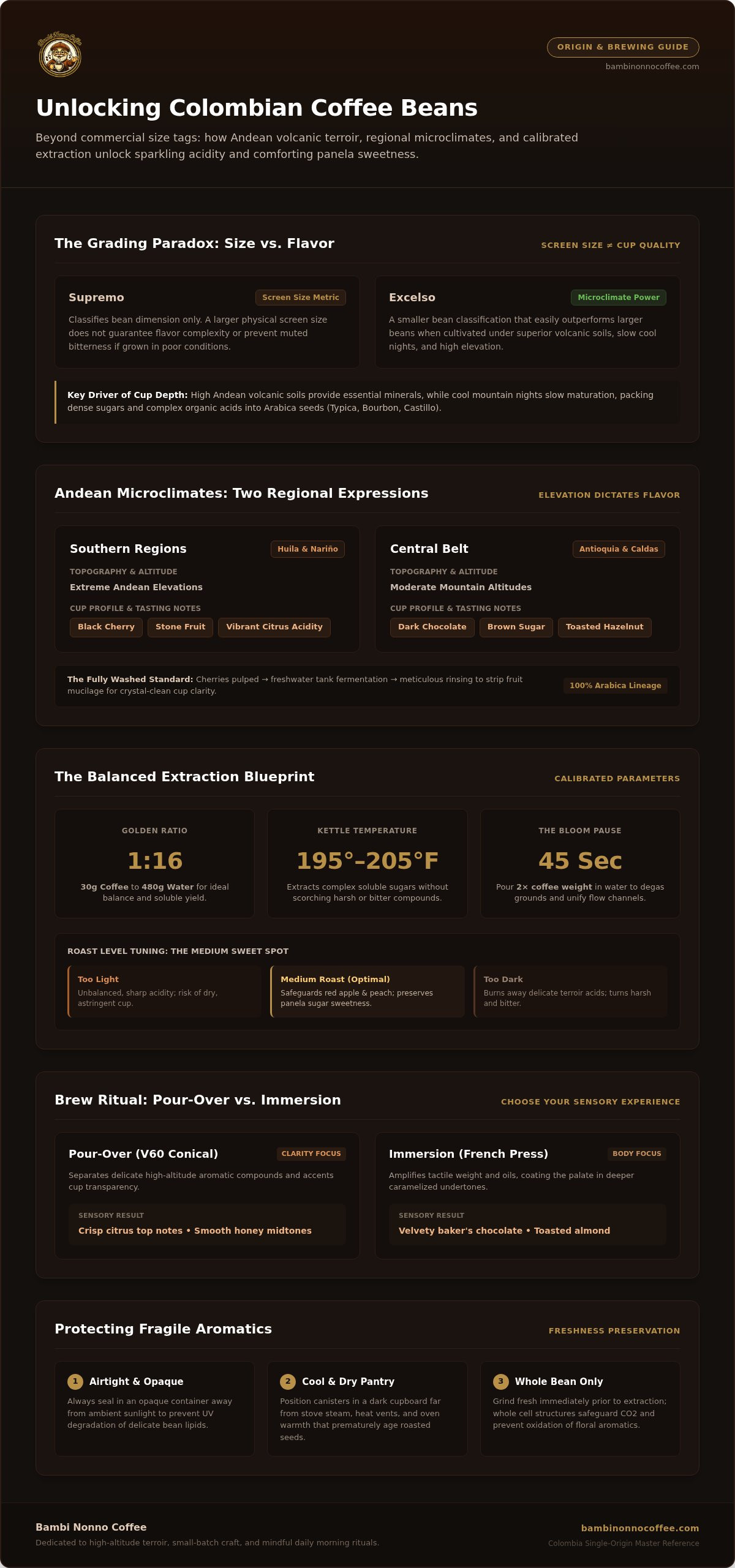
The global reputation of Colombian coffee beans rests on an exquisite sense of harmony. Rather than overpowering your palate with heavy astringency, genuine Colombian Arabica delivers a clean, medium body paired with sparkling malic acidity and cane sugar sweetness. This refined balance begins in the high-altitude Andes, where volcanic soil packs essential minerals into every root system. Cool mountain nights slow cherry maturation, which allows complex organic acids and dense sugars to develop deep inside the seed.
Processing secures that hard-won sweetness. Colombia traditionally relies on the fully washed method, where ripe cherries are pulped, fermented in freshwater tanks, and meticulously rinsed. This careful separation strips away fruit mucilage before drying, yielding remarkable clarity in the final extraction. As detailed in historical records on coffee production in Colombia, exclusive cultivation of Arabica varietals under strict washing standards established the country's hallmark clean profile.
Decoding Grades, Varietals, and Regional Terroir
Packaging often emphasizes terms like Supremo or Excelso, but these grades merely measure screen size, not flavor complexity. A smaller Excelso bean from an exceptional microclimate will easily outperform a larger Supremo grown under poor conditions. Flavor stems from the landscape and the botanical lineage, whether traditional Typica, sweet Bourbon, or resilient Castillo.
Topography further diversifies every harvest across three distinct Andean mountain ranges:
- Southern Regions (Huila and Nariño): Extreme elevations generate pronounced black cherry, stone fruit, and vibrant citrus brightness.
- Central Belt (Antioquia and Caldas): Moderate altitudes favor comforting notes of dark chocolate, brown sugar, and toasted hazelnut.
To dive deeper into regional geography and farm-level transparency, explore our broader single origin coffee collection to see how microclimates directly shape every pour.
How to Brew Colombian Coffee Beans for Maximum Balance
Unlocking the full potential of Colombian coffee beans requires tuning your extraction to match their density. A thoughtful medium roast serves as the sweet spot, safeguarding delicate red apple and peach notes without sacrificing rich panela sugar undertones. If you roast too dark, those vibrant regional traits burn away. Roast too light, and the brew turns astringent.
Achieving a balanced cup comes down to consistent parameters:
- Brew Ratio: Start with a precise 1:16 ratio (30 grams of coffee to 480 grams of water).
- Water Temperature: Keep your kettle between 195F and 205F to extract soluble sugars without scalding bitter compounds.
- The Bloom: Pour double the coffee weight in water and wait 45 seconds. This pause degases fresh grounds and ensures uniform water channels.
Pour-Over Versus Immersion: Choosing Your Home Ritual
Your brewing tool directs the sensory experience. Conical pour-over cones like the V60 highlight clean cup transparency, separating crisp citrus top notes from smooth honey midtones. In contrast, immersion methods like the French press amplify tactile weight, coating the palate in velvety baker's chocolate and toasted almond.
Standard electric brewers can deliver stunning results too. Macro harvest data highlighted in the USDA Coffee Annual report confirms consistent quality across high-altitude yields, making these lots remarkably versatile for everyday batch brewing. To dial in your daily machine with fresh beans, check our favorite tips on drip coffee brewing rituals. If you ever need help fine-tuning your grinder setting or water ratio, feel free to reach out to our brew team.
Sourcing Freshness: Elevating Your Daily Morning Ritual
Great coffee begins long before water meets the grounds. Small-batch roasting treats Colombian coffee beans with the care they deserve, applying focused heat profiles that lock in fragile aromatic compounds rather than baking them out. Freshness is fleeting; coffee beans continuously release carbon dioxide while volatile aromatics oxidize when exposed to air. Grinding fresh right before you brew transforms an ordinary routine into a sensory pause that sets the rhythm for your entire day.
Protecting those nuanced sugars at home requires simple, disciplined habits:
- Airtight and Opaque: Store beans in a sealed canister away from sunlight, which degrades delicate lipids.
- Cool and Dry: Keep your stash in a pantry cupboard, far from steam, heat vents, and oven warmth.
- Whole Bean Only: Skip pre-ground bags so that oxygen never steals the floral fragrances inside the cell structure.
Finding Your Preferred Roast and Origin Profile
Exploring artisanal harvests lets you appreciate how intentional farming choices translate into the cup. When you browse through curated single-origin offerings, you experience seasonal profiles shaped by responsible shade-forest cultivation and careful lot selection. Balanced single-origin Colombia beans shine brightest during slow mornings spent reconnecting with family or sharing quiet conversation over a warm mug.
Every coffee setup behaves a little differently based on your water chemistry and grinder burrs. If you have questions about matching a specific grind to your brewer, you can always connect with our coffee team to swap notes and refine your home ritual.
Bring the Andean Ritual to Your Kitchen Counter
Brewing exceptional Colombian coffee beans isn't just about technical precision. It's an invitation to slow down and savor the craftsmanship behind every harvest. From steep mountain slopes to calibrated water temperatures, small details unlock that beloved harmony of crisp stone fruit and velvety caramel sweetness.
When you choose small-batch roasted coffee beans responsibly sourced from high-altitude shade canopies, each cup tells a richer story. With complimentary shipping across the United States on all coffee orders, fresh discovery is always within reach. If you want personalized advice dialing in your grinder or exploring new roast profiles, feel free to connect with our coffee team to curate your ritual. Take your time with tomorrow's first pour and enjoy every sip.
Frequently Asked Questions
What do Colombian coffee beans taste like?
Colombian coffee beans typically showcase a harmonious balance of sweet caramel, toasted nuts, and crisp fruit acidity resembling red apples or citrus. Because of traditional washed processing and volcanic soil, the cup profile remains remarkably clean with a smooth, medium body rather than heavy astringency. Depending on the microclimate, you might also discover delicate floral hints or deeper cocoa undertones.
Why are Colombian coffee beans considered so high quality?
Colombia cultivates 100% Arabica varieties across steep Andean slopes, where elevations exceeding 1,200 meters slow cherry development. This prolonged maturation concentrates sugars and acids inside the seed. Combined with selective hand-picking, nutrient-rich volcanic terrain, and pristine freshwater washing stations, Colombian coffee beans consistently deliver exceptional structural density and cup clarity.
What is the best roast level for Colombian coffee beans?
A balanced medium roast is widely considered the sweet spot for these harvests. It develops rich brown sugar and caramel tones while preserving the delicate stone fruit acidity native to high-altitude terroir. Very dark roasts often obscure those bright regional nuances with roasty bitterness, whereas overly light roasts can taste unpleasantly sharp or underdeveloped.
Is Colombian coffee naturally high in caffeine?
No, Colombian coffee isn't unusually high in caffeine compared to other growing origins. Colombia exclusively exports Arabica beans, which naturally contain about half the caffeine concentration found in robusta varieties. A standard brewed cup delivers a smooth, steady morning lift of roughly 90 to 120 milligrams of caffeine without harsh jitters.