

Exploring the Craft and Ritual of Whiskey Barrel Aged Coffee
What if your morning coffee could carry the soul of a vintage spirit without a single drop of alcohol? You've likely encountered those "whiskey flavored" bags that smell like a chemistry lab. It's disappointing when synthetic oils mask the quality of specialty beans, leaving you unsure if you're tasting genuine craft or a factory shortcut. You want a cup that honors the bean while offering something new.
True whiskey barrel aged coffee is different. It's a slow, intentional process where green beans rest inside charred barrels to absorb the essence of the wood and spirit. You'll learn how this intersection of aging and artisan roasting creates a cup defined by depth and patience. This guide explores the nuance of the aging ritual, clears up common misconceptions, and gives you the confidence to brew a complex, small-batch experience for your quietest everyday moments.
Key Takeaways
- Learn how green beans act as a natural sponge, absorbing the "angel’s share" from charred oak barrels without the use of synthetic oils or additives.
- Discover why whiskey barrel aged coffee offers a deeper sensory profile by merging the patience of spirit aging with the precision of small-batch roasting.
- Master the specific brewing rituals, such as using a French Press or Chemex, to perfectly extract complex spirit notes and delicate oils.
- Understand how to integrate this unique coffee into your lifestyle as a slow, weekend ritual designed for reflection and discovery.
The Patience of the Pour: Understanding Whiskey Barrel Aged Coffee
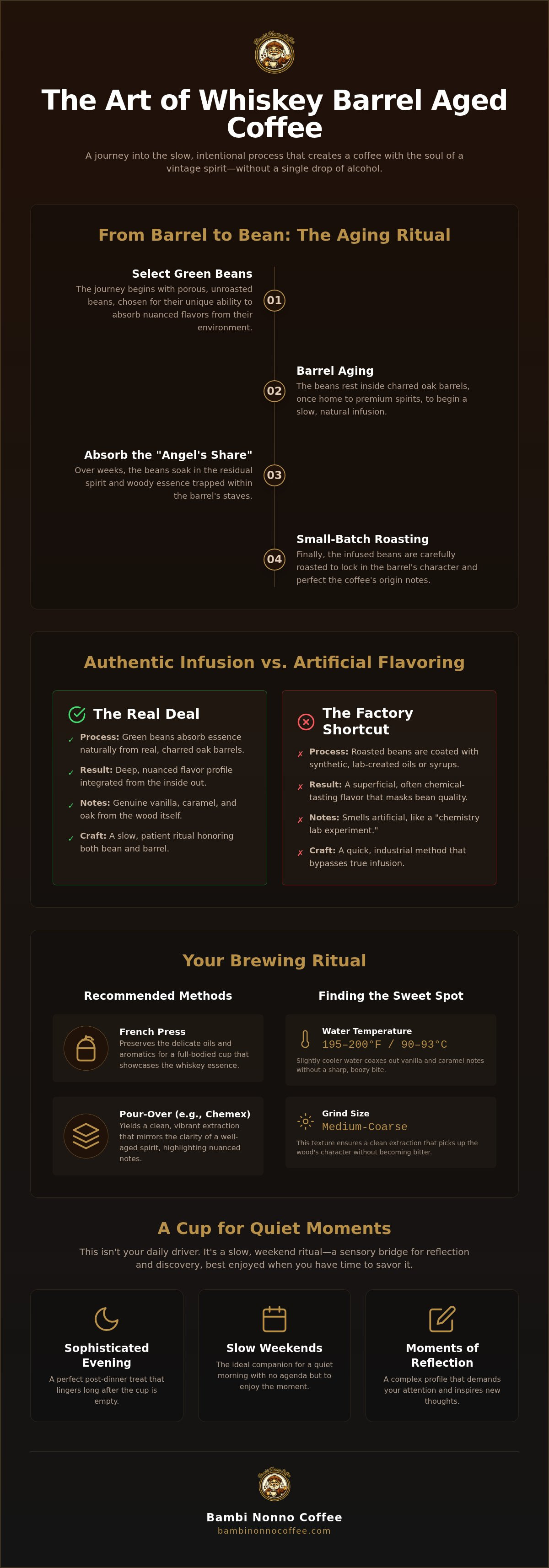
Crafting a truly exceptional whiskey barrel aged coffee requires a level of patience that's rare. It starts with green, unroasted beans. These beans aren't just seeds; they're porous vessels. When we place them inside charred oak barrels that once held premium spirits, they act like a sponge. They slowly draw in the 'angel’s share,' which is the residual spirit and woody essence trapped within the staves.
This isn't about adding syrups or synthetic oils after roasting. It's a natural, chemical-free infusion that happens before the beans ever see the heat of the roaster. Small-batch production is essential here. By keeping batches small, we ensure every bean receives equal exposure to the barrel's surface. Without this close attention, the delicate balance between the bean's origin and the barrel's character can easily tip, resulting in a cup that feels muddy rather than nuanced.
Infusion vs. Flavoring: Why Real Barrels Matter
Most 'flavored' coffees rely on lab-created coatings that sit on the surface. In contrast, barrel aging allows the charred oak to impart deep notes of vanilla and caramel from the inside out. The duration of this rest is critical. If the beans stay too long, they lose their inherent brightness; if the time is too short, the spirit's soul never makes it into the final brew. We look for that perfect moment where the high-altitude forest notes meet the warmth of the wood. This careful dance of aging is what makes whiskey barrel aged coffee a ritual worth waiting for. You aren't just drinking coffee; you're tasting a legacy of wood, time, and fire.
Unlocking the Profile: How to Brew Barrel Aged Beans
The ritual begins the moment you open the bag. You'll immediately notice the scent is heavier and more evocative than a standard roast. Brewing whiskey barrel aged coffee is less about technical precision and more about honoring the time the beans spent in the wood. You've seen how the beans absorb the spirit's soul. Now, you need a method that lets those complex oils shine.
I recommend reaching for your French Press or a Chemex. These tools are excellent because they don't strip away the delicate fats and aromatics that carry the whiskey's essence. When you start your pour, pay close attention to the bloom. As the hot water hits the grounds, you'll notice a distinct release of aromatic whiskey vapors. This moment is the bridge between the barrel and your cup. It's where the specialty coffee base finally reveals its partnership with the oak.
Temperature and Extraction: Finding the Sweet Spot
Getting the best from these beans requires a gentle touch with heat. I suggest keeping your water temperature between 195 and 200F. If the water is too hot, the spirit notes can turn sharp or boozy, losing their refined sweetness. A slightly lower temperature coaxes out the vanilla and caramel without the bite.
Pair this with a medium-coarse grind. This texture ensures a clean, vibrant extraction that mirrors the clarity of a well-aged spirit. You want the water to move through the grounds with enough resistance to pick up the wood's character, but not so much that it becomes bitter. If you find yourself curious about the best settings for your setup, you can always browse our latest brewing guides for more inspiration.
The Modern Ritual: When to Enjoy a Barrel Aged Cup
There's a particular kind of stillness that arrives with the first sip of whiskey barrel aged coffee. It isn't a drink you rush through on a busy Tuesday morning. Instead, it's a sensory bridge. You'll find the heavy, comforting aroma of charred oak and toasted grain meeting the vibrant brightness of high-altitude coffee. It's a complex profile that demands your attention. This is the slow sip of the weekend, a companion for a quiet morning of reflection or a sophisticated post-dinner treat that lingers long after the cup is empty.
Our obsession with these unique profiles is rooted in years of travel and a genuine love for discovery. You can read more about that journey in Bambi Nonno’s Our Story. We believe that finding your perfect cup is about more than just caffeine; it's about finding a rhythm. Whether it's a bold single-origin or a barrel-aged experiment, choosing the right roasted coffee beans helps define the tempo of your day. It's about creating a moment that belongs entirely to you.
Bambi Nonno’s Approach to Small-Batch Aging
Our whiskey barrel aged coffee represents the culmination of curiosity and craft. We don't follow a rigid timer. Instead, we rely on the roaster's eye and intuition. The human element is what determines when the beans have reached that perfect equilibrium between the spirit's warmth and the bean's natural character. It's about knowing when the wood has given enough of its soul to the coffee without overpowering the delicate high-altitude notes we worked so hard to source. This small-batch focus ensures that every bag you open carries the same depth and dedication.
Embrace the Art of the Slow Sip
You've discovered that the secret to a truly remarkable cup lies in the patience of the aging process and the precision of the brew. By choosing beans that have naturally absorbed the soul of the wood, you're moving away from synthetic flavors and toward a genuine craft experience. Remember to keep your water temperature gentle and allow the bloom to release those hidden aromatics.
We take pride in our whiskey barrel aged coffee, ensuring it's small-batch roasted for peak freshness. With free shipping on all US orders and a process fueled by a genuine passion for the ritual, we make it easy to elevate your quietest moments. If you're ready to start your own journey of discovery, reach out to us today with any questions about our current batches. There's a world of flavor waiting in your next cup.
Frequently Asked Questions
Does whiskey barrel aged coffee contain alcohol?
No, your cup won't contain any alcohol. While the green beans spend weeks resting in spirit-soaked barrels to absorb the essence of the whiskey, the intense heat of the roasting process evaporates any residual alcohol. You're left with the deep, aromatic soul of the spirit and the charred oak, allowing you to enjoy the complexity without any of the boozy effects.
Will this coffee make my coffee maker smell like whiskey?
You'll notice a beautiful, temporary aroma during the brew, but it won't linger permanently in your machine. Since we avoid synthetic oils and sticky syrups, there's no heavy residue left behind to clog your filters. A standard rinse of your French Press or dripper is all it takes to keep your equipment ready for your next batch of whiskey barrel aged coffee.
What are the primary tasting notes of barrel aged coffee?
You'll typically find a rich landscape of vanilla, toasted caramel, and smoky oak. These notes come directly from the charred wood and the spirit that once lived there. Because we use high-altitude forest beans, these warm, heavy flavors are balanced by a natural brightness. It's a sophisticated profile that reveals different layers of grain and fruit as the temperature of the coffee drops.
Can I drink whiskey barrel aged coffee with milk and sugar?
You can definitely add milk or sugar, though many enthusiasts prefer to enjoy whiskey barrel aged coffee black to taste the nuances. A splash of cream can actually pull out the hidden caramel and vanilla notes, making the cup feel even more indulgent. I encourage you to experiment with your ritual. Just try a few sips plain first to see what the barrel has shared.