

Exploring the Craft and Ritual of Whiskey Barrel Aged Coffee
What if a coffee could carry the warmth of a whiskey barrel without tasting like a flavored syrup? Whiskey barrel aged coffee gets its character through patience: green beans rest in former whiskey barrels, where they take on subtle aromas from the wood. If you’ve been disappointed by coffees that lean on artificial oils, or wondered whether barrel-aged beans contain alcohol, you’re right to look beyond the label. The best cup lets the coffee speak, too.
So, how does the process shape the flavor, and is the result worth seeking out? We’ll explore how barrel aging works, what happens to alcohol during roasting, and how oak, vanilla, caramel, or spice can complement a bean’s own character rather than hide it. You’ll also find practical guidance for brewing these nuanced beans and choosing a thoughtful, small-batch source, so your next cup feels less like a novelty and more like a ritual worth sharing.
Key Takeaways
- Learn how whiskey barrel aged coffee develops layered character, and what to look for beyond a strong whiskey impression.
- Experiment with a French press or Chemex, then adjust your grind and extraction to find the balance that suits your cup.
- Notice how oak and grain aromas meet the coffee's own brightness, and choose a quiet moment to enjoy the slower sip.
- Use the bean's origin and the maker's process as clues when choosing a small-batch coffee that lets the coffee itself shine.
The Patience of the Pour: Understanding Whiskey Barrel Aged Coffee
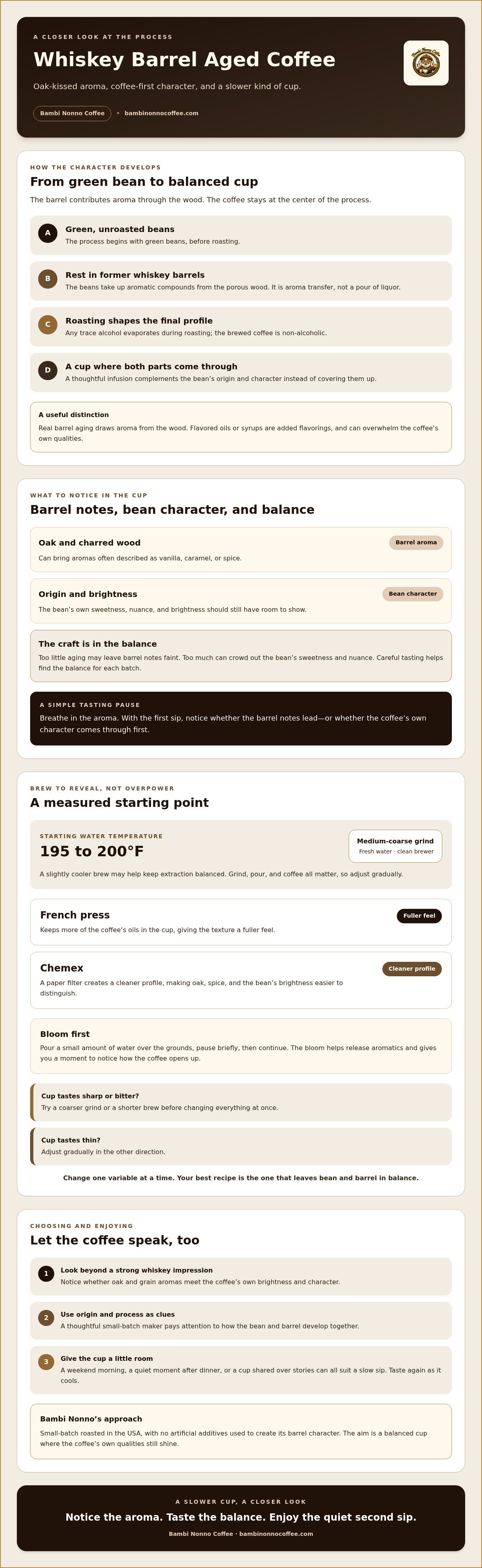
Whiskey barrel aged coffee starts with green, unroasted beans resting in barrels that previously held whiskey. Their porous structure takes up aromatic compounds from the wood, and the beans are later roasted to develop the final cup. The phrase "angel's share" describes spirit lost from a barrel during aging, but it doesn't mean the beans are soaked in whiskey. The process is about transferring aroma, not adding a pour of liquor.
Barrel aging is a distinctive step within the wider story of coffee processing. The green beans remain central: a thoughtful infusion should complement their origin and character rather than cover them up. Small-batch production gives makers room to monitor how the coffee and barrel develop together, helping keep the barrel's influence in balance with the bean.
For Bambi Nonno Coffee, the Whiskey Barrel Aged selection reflects that care, with no artificial additives used to create its barrel character.
Infusion vs. Flavoring: Why Real Barrels Matter
Charred oak can lend aromas often described as vanilla, caramel, or spice. That's different from adding flavored oils or syrups after roasting, which can overwhelm the coffee's own qualities. The aging duration matters, too. Too little time may leave the barrel notes faint; too much can let them crowd out the bean's sweetness and nuance. Careful tasting helps find the right balance for each batch.
After aging, roasting shapes the final profile, and any trace alcohol evaporates during the process. The brewed coffee is non-alcoholic. When you try a batch, taste it slowly and notice what comes from the bean and what the barrel contributes. That balance is the craft.
Unlocking the Profile: How to Brew Barrel Aged Beans
Give these beans a measured brew rather than trying to amplify every barrel note. Start with a medium-coarse grind, fresh water, and a clean brewer. A French press keeps more of the coffee's oils in the cup, giving the texture a fuller feel. A Chemex uses a paper filter for a cleaner profile, which can make oak, spice, and the bean's own brightness easier to distinguish.
Bloom the grounds first with a small pour of water, then pause briefly before continuing. The bloom helps release aromatics, setting the stage for the cup's layered scent. It won't guarantee a stronger whiskey impression, but it gives you a useful moment to notice how the coffee opens up.
Temperature and Extraction: Finding the Sweet Spot
Try water around 195 to 200 degrees Fahrenheit as a starting point. A slightly cooler brew can help keep extraction balanced, though your grind, pour, and coffee all matter. If the cup tastes sharp or bitter, try a coarser grind or a shorter brew before changing everything at once. If it tastes thin, adjust gradually in the other direction.
Barrel aging is distinct from the unwanted process which causes coffee quality to diminish, and careful brewing helps you taste the difference between the coffee's base character and its added barrel nuance. For a cup that lets both come through, explore Whiskey Barrel Aged coffee. Take notes as you adjust one variable at a time. Your best recipe is the one that leaves the bean and the barrel in balance.
The Modern Ritual: When to Enjoy a Barrel Aged Cup
Some coffees are made for the everyday rhythm. Whiskey barrel aged coffee invites you to pause. As it brews, oak and grain aromas rise from the cup, then meet the brightness of high-altitude coffee. Take a moment with the first sip. Notice whether the barrel notes lead, or whether the bean's own character comes through first.
For many, this is a slow-sip coffee: a weekend morning with nowhere to rush, a quiet moment after dinner, or a cup shared while stories stretch around the table. Barrel aging is part of a creative trend in pairing coffee with barrel character, but you don't need a special occasion to enjoy it. The ritual can be as simple as choosing a favorite mug and giving the cup your full attention.
If you're building a daily rhythm around coffee, explore this guide to Bambi Nonno's story, shaped by travel, curiosity, and discovery. That spirit of exploration belongs in the cup, too. Try it beside a familiar coffee and see what stands out.
Bambi Nonno's Approach to Small-Batch Aging
Bambi Nonno offers a Whiskey Barrel Aged coffee, small-batch roasted in the USA and rooted in a fresh perspective on coffee. Small batches support careful attention to the relationship between the bean and barrel, rather than treating every coffee as interchangeable. The goal is balance: barrel character with room for the coffee's own qualities to shine.
Make a cup when you can slow down. Before the first sip, breathe in the aroma, then taste again as it cools. Sometimes the quiet second sip tells you the most.
Make Room for a More Thoughtful Cup
Whiskey barrel aged coffee brings together two crafts: the patient influence of a barrel and the care of a considered roast. Brew it gently, pay attention to the balance between oak notes and the bean's own character, and let the cup become a small pause in your day. It doesn't need a special occasion. Sometimes a quiet moment is reason enough.
Bambi Nonno's Whiskey Barrel Aged selection is small-batch roasted for freshness and made with genuine care for the coffee ritual. Coffee orders within the United States ship free. Pour a cup for yourself, or share it with someone who enjoys discovering something new.
Get in touch with our coffee team if you have questions. Then take your time with that first sip. A good coffee moment is yours to make.
Frequently Asked Questions
Does whiskey barrel aged coffee contain alcohol?
No, whiskey barrel aged coffee is considered non-alcoholic. Green beans take on aromatic compounds from the barrel, rather than being made by adding whiskey to the coffee. Any trace alcohol present from the barrel is evaporated during roasting. You can enjoy the brewed cup for its layered aroma and flavor, not as an alcoholic drink.
Will this coffee make my coffee maker smell like whiskey?
It may leave a warm, barrel-like aroma while brewing, but that doesn't mean your coffee maker will keep smelling that way. Rinse removable parts and clean your brewer as you normally would after use. If you notice lingering aromas, run a cleaning cycle according to the manufacturer's instructions before making your next coffee.
What are the primary tasting notes of barrel aged coffee?
Expect the coffee's own character alongside aromas and flavors often associated with oak, vanilla, caramel, and spice. The balance varies with the beans and the aging process, so the barrel shouldn't necessarily dominate each cup. Let the coffee cool a little as you sip; changes in temperature can make different parts of its profile easier to notice.
Can I drink whiskey barrel aged coffee with milk and sugar?
Absolutely. Try your first cup black, so you can get a sense of the coffee and barrel notes on their own. Then add a little milk or sugar and see how the cup changes. Milk can soften the coffee's edges, while sugar brings extra sweetness. Use a light hand at first to avoid covering the details you enjoy.