

Guatemalan Coffee Beans: A Guide to the Brightness and Balance of the Highlands
Guatemalan coffee is the ultimate bridge bean, offering a structural masterpiece of balance that satisfies both the chocolate lover and the acidity seeker. If you've been searching for the perfect guatemalan coffee beans, you probably already know the frustration of an inconsistent home brew. It's hard to feel confident in your morning ritual when you're struggling to distinguish one Central American origin from another or master the perfect extraction.
This guide will help you discover the rich complexity of these high-altitude treasures and show you how to elevate your daily routine. We'll explore the unique terroir of the highlands, where nearly 99% of plantations now meet strict deforestation-free standards, and decode the terminology you need to brew like a pro. From understanding the slow sip lifestyle to finding a high-quality, small-batch roast, you're about to turn your kitchen into a place of genuine discovery and quiet, everyday joy.
Key Takeaways
- Learn to identify the structural balance of these beans, characterized by a harmony between bright acidity and deep, toffee-like sweetness.
- Explore how the volcanic terroir of regions like Antigua shapes the unique profile of guatemalan coffee beans, delivering a transition from fruity acidity to rich cocoa.
- Discover why a medium-coarse grind is the secret to unlocking spicy and floral top notes during your morning ritual.
- Master the art of the 30-second bloom to ensure a clean extraction and a more consistent cup every time you brew at home.
- Understand how high-altitude, responsibly sourced beans transform your daily coffee into an intentional moment of discovery and connection.
The Signature Profile of Guatemalan Coffee Beans
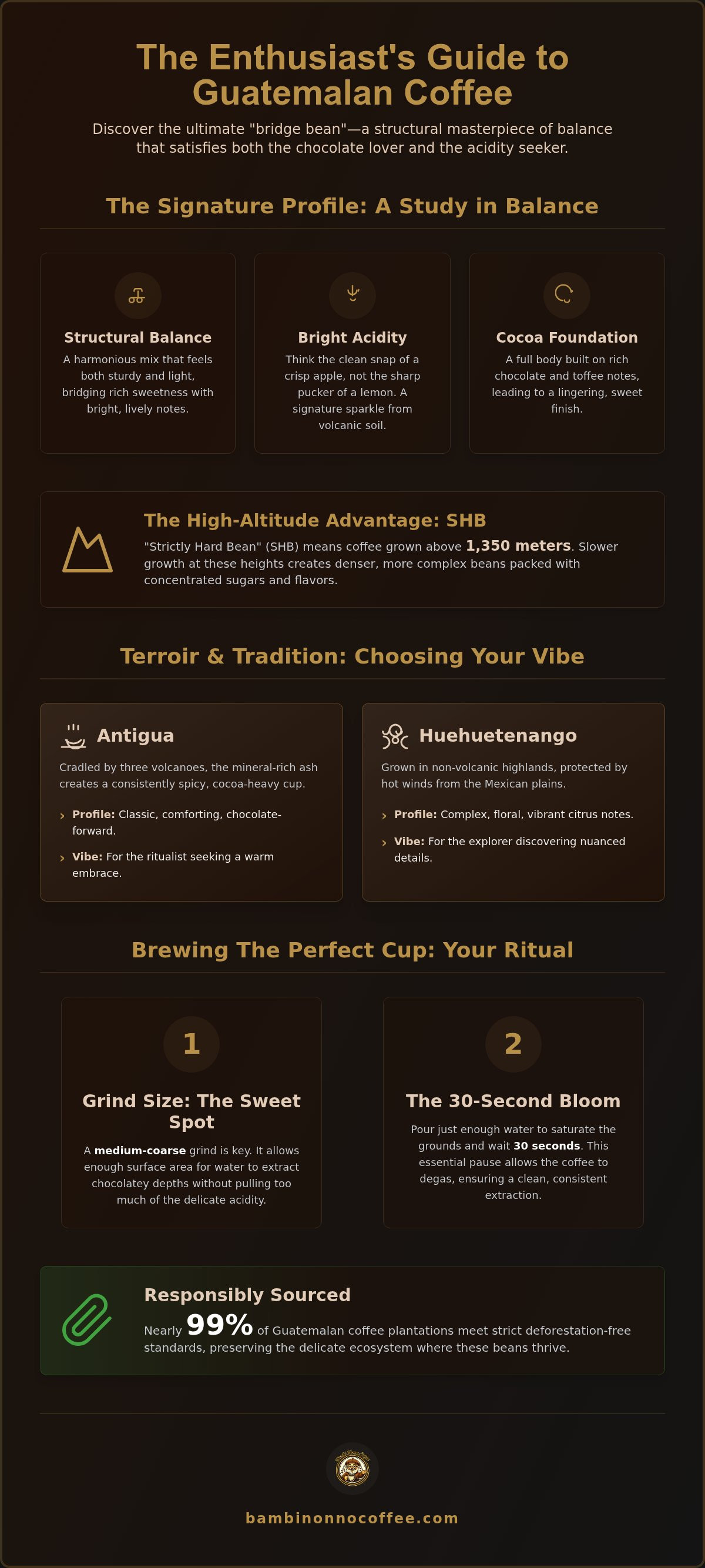
Guatemalan coffee beans are celebrated for their structural balance, a harmonious mix that feels both sturdy and light. The History of Coffee in Guatemala illustrates a long tradition of perfecting these profiles in high-altitude forests. They're the perfect choice for someone transitioning from blends to single-origin coffee because they offer a familiar comfort with a sophisticated twist.
To better understand how these flavors come together, watch this helpful video:
You might notice the SHB label on your bag of guatemalan coffee beans. This stands for Strictly Hard Bean, a designation for coffee grown above 1,350 meters. At these heights, the cherries grow slower, creating a denser bean with a higher concentration of sugars and complex organic acids that define the flavor concentration of your cup.
Understanding the "Bright" Acidity
Think of the snap of a crisp apple rather than the sharp pucker of a lemon. This is the difference between bright and sour. High-altitude volcanic soil infuses the beans with phosphoric acidity. This unique mineral profile gives the cup its signature sparkle, making each sip feel alive on the palate without being overwhelming.
The Cocoa and Nutty Foundation
While the acidity provides the highlight, the foundation is built on rich chocolate, cocoa, and a subtle nuttiness. These beans are a favorite for those who enjoy a fuller body and a lingering, sweet finish. During roasting, the heat carefully transforms green bean sugars into that signature toffee sweetness that anchors the entire profile.
Terroir and Tradition: The Growing Regions of Guatemala
Terroir isn't just a term for experts; it's the living history of the soil. In Guatemala, this environmental fingerprint determines if your cup tastes like a bright sunrise or a decadent dessert. Recent Guatemalan Coffee Research highlights how the intersection of climate and genetic diversity creates these distinct profiles. Selecting the right guatemalan coffee beans is about matching that terroir to your personal ritual.
Antigua remains the most storied region. Three massive volcanoes cradle this valley, dusting the coffee trees with mineral-rich ash. This creates a consistently spicy, cocoa-heavy cup that feels like a warm embrace. It's the kind of coffee that reminds you why you fell in love with the craft in the first place.
Huehuetenango offers a different story. These guatemalan coffee beans grow in non-volcanic highlands, protected from frost by hot winds from the Mexican plains. The result is a more complex, floral extraction with a lighter body and vibrant citrus notes. It's a cleaner cup that rewards those who take the time to notice the details.
We believe in the slow rhythm of nature. Shade-grown farming is essential for preserving the delicate varietals like Bourbon and Typica used in our Guatemala beans. It allows the cherries to ripen slowly, soaking up every nuance of the forest while protecting the local ecosystem.
Antigua vs. Huehuetenango: Choosing Your Vibe
Antigua is for the ritualist. If you want a classic, reliable, and comforting chocolate profile for a quiet morning, this is your home. Huehuetenango is for the explorer. It invites you to discover citrus notes and a cleaner, lighter body that changes as the cup cools.
The Impact of Volcanic Ash
Mineral-rich soil acts as a natural fertilizer. It intensifies the nutrient density of the coffee cherry, leading to more complex sugars. This rugged landscape also builds the "hard bean" durability required for small batch roasted coffee beans. The density allows the beans to withstand the heat of the roaster while keeping their delicate sweetness intact.
If you're curious about how these regions compare in your own kitchen, feel free to reach out and share your brewing results with us.
Brewing the Perfect Cup: Bringing the Ritual Home
The ritual of brewing is where the long journey from the highlands finally meets your home. It's a quiet moment of connection. When you're working with guatemalan coffee beans, the grind is your first critical decision. A medium-coarse setting serves as the sweet spot. It allows enough surface area for the water to pull out the chocolatey depth without over-extracting the delicate acidity.
Mastering the bloom is the next step in your ritual. Pour just enough water to saturate the grounds and wait for 30 seconds. You'll see the coffee degas and bubble. This simple pause is essential for a clean extraction because it clears the way for the water to reach the heart of the bean. Keep your water temperature between 195°F and 205°F. If the water is too hot, you risk scorching those floral top notes we explored earlier.
The Pour-Over Method for Clarity
If you love the sparkle of a high-altitude bean, the pour-over is your best friend. Using a paper filter helps to accentuate the bright acidity and floral aromas by trapping the heavier oils. Focus on a steady, circular pour. You want to maintain a flat bed of grounds to ensure every particle contributes equally to the cup. It's a meditative process that rewards your patience with a vibrant, tea-like clarity.
French Press for Body and Sweetness
Sometimes you want a more indulgent, heavy mouthfeel. The immersion method of a French press pulls out the deep cocoa and toffee oils that paper filters might miss. This creates a rich, textured experience that highlights the natural sweetness of your guatemalan coffee beans. Don't rush the final step. Practice the ritual of the wait by letting the coffee settle for a minute after brewing but before the final press. This results in a cleaner cup with less sediment.
Try brewing the same bean both ways this weekend. You might be surprised how a single origin can reveal entirely different secrets depending on the tool you choose.
Elevate Your Morning Ritual
Choosing the right coffee is a journey that connects you to the rugged landscapes and generations of tradition in Central America. We've explored how the unique volcanic terroir creates a structural masterpiece of flavor, offering both the snap of a crisp apple and the comfort of dark chocolate. By mastering the 30-second bloom and choosing the right brewing method, you can transform these guatemalan coffee beans into a reliable morning ritual that celebrates the joy of discovery.
Our commitment to the craft means focusing on high-altitude beans that are responsibly sourced and freshly roasted in small batches. We want your daily cup to be a moment of stillness and quality. To make the transition easier, we offer free shipping on all coffee orders within the US. It's about more than just a drink; it's about the stories told over a steaming mug and the connection built through shared moments.
Experience the balance of our small-batch Guatemala single-origin beans. We can't wait to hear how these flavors brighten your day.
Frequently Asked Questions
What does Guatemalan coffee taste like?
Guatemalan coffee beans typically offer a complex, layered taste characterized by a deep chocolate base and a bright, apple-like acidity. You'll often find notes of toffee and roasted nuts, which are sometimes finished with a delicate floral or spicy aroma that lingers on the palate. It's a profile that feels both substantial and elegantly balanced, making it a favorite for those who enjoy a cup with a clear beginning, middle, and end.
Is Guatemalan coffee acidic or bitter?
These beans are celebrated for their "bright" acidity rather than bitterness. This acidity provides a lively sparkle, similar to the snap of fresh fruit, which perfectly cuts through the rich cocoa sweetness. Bitterness usually only enters the cup if the extraction is pushed too far or the water temperature is too high. When brewed correctly, the result is a clean, sweet, and vibrant experience that feels refreshing on the tongue.
What is the best roast for Guatemalan coffee beans?
A medium roast is widely considered the sweet spot for guatemalan coffee beans. This level of roast is enough to develop the natural toffee sugars and body while preserving the unique phosphoric acidity and floral top notes that define the region. While darker roasts can be indulgent and smoky, they often mask the subtle nuances and the "sparkle" that make high-altitude Guatemalan terroir so special.
Are Guatemalan coffee beans good for espresso?
Yes, they are an excellent choice for espresso because of their inherent structural balance. The natural sweetness and full body create a rich crema and a syrupy mouthfeel that stands up well to pressure. When pulled as a shot, the chocolate notes become more concentrated and intense. This makes it a perfect base for milk-based drinks like lattes or a sophisticated stand-alone espresso for your quiet afternoon ritual.
What makes Antigua coffee different from other Guatemalan regions?
Antigua is unique because it's a valley surrounded by three volcanoes, which regularly enrich the soil with mineral-rich ash. This specific volcanic terroir produces a bean that is consistently more spicy and cocoa-heavy compared to the fruitier profiles found elsewhere. The high nitrogen levels in the soil and the consistent humidity create a reliable, classic cup that many enthusiasts consider the gold standard for Central American coffee.
How should I store my Guatemalan coffee beans to keep them fresh?
To keep your beans at their peak, store them in an airtight container in a cool, dark place like a pantry. Avoid the refrigerator or freezer, as moisture and kitchen odors can easily damage the delicate oils and muted flavors. Since we roast in small batches to ensure absolute freshness, it's best to enjoy your beans within four weeks of the roast date to capture the full range of floral and spicy notes.