

Hojicha Benefits and Caffeine: What to Know Before You Brew
What if a green tea could taste toasted and mellow while still containing some caffeine? Hojicha benefits and caffeine are often discussed together, but the details can be confusing. Hojicha is roasted green tea. Roasting gives it a warm, rounded character and generally leaves it with less caffeine than coffee. It isn’t caffeine-free, though, and the amount in your cup can vary with the tea and how you brew it.
If you’re looking for a drink that may feel gentler than coffee, it makes sense to ask what hojicha can really offer. This guide explains how roasting shapes its flavor and caffeine, how to make meaningful comparisons with other drinks, and which potential benefits are reasonable to expect. Use it to decide whether this mellow cup suits your routine, not as a shortcut to a health promise.
Key Takeaways
- Learn how hojicha’s roasting sets it apart from other green teas and shapes the cup.
- Get a grounded guide to hojicha benefits and caffeine, including why comparisons depend on the tea and brewing choices.
- Separate realistic wellness context from claims that go beyond what the evidence can show.
- Use a simple brew-and-adjust approach to find a cup that suits your taste and routine.
What Is Hojicha, and Why Does Its Roast Matter?
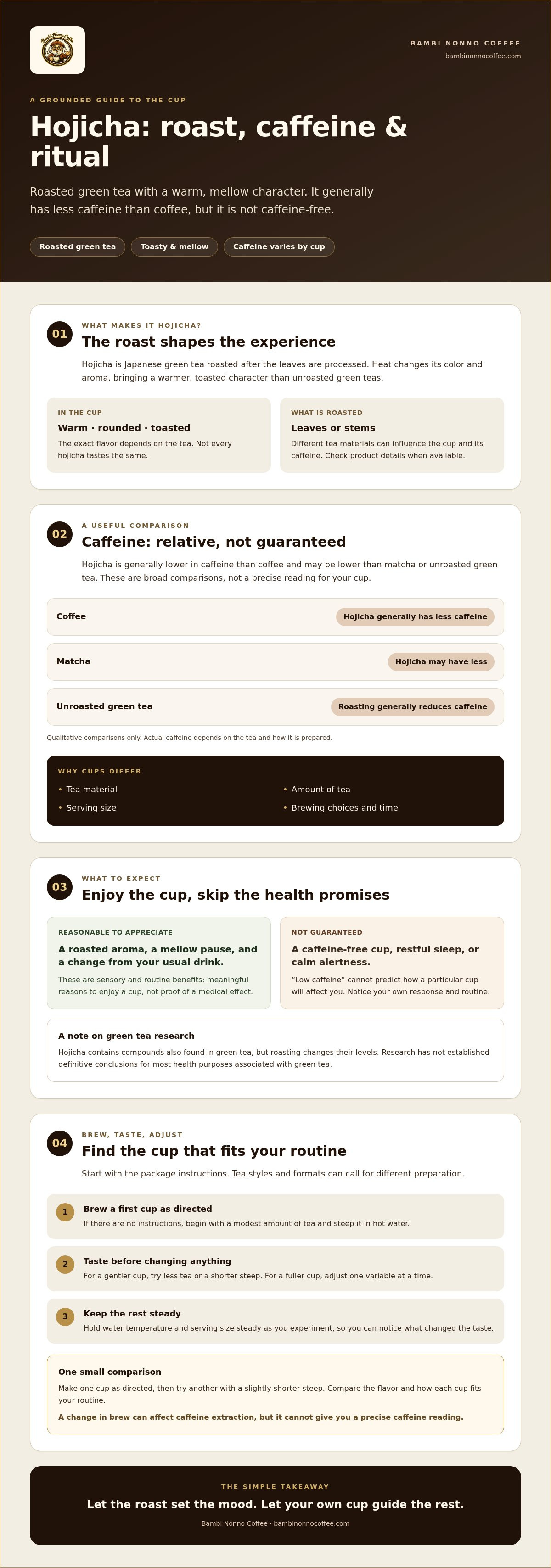
Hojicha is Japanese green tea roasted after the leaves are processed. That extra step sets it apart from green teas that are steamed and brewed without roasting. Heat changes the tea’s color and aroma, giving it a warmer, toasted character. The result depends on the tea itself, so don’t assume every hojicha tastes the same.
Roasting also matters when you’re considering hojicha benefits and caffeine. It generally reduces caffeine compared with unroasted green tea, but hojicha isn’t caffeine-free. The tea material, amount used, serving size, and brewing choices all affect what ends up in your cup.
How Is Hojicha Different from Matcha and Other Green Teas?
Hojicha is roasted green tea, usually prepared by steeping the tea in water and removing the leaves before drinking. Matcha is powdered green tea whisked into water, so you drink the powder rather than strain it out. They offer different experiences, even though both come from green tea.
The roast is hojicha’s defining distinction. It can be made with different parts of the tea plant, including leaves or stems, and that choice can influence the cup and its caffeine. Check the product details when available instead of assuming all hojicha uses the same material. Compared with unroasted teas such as sencha, hojicha’s toasted character and generally lower caffeine may make it a gentler-feeling option. Neither the flavor nor caffeine level is guaranteed by the name alone.
When comparing hojicha with matcha or another green tea, look beyond the category. Consider how each is prepared and how much tea goes into a serving. Those details make for a more useful comparison than treating every cup as identical.
Hojicha Benefits and Caffeine: What the Evidence Can and Cannot Tell You
Hojicha is often described as a lower-caffeine choice than coffee. It may suit you if you want a warm drink without the stronger lift you associate with coffee. But “lower caffeine” doesn’t mean caffeine-free, and it can’t predict how a particular cup will affect you. The tea material, amount used, serving size, and brewing time all play a part.
Caffeine varies from cup to cup because the tea material, amount used, serving size, and brewing choices are not always the same. Hojicha generally has less caffeine than coffee and may have less than matcha, but comparisons are most useful when serving sizes and preparation are similar. The unique benefits of hojicha include its roasted character and comparatively gentle caffeine profile, not a guaranteed effect.
Is Hojicha Low in Caffeine, and What Benefits Are Realistic?
Hojicha is usually considered relatively low in caffeine, but the amount in your cup can still vary. If you’re sensitive to caffeine or choosing a drink for later in the day, check the tea’s packaging and pay attention to how it fits your own routine. “Low caffeine” isn’t a promise of restful sleep or calm alertness.
Its most dependable appeal may be the experience itself: a roasted aroma, a mellow pause, and a change from your usual coffee or tea. Those are worthwhile reasons to brew it, but they’re sensory and routine benefits, not proof of a medical effect. Hojicha contains compounds also found in green tea, yet roasting changes their levels, and evidence about green tea’s health effects remains limited for many uses. The National Center for Complementary and Integrative Health notes that research has not established definitive conclusions for most health purposes associated with green tea. Enjoy hojicha for the cup in front of you rather than treating it as a health solution.
How to Brew Hojicha for a Cup That Fits Your Routine
Start with the instructions on the package, since different tea styles and formats can call for different preparation. If no guidance is available, use a modest amount of tea, steep it in hot water, and taste before adjusting. A longer steep or more tea can make the cup stronger, but it can also change the flavor and the amount of caffeine extracted. Neither adjustment gives you a precise caffeine reading.
For a gentler cup, try using less tea or shortening the steep. For a fuller one, change one variable at a time so you can tell what made the difference. Keep the other parts of your method steady while you experiment, including the water temperature and serving size. The aim is a cup you enjoy, not a guaranteed caffeine level. That approach is more useful than treating hojicha benefits and caffeine as identical from one brew to the next.
How Can You Make Hojicha Part of Your Daily Tea Ritual?
Choose a moment when you can notice the aroma and flavor without rushing. Bambi Nonno Coffee offers Hojicha, and you can explore the tea collection alongside it. Check the product details and follow the packaging instructions for your first brew instead of assuming every hojicha needs the same method.
Try a simple comparison: brew one cup as directed, then make another with a slightly shorter steep. Compare the taste and notice how each cup fits your routine and your personal response to caffeine. Change just one thing at a time. A small adjustment can teach you more than chasing a perfect recipe.
Make Your Next Cup a Small Experiment
Hojicha stands apart because of its roast, while its caffeine content can vary with the tea and how you brew it. The clearest takeaways from hojicha benefits and caffeine are simple: it generally has less caffeine than coffee, it isn’t caffeine-free, and wellness claims deserve more scrutiny than broad promises suggest.
Let flavor and your own routine guide you. Follow the package directions, then adjust one brewing choice at a time and notice what changes. Bambi Nonno Coffee offers Hojicha as well as a tea collection for curious tea drinkers.
Ready to try it? Ask us about hojicha, or explore the tea collection to find a cup for your next brew.
Frequently Asked Questions
Is hojicha caffeine-free?
No. Hojicha is made from tea leaves and generally contains caffeine, though the amount isn’t fixed. It can vary with the tea material, how much you use, serving size, and brewing method. If you closely manage your caffeine intake, check reliable product information where available and consider your own sensitivity. “Low caffeine” doesn’t mean caffeine-free.
How much caffeine is in a cup of hojicha?
There isn’t one dependable amount for every cup. Hojicha’s caffeine depends on the tea used, serving size, and brewing method, so a number from one product or preparation may not describe another. Comparisons with coffee or matcha are approximate, too. Check product information when available, and treat general figures as guides, not guarantees.
Is hojicha lower in caffeine than matcha or coffee?
Hojicha is often lower in caffeine than coffee and may be lower than matcha, but that isn’t a precise ranking for every cup. Matcha is whisked as powder, while hojicha is typically steeped, and serving sizes and preparation differ. If you’re choosing based on caffeine, compare product guidance where available and consider how each drink suits your preferences.
What are the benefits of drinking hojicha?
The most dependable benefits are sensory and practical: hojicha brings a roasted character to your tea routine and offers a deliberate pause in the day. Those can make it an enjoyable alternative to your usual drink, but they aren’t medical outcomes. Claims about better sleep, detoxification, or disease prevention shouldn’t be assumed from drinking hojicha.