

How to Get Started with Home Brewing Coffee
Your first great cup at home may come from a simple setup, not a counter crowded with gear. If you're wondering how to get started with home brewing coffee, it’s easy to feel pulled between pour-over, immersion, grinders, kettles, and advice that makes every detail sound essential. A better cup shouldn’t require turning your morning into a project.
Start with one method, the tools it needs, and a repeatable routine. This guide will help you choose a manageable setup, brew a first cup, and use grind size, bloom, and taste to make thoughtful adjustments. As you get comfortable, you can explore different coffees, including blends and single-origin options, and learn which flavors and methods you enjoy. Think of each brew as a small experiment, and each shared cup as a chance to pass along what you’ve learned.
Key Takeaways
- Learn how to get started with home brewing coffee with a practical setup, without treating premium gear as a prerequisite.
- Build a repeatable first-brew routine, then use taste to assess the result.
- Keep brief notes and change one brewing variable at a time to understand what affects your cup.
- Explore blends and single-origin coffees to discover which flavors and methods you enjoy most.
How to Get Started with Home Brewing Coffee: Choose Your Essentials
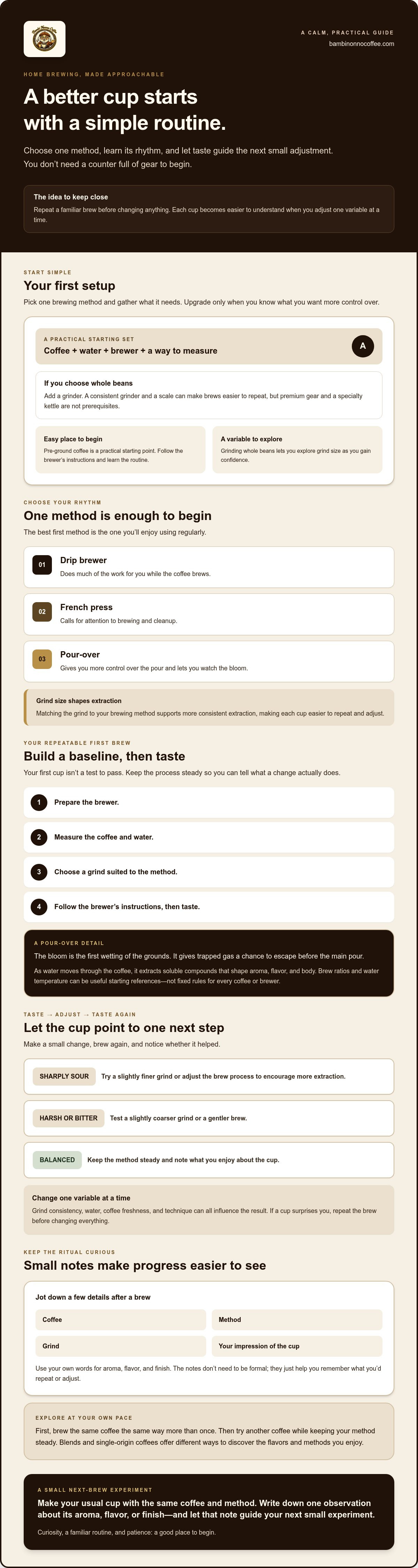
A thoughtful first setup can be simple. If you’re wondering how to get started with home brewing coffee, choose one method and gather what it needs: coffee, water, a brewer, and a reliable way to measure. If you choose whole beans, you’ll also need a grinder. A scale and a consistent grinder can make brews easier to repeat, but neither premium equipment nor a specialty kettle is essential at the beginning. Wait to upgrade until you know what you want more control over.
Grind size affects how water moves through the coffee and how it extracts. Matching the grind to your brewing method supports more consistent extraction, making each cup easier to repeat and adjust. Pre-ground coffee is a practical starting point. Grinding whole beans gives you another variable to explore as you gain confidence. For a broader overview of coffee preparation methods, see how different approaches shape the brewing process.
Pick one brewing method before adding more gear
Choose a routine that fits your day. A drip brewer does much of the work for you while the coffee brews. A French press calls for attention to brewing and cleanup, while pour-over gives you more control over the pour and lets you watch the bloom. Each method can make a satisfying cup. The best first method is one you’ll enjoy using regularly.
For method-specific guidance, look for a drip coffee brewing guide. A specialty coffee guide can offer broader context on beans and brewing choices. Start with a brewer you already have or one straightforward option, then repeat the process before adding equipment. Let your taste, not a crowded countertop, decide what comes next.
Brew Your First Cup and Adjust One Variable at a Time
Treat your first brew as a baseline, not a test you need to pass. Prepare the brewer, measure the coffee and water, choose a grind suited to the method, and follow the brewer’s instructions. Then taste the result. Keeping the steps consistent makes it easier to identify what you might want to change.
For pour-over, the bloom is the first wetting of the grounds, which gives trapped gas a chance to escape before the main pour. As water moves through the coffee, it extracts soluble compounds that shape aroma, flavor, and body. The NCA Guide to Brewing Essentials offers reference points for brew ratios and water temperature. Use them as starting guidance, rather than fixed rules for every coffee or brewer.
Use taste to guide your next brew
After brewing, consider whether the cup tastes sharply sour, harsh or bitter, or balanced. If it tastes sharply sour, try a slightly finer grind or adjust the brew process to encourage more extraction. If it tastes harsh or bitter, test a slightly coarser grind or a gentler brew. Make a small change, then taste again to see whether it helped.
Change one brewing variable at a time, and each cup becomes easier to interpret. Grind consistency, water, coffee freshness, and technique can all influence the result. Jot down the method and one tasting note so you can compare brews. If you’re learning how to get started with home brewing coffee, those brief notes can turn guesswork into a steady rhythm of discovery. Don’t change everything after one surprising cup. Repeat the brew, make one careful adjustment, and notice what changes.
Make Home Brewing Coffee a Ritual That Keeps Getting Better
A repeatable routine gives you a clearer sense of what you enjoy and can teach you more than another piece of equipment. Keep a few notes on the coffee, method, grind, and your impression of the cup. If something tastes off, change one variable next time. Before buying a new brewer, revisit your technique and see whether a small adjustment makes a difference.
Explore coffees through small, deliberate experiments
First, brew the same coffee the same way more than once. Notice its aroma, flavor, and finish in your own words, without worrying about finding the perfect tasting note. Then try another coffee while keeping your method steady. Blends and single-origin coffees offer different ways to explore what you like. For another perspective on how brewing choices shape a cup, read about the science of a perfect cup.
This is the heart of how to get started with home brewing coffee: curiosity, a familiar routine, and patience to notice what changes. Your notes don’t need to be formal. A few words beside each brew can help you remember what you’d repeat and what you’d adjust.
If you’d like to learn more about Bambi Nonno Coffee, you can read the story behind the coffee.
Next-brew challenge: Make your usual cup with the same coffee and method, then write down one observation about its aroma, flavor, or finish. Let that note guide your next small experiment.
Let Your Next Cup Be a Small Discovery
Learning how to get started with home brewing coffee doesn’t call for a perfect setup. Choose a method that fits your day, keep your routine steady, and let taste guide one thoughtful adjustment at a time. A few notes can reveal more than new equipment, while trying different coffees can make a familiar ritual feel fresh.
Bambi Nonno Coffee offers small-batch roasted coffees, including blends and single-origin selections to explore as your preferences take shape. Its selection includes Breakfast Blend, which can be one option to try as you build your routine. The brand describes its sourcing as responsible and from high-altitude forests. Explore the coffees and find an option for your next brew, or get in touch with Bambi Nonno Coffee with questions.
For your next brew, keep everything the same except one small choice, then take a moment to notice what changes in the cup. That’s how a daily ritual becomes your own.
Frequently Asked Questions
What equipment do you need to start brewing coffee at home?
A modest setup is enough: choose one brewer, coffee, water, and a scale or another reliable way to measure. A grinder is useful if you buy whole beans, but it isn't essential at the start; pre-ground coffee works too. Add equipment only when you can name what you want to improve, such as grind consistency or more control over pouring.
Is it worth grinding coffee beans at home?
Yes, especially if you enjoy whole-bean coffee and want more control over grind size. Grinding just before brewing can help retain aroma, while a consistent grind makes it easier to repeat a recipe. If a grinder doesn't suit your budget or routine, start with pre-ground coffee and focus on brewing it consistently.
What is the easiest way to start brewing coffee at home?
The easiest approach is the one with the fewest steps in your morning, often a drip brewer or a simple immersion brewer like a French press. Follow the brewer's instructions, measure your coffee and water, and keep the recipe consistent for your first few cups. Once the routine feels natural, decide whether a more hands-on method sounds enjoyable.
How can I make my home-brewed coffee taste better?
Start with coffee you enjoy and make your brewing conditions repeatable. Keep your brewer clean, measure carefully, and avoid changing grind, dose, water, and brew time all at once. Taste for balance, then adjust one factor and compare. If you're learning how to get started with home brewing coffee, brief notes can help you spot which changes suit your palate.