

The Coffee Enthusiast’s Guide to Finding Your Perfect Blend in 2026
While the specialty world often pushes single-origin beans as the peak of quality, the most soulful cup in your kitchen might actually come from a thoughtfully crafted selection of blends. You've probably felt the sting of a single-origin bag that tastes incredible on Tuesday but loses its magic by Friday. It's frustrating when you're just looking for a reliable moment of peace before the day starts. A great blend isn't about hiding low-quality filler beans; it's a curated symphony designed to bring harmony to your morning ritual.
We believe that finding your perfect coffee shouldn't feel like a chemistry exam or a gamble. This guide will help you discover how to choose a coffee blend that elevates your daily ritual through a deeper understanding of roast, origin, and extraction. You'll learn the "why" behind specific roast profiles and gain the confidence to buy coffee that tastes exactly how you expect it to. We'll explore the balance of different regions and show you how to achieve a consistent, delicious cup that honors the craft without the gatekeeping.
Key Takeaways
- Discover why the most soulful coffee blends are crafted for complexity, using high-altitude beans to build a layered flavor experience.
- Learn to navigate tasting notes and roast levels to find a profile that resonates with your personal morning ritual.
- Master the subtle art of extraction by matching your grind size to the specific chemical structure of your roast.
- Understand how water chemistry and temperature act as the final bridge between the bag and a perfect, repeatable cup.
The Art of the Blend: Why Complexity Beats Consistency
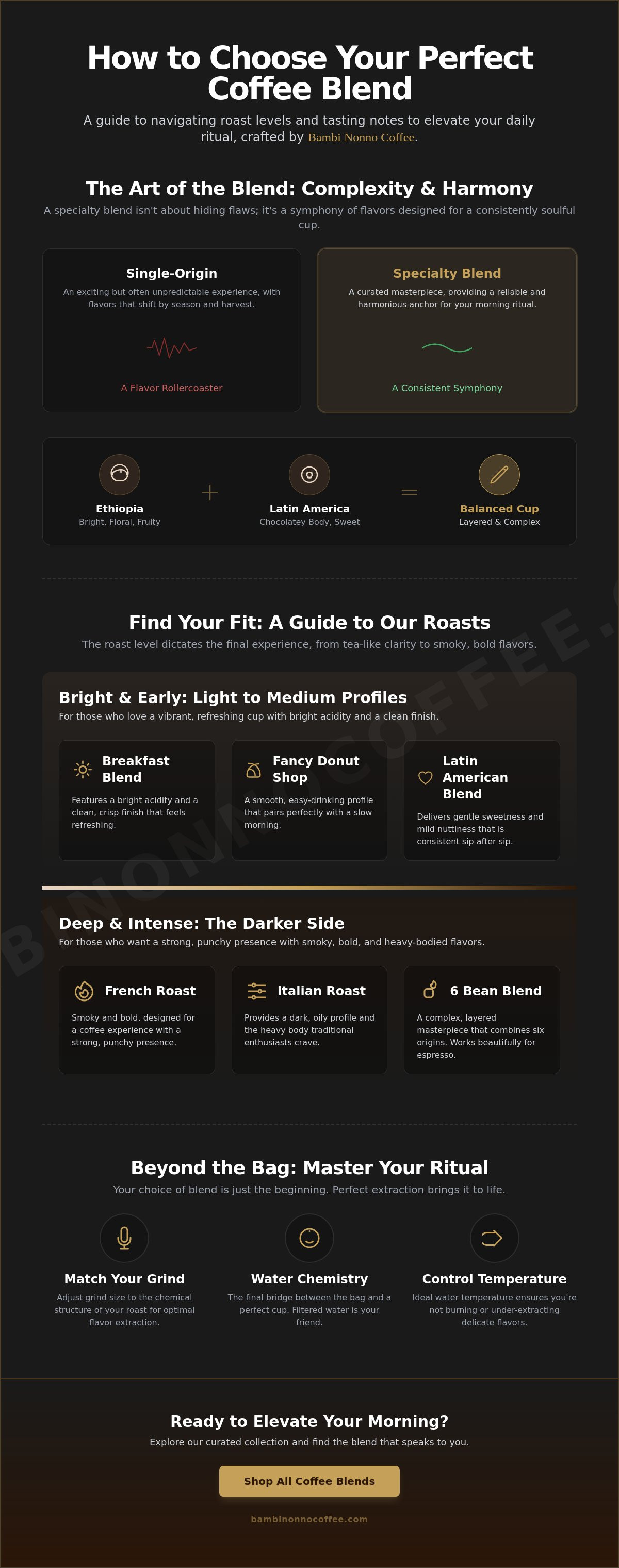
A specialty blend is a deliberate creation, not a fallback for beans that didn't make the cut. In the commercial world, blends were often used to hide cheap filler, but small-batch roasting has flipped that script. We use high-altitude beans from distinct regions to build layers of flavor that a single-origin coffee simply can't achieve on its own. It's about finding synergy between different terroirs:
- Ethiopia: Adds bright, floral, or fruity top notes that dance on the palate.
- Latin America: Provides a grounding, chocolatey body and a lingering sweetness.
To see how mixing different elements creates a superior final product, check out this video on the logic of blending:
Understanding the history of coffee shows us that the craft has always been about exploration. Our own approach is rooted in years of travel and the quiet habits we've picked up along the way. You can learn more about our multicultural journey on our story page and see how these experiences shape our roasting philosophy.
The Ritual of the Everyday Cup
A single-origin bag can be a wild ride, but its flavor profile shifts with every harvest and season. High-quality blends offer a reliable anchor for your morning. They provide a consistent taste that honors your daily routine, whether you're waking up in a quiet kitchen or sharing a cup with family. We draw inspiration from the diverse coffee cultures we've encountered to ensure your first sip is always familiar and welcoming.
Small-Batch Roasting vs. Commercial Blending
In massive commercial operations, consistency comes from over-roasting to mask imperfections. We take the opposite path. By roasting in small batches, we can carefully manage the Maillard reaction, the chemical process that develops sweetness and complex aromas. This precision ensures every bean in the blend reaches its peak potential. It isn't just about mixing beans; it's about honoring the unique chemistry of each origin to create a harmonious whole.
Navigating the Collection: Which Blend Fits Your Palate?
Finding your signature cup is less about following rules and more about understanding what brings you comfort. Flavor notes like chocolatey or citrusy aren't just poetic descriptions; they're clues to how the beans will behave in your brewer. According to the National Coffee Association, the primary goal of creating specialty blends is to offer a balanced profile that highlights the best of multiple origins simultaneously. Whether you enjoy your coffee black or with a heavy pour of cream, the roast level dictates the final experience.
Light roasts keep the bean's organic acids intact, resulting in a tea-like clarity. Dark roasts undergo a longer transformation in the drum, where sugars caramelize into smoky, bold flavors. If you're looking for something that pushes the boundaries of traditional flavor, explore our Whiskey Barrel Aged coffee for a unique, adventurous profile. It's a testament to how curiosity can lead to incredible discoveries in your daily habit.
Bright and Early: Light to Medium Profiles
If you love a vibrant, wake-up cup, our Breakfast Blend is your best companion. It features a bright acidity and a clean finish that feels refreshing and crisp. For a touch of nostalgia, the Fancy Donut Shop blend offers a smooth, easy-drinking profile that pairs perfectly with a slow morning. If balance is your priority, the Latin American Blend delivers a gentle sweetness and mild nuttiness that stays consistent from the first sip to the last.
Deep and Intense: The Darker Side of Roasting
Darker roasts are the heavy hitters of the coffee world. Our French Roast is smoky and bold, designed for those who want their coffee to have a strong, punchy presence. The Italian Roast provides a dark, oily profile and the heavy body that many enthusiasts crave for a traditional experience. For those who want it all, the 6 Bean Blend combines six different origins into a complex, layered masterpiece that works beautifully for espresso. If you're having trouble deciding which bag to open next, ask us for a personalized suggestion based on your favorite brewing method.
Beyond the Bag: Mastering Extraction for Your Home Ritual
Once you have the right beans in your hands, the focus shifts to your kitchen counter. Coffee is mostly water; using a fresh, filtered source is the easiest way to ensure your favorite blends shine. If your water tastes flat or metallic, your coffee will too. You also need to consider your grind size. Light roasts are dense and require a finer touch to release their sweetness. Darker roasts are more porous and brittle, so a slightly coarser grind keeps them from tasting harsh or muddy.
Citing scientific research on coffee blending helps us understand that physical bean density changes how water moves through the grounds. This is why your ritual should involve a bit of curiosity. Treat your coffee like a living thing. If you change only one variable at a time, you'll eventually find that perfect "god shot" that brings you joy every single morning.
The Science of the Bloom
When you first pour hot water over your grounds, you'll see them swell and bubble. This is the bloom. It takes about 30 seconds for the coffee to release trapped CO2. This step is vital because those gas bubbles can block water from reaching the flavor compounds inside the bean. A healthy, active bloom is a beautiful sign that your beans were roasted recently and handled with genuine care.
Dialing in Your Extraction
Mastering extraction is about listening to your palate and trusting your senses. If your cup tastes sharp or unpleasantly sour, you've under-extracted the beans. Try a finer grind next time. If the finish is dry and lingeringly bitter, you've gone a bit too far. You can read our ultimate guide to the 6 Bean Blend for deep-dive brewing tips to see how we manage these variables with our most complex profiles. Ultimately, the ritual of brewing is just as important as the coffee itself. It's a quiet moment to slow down and breathe before the world starts rushing.
Remember that the perfect cup isn't a destination; it's a practice. Try changing your water temperature by just two degrees tomorrow and see if you can taste the difference in the sweetness of your brew.
Elevate Your Daily Ritual
Your journey to a better cup is deeply personal and ever-evolving. We've seen how specialty blends provide a layered complexity that single-origin beans often lack, offering a reliable anchor for your morning. By matching your roast level to your favorite brewing method and respecting the science of the bloom, you transform a simple habit into a moment of genuine discovery. It's about finding that specific harmony between origin and extraction that speaks to your own story.
Every bag we craft is small-batch roasted in the USA to ensure the sweetness and body are perfectly developed. We source our beans from high-altitude, responsible farms because we believe quality and care are inseparable. To make your experimentation even easier, we provide free shipping on all coffee orders. If you're still looking for that one profile to complete your morning, reach out to us for a personal recommendation. We'd love to help you find the coffee that makes your quiet moments feel like home.
Frequently Asked Questions
What is the difference between a coffee blend and single-origin coffee?
Single-origin coffee comes from a single farm or region, while blends combine beans from multiple locations to create a balanced profile. This approach keeps flavor consistent across the seasons. While a single-origin bean highlights the unique terroir of its home, a blend offers a harmonious symphony of flavors. It honors your daily morning ritual with a taste you can always count on.
Are blends better for espresso or drip coffee makers?
You can use these coffees for both espresso and drip, though they're often the preferred choice for high-pressure brewing. The concentrated nature of espresso can make the sharp acidity of some single-origins feel overwhelming. A well-crafted combination provides the necessary body and sweetness to create a smooth shot. It tastes wonderful on its own or when mixed with your favorite milk.
How long do freshly roasted coffee blends stay fresh after opening?
Most freshly roasted coffee blends stay at their peak flavor for about two to four weeks after you open the bag. After this window, the delicate aromatic oils begin to fade. The beans are still safe to drink, but the cup will taste less vibrant. To keep your coffee fresh, store it in an airtight container in a cool, dark place. Always grind your beans just before brewing.
Can I use a dark roast blend in a cold brew maker?
Dark roasts are a fantastic choice for cold brew because the slow extraction process highlights deep, chocolatey sweetness. Cold water doesn't pull out the same bitter oils that hot water can, so the smoky and toasted notes of a darker profile come through as smooth and refreshing. It creates a heavy, syrupy body that holds up beautifully when served over ice or with a splash of cream.