

Troubleshooting My Espresso Shot: A Practical Guide
What if a disappointing espresso shot is less a failure than a clue? When the stream gushes, drips, or tastes sour or bitter, it’s tempting to change the grind, dose, and yield all at once. If you’ve caught yourself thinking, “I’m troubleshooting my espresso shot again,” pause before adjusting anything. The flavor and flow can help you decide what to test first.
This guide shows you how to read those clues and make one focused change at a time. You’ll learn how grind, dose, yield, temperature, and pressure can shape extraction, and how to build a repeatable dial-in routine for your coffee and equipment. Treat each shot as a small experiment: keep a steady baseline, taste the result, and record what you changed.
Key Takeaways
- Use sour, thin, harsh, or dry flavors as clues to what may be happening with extraction.
- When troubleshooting my espresso shot, change one variable at a time and taste before adjusting again.
- Start with a consistent dose, yield, and timing that suit your basket and machine, then use that baseline to guide your next shot.
- If results stay inconsistent, check grinder performance, machine readiness, basket condition, and cleanliness before changing your technique.
Troubleshooting an Espresso Shot Starts with Taste and Flow
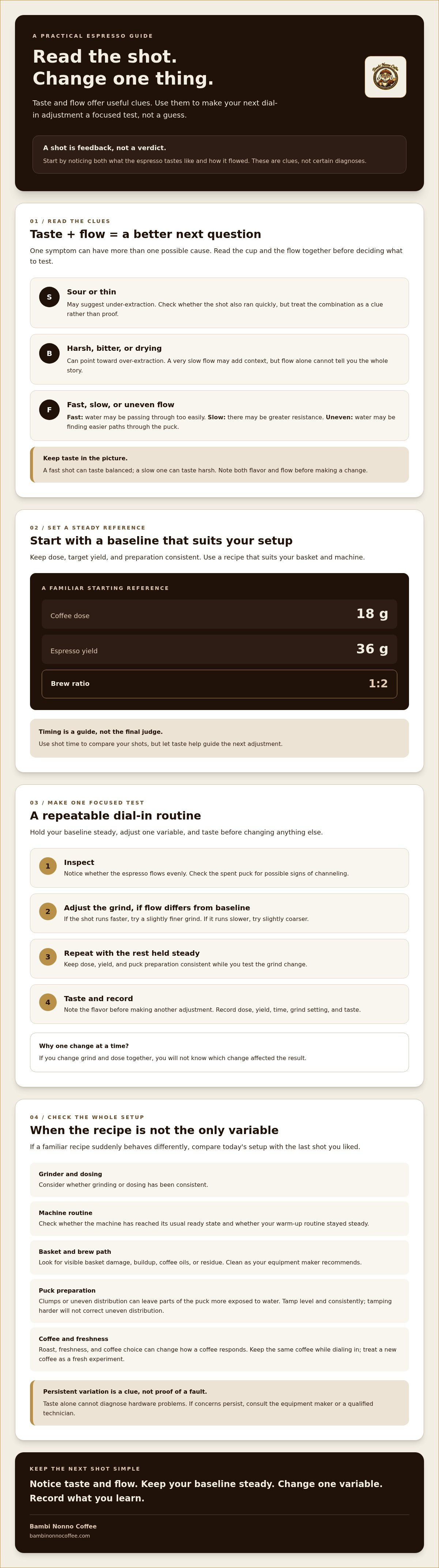
An inconsistent shot isn’t proof you lack skill. It’s feedback. When troubleshooting my espresso shot, I start with two observations: what the espresso tastes like and how it flowed. Together, they can help you choose a useful next step without treating every imperfect result as a reason to change everything.
Extraction is how water draws soluble compounds from coffee. Sour or thin flavors may suggest under-extraction, while harsh, bitter, or drying flavors can point toward over-extraction. These are clues, not certain diagnoses. For a broader overview of espresso and its brewing process, see Espresso.
What sour, bitter, fast, and uneven shots can tell you
Flow adds context to flavor. A fast shot may mean water is passing through the coffee too easily; a very slow shot may suggest greater resistance. An uneven stream can indicate that water is finding easier paths through the puck. But flow alone doesn’t tell the whole story. A fast shot can taste balanced, and a slow one can taste harsh.
Read the cup and the flow together. A fast, sour shot gives you a different clue from a fast shot that tastes balanced. Roast level, coffee age, grinder consistency, and equipment all affect what you see and taste, so one symptom can have more than one possible cause. Note both flavor and flow before choosing what to test next.
How to Troubleshoot Your Espresso Shot One Adjustment at a Time
A useful dial-in starts with a steady reference point. Keep your dose, target yield, and preparation routine consistent, using a recipe that suits your basket and machine. As a familiar starting reference, an 18-gram dose yielding 36 grams of espresso is a 1:2 brew ratio. Timing helps you compare shots, but use it as a guide rather than a rule that overrides taste.
Once you have a baseline, change one variable per shot. If you adjust grind and dose together, you won’t know which change affected the result. Record the dose, yield, time, grind setting, and flavor. Those notes make troubleshooting my espresso shot a series of useful tests instead of guesswork.
A repeatable dial-in routine for your next shot
- Inspect: Note whether the espresso flows evenly, and check the spent puck for possible signs of channeling.
- Adjust: If the shot runs faster than your baseline, try a slightly finer grind. If it runs slower, try slightly coarser.
- Repeat: Keep dose, yield, and puck preparation steady while testing the grind change.
- Taste: Record the flavor before making another adjustment.
Grind size affects resistance, but preparation matters too. Clumps or uneven distribution can leave parts of the puck more exposed to water. Tamp level and consistently; tamping harder won’t correct uneven distribution. Channeling can create a fast or erratic stream, even when the overall shot time seems reasonable.
The coffee itself is part of the recipe. Roast and freshness can change how a coffee responds, so keep the same coffee while dialing in. If you’re choosing beans for your next espresso experiment, explore a selection of single-origin coffees.
When Espresso Shot Problems Point Beyond Your Technique
If a familiar recipe suddenly produces a different shot, pause before changing several settings. Inconsistent grinding or dosing, a machine that hasn’t reached its usual ready state, a damaged or dirty basket, and coffee oils or residue can all affect repeatability. Clean the basket and brew path as your equipment maker recommends. Keep your warm-up and preparation routine steady while you investigate.
Deciding whether to adjust the recipe, coffee, or equipment
Compare today’s setup with the last shot you liked. Has the grind setting changed? Is the coffee newly opened or older? Did your puck preparation or machine routine change? Check the basket for visible damage or buildup. Troubleshooting my espresso shot is clearer when I change one thing at a time and note what stayed the same.
If the coffee and routine are consistent but shots still vary, consider whether the grinder produces a consistent grind and whether the machine seems ready in the same way each time. These are clues, not proof of a fault. Taste alone can’t diagnose hardware problems. For persistent machine or grinder concerns, consult the equipment maker or a qualified technician.
Coffee choice can also shift your dial-in. Different coffees and roast characteristics may call for a different recipe. Keep the coffee consistent while checking equipment, then treat a new coffee as a fresh experiment. For your next shot, record the dose, yield, flow, and taste, then adjust one variable. If you have a question about choosing coffee, you’re welcome to contact us with your coffee question.
Make Your Next Shot a Useful Test
If troubleshooting my espresso shot feels like guesswork, return to a simple routine: consider taste and flow together, keep dose and yield steady, and change one variable at a time. Record what you changed and what you taste. These notes can turn an unpredictable shot into a repeatable dial-in process.
When results stay inconsistent, check your coffee, grinder, preparation, and machine routine before assuming the recipe is the only issue. Each coffee responds in its own way, so allow room to adjust when you open a new bag.
Bambi Nonno Coffee offers small-batch roasted coffees, including single-origin coffees and blends, for exploring different tastes in your cup. Have a question about choosing coffee? Contact us with your coffee question.
Stay curious, make one thoughtful adjustment, and let the next shot teach you something.
Frequently Asked Questions
Why does my espresso shot taste sour?
A sour espresso shot can suggest under-extraction, meaning the water hasn’t drawn enough soluble compounds from the grounds. Check whether the shot ran quickly, then try a slightly finer grind while keeping dose and yield steady. Sourness can also reflect the coffee’s natural character, so consider flavor and flow together before changing your recipe.
Why is my espresso shot pulling too fast?
A shot that pulls too fast may mean the grind is too coarse, allowing water to pass through the puck with less resistance. When troubleshooting my espresso shot, first confirm dose and yield, then make a small adjustment finer and repeat with the same puck preparation. If flow stays erratic, check distribution and tamp level for possible channeling.
How do I fix a bitter or harsh espresso shot?
A bitter or harsh shot can point to over-extraction, though taste alone isn’t a certain diagnosis. Keep your dose steady and try a slightly coarser grind if the shot is running slowly. Taste again before changing yield or temperature. If the cup tastes dry and the flow looks uneven, review puck preparation too, since channeling can make extraction inconsistent.
Can coffee beans cause inconsistent espresso shots?
Yes. Coffee age, roast characteristics, and differences between origins or blends can change how beans respond to your grinder and recipe. Treat a new bag as a fresh dial-in, keeping your routine consistent while tracking dose, yield, flow, and taste. Bambi Nonno Coffee offers small-batch roasted coffees, including single-origin coffees and blends, for exploring different coffee profiles.