

What Does Whiskey Barrel Aged Coffee Taste Like? A Sensory Journey
Imagine sitting in a quiet corner of your home as the morning light hits your favorite mug, releasing an aroma that feels like a shared secret between a master distiller and a dedicated roaster. You might find yourself wondering, what does whiskey barrel aged coffee taste like when it's done with patience and craft? It's a question many coffee lovers ask when they're tired of the thin, chemical flavors found in mass-produced bags. You want a cup that respects the bean's natural terroir while adding a new chapter to its story.
We agree that a premium cup should never taste like a lab experiment. This journey shows how the aging process transforms specialty beans into a spirited ritual full of oak and vanilla notes. We'll explore the specific sensory profile, clarify the lack of alcohol, and provide brewing tips to ensure your morning remains a moment of pure, quiet discovery.
Key Takeaways
- Explore the specific sensory notes that define what does whiskey barrel aged coffee taste like, from its resonant sweetness to its spirit-forward aroma.
- Understand the critical difference between synthetic flavoring and the authentic barrel-aging process that uses the bean's natural porosity.
- Learn why your choice of brewing equipment, whether it's a pour-over or a French Press, completely changes the flavor clarity and body of the cup.
- Find out how to select a specialty-grade barrel-aged coffee that honors the bean's terroir without letting the whiskey notes overpower the experience.
The Flavor Profile: What Does Whiskey Barrel Aged Coffee Taste Like?
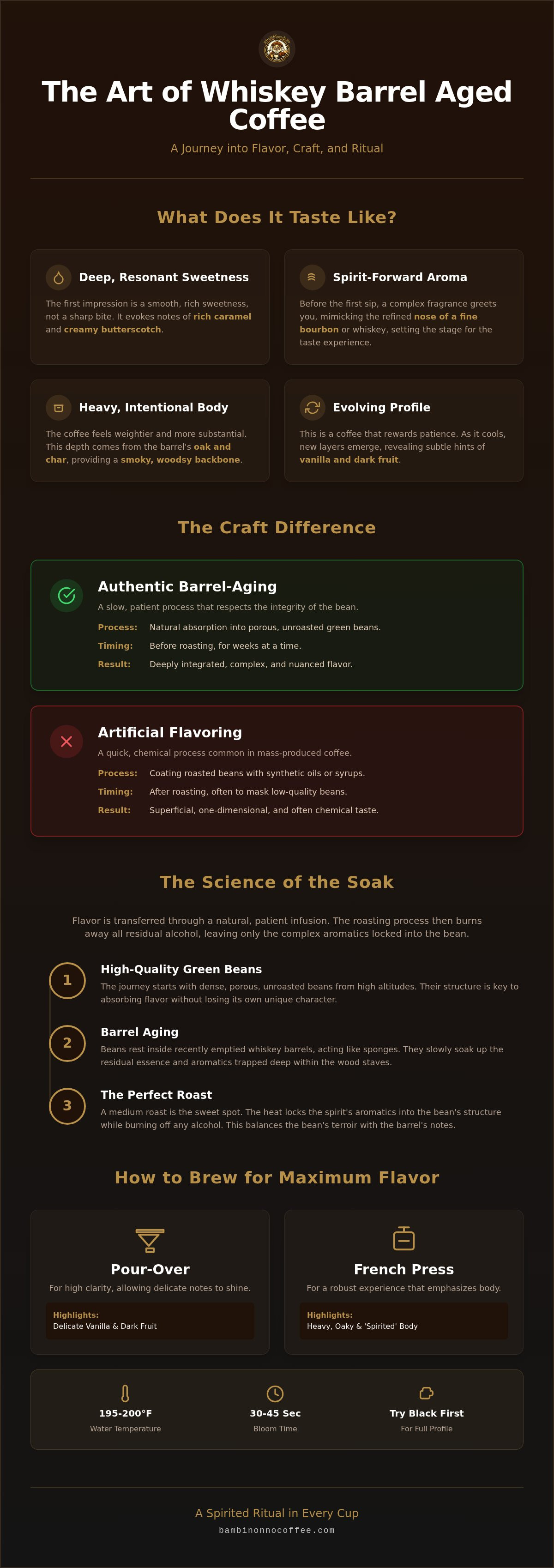
When you take that first sip, the primary experience isn't a sharp bite. Instead, you'll find a deep, resonant sweetness. It often reminds people of rich caramel or creamy butterscotch. If you've ever wondered what does whiskey barrel aged coffee taste like, think of it as a bridge between two worlds. You get the familiar comfort of specialty coffee paired with a distinct, spirit-forward aroma. This fragrance mimics the nose of a fine bourbon, offering a complex greeting before the liquid even touches your tongue.
The body of the cup feels heavier and more intentional than a standard roast. This depth comes from the oak and char found in wooden barrels. These elements provide a smoky, woodsy backbone that grounds the brighter notes of the bean. As your Whiskey Barrel Aged coffee cools, the profile continues to evolve. Subtle hints of vanilla and dark fruit begin to emerge. It's a drink that rewards those who take their time, revealing new layers with every minute that passes.
The Science of the Soak: How Flavor Transfers Without Alcohol
To truly understand what does whiskey barrel aged coffee taste like, you have to look at the chemistry of the bean. The transformation begins with green coffee beans. These unroasted beans are naturally porous. When they rest inside recently emptied barrels, they act like sponges. They soak up the residual essence and aromatics trapped deep within the wood staves. It's a slow, patient process that requires a sturdy, high-altitude bean to maintain its own character against the spirit's influence.
Many people worry about the alcohol content, but the roasting process handles that naturally. The intense heat of the roast burns off every drop of alcohol while locking the spirit's aromatics into the bean's cellular structure. This authentic conditioning creates a deeply integrated flavor profile that synthetic, oil-based flavorings can never replicate.
Barrel-Aged vs. Flavored Coffee: Understanding the Craft Difference
Many people assume that whiskey-infused coffee is just another flavored brew. However, there is a vast difference between synthetic oils and authentic craft. If you want to understand what does whiskey barrel aged coffee taste like, you have to look at the timeline. While grocery store shelves are filled with beans coated in laboratory-made syrups after roasting, true barrel-aging happens much earlier. The process of ageing green beans relies on the natural porosity of the raw coffee. It takes weeks of careful rotation and patience for the beans to absorb the spirit's soul before they ever see the heat of a roaster.
This method respects the integrity of the roasted coffee beans by using nature rather than chemicals. To succeed, we must start with high-quality specialty coffee. If the base bean lacks character or density, the heavy notes of charred oak will simply overwhelm it. The goal is a partnership between the farm and the barrel. This ensures that every cup of Whiskey Barrel Aged coffee maintains its soul while gaining a new, spirited dimension.
Choosing the Right Roast Level for Barrel Notes
The roast level is the final, delicate step in defining what does whiskey barrel aged coffee taste like in your cup. We find that a medium roast is the sweet spot. It preserves the bean's unique terroir while allowing the vanilla and caramel barrel notes to shine. Darker roasts often introduce a competing char that masks the whiskey's nuance. We focus on a balance that feels like a warm conversation. If you're curious about how these flavors change with different methods, feel free to ask us for personalized brewing advice.
How to Brew for Maximum Flavor Clarity and Ritual
Your choice of brewing method acts as a lens, focusing on different parts of the barrel's story. If you want to highlight the delicate vanilla and dark fruit notes, the Pour-Over is your best tool. Its high clarity allows these nuances to shine without being muddied by sediment. Conversely, the French Press is ideal for those who want to lean into the heavy, oaky, and 'spirited' body of the barrel. The immersion method pulls out the rich oils that define the bean's character, creating a much more robust experience.
Precision matters when you're dealing with such complex aromatics. Keep your water temperature between 195 and 200°F. This range prevents the charred oak notes from turning unpleasantly bitter during extraction. You should also be intentional with the bloom. Letting the spirit-aged gases escape for 30 to 45 seconds is vital. It's a small, patient step that makes a massive difference in the balance of your final cup.
The Ritual of the Cup: A Moment for Discovery
We encourage you to try this coffee black first. It's the best way to understand what does whiskey barrel aged coffee taste like across the full sensory spectrum before adding cream or sugar. Find a quiet corner and notice how the flavor evolves as the cup cools; you'll find the sweetness deepens as the heat dissipates. As a final tip, try pairing your Whiskey Barrel Aged brew with a square of dark chocolate or the premium refined nuts and dates from Khan's. The cocoa and nutty textures naturally amplify the hidden caramel and butterscotch notes, turning your morning routine into a true ritual of discovery.
Exploring the depths of a barrel-aged cup is more than just tasting coffee; it's about embracing a patient, natural process. By understanding what does whiskey barrel aged coffee taste like, you've seen how charred oak and time transform specialty beans into a layered experience of caramel, smoke, and vanilla. Our small-batch roasted beans ensure these peak aromatics reach you fresh, without synthetic oils or shortcuts. Whether you choose the clarity of a pour-over or the weight of a French press, your quiet morning moments are now a canvas for discovery.
Remember that we offer free shipping on all coffee orders within the United States to make your journey even smoother. Have questions about our aging process? Contact our team for a personalized recommendation. We're here to help you find the perfect balance for your cup. May your next brew be as spirited as the stories it helps you tell.
Frequently Asked Questions
Does whiskey barrel aged coffee contain alcohol?
No, whiskey barrel aged coffee doesn't contain alcohol. While the beans absorb the spirit's essence to define what does whiskey barrel aged coffee taste like, the roasting heat burns off the alcohol content. You're left with the deep soul of the whiskey, such as oak and vanilla notes, without any intoxicating effects. It's a safe, spirited way to enjoy your morning ritual.
Is there more caffeine in barrel-aged coffee?
The barrel-aging process doesn't increase the caffeine levels in the coffee. The primary change is sensory, affecting the aroma and flavor profile. Because we use high-altitude specialty beans, you'll still get the standard caffeine kick you expect from a premium roast. The focus here is on the complex what does whiskey barrel aged coffee taste like experience rather than boosting stimulation.
Can I use whiskey barrel aged coffee for cold brew?
These beans make an exceptional cold brew. The long, slow extraction of cold brewing pulls out the heavy caramel and butterscotch notes while minimizing acidity. This method highlights the spirit-forward nature of the coffee, making it taste like a sophisticated, non-alcoholic cocktail. It's a perfect way to experiment with the bean's versatility during a quiet, reflective afternoon in your favorite corner.
How should I store my barrel-aged beans to keep them fresh?
Store your beans in an airtight container away from direct sunlight and moisture. Because these beans have absorbed delicate aromatics from wooden barrels, they are sensitive to air exposure. Keeping them in a cool, dark place preserves the integrated flavors of oak and vanilla. Avoid the freezer; a simple pantry shelf is the best home for your small-batch roasted specialty coffee.