

What Is Italian Espresso? The Method, Roast, and Flavor Explained
What if "Italian" in Italian espresso describes the way the coffee is made, not how dark the beans are roasted? If you picture a short, intense shot beneath a layer of crema, you're not far off, but the label can blur two different ideas. So, what is italian espresso, exactly?
The key distinction is simple: espresso is a brewing method, while Italian Roast is a roast style. A dark roast can suit espresso, but darkness alone doesn't make a shot Italian, and crema isn't a guarantee of quality. What matters in the cup is balance: sweetness, bitterness, body, and how clearly the coffee's character comes through.
This guide separates the method from the roast label, explains what crema and flavor can tell you, and offers practical ways to adjust your espresso at home. You'll come away with a clearer sense of what to taste and what to change, one thoughtful shot at a time.
Key Takeaways
- Understand what is italian espresso by looking at its preparation and tradition, not just the beans.
- Learn how roast development can shift a shot's bitterness, sweetness, body, and aroma.
- Use aroma, flavor, body, and finish to identify what you enjoy in the cup.
- Fine-tune your espresso by changing one variable at a time and observing the extraction.
What Is Italian Espresso? Start With the Brewing Method
Espresso is a concentrated coffee brewed by forcing hot water through finely ground coffee under pressure. That compact preparation brings aroma, texture, and flavor into a small cup, where each detail is close at hand.
To understand what is italian espresso, separate the brewing method from the bean itself. "Italian" points to a familiar espresso tradition and style, not a distinct bean species or a rule that every cup must taste the same. The broader overview of espresso offers helpful context on how this brewing method is made and how it varies.
Is Italian espresso a bean, a drink, or a brewing style?
It's a drink made using espresso brewing, and "Italian" describes a tradition around that style of coffee. The beans can come from different origins, be single-origin or blended, and have different roast levels. Those choices influence the result, but none alone makes a coffee Italian espresso.
Italian espresso is a traditional style of espresso preparation, not a particular bean, blend, roast level, or mandatory recipe.
Concentration and crema offer useful clues about the cup. Espresso should feel more concentrated than filter coffee, while crema can reveal something about the coffee and its extraction. But crema isn't a universal quality score: its appearance alone can't tell you whether the shot tastes balanced or suits your preference.
Think of these signs as a starting point, not a pass-or-fail test. Notice the aroma, flavor, and texture together. A cup can be a reason to slow down and pay attention, whether you're enjoying a quiet moment on your own or sharing one with someone else.
Italian Espresso vs. Italian Roast: What Actually Changes in the Cup?
Espresso describes how coffee is brewed. Italian Roast describes how the beans are roasted. The terms can appear side by side, but they answer different questions: one is about extraction, the other about roast development. For more context on the brewing method and its history, see Britannica’s Espresso brewing and history.
An Italian Roast is typically roasted dark, but the label alone doesn't tell you exactly how a shot will taste. More developed roasting can bring forward deeper, roast-led aromas and a heavier impression of body. It may also emphasize bitterness, while making some brighter or sweeter notes less prominent. These are tendencies, not guarantees. The coffee's origin and composition matter, too, and extraction can shift how its flavors land in the cup.
Can coffee roasted in different styles work for espresso?
Yes. Espresso suitability depends on the coffee and the flavor you enjoy, not the roast label alone. Different roasted coffee beans can be prepared as espresso, though you may need to adjust the grind and extraction to bring out their best. A darker roast might give you the fuller, more roast-forward cup you prefer; another roast could make other characteristics more noticeable.
That's the practical answer to what is italian espresso: a style of espresso preparation, not a requirement to use one roast. Start with a coffee you like, then taste the shot before changing your recipe. If it's too sharp, bitter, or thin for your palate, adjust one brewing variable at a time and notice what changes. Keep the other parts of your preparation steady while you test a change, so you can tell what affected the cup. A few patient comparisons can teach you more than a roast label ever will.
How to Taste and Fine-Tune an Italian Espresso at Home
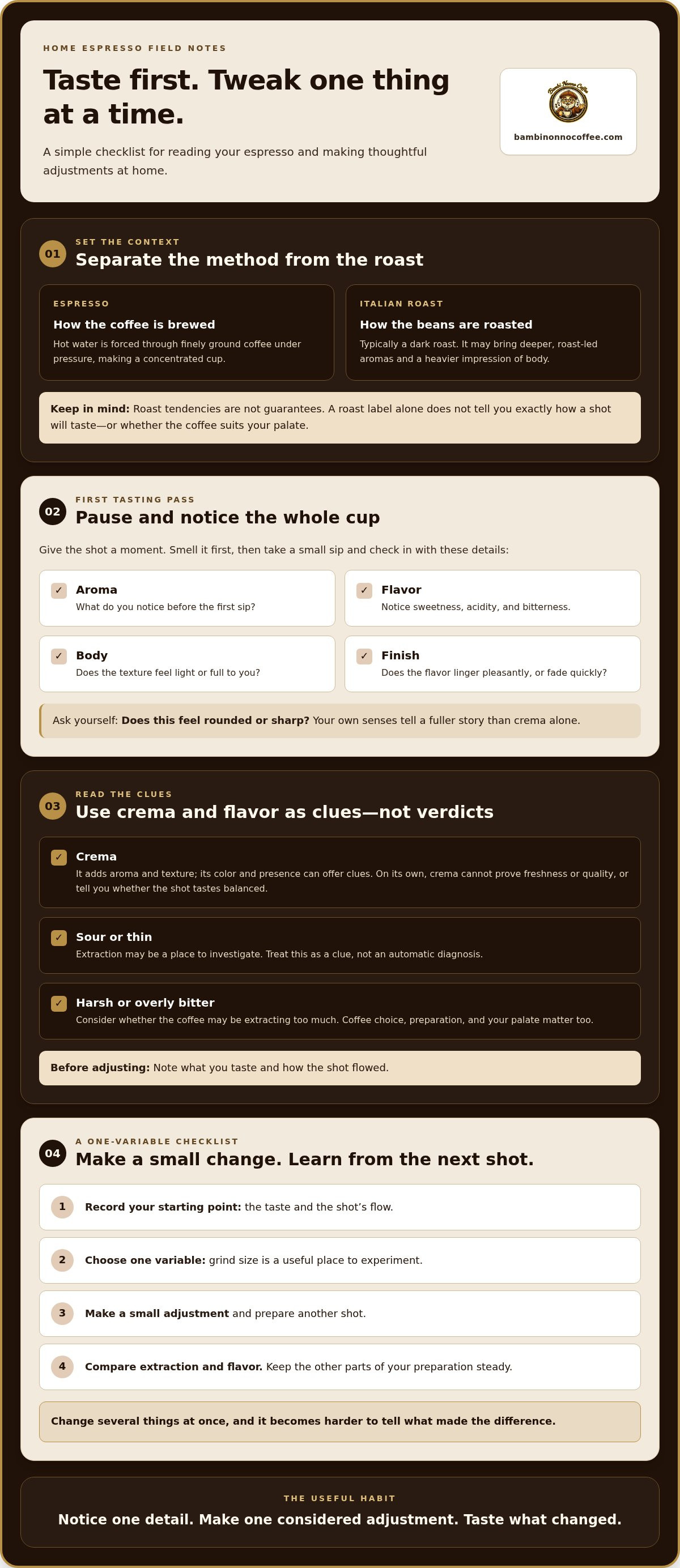
Give the shot a moment before reaching for the grinder. Smell it first, then take a small sip and notice sweetness, acidity, bitterness, body, and finish. Does it feel rounded or sharp? Does the flavor linger pleasantly, or fade quickly? These observations help you decide what, if anything, to adjust.
What should you notice in the crema and flavor?
Crema adds aroma and texture, and its color and presence can offer clues about the shot. But crema alone can't prove freshness or quality. Taste the espresso beneath it, too. A pleasing shot is about how the flavors work together, not simply how much crema sits on top.
If the cup tastes sour or thin, extraction may be a place to investigate. If it tastes harsh or overly bitter, consider whether it may be extracting too much. These are clues, not automatic diagnoses: coffee choice, preparation, and your own palate all matter. Note what you taste and how the shot flowed before making a change.
Change one brewing variable at a time, and you'll learn how that adjustment shapes the cup. Grind size is a useful place to experiment. Make a small adjustment, prepare another shot, and observe both the extraction and the flavor. If you change several things at once, it's harder to tell what made the difference.
There's no need to turn every morning into a lab session. Let the process become part of a quiet coffee ritual: notice one detail, make one considered adjustment, and enjoy the chance to learn. That's a practical way to explore what is italian espresso at home, one cup at a time.
Make Your Next Espresso a Moment of Discovery
Knowing what is italian espresso starts with separating the brewing method from the roast label. Espresso is shaped by preparation, while roast development, coffee choice, and extraction all influence what you taste. Crema can offer a clue, but your own senses tell a fuller story.
At home, begin with aroma, sweetness, acidity, bitterness, body, and finish. Then adjust one variable at a time and notice how the cup responds. Small, thoughtful changes can turn an everyday coffee into a welcome moment of discovery.
Bambi Nonno Coffee is an independent specialty coffee roaster focused on small-batch roasted beans and responsible sourcing from high-altitude forests. Explore our coffees, including Breakfast Blend, and talk coffee with us.
Take your time with the next shot. One curious sip can teach you something new.
Frequently Asked Questions
Is Italian espresso different from regular espresso?
Italian espresso is still espresso, brewed by forcing hot water through ground coffee. The word "Italian" generally points to a familiar tradition and style of preparation, rather than a separate bean or universally fixed recipe. So, what is Italian espresso? It's espresso understood through that tradition, with the final taste shaped by the coffee, roast, and extraction.
Does Italian espresso always use dark-roasted coffee?
No. Italian espresso doesn't require dark-roasted beans. Italian Roast is a roast-style label, while espresso describes a brewing method. Roast development can influence the cup: a darker roast may emphasize roast-led flavors and bitterness, while other roasts can bring different qualities forward. The best choice depends on the flavor you enjoy and how the coffee extracts on your setup.
Can you make espresso with any coffee beans?
You can try many kinds of coffee as espresso, including single-origin beans and blends. Not every coffee will taste the same or suit every palate, and some may take more dialing in. Start with beans whose flavor you enjoy, then adjust the grind and observe the extraction. A small grind change can help you find a more balanced result.
What makes a good Italian espresso?
A good Italian espresso is one that tastes balanced and enjoyable to you. Notice its aroma, sweetness, acidity, bitterness, body, and finish rather than judging it by crema alone. Crema is one sensory cue, not a standalone measure of freshness or quality. If a shot tastes harsh or thin, change one brewing variable at a time and taste again.