

Whiskey Barrel Aged Coffee: A Guide to the Craft and the Ritual
Can a piece of charred oak, once home to a slow-aging spirit, truly transform the soul of a coffee bean? If you've been curious about whiskey barrel aged coffee, you might feel a bit skeptical. Perhaps you worry that the spirit will drown out the delicate notes of a high-quality roast or leave you with something that tastes like artificial syrup. It's a natural concern for anyone who treats their morning cup as a sacred ritual. When you've spent years searching for the perfect roast, you don't want to compromise on the quality of the bean.
The truth is that genuine barrel aging isn't about masking the coffee. It's a collaborative art form where the wood, the spirit, and the specialty bean create a temporary, unrepeatable flavor profile. With specialty coffee now making up 25% of the U.S. market, bean quality has never been more important. This guide will show you how this slow-cured process creates a sensory experience that transcends your ordinary routine. We'll explore the science of the infusion, how to spot beans that haven't sacrificed their integrity, and the best ways to brew this unique craft so every note of oak and vanilla shines through in your cup.
Key Takeaways
- Understand how green coffee beans breathe in the spirit-soaked essence of charred oak barrels during the slow conditioning process.
- Identify the rich flavor architecture of molasses and toasted oak that distinguishes true craft from artificial flavoring.
- Learn why the pairing of specific beans, such as a Guatemalan single-origin, is vital for a balanced and sophisticated sensory profile.
- Master the brewing techniques required to honor whiskey barrel aged coffee, ensuring you preserve the delicate aromatics and heavy body.
- Discover how to transform your morning routine into a slow, meaningful ritual rooted in years of travel and curious experimentation.
Understanding the Craft: How Whiskey Barrel Aging Transforms the Bean
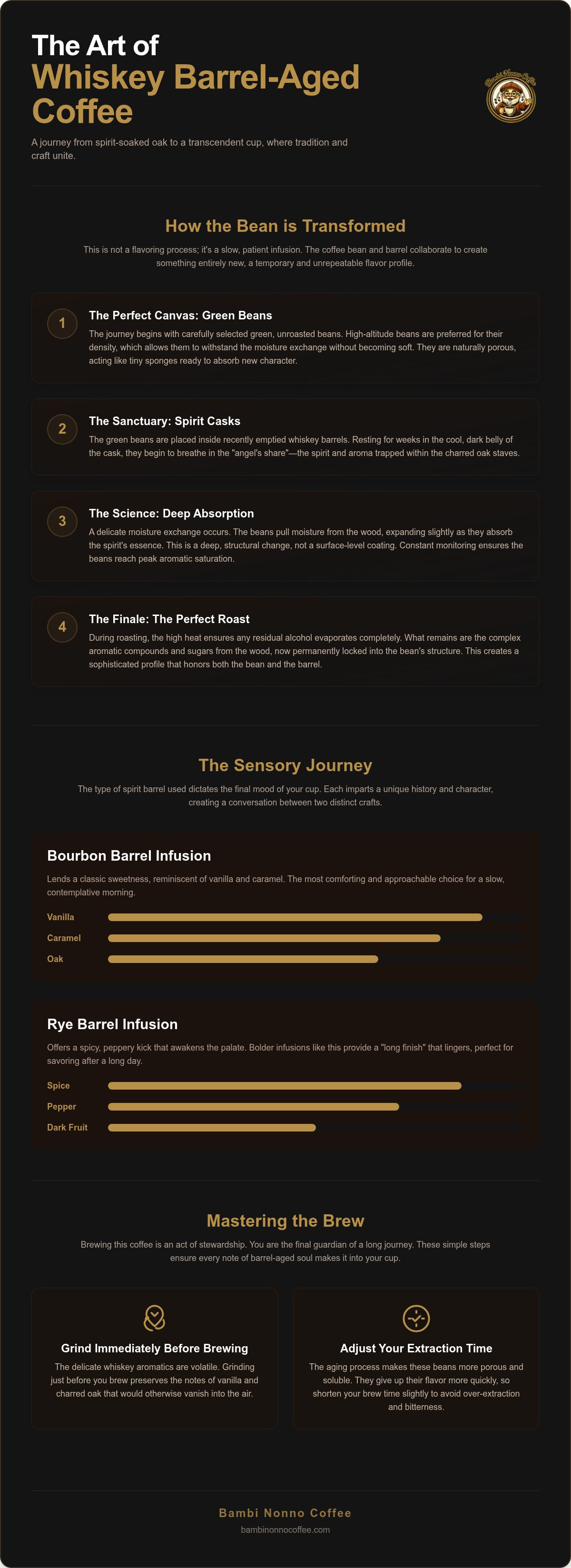
Whiskey barrel aged coffee is often misunderstood as just another flavored brew, but the reality is far more poetic. It begins with green, unroasted coffee beans placed inside recently emptied spirit casks. These beans are naturally porous; they act like tiny sponges. As they rest in the dark, cool belly of the barrel, they breathe in the "angel's share," which is the spirit and aroma trapped within the wood staves. This isn't a surface-level application. It's a deep, structural change that happens over weeks of patient waiting.
Many people ask if this coffee contains alcohol. During the coffee roasting process, the high heat ensures that any residual alcohol evaporates entirely. What remains behind are the complex aromatic compounds and the sugars from the wood. This process differs from "flavored coffee" because it relies on the physical interaction with charred oak and tannins rather than synthetic oils. This creates a sophisticated profile that honors the bean's origin while adding a new layer of history.
The Marriage of Wood and Bean
The barrel acts as a silent partner in this sensory ritual. Charred oak provides the foundational notes of vanilla, caramel, and subtle smoke that we've grown to love through our travels. Because each barrel has its own history, small-batch production is vital. It allows us to monitor the intensity of the infusion and ensure the whiskey's character enhances the whiskey barrel aged coffee without masking its natural brilliance.
The Science of Absorption
A delicate moisture exchange occurs inside the cask over several weeks. The green beans pull moisture from the wood, expanding slightly as they absorb the spirit's essence. This requires constant attention to keep the beans at the right consistency for roasting. The infusion window is the specific point in time when the bean reaches peak aromatic saturation before the wood's tannins become too dominant.
The Sensory Journey: Exploring Flavor Profiles and Aromas
The magic of whiskey barrel aged coffee begins long before the first sip. It starts the moment you break the seal on the bag. A heavy, sweet perfume fills the room. It's an aroma that tells a story of time and wood. When you start the grind, the "nose" becomes even more intense. You catch notes of dark chocolate and thick molasses, grounded by the scent of toasted oak. This isn't just coffee; it's a sensory bridge between the distillery and the roastery.
The base bean is the foundation of this journey. For instance, a Guatemalan single-origin provides a bright, cocoa-heavy profile that stands up beautifully to the barrel's influence. Instead of being overshadowed, the coffee's natural acidity cuts through the richness of the spirit. This balance is what makes the barrel-aged coffee trend so fascinating for those who appreciate complexity. You aren't just tasting whiskey; you're tasting a conversation between two distinct crafts.
Bourbon vs. Rye vs. Malt Infusions
The type of spirit previously held in the cask dictates the final mood of your cup. Bourbon barrels lend a classic sweetness, reminiscent of vanilla and caramel. It's a comforting choice for a slow Sunday morning. Rye casks offer a spicy, peppery kick that wakes up the palate. If you're looking for something to savor after a long day, these bolder infusions provide a "long finish" that lingers just like a fine aged spirit.
The Role of Terroir in Aged Coffee
Not every bean is suited for this process. We look for high-altitude beans because their density allows them to withstand the moisture exchange without becoming soft. This connection to specialty coffee terroir ensures that the bean maintains its structural integrity throughout the whiskey barrel aged coffee process. If you want to learn more about how we select these unique beans, you can read more of our story here.
Mastering the Brew: How to Honor the Barrel-Aged Ritual at Home
Brewing a cup of whiskey barrel aged coffee is an act of stewardship. You are the final guardian of a process that began months ago in a high-altitude forest and continued for weeks inside a spirit-soaked cask. To honor this journey, your first step must be the grind. The whiskey aromatics trapped within the bean are volatile. If you grind too early, those delicate notes of vanilla and charred oak vanish into the air. Grind your beans immediately before brewing to ensure every bit of that barrel-aged soul makes it into your carafe.
Because the aging process makes the beans more porous, they behave differently during extraction than standard roasts. They are more soluble, meaning they give up their flavors more readily. If your water is too hot or your brew time too long, you risk pulling out bitter, woody tannins that overshadow the spirit's sweetness. We recommend using a French Press if you love a heavy, velvety body, or a Pour-over if you prefer to highlight the complex acidity of the base bean.
The Perfect Pour-Over Technique
A pour-over allows you to control the extraction with precision. Follow these steps to find the balance:
- The Bloom: Use twice the weight of water as coffee grounds. Let it sit for 45 seconds. This long bloom is essential for releasing trapped gases and opening up the spirit-soaked pores of the bean.
- Water Temperature: Aim for 195 to 200 degrees Fahrenheit. This slightly lower temperature prevents over-extracting the charred oak notes.
- The Pour: Use slow, concentric circles. This steady rhythm ensures even contact and a clean finish.
A Ritual of Discovery
Don't be afraid to experiment with your water-to-coffee ratio. While a standard 1:16 ratio is a great starting point, some find that a tighter 1:15 ratio brings out the molasses-like richness of the whiskey. Our whiskey barrel aged coffee is crafted for those who value the story behind the cup, so take your time to find your personal sweet spot. View this as a slow, intentional ritual. It's a quiet moment in your day to appreciate the intersection of two ancient crafts.
Just as we find value in these intentional daily moments, there are times when we must approach life's larger transitions with the same level of care and respect; for those seeking a compassionate way to honor a legacy, Sunnyside Cremation and Funeral offers professional support in creating meaningful tributes.
Try brewing your next cup without any additives first. Let the temperature drop slightly as you sip; you'll notice the whiskey notes become more pronounced as the coffee cools.
Begin Your Own Coffee Discovery
Every cup of whiskey barrel aged coffee is the result of a long journey, one fueled by years of travel and a genuine obsession with the craft. You now know that this isn't about artificial flavors, but a deep, physical transformation within the barrel that requires a specific brewing ritual to truly honor. By focusing on a slow bloom and careful temperature control, you can unlock the layers of molasses and oak that we've worked so hard to preserve. It's about finding those quiet, everyday moments where the quality of the experience matters more than the speed of the caffeine fix.
Our beans are small-batch roasted in the USA to ensure that the human connection remains at the heart of every roast. We believe that the joy of discovery should be accessible to everyone, which is why we offer free shipping on all coffee orders. If you're ready to transform your morning routine into something extraordinary, we invite you to experience the ritual with our Whiskey Barrel Aged Coffee. Take your time, experiment with your pour, and enjoy the slow sip you've earned.
Common Questions About the Barrel-Aged Ritual
Does whiskey barrel aged coffee contain alcohol?
No, whiskey barrel aged coffee does not contain alcohol. During the roasting process, the beans reach temperatures that far exceed the boiling point of alcohol, causing it to evaporate completely. What remains are the complex sugars and aromatic compounds from the spirit and the charred oak. You get the sophisticated depth of the whiskey without the intoxicating effects, making it a perfect choice for your morning ritual or a quiet afternoon break.
Is barrel aged coffee the same as flavored coffee?
It is fundamentally different from flavored coffee. While flavored beans are usually coated with synthetic oils or syrups after they are roasted, barrel aging happens when the beans are still green. The coffee breathes in the essence of the wood and the spirit over several weeks of patient conditioning. This creates a natural, integrated profile that honors the bean's origin rather than masking it with artificial additives or sugary coatings.
Will the whiskey oils damage my coffee grinder?
What is the best way to store barrel aged coffee beans?
The best way to store these beans is in an opaque, airtight container kept in a cool, dark place. Whiskey barrel aged coffee relies on volatile aromatic compounds that can dissipate if exposed to oxygen or light for too long. We recommend only grinding what you need for each specific brew. Leaving beans in your grinder's hopper can cause those beautiful notes of vanilla and oak to fade before they ever reach your cup.