

Coffee Bloom: What Is It, and Why Does It Matter?
What if the bubbles in your coffee bed offer useful information, but don’t guarantee a better cup? If you’ve ever searched “coffee bloom what is it” while watching your grounds swell, you’re not alone. That bubbling happens as hot water meets the coffee and carbon dioxide escapes. It can tell you something about the grounds, but bubbles alone don’t determine how your brew will taste.
The bloom is a brief first step in brewing. Giving it a little attention can help water reach the grounds more evenly. In this article, you’ll learn what happens as coffee releases gas, how blooming can support more even extraction, and how to fit it into your routine. We’ll cover when and how to bloom, what the bubbling can suggest about the coffee, and why the taste in your cup is still the best guide.
Key Takeaways
- Wondering “coffee bloom what is it”? It’s the initial wetting of the grounds, when trapped carbon dioxide escapes and may create bubbles.
- Try a simple bloom routine: prepare your grounds, wet them evenly, pause, then continue brewing.
- Adjust bloom time and water to suit your brewer and recipe rather than treating one method as universal.
- Use bubbling as a brewing cue, not a quality score. Grind consistency, pouring technique, and the taste in your cup offer more useful clues.
Coffee Bloom: What Happens When Fresh Grounds Meet Water?
If you’re asking, “coffee bloom what is it,” the short answer is that blooming is the initial wetting and gas-release stage of brewing. When water first meets ground coffee, trapped carbon dioxide escapes. In a pour-over, you may see the coffee bed swell as bubbles rise to the surface.
Roasting leaves carbon dioxide inside coffee beans. Some of this gas escapes gradually after roasting, while grinding exposes more of the coffee to air. When water reaches the grounds, it helps release some of the remaining gas. The bubbles are carbon dioxide moving through wet coffee, not a sign that the water is boiling.
Why does coffee release gas during the bloom?
The first pour wets the grounds and releases gas before the main brewing phase. Saturating the bed evenly helps prepare it for the water that follows. Pre-wetting, also called blooming, is described as part of pour-over brewing in this overview of coffee preparation.
The visible bloom varies with the coffee, roast date, grind, and brewing conditions. A lively bloom can suggest that gas remains in the grounds, but it can’t prove freshness, quality, or ideal extraction. A quieter bloom doesn’t automatically mean the coffee is stale, either. Treat the bloom as one observation, then let the taste of the finished cup guide your next adjustment.
How to Bloom Coffee Grounds for a More Even Brew
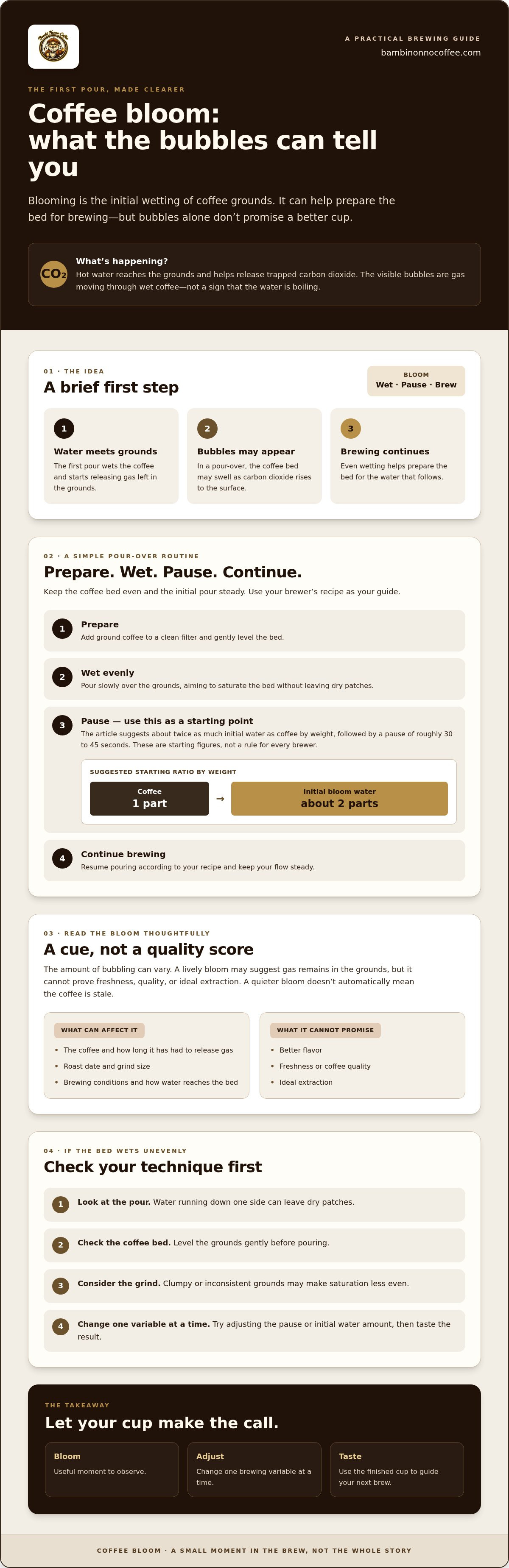
A good bloom is simple: prepare your grounds, wet them evenly, pause, then continue brewing. For a pour-over, start with a clean filter and spread the grounds into an even bed. Pour enough hot water to saturate the coffee without leaving dry patches. A useful starting point is about twice as much water as coffee by weight, followed by a pause of roughly 30 to 45 seconds. Treat those figures as a starting recipe, not a rule for every brewer.
- Prepare: Add your ground coffee to the filter and level the bed gently.
- Wet: Pour the initial water slowly over the grounds, covering the bed as evenly as you can.
- Pause: Let the coffee bloom before adding the rest of your brew water.
- Continue: Resume pouring according to your recipe and keep your flow steady.
For another step-by-step perspective, see How to Bloom Coffee. You can also explore this drip coffee brewing guide for tips on making your daily brew more consistent.
Does every brewing method need a bloom?
A deliberate bloom is most useful when your recipe gives you control over an initial pour, especially with pour-over brewing. Immersion methods, where grounds steep in water, may not call for a separate pause. If you’re wondering “coffee bloom what is it” in relation to your setup, start with a recipe for your brewer, then change one variable at a time, such as the pause or initial water amount. Taste the result before adjusting again.
What Your Coffee Bloom Can Tell You and What It Cannot
A bloom is a useful moment to observe, not a verdict on the beans. The amount of bubbling can vary with the roast date, the coffee itself, grind size, and brewing conditions. Coffee that has had more time to release gas may bubble less, while grind differences and the way water reaches the bed can also change what you see.
If the grounds wet unevenly, check your pour before changing the coffee. Water running down one side can leave dry patches, and a clumpy or inconsistent grind may make saturation less even. Try leveling the grounds and pouring in a steady pattern. If the bloom seems quiet, check your technique and recipe before assuming the coffee is poor or stale.
Is a bigger bloom always a sign of better coffee?
No. More visible bubbling doesn’t guarantee better flavor, freshness, or ideal extraction. If you’re wondering “coffee bloom what is it” telling you about quality, the honest answer is that bubbles offer only one clue. Taste the cup, then adjust one variable at a time, such as grind consistency or pouring technique. This makes it easier to tell what actually changes the result.
For a wider look at the care and curiosity behind a good cup, explore our specialty coffee craft and ritual guide. If you’re still puzzling over your brew, you’re welcome to ask us a coffee question.
Make the Bloom Part of Your Next Brew
The bloom is the first wetting of the grounds, when trapped carbon dioxide escapes. Use it as a practical cue, not a scorecard: bubbling varies and can’t promise a better-tasting cup. Start with your brewer’s recipe, adjust one variable at a time, and let taste guide you.
If you’ve asked, “coffee bloom what is it telling me?”, remember that the cup matters more than the bubbles. That same curiosity informs our small-batch roasted coffees, made with responsible sourcing from high-altitude forests. For help with your brewing questions, contact our coffee team.
Frequently Asked Questions
What is coffee bloom?
The coffee bloom is the first wetting stage of brewing, when water meets ground coffee and trapped carbon dioxide escapes. Bubbles or a swelling coffee bed are visible signs of that gas release. If you’re asking “coffee bloom what is it,” think of it as a brewing step, not a separate coffee type or a guaranteed measure of cup quality.
Why does coffee bloom when you pour water over it?
Coffee blooms because roasting leaves carbon dioxide inside the beans, and grinding exposes more surface area. When water reaches the grounds, some of that retained gas escapes and forms bubbles. The amount you see can vary from one coffee to another, so a lively bloom doesn’t automatically predict a particular flavor or a better-tasting cup.
Should you bloom coffee before every brewing method?
No, a deliberate bloom isn’t required for every brewing method. It’s a common step in pour-over recipes, where you control the initial pour, but other brewers may use a different routine. Start with a trusted recipe for your brewer, then change one variable at a time, such as the bloom pause. Taste each cup to see what works for you.
Does a bigger coffee bloom mean the beans are fresher?
Not necessarily. A visible bloom can suggest that gas remains in the grounds, but it can’t establish freshness on its own. The coffee type, roast, grind, storage, and pouring technique can all affect what you see. Check the roast information when available, then taste the brewed coffee. Bubbles are one observation, not a freshness or quality score.