

Drip Coffee: A Guide to the Art and Ritual of Your Daily Brew
Drip coffee is not a compromise of convenience; it is the most transparent way to experience a bean's unique journey from soil to cup. You've likely stood in your kitchen, watching the water fall, and wondered why today's cup tastes sharp and bitter while yesterday's was sweet and perfect. It's a common struggle for the nearly three in four specialty coffee drinkers who now brew at home. Confusion over grind sizes or water temperature shouldn't stand between you and the flavor clarity you crave.
We believe your morning should be a slow, intentional ritual rather than a rushed habit. You deserve a cup that reflects the dedication put into the harvest, whether you're brewing a bright Ethiopia Natural or a balanced Latin American Blend. This guide will help you master the nuances of extraction and ratios to ensure consistent results every day. We'll explore the science of the bloom and the updated 2026 standards for measurement, giving you the tools to turn your kitchen into your favorite specialty cafe.
Key Takeaways
- Understand the quiet science of gravity-fed extraction and how it differs from immersion to bring a newfound clarity to your morning ritual.
- Master the nuance of a medium-coarse grind to ensure every drop of your drip coffee captures the full story of the bean.
- Learn why specific origins like Ethiopia Natural or Guatemala offer such distinct, memorable experiences when brewed with patience.
- Find your perfect balance by exploring the contrast between the bright curiosity of light roasts and the deep, soulful comfort of a house blend.
Understanding Drip Coffee: The Transparent Heart of Your Ritual
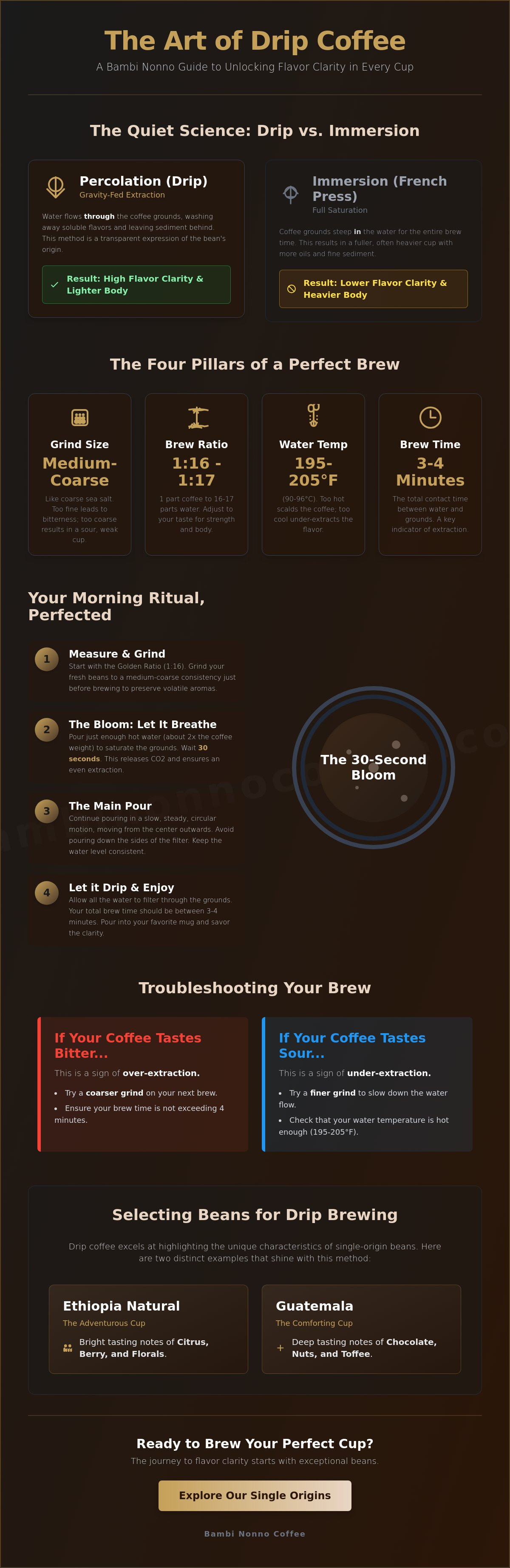
Drip coffee is more than just a morning necessity; it is a quiet conversation between water and bean. At its heart, this is a method of gravity-fed extraction. Unlike immersion methods like the French Press where grounds sit in water, drip relies on percolation. Water flows through the coffee, washing away the complex flavors and leaving the sediment behind. This process highlights a distinct clarity of flavor that other methods often mask with a heavy, oily body.
Our preference for this method grew from years of quiet habits and travel. We've found that specialty coffee truly finds its voice when brewed this way. It allows the subtle stories of the land to emerge. When you choose a drip-brewed coffee, you aren't just making a drink. You're practicing a grounded ritual that honors the journey from the farm to your favorite ceramic mug.
To better understand this concept, watch this helpful video:
Manual Pour-Over vs. Automatic Drip: Choosing Your Pace
Manual pour-over is a meditative act. You control the bloom, the tilt of the kettle, and the speed of the stream. It requires patience and a steady hand. However, the world of coffee has evolved. High-end automatic drip makers now mimic this manual precision. As of May 2026, machines like the Technivorm Moccamaster or the Ratio Six are celebrated for their ability to heat water consistently and distribute it evenly. Whether you enjoy the hands-on craft or prefer the reliable ease of a machine, both paths lead to a beautiful cup. We encourage you to experiment with both to find the rhythm that fits your morning best.
The Science of Extraction and Flavor Clarity
Think of water as a gentle solvent. It pulls the delicate oils and aromatics from the grounds as it passes through. In the specialty world, we talk a lot about clarity. This is the ability to taste distinct, bright notes like the citrus in an Ethiopia Natural or the deep chocolate undertones of a Guatemala. The 2026 SCA standards now place a higher emphasis on using precise measurement tools, such as digital refractometers, to monitor this process. Extraction is the delicate balance between the strength of the brew and the total flavor yield.
How to Brew the Perfect Drip Coffee: A Step-by-Step Guide
Creating a beautiful cup at home starts long before the water hits the grounds. It begins with the selection of freshly roasted coffee beans that still carry the vibrant oils and aromas of their origin. Once you have your beans, the grind becomes your most important tool. For drip coffee, aim for a consistent medium-coarse texture, similar to sea salt. If the grind is too fine, the water will struggle to pass through, leading to over-extraction; if it's too coarse, the water will rush through, leaving the flavor behind.
Precision brings peace to your morning. We recommend the Golden Ratio, which is typically one part coffee to 16 or 17 parts water. This balance ensures the brew is neither too heavy nor too thin. Water quality is equally vital, as it makes up nearly 98% of your cup. Use filtered water heated to between 195 and 205 degrees Fahrenheit. Following these steps for how to make drip coffee will transform a simple caffeine fix into a moment of genuine discovery. If you ever feel stuck or want to share your results, you can always reach out to us for a little guidance.
The Art of the Bloom: Why Bubbles Matter
The bloom is the most sensory part of the process. When hot water first touches the grounds, you'll see them swell and bubble. This is the degassing process, where trapped carbon dioxide escapes. Give it 30 seconds of quiet attention. This brief pause is not just for show; it prevents channeling, which is when water finds a narrow path through the grounds rather than soaking them evenly. A proper bloom ensures every grain contributes to the final flavor.
Mastering the Pour and Extraction Time
If you're using a manual dripper, use a steady, circular pour. This motion keeps the coffee slurry agitated and ensures the water extracts flavor from the center and the edges equally. Your total brew time should land between 3 and 4 minutes. Use your palate as the final judge. If the coffee tastes unpleasantly bitter, try a slightly coarser grind next time. If it tastes sour or thin, go a bit finer. It's a journey of small adjustments that lead to your perfect cup.
Elevating the Experience: Selecting Beans for Drip Brewing
The beans you choose define the soul of your morning. While the mechanics of drip coffee provide the structure, the origin of the bean provides the story. An Ethiopia Natural often brings bright, berry-like notes that dance on the palate. In contrast, a Guatemala offers a grounded, cocoa-toned warmth. This clarity is the result of the science of coffee, where the drip method filters out heavy sediments to let these delicate profiles shine.
Roast levels also play a starring role in your ritual. A light roast celebrates the raw acidity and floral characteristics of high-altitude farms. Conversely, a well-crafted house blend coffee provides a comforting depth. It's the perfect companion for those quiet mornings when you need a familiar, steady rhythm. Every bean carries the fingerprint of its processing method and the altitude where it grew, waiting for your brew to release its secrets.
Single-Origin vs. Signature Blends for Drip
Choosing between a single-origin and a blend depends on your mood. Single-origins offer a window into a specific terroir, capturing a unique moment in geography. Blends, however, are about the art of balance and consistency. Our 6 bean blend is a great example of complexity. Drip brewing slowly unravels these layers, revealing a harmony of flavors that a single bean might not achieve alone. It's a reliable choice for a daily ritual that never feels dull.
The Ritual: Making Coffee a Moment of Discovery
Treat your brewing as a daily passport. Every cup is a chance to travel to the mountains of Nicaragua or the plateaus of Bali without leaving your kitchen. Since specialty coffee is now a mainstream standard for home brewers, you have access to incredible diversity. Keeping a simple brew journal can help you track these discoveries. Note the temperature, the bean, and how the flavors changed as the cup cooled.
Try your coffee black first. Even if you usually prefer a splash of cream, taking one sip of the pure brew allows you to appreciate the subtle notes of the harvest. Ultimately, the best cup of coffee isn't defined by a score or a price tag. It's the one that makes you pause, breathe, and feel truly present in the moment.
Your Journey to a More Mindful Morning
Your morning ritual is a chance to slow down and connect with the stories hidden inside every bean. By mastering the bloom and fine-tuning your extraction, you've turned a simple habit into a moment of genuine discovery. The clarity of drip coffee ensures that whether you choose a bright single-origin or a soulful blend, every subtle note is allowed to shine through and be appreciated.
We are dedicated to providing beans that are small-batch roasted for peak freshness and responsibly sourced from high-altitude forests. To support your daily ritual, we also provide free shipping on all US coffee orders. If you're looking for guidance on choosing the right roast or want to share your brewing progress, explore our curated coffee blends to find your perfect morning ritual.
Take your time with the process and don't be afraid to experiment. The most rewarding part of brewing at home is the permission to adjust your technique until the cup tastes exactly like home to you. Every pour is a new opportunity to pause, breathe, and enjoy a quiet moment of peace before the day begins.
Frequently Asked Questions
Is drip coffee the same as pour-over coffee?
Pour-over is actually a manual form of drip coffee, as both rely on the same gravity-fed percolation principle. While an automatic machine handles the water distribution for you, a pour-over setup gives you total control over the bloom and pour speed. Both methods are designed to highlight the clarity and unique origin notes of your beans, though the manual approach feels a bit more like a meditative ritual.
What is the best grind size for an automatic drip coffee maker?
A medium-coarse grind, similar to the texture of sea salt, is the sweet spot for most automatic machines. If your drip coffee tastes unpleasantly sharp, your grind might be too fine, causing the water to linger too long. Conversely, a grind that is too coarse will let the water rush through, resulting in a thin, sour cup that lacks the soul of the bean.
How much coffee should I use for a standard 12-cup drip machine?
For a full 12-cup carafe, you should use approximately 60 to 70 grams of coffee to maintain a balanced extraction. It's helpful to remember that a "cup" on a coffee maker is usually 5 ounces rather than a standard 8-ounce measuring cup. Sticking to the 1:16 ratio ensures your brew has enough body to satisfy without becoming overwhelming or muddy.
Why does my drip coffee taste bitter or burnt?
Bitterness usually signals over-extraction, which often happens if your water is hotter than 205 degrees Fahrenheit or your grind is too fine. If the coffee tastes "burnt" after sitting, the culprit is likely the heated warming plate on your machine. Try transferring your fresh brew into a thermal carafe immediately to protect those delicate, high-altitude flavors from scorching.
Can I use espresso beans for drip coffee?
You can certainly use beans labeled for espresso, as that term usually refers to the roast profile rather than the bean itself. These roasts are often darker and more developed, which can provide a comforting, low-acid experience in a drip format. However, if you're looking for the bright, floral notes of an Ethiopia Natural, a lighter roast specifically intended for filter brewing might be more rewarding.
How often should I clean my drip coffee maker for the best flavor?
You should deep clean and descale your machine every one to three months to prevent mineral buildup and old oils from ruining your cup. Coffee oils can become rancid over time, masking the true taste of your specialty beans with a stale, metallic tang. A simple monthly maintenance routine ensures that your daily ritual remains a moment of pure discovery and fresh flavor.