

Roasted Coffee Beans: A Guide to Finding Your Perfect Daily Ritual
You bought a beautiful bag of single-origin beans, waited for a quiet Saturday morning, and yet the first sip tasted more like burnt toast than the jasmine and stone fruit promised on the label. It feels like a small betrayal when your daily ritual doesn't live up to the investment, especially as the cost of a good morning cup continues to rise. We've all been there, standing in front of a shelf feeling more confused by the labels than inspired by them.
Finding the right roasted coffee beans isn't just about picking a name you recognize; it's about understanding how the heat of the roaster interacts with the soul of the soil. This guide will help you choose the perfect roast profile for your favorite brewing method and teach you the simple secrets to keeping that flavor alive until the very last scoop. We'll look at the relationship between origin and roast levels, decode the terminology that often feels like a barrier, and master the art of freshness so every cup feels like a shared story.
Key Takeaways
- Discover how the careful application of heat unlocks hidden sugars and oils, transforming green seeds into the vibrant roasted coffee beans that define your morning ritual.
- Learn to distinguish between roast profiles and understand why lighter roasts are the perfect way to taste the unique terroir and character of a specific origin.
- Identify the ideal roast level for your favorite brewing method to balance acidity and body for a more consistent home extraction.
- Master the timing of your brew by understanding degassing and why most specialty beans reach their peak flavor window between 7 and 21 days post-roast.
- Protect the integrity of your coffee with simple storage habits that keep your beans at their most aromatic from the first cup to the last.
The Transformation: From Green Seed to Roasted Coffee Bean
Before they reach your grinder, every bean starts as a dense, green seed with very little aroma. It's the fire that brings them to life. Through the coffee roasting process, we apply controlled heat to unlock the sugars and oils hidden deep inside the cellular structure. This isn't just a mechanical step; it's a craft that requires patience and a keen ear for the subtle changes happening inside the drum.
One of the most critical moments in the roaster is the "First Crack." It sounds like popcorn popping as the beans expand and release moisture. This physical reaction signals that the bean has developed enough to become drinkable specialty coffee. At Bambi Nonno Coffee, we view this transformation through a lens of multicultural exploration. Our approach to roasted coffee beans is shaped by years of travel and the quiet, daily habits we've observed in kitchens around the world. We don't just roast for caffeine; we roast to honor the journey from the farm to your table.
To better understand how these choices impact your morning cup, watch this helpful video:
The Maillard Reaction and Flavor Development
The Maillard reaction is the chemical magic where amino acids and reducing sugars react under heat to create hundreds of complex aromatic compounds. The length of the roast determines whether you'll taste bright, sparkling acidity or a heavy, syrupy body in your final cup. We always look for the "sweet spot" where the unique character of the origin meets the warmth of the roast without overshadowing the bean's natural terroir.
Why Small-Batch Roasting Matters for Quality
Industrial roasting often prioritizes volume over nuance, but we prefer a more intimate approach. Smaller loads allow for even heat distribution and give us the control to remove beans with minor defects that larger machines might miss. You can read more about how our personal relationships and history drive these choices in our story. By using precise roast profiles, we ensure that the specific flavor you love remains consistent, even as different harvests arrive from the mountains of South America or the highlands of Africa.
Finding Your Profile: Comparing Roast Levels and Tastes
Your choice of roasted coffee beans acts as the foundation for your morning ritual. It's the difference between a bright, sparkling wake-up call and a warm, comforting hug in a mug. While many people choose based on "strength," the real magic lies in the balance between the bean's origin and the roasting profile. Professional roasters carefully adjust roasting techniques and temperatures to either preserve the delicate acids of the soil or develop the heavy sugars that lead to a smoky finish.
Matching your roast to your mood can transform a simple cup into a moment of intentionality. Use bright, floral roasts when you need to spark focus and creativity. Reach for deep, bold roasts when you're seeking comfort and a slower pace. It’s a quiet discovery that changes with the seasons of your life.
Light to Medium: Celebrating Single-Origin Terroir
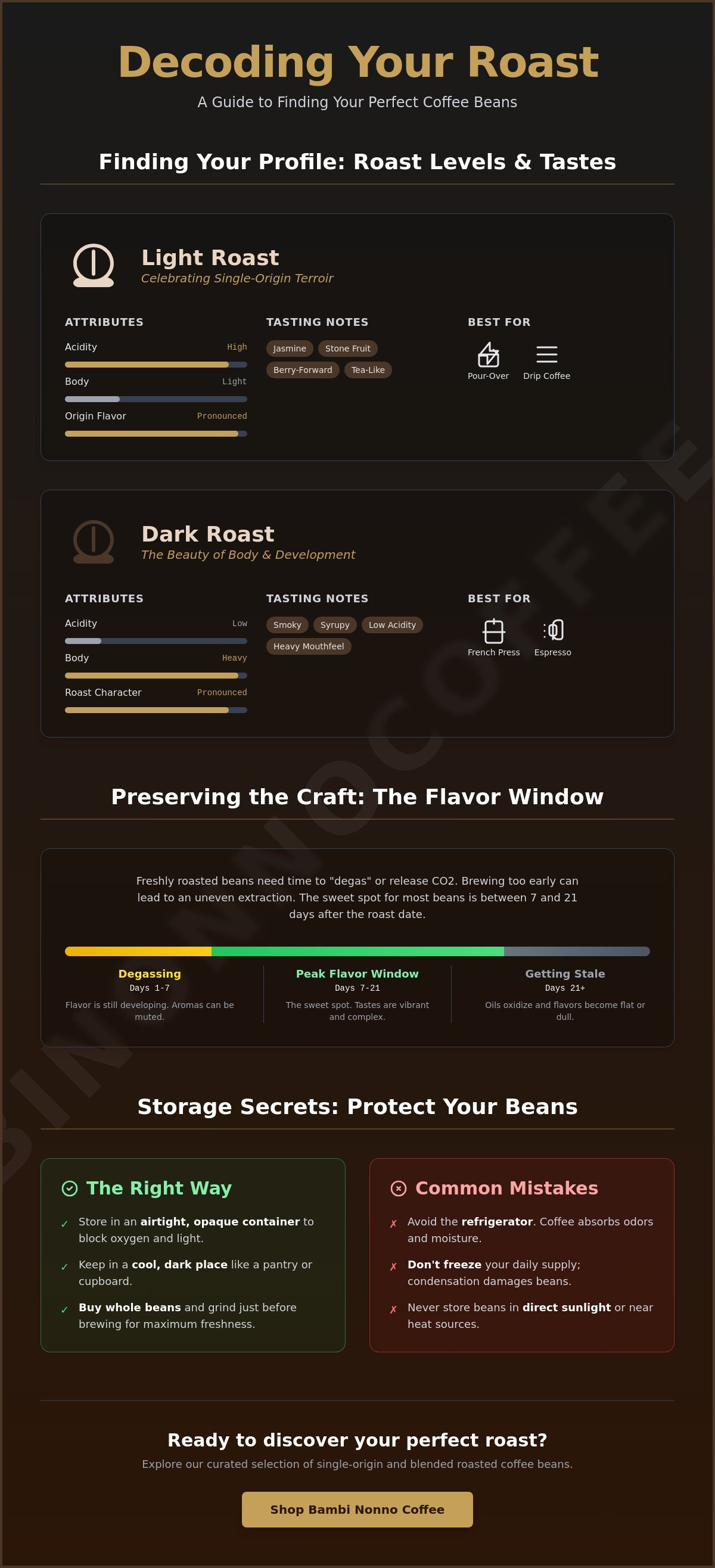
Lighter roasts are designed to let the "terroir" speak. This term encompasses the soil, altitude, and climate where the coffee grew. Our Ethiopia Natural is a beautiful example of this, offering berry-forward notes and a tea-like complexity that would be lost in a darker roast. These beans excel in pour-over and drip coffee setups where clarity is key. When you brew, pay attention to the "bloom." This initial release of gases is particularly vibrant in lighter beans and requires a steady, patient hand to ensure perfect extraction.
Dark Roasts: The Beauty of Body and Development
Darker roasts prioritize "roast character" over the raw fruitiness of the bean. The Italian Roast is a technical style that focuses on low acidity and high caramelization, creating a heavy mouthfeel. These are perfect for a French Press or espresso, where you want that thick, syrupy texture. We often use blends for our darker profiles to ensure a consistent, reliable flavor that reminds you of home, no matter where you are. If you're unsure which profile fits your home setup, feel free to reach out for a personal recommendation.
Preserving the Craft: Freshness and Home Storage
Once the heat of the drum fades, a new and quieter process begins. You might be tempted to tear into a bag of roasted coffee beans the moment they arrive, but patience is a final ingredient in the roasting craft. Freshly roasted beans need time to "degas," a process where they release carbon dioxide that can otherwise interfere with your extraction and leave you with a sharp, metallic taste.
Most specialty coffees hit their peak flavor window between 7 and 21 days after they leave the roaster. During this time, the internal chemistry stabilizes, allowing the nuanced notes we worked so hard to develop to truly shine. As the National Coffee Association suggests, the way you handle these beans at home is just as vital as the roast itself. Don't let the fear of staling push you to use the freezer. The moisture and fluctuating temperatures inside a fridge or freezer are the natural enemies of quality coffee, often leading to condensation that ruins the oils.
The Science of Staling: Air, Light, and Moisture
Oxidation is a relentless process that breaks down the volatile oils responsible for the beautiful aromas that fill your kitchen. To fight this, always keep your beans in an airtight, opaque container stored in a cool, dry spot away from the stove or direct sunlight. That little one-way valve on your coffee bag isn't just for smelling the roast; it's a functional tool that lets gases escape while preventing oxygen from entering and dulling the flavor profile.
Whole Bean vs. Pre-Ground: The Final Frontier
Grinding your coffee dramatically increases its surface area, which accelerates the loss of flavor. We always recommend grinding just before you brew to preserve the vibrant, travel-inspired notes found in our single origin selections. If you don't have a grinder at home yet, try buying smaller bags more frequently. It's better to finish a fresh, small bag than to let a larger bulk bag sit until it tastes flat and tired. A "buy small, buy often" mentality ensures that every cup is as vibrant as the day it was roasted.
Consider your coffee as a living thing that changes every day. The best way to honor the farmer's labor is to brew only what you'll enjoy in the moment, letting the ritual of the grind be your daily invitation to slow down and breathe.
Crafting Your Signature Coffee Moment
Choosing the right roasted coffee beans is more than a simple grocery run; it's an act of care for your future self. We've seen how the delicate balance of heat and time can either highlight the bright terroir of a single origin or develop the comforting, syrupy body of a dark roast. By respecting the degassing period and storing your coffee in a cool, dark place, you protect the travel-inspired flavor profiles that make every cup a small escape.
At Bambi Nonno Coffee, we believe the best coffee is the one that makes you want to linger a little longer over the steam. Our beans are small-batch roasted in 2026 to ensure you receive them at the height of their vibrancy. We also offer free shipping on all US coffee orders, making it easier to keep your pantry stocked with fresh, intentional choices. Whether you're chasing the berry notes of an Ethiopian natural or the deep caramel of a dark blend, your perfect ritual is waiting to be found.
Discover your next favorite ritual in our collection of small-batch roasts.
Next time you brew, take a moment to notice the aroma as the water hits the grounds. It’s a quiet reminder that the most meaningful parts of our day are often the ones we create for ourselves.
Common Questions About Your Daily Brew
How long do roasted coffee beans stay fresh?
Your roasted coffee beans are at their most vibrant between 7 and 21 days after they leave the drum. While they don't "spoil" in a way that makes them unsafe to drink for several months, the delicate oils and complex aromatics begin to fade significantly after the four-week mark. To enjoy the full story of the bean's origin, it's best to buy smaller quantities that you can finish within this peak window.
Is a dark roast stronger than a light roast in terms of caffeine?
Light roasts actually contain slightly more caffeine when measured by volume because the beans are denser and have spent less time under high heat. Dark roasts possess a bolder, more bitter flavor profile that many people associate with "strength," but the roasting process actually burns off a tiny amount of caffeine and bean mass. If you're looking for the most caffeine to start your morning, a bright, light-roasted single origin is your best bet.
What is the roast date and why is it more important than an expiration date?
The roast date is a marker of transparency that tells you exactly when the beans were brought to life. Most commercial coffees only provide an expiration date, which is often set a year into the future and tells you nothing about the flavor's peak. Knowing the roast date allows you to manage the degassing period and ensures you're brewing when the sugars and oils are at their most balanced and aromatic.
Can I use any roasted bean for espresso?
You can use any bean for espresso, though the roast profile will change how you need to "dial in" your machine. Traditional espresso often uses darker roasts because they're easier to extract and provide a syrupy, heavy body. Lighter roasts are becoming popular for espresso enthusiasts who enjoy high acidity and fruit-forward notes, though they require more precision with temperature and grind size to avoid a sour taste. Experimenting with different profiles is part of the joy of the craft.