

Italian Roast Coffee Beans: A Buyer’s Guide to Old-World Boldness
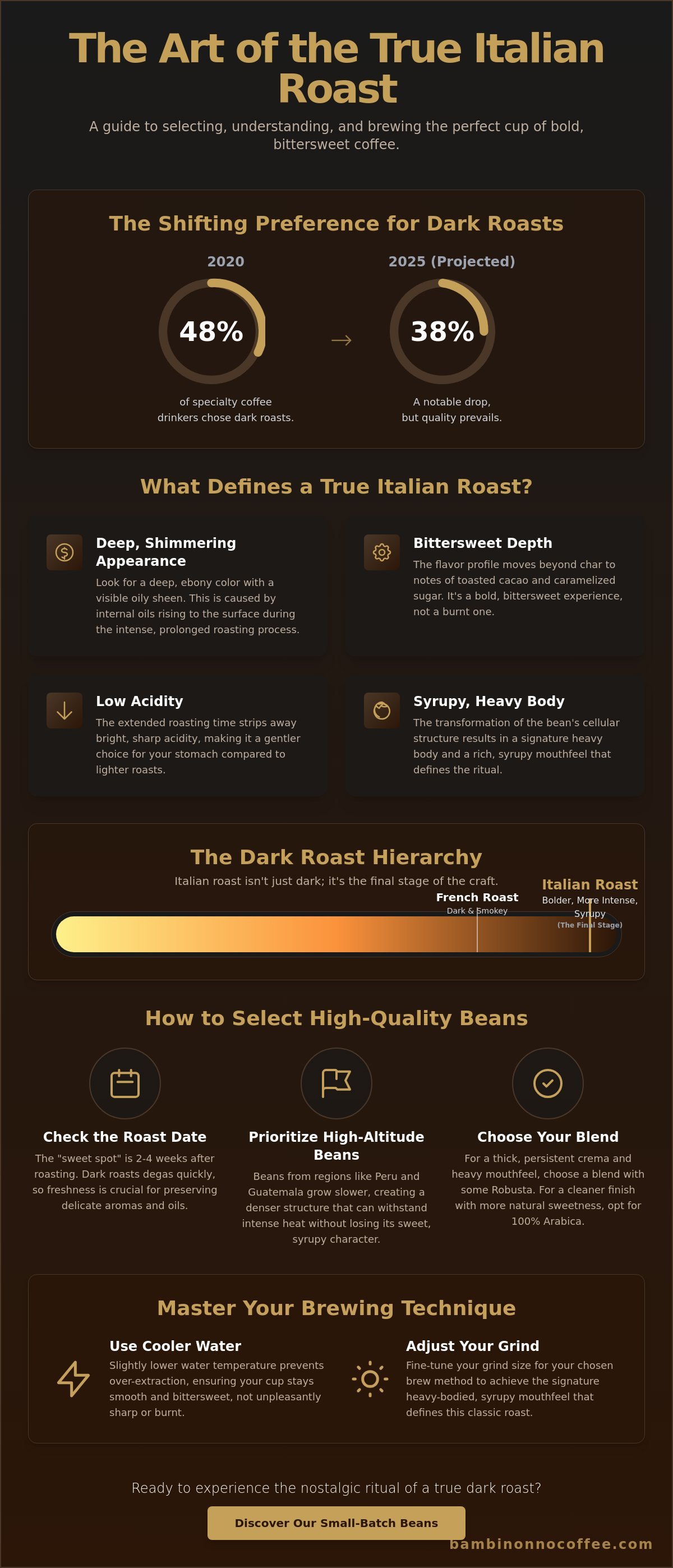
In 2025, only 38% of specialty coffee drinkers chose dark roasts, which is a notable drop from 48% in 2020. It's easy to see why when so many bags of italian roast coffee beans taste more like charcoal than a carefully crafted drink. You've likely felt that frustration before; you're looking for a bold, heavy cup but end up with something thin, bitter, and oily enough to clog your grinder. A true dark roast isn't a way to hide poor quality beans. Instead, it's a nostalgic, deliberate ritual that prioritizes a syrupy body and bittersweet depth over high acidity.
You deserve a morning cup that feels like a warm, familiar conversation, not a burnt mess. We'll help you find high-quality beans that honor this tradition while keeping your equipment safe from excess oils. You'll learn the subtle differences between Italian and French profiles and the specific brewing tweaks needed for a balanced extraction. We're going to explore how to source reliable small-batch beans that bring a sense of discovery to your kitchen; ensuring every sip is as rich and rewarding as the quiet, shared rituals that first made you love coffee.
Key Takeaways
- Identify authentic italian roast coffee beans by their deep ebony color and the rich notes of toasted cacao that emerge during the long, careful roasting process.
- Learn why the two-to-four-week window after the roast date is the "sweet spot" for enjoying these dark beans before their delicate oils and aromas begin to fade.
- Discover why high-altitude beans from regions like Peru and Guatemala are the best candidates to withstand the intense heat of an old-world roast without losing their character.
- Master the art of temperature control by using slightly cooler water to prevent over-extraction, ensuring your cup stays smooth and bittersweet rather than unpleasantly sharp.
- Explore how to adjust your grind size for different methods to achieve that signature heavy-bodied, syrupy mouthfeel that defines a truly soulful morning ritual.
What Defines a True Italian Roast Coffee Bean?
When you pull a bag of italian roast coffee beans from the shelf, the first thing you'll notice is the shine. These beans aren't just dark; they're a deep, shimmering ebony. This happens because the roasting process is pushed to its limits, forcing the internal oils to the surface. It's a delicate dance between heat and time that transforms the cellular structure of the bean. This physical transformation is what gives the coffee its signature syrupy mouthfeel and heavy body.
To better understand the visual and technical differences between these dark profiles, watch this helpful video:
Don't let the dark color fool you into thinking it's just bitter. A well-executed Italian roast moves past the char and into a world of toasted cacao and caramelized sugar. Because the beans spend more time in the roaster, much of the bright acidity is stripped away. This makes it a gentle choice for your stomach compared to lighter, high-acid roasts. At Bambi Nonno Coffee, we prioritize a slow and low approach in our small-batch roasting to ensure the beans develop sweetness without tasting like ash. Commercial roasters often rush this process with high heat, which is why some store-bought italian roast coffee beans can feel flat or overly burnt.
Italian Roast vs. French Roast: The Dark Roast Hierarchy
Think of these as two different chapters in the same book. French roast is dark and smokey, but Italian roast goes even further. It's the final stage of the dark roast hierarchy. The roaster waits for the second crack to fully subside, pulling the beans just before they lose their soul to the fire. It results in a cup that is more intense, more syrupy, and undeniably bolder than its French counterpart. It's the peak of the roasting craft.
The Nostalgia of the Dark Roast Ritual
For us, this roast isn't just a product; it's a bridge to the past. It's the smell that filled the kitchen during the quiet morning moments we talk about in Our Story. When you brew these beans, the aroma is heavy and hushing. It’s a sensory experience that invites you to slow down. It’s about the ritual of the grind and the first sip that connects you to generations of coffee lovers who found comfort in this exact same boldness. Every cup is a reminder that good things take time and patience.
How to Select High-Quality Italian Roast Beans
Finding a bag of italian roast coffee beans that isn't just a charred mess requires a bit of detective work. Because these beans are roasted longer, they become more porous and degas much faster than lighter roasts. You'll want to find a bag with a roast date within the last 14 to 28 days for the best experience. If the bag lacks a one-way valve, those delicate, toasty aromatics have likely already escaped into the air long before you opened it.
You might notice a heavy, shimmering sheen on the surface of the beans. Don't worry; that's not a defect. It's a natural byproduct of the bean's cell walls breaking down during the final stages of the roast. This oil carries the very flavors you're looking for. As mentioned in the National Coffee Association's guide to roast levels, this oily finish is the primary visual marker of an authentic dark roast. If the beans look dry and dull, they're likely past their prime.
Not all beans are built for this intensity. We prefer sourcing from high-altitude regions like Peru or Guatemala. These beans grow slower in cooler mountain air, resulting in a denser structure that can stand up to high heat without losing its character. This density ensures your cup remains sweet and syrupy rather than thin and bitter.
The Arabica vs. Robusta Balance
Traditional blends often include a small percentage of high-quality Robusta to help produce a thick, persistent crema. It's a classic choice for those who love a heavy mouthfeel. If you prefer a cleaner finish with more natural sweetness, look for 100% Arabica options. Both have their place in the morning ritual; it just depends on the texture you're chasing in your favorite mug.
Ethical Sourcing in Dark Roasts
Bean density is best achieved through high-altitude forest sourcing, which also protects local ecosystems. Responsible sourcing is the practice of building long-term, transparent relationships with growers to ensure both the land and the community thrive for generations. If you ever have questions about where your favorite blend started its journey, feel free to reach out to us anytime. We love sharing the stories behind the beans.
Brewing the Perfect Cup: From Espresso to Drip
Many people assume italian roast coffee beans are strictly for espresso machines. While they do produce a beautiful, thick crema, limiting them to a tiny shot misses half the story. You can achieve a deeply satisfying, syrupy cup using a standard drip brewer or a pour-over if you adjust your technique. Because these beans are more soluble than lighter roasts, they give up their flavors quickly. If you use water that is too hot, you'll pull out those harsh, ashy notes you're trying to avoid.
Aim for a water temperature between 195°F and 200°F. This slight drop from boiling protects the delicate oils we discussed earlier. Your grind size should also match your patience. If you're using a Moka Pot, which is perhaps the most soulful way to enjoy this roast at home, go for a medium-fine consistency. For a standard drip machine, a medium grind works best to ensure the water flows through at a pace that captures sweetness without the bite.
Brewing Methods for Deep, Syrupy Body
The French Press is a favorite for those who love a heavy mouthfeel. To get it right, use a coarse grind and don't skip the bloom. Even with dark roasts, pouring a small amount of water over the grounds and waiting 30 seconds allows trapped gases to escape. After the bloom, pour the rest of your water and let it steep for exactly four minutes. This method highlights the toasted cacao notes and creates a cup that feels substantial and comforting.
Pairing Your Roast with the Moment
A bold roast deserves a companion that can stand up to its intensity. We love pairing a fresh brew with a piece of 70% dark chocolate or a crisp almond biscotti. If you prefer a softer start to your morning, a splash of heavy cream interacts beautifully with the caramelized sugar profile of the beans. It’s about creating a small, quiet pocket of peace in your day. When you're ready for your next discovery, feel free to explore the Bambi Nonno Coffee collection to find your perfect match.
To keep your ritual tasting fresh, remember that those surface oils are sensitive. Store your beans in an airtight container in a cool, dark cabinet rather than on the counter. Exposure to light and air can turn those rich oils rancid in just a few days. Treat your beans with a little extra care, and they'll reward you with a perfect cup every single morning.
Start Your Own Tradition of Bold Mornings
You've seen how the right italian roast coffee beans can transform a simple morning into a deeply meaningful ritual. By choosing beans sourced from high-altitude responsible forests, you ensure that the bold, bittersweet profile is backed by density and quality. We've explored the importance of keeping your brewing temperatures slightly lower and recognizing the shimmering sheen of fresh oils as a sign of craftsmanship rather than a defect.
Our approach at Bambi Nonno Coffee is built on these quiet, shared moments. We small-batch roast every order to ensure maximum freshness reaches your kitchen. To make your journey even easier, we provide free shipping on all US coffee orders. Whether you're using a classic Moka Pot or a French Press, you're now ready to brew a cup that truly honors the old-world tradition of dark roasting.
If you're ready to elevate your daily habit, discover the deep traditions of our small-batch Italian roast and let us know how we can help you find your perfect match. We can't wait to hear about your next great cup.
Frequently Asked Questions
Is Italian roast coffee the strongest coffee?
Italian roast is considered the strongest in terms of flavor intensity and mouthfeel, but not caffeine. The long duration in the roaster creates those deep, bittersweet notes that dominate the palate. It's the perfect choice for drinkers who want a cup that feels substantial. This intensity comes from the caramelization of sugars, providing a bold experience that lingers much longer than a bright, acidic light roast.
Does Italian roast have more caffeine than light roast?
No, light roasts generally have more caffeine when measured by volume. As italian roast coffee beans are subjected to high heat, they lose roughly 20% of their mass. While caffeine is heat-stable, the physical expansion of the bean means you get less caffeine per scoop. If you're looking for a morning jolt, a light roast might be more effective, but the dark roast offers a much smoother, lower-acid ritual.
Why are my Italian roast beans so oily?
Those oils appear because the intense heat of the dark roast breaks down the bean's internal structure. This allows the natural oils to travel from the center to the surface. It’s a sign of a true dark roast, providing that signature syrupy texture you love. However, these surface oils react quickly with oxygen. To keep the flavor fresh, store your beans in a cool, dark place and use them within four weeks.
Can I use Italian roast beans in a regular drip coffee maker?
You can definitely use italian roast coffee beans in your daily drip brewer. To get the best results, use a medium-coarse grind and slightly cooler water to prevent the cup from becoming overly bitter. This method produces a heavy-bodied, comforting coffee that pairs perfectly with a slow morning. It's a great way to enjoy the bold tradition of a dark roast without needing a specialized espresso setup in your kitchen.