

Italian Roast Coffee Beans: A Buyer’s Guide to Old-World Boldness
The boldest cup of coffee in your morning ritual shouldn't taste like a burnt matchstick. While many enthusiasts hesitate to buy italian roast coffee beans because they fear a charcoal-like bitterness, the truth is that a masterfully roasted dark bean is a nostalgic bridge to a richer, sweeter era of brewing. You likely crave that heavy, syrupy body that lingers on the palate, yet you're tired of oily beans clogging your expensive grinder or delivering nothing but smoke. We've all been there, searching for that elusive balance between intensity and clarity.
In this guide, you'll discover how to select and brew the perfect Italian roast for a bittersweet cup that honors tradition without sacrificing quality. We will navigate the confusing line between Italian and French roasts and look at why the 61.9% Arabica market share is shifting toward specialty quality in 2026. You will also learn how new EU deforestation regulations, fully applicable by December 30, 2026, are ensuring your favorite bold beans are as ethical as they are delicious. Let's find that reliable source and master the heavy-bodied extraction you deserve.
Key Takeaways
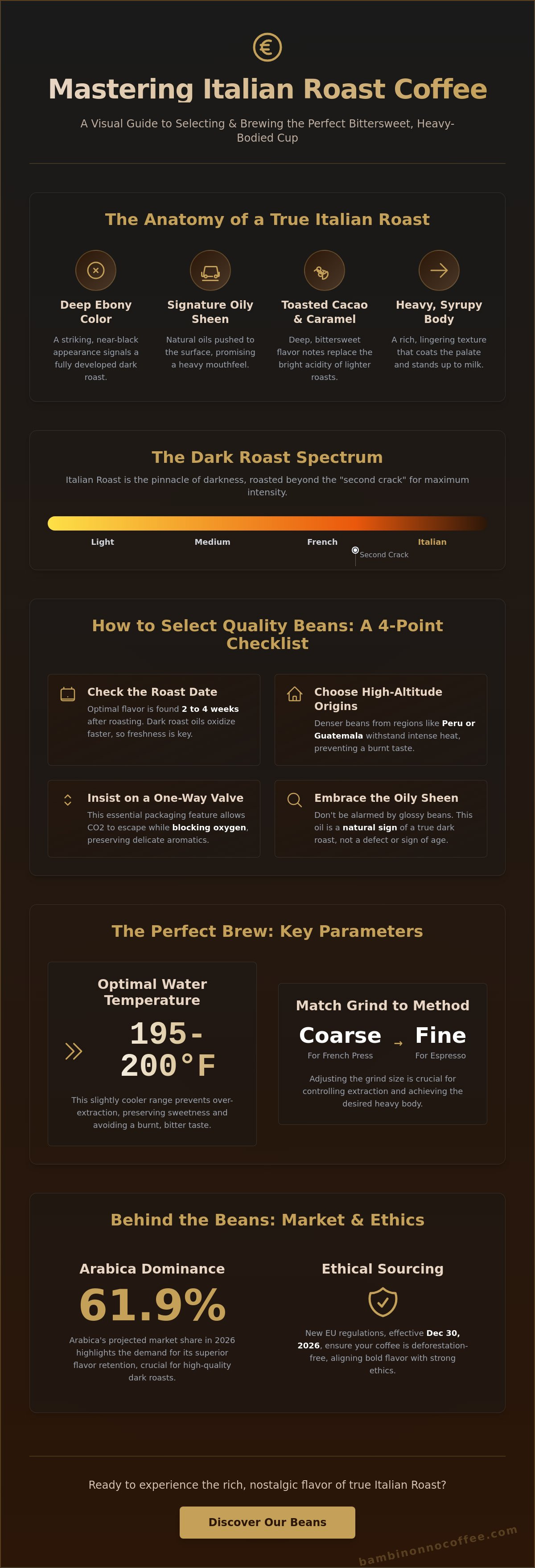
- Identify the deep ebony color and oily sheen that signal a well-crafted dark roast, moving your palate toward notes of toasted cacao and caramelized sugar.
- Select high-altitude italian roast coffee beans from places like Peru or Guatemala to ensure the bean's structure holds up against the intense heat of the roaster.
- Prioritize freshness by checking for a roast date within the last 2 to 4 weeks, as the oils in dark roasts are more prone to rapid oxidation.
- Adjust your brewing temperature to between 195°F and 200°F to prevent over-extraction, resulting in a cup that is syrupy rather than unpleasantly bitter.
- Experiment with grind sizes to match your brewing ritual, choosing a coarse setting for a rich French Press or a fine grind for a traditional, heavy-bodied extraction.
What Defines a True Italian Roast Coffee Bean?
When you hold a handful of italian roast coffee beans, you'll first notice their striking, deep ebony color. This isn't just a surface change. It's the result of a precise chemical and physical transformation that happens during the final stages of the roast. To understand the science behind What Defines a True Italian Roast, it's helpful to look at how heat restructures the bean's cell walls. This process pushes natural oils to the surface, creating that signature glossy sheen that promises a heavy, syrupy mouthfeel in your cup.
To see the visual difference between these dark roasts in action, watch this helpful video:
Beyond the look, the flavor profile shifts away from the bright, citrusy notes of light roasts. Instead, you'll find a comforting depth of toasted cacao and caramelized sugar. Because the roasting process lasts longer, much of the chlorogenic acid breaks down. This makes a dark roast significantly gentler on the stomach for many drinkers. Choosing small-batch beans over mass-produced commercial bags is vital. Large-scale operations often use high heat to speed up the process, which leaves the beans tasting like ash. A slow and low approach preserves the sweetness, especially since Arabica beans still hold a 61.9% market share as of 2026 because of their superior flavor retention.
Italian Roast vs. French Roast: The Dark Roast Hierarchy
Think of these as levels on a scale of intensity. While a French roast is dark and smoky, this specific roast level pushes even further. It waits for the second crack to fully develop, stopping just before the beans lose their soul to the fire. It's the ultimate dark roast, offering a syrupy, heavy-bodied experience that stands up beautifully to milk or cream. This roast level requires high-quality beans that can handle the heat without crumbling.
The Nostalgia of the Dark Roast Ritual
There's a specific magic in the way the aroma of italian roast coffee beans fills a kitchen. It’s a sensory bridge to the past, much like the foundation of our story at Bambi Nonno Coffee, built on the quiet, daily habits that connect generations. This ritual isn't about a quick caffeine fix. It's about the joy of discovery found through travel and the personal relationships nurtured over a shared pot. When you brew these beans, you're participating in a tradition of patience and care.
How to Select High-Quality Italian Roast Beans
Finding the right bag of italian roast coffee beans feels like a treasure hunt for the soul. You want that deep intensity without the acrid taste of charcoal. The first thing you should look for is the roast date. Because dark roasts have a more porous structure, they degas much faster than lighter beans. For the best experience, aim for a window between 2 and 4 weeks after roasting. This ensures the carbon dioxide has escaped; however, the delicate, toasty aromatics haven't yet oxidized into a stale profile.
Don't be alarmed by a glossy, wet surface on your beans. This oily sheen is a natural byproduct of the roasting process, where heat breaks down the internal cell walls and pushes lipids to the surface. It’s a sign of a true dark roast, not a defect or a sign of age. To understand the broader categories of roast levels, you can learn more about How to Select High-Quality Italian Roast Beans from industry experts. Always ensure your bag features a one-way valve. This little piece of technology allows gases to escape while preventing oxygen from entering and dulling the flavor you've been waiting for.
Origin plays a massive role in how a bean handles the roaster's flame. High-altitude beans, like those from Peru or Guatemala, possess a higher density. This physical strength allows them to withstand the high temperatures required for an Italian roast without turning to ash. If you're curious about which origin fits your brewing style, feel free to reach out for a recommendation.
The Arabica vs. Robusta Balance
You’ll often find a mix of beans in traditional dark blends. Some roasters include high-quality Robusta to boost the crema and body, which is a favorite for those who love a thick mouthfeel. However, a 100% Arabica Italian roast often provides a cleaner, sweeter finish that highlights those caramelized sugar notes. It’s a matter of personal preference and how you enjoy your quiet morning ritual.
Ethical Sourcing in Dark Roasts
Dense beans grown in high-altitude forests are essential for maintaining flavor integrity during long roasts. Responsible sourcing means building direct relationships with farmers who prioritize ecological health and fair labor practices, ensuring every cup supports a sustainable future. As the EUDR regulations approach full application on December 30, 2026, this traceability becomes even more vital for the beans you enjoy.
Brewing the Perfect Cup: From Espresso to Drip
Don't limit your italian roast coffee beans to the espresso machine. While these dark beans excel under pressure, they produce a remarkably syrupy cup when used in a standard drip machine or a traditional stovetop brewer. The secret lies in managing the extraction. Because the roasting process has already done much of the work in breaking down the bean's structure, you must be gentle during the final act of brewing. If you treat a dark roast with the same aggression as a light roast, you'll likely lose the sweetness you're chasing.
Temperature control is your most powerful tool in this ritual. Aim for water between 195°F and 200°F. If your water is boiling, it will scorch the heart of your brew and leave you with a harsh, ashy finish. A slightly cooler temperature coaxes out the toasted cacao notes without the bite. Your grind size should also match your intent. Use a fine grind for your stovetop brewer to mimic that concentrated intensity, but keep it coarse for immersion methods to maintain clarity and body.
Storage is equally vital for these oily beans. Since the surface lipids are exposed to the air, they can turn rancid quickly if left in a clear jar on the counter. Keep your beans in an airtight container in a cool, dark cupboard. This simple habit preserves the toasty aromatics that make your morning feel hallowed.
Brewing Methods for Deep, Syrupy Body
The French Press is perhaps the best way to experience the full weight of a dark roast. Use a coarse grind, resembling sea salt, and start with a 30 second bloom. Even for dark roasts, this allows any remaining gases to escape so the water can fully penetrate the grounds. After the bloom, pour the remaining water and let it steep for exactly four minutes. Plunge slowly to avoid unnecessary agitation, and you'll be rewarded with a heavy, coating mouthfeel.
Pairing Your Roast with the Moment
A bold cup invites a moment of indulgence. The bittersweet notes of the roast pair beautifully with a piece of dark chocolate or a splash of heavy cream. These combinations aren't just about flavor; they're about the ritual of slowing down and enjoying the quiet spaces in your day. When you're ready to explore new horizons, you can browse the Bambi Nonno Coffee collection to find your next favorite discovery. Tomorrow morning, try adjusting your water temperature by just two degrees and notice how the sweetness evolves.
Embrace the Ritual of the Dark Roast
Choosing the right italian roast coffee beans is about more than just finding the darkest bag on the shelf. It's an invitation to slow down and honor a craft that rewards patience and curiosity. By selecting high-altitude beans sourced from responsible forests and minding your water temperature, you transform a simple cup into a syrupy, bittersweet experience that lingers long after the last sip. We small-batch roast every order to ensure you receive your coffee within that vital two to four week freshness window. To make your journey even easier, we provide free shipping on all US coffee orders.
Coffee has a unique way of connecting our past travels with our quietest daily moments, much like a conversation between generations. Whether you're perfecting your French Press technique or dusting off a stovetop brewer, the goal is always the same: a cup that feels like home. If you're ready to find your perfect match, Discover the Deep Traditions of Our Small-Batch Italian Roast. Every morning is a new opportunity to explore the depths of a bold, well-crafted brew.
Frequently Asked Questions
Is Italian roast coffee the strongest coffee?
Italian roast is the strongest in terms of sensory impact and flavor intensity, though not necessarily caffeine. The long duration roasting creates a deep, smoky profile that stands out even when mixed with heavy creams. If you enjoy a cup with a syrupy body and notes of toasted cacao, this is the most intense experience you'll find. It's perfect for those who want their morning ritual to have a bold, unmistakable presence.
Does Italian roast have more caffeine than light roast?
Contrary to popular belief, Italian roast doesn't have more caffeine than a light roast. In fact, the prolonged exposure to high heat causes the beans to lose density and a small amount of caffeine content. While a 100% Arabica bean still provides a steady energy boost, the perceived strength of italian roast coffee beans comes from their bittersweet flavor rather than a higher concentration of caffeine per bean.
Why are my Italian roast beans so oily?
The oily surface is a sign that the italian roast coffee beans have been roasted long enough to break down their internal cell walls. This process, which happens after the second crack, pushes natural lipids to the surface of the bean. It isn't a defect; instead, it's the source of the rich, coating mouthfeel you crave. Just remember to use these beans within 2 to 4 weeks to keep those oils from turning stale.
Can I use Italian roast beans in a regular drip coffee maker?
Yes, you can enjoy a beautiful cup of dark roast using a regular drip machine. The key is to manage your extraction by using slightly cooler water, ideally between 195°F and 200°F, to prevent the brew from becoming too acrid. Many hobbyists prefer this method because it offers a cleaner way to experience the caramelized sugar notes without the intense concentration of a traditional espresso shot. It’s a simple way to elevate your daily habit.