

Italian Roast Coffee Beans: A Buyer’s Guide to Old-World Boldness
The darkest roast in the shop isn't a mistake; it's a bridge to a slower, more intentional way of living. You've likely felt the frustration of bringing home a bag of italian roast coffee beans only to find they taste more like charcoal than a premium brew. It's a common struggle, especially since the average price for a pound of coffee hit $9.61 in March 2026 after a 20% price surge during the 2025 calendar year. You want that heavy, syrupy body and bittersweet finish, not a clogged grinder or a bitter disappointment.
We understand that a good cup of coffee is about more than just caffeine; it's a ritual that connects us to our favorite memories and the people we love. Since there are no official or regulated standards defining an Italian roast as of May 2026, finding the right beans requires a bit of curiosity and a master roaster's eye for detail. This guide will help you distinguish this style from a French roast and teach you how to brew a cup that honors tradition. You'll discover how to choose small-batch beans that deliver a rich, old-world boldness every single morning.
Key Takeaways
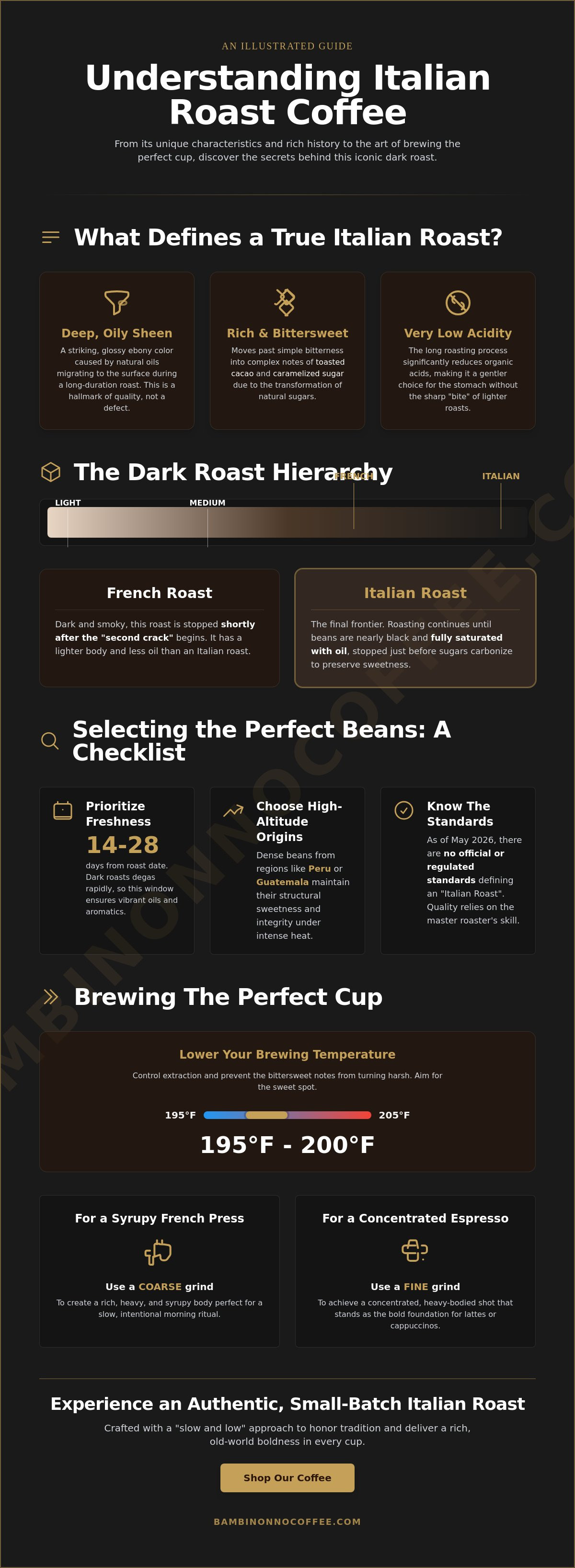
- Identify authentic italian roast coffee beans by their deep ebony color and visible oily sheen, which signal a flavor profile of toasted cacao and caramelized sugar.
- Prioritize freshness by checking for a roast date within the last two to four weeks, as dark roasts degas more rapidly than lighter varieties.
- Select high-altitude beans from origins like Peru or Guatemala; these dense seeds maintain their integrity and sweetness even under the intense heat of a long-duration roast.
- Lower your brewing temperature to between 195°F and 200°F to control extraction and prevent the bittersweet notes from turning unpleasantly harsh.
- Match your grind size to your preferred ritual, using a coarse setting for a syrupy French Press or a fine grind for a concentrated, heavy-bodied espresso.
What Defines a True Italian Roast Coffee Bean?
When you hold italian roast coffee beans in your hand, you'll immediately notice their striking, glossy appearance. They aren't just dark; they're a deep, shimmering ebony. This characteristic shine comes from the natural oils that migrate to the surface during a long-duration roast. While some worry these oils might impact a grinder, they're actually the hallmark of a bean that has been pushed to its flavor limits to achieve a heavy, syrupy body.
Understanding the coffee roasting process helps explain why these beans look so different from a light or medium roast. During the heat cycle, the cell structure of the bean expands and eventually releases these oils through a series of chemical transformations. This isn't just about color; it's about a complete structural change that defines the mouthfeel of your morning cup.
To see the visual difference between these dark roast stages, watch this helpful video:
Forget the idea that dark means burnt. A high-quality Italian roast moves past simple bitterness into a world of toasted cacao and caramelized sugar. Because the beans spend more time in the roaster, the natural sugars undergo a deep, dark transformation. This process also significantly reduces the organic acids found in the raw seed. For many drinkers, this makes it the gentlest choice for the stomach, offering a high-impact flavor without the sharp "bite" or acidity found in lighter roasts.
At Bambi Nonno Coffee, we believe in a "slow and low" approach to this tradition. Commercial roasters often use extreme heat to speed up production, which results in beans that taste like ash or charcoal. Small-batch roasting ensures the heat penetrates the center of the bean evenly. This patience preserves the integrity of the bean, allowing you to experience a rich, bittersweet complexity that honors the craft.
Italian Roast vs. French Roast: The Dark Roast Hierarchy
Italian is essentially the final frontier of the dark roast hierarchy. While a French roast is dark and smoky, it typically stops shortly after the "second crack" begins. An italian roast coffee beans profile continues further until the beans are nearly black and fully saturated with oil. It's a delicate balance that requires a master roaster's intuition to stop the process before the sugars carbonize completely, ensuring you get sweetness rather than smoke.
The Nostalgia of the Dark Roast Ritual
This roast level is deeply tied to Our Story. It represents those quiet, early morning moments shared between generations, like a grandfather teaching a child the importance of patience. The aroma of a dark roast filling a kitchen is a sensory bridge to the past. It's a ritual that encourages you to slow down and savor the discovery of every sip, turning a simple daily habit into a moment of genuine connection.
How to Select High-Quality Italian Roast Beans
Finding the right italian roast coffee beans feels like a treasure hunt through a landscape of deep, comforting flavors. You want that nostalgic, heavy body, but you don't want the bitterness of beans that have sat on a shelf too long. Because dark roasts have a more porous cell structure, they degas much faster than lighter varieties. For the best experience, aim for a roast date within the last 14 to 28 days. This window ensures the oils are still vibrant and the aromatics haven't turned rancid or flat.
According to the National Coffee Association guide to coffee roasts, the dark stage is where origin characteristics begin to fade, but they never truly disappear. This is why the starting point matters so much. Dense, high-altitude seeds from Peru or Guatemala are sturdy enough to withstand the intense heat of a dark roast without crumbling into ash. They retain a structural sweetness that balances the smoky notes, providing a depth that commercial "burnt" coffees simply cannot match.
When you open a bag, don't be alarmed by a heavy oily sheen. This oil is a natural byproduct of the cell walls breaking down during the final stages of the roast. It's a sign of a well-developed profile, not a defect. Just make sure your bag features a one-way valve. This little piece of technology allows carbon dioxide to escape while keeping oxygen out, preserving those delicate, toasty notes until you're ready to brew. If you ever have questions about which origin suits your morning ritual best, feel free to reach out to us.
The Arabica vs. Robusta Balance
Some traditional blends include a touch of high-quality Robusta to boost the crema and body, which can be wonderful for a thick mouthfeel. However, if you prefer a cleaner, more sophisticated finish, a 100% Arabica Italian roast is the way to go. It offers a softer sweetness, often leaning toward dark chocolate or molasses, which highlights the skill of the roaster and the quality of the green coffee.
Ethical Sourcing in Dark Roasts
Density is key for a successful dark roast, and that density comes from slow maturation in high-altitude forests. Responsible sourcing is the commitment to paying premiums for high-density seeds that support both the ecosystem and the livelihoods of the farmers who grow them. This dedication to quality ensures that every cup tells a story of care and respect for the land and the people who nurture it.
Brewing the Perfect Cup: From Espresso to Drip
Many enthusiasts believe italian roast coffee beans belong exclusively in an espresso machine. It's a myth that limits the potential of these beautiful, dark seeds. Because italian roast coffee beans are physically more soluble than lighter roasts, they give up their flavors much faster during extraction. To avoid pulling out harsh or ashy notes, try using slightly cooler water between 195°F and 200°F. This small adjustment preserves the sweetness of the surface oils while preventing over-extraction.
Your grind size is the next dial to turn in your daily ritual. If you're pulling a shot, go for a fine, powdery texture. For a drip machine or a pour-over, a medium-coarse setting works best to maintain a clean finish. If you enjoy the heavy, concentrated body of a stovetop brew, the Moka Pot is often cited as the most authentic way to enjoy this style at home. Just remember to store your beans in an airtight container away from direct sunlight. Exposure to air can turn those delicate fats rancid in just a few days, robbing you of that fresh, toasty aroma.
Brewing Methods for Deep, Syrupy Body
A French Press is perhaps the best way to highlight the syrupy mouthfeel of a dark roast. Start with a coarse grind and add your water. Even with very dark roasts, a 30-second bloom phase is vital. Pouring just enough water to wet the grounds allows trapped gases to escape, ensuring the water can fully saturate the coffee during the four-minute steep. This results in a cup that feels substantial and comforting, like a warm conversation with an old friend.
Pairing Your Roast with the Moment
The bittersweet profile of an Italian roast makes it a perfect companion for rich, indulgent flavors. Try pairing your morning cup with a piece of dark chocolate or a crisp biscotti to see how the flavors dance together. If you prefer a softer experience, a splash of heavy cream can transform the smoky notes into something resembling a liquid dessert. We invite you to explore the Bambi Nonno Coffee collection to find the beans that will anchor your next quiet moment of discovery. Tomorrow, try changing your water temperature by just two degrees; you might be surprised by the new layers of flavor you uncover.
Embrace the Boldness of Your Next Morning Ritual
Choosing the right italian roast coffee beans means looking beyond the surface shine to find a heart of toasted cacao and syrupy sweetness. You've learned that freshness within 28 days is non-negotiable for dark roasts and that dropping your water temperature to 195°F can unlock a smoother, more balanced cup. These small adjustments transform a simple caffeine fix into a moment of genuine discovery, connecting you to a tradition of craftsmanship and care.
Our beans are small-batch roasted for maximum freshness and sourced from high-altitude responsible forests to ensure every seed has the density to handle the heat. Whether you're brewing a concentrated shot or a comforting drip, we make it easy to stock your pantry with free shipping on all US coffee orders. It's about more than just a product; it's about the quiet everyday moments that anchor our lives and the stories we share over a steaming mug.
If you're ready to elevate your home brewing experience, we're here to help you find your perfect match. Discover the Deep Traditions of Our Small-Batch Italian Roast and start a new ritual today. Every cup is an opportunity to slow down and savor the journey.
Frequently Asked Questions
Is Italian roast coffee the strongest coffee?
Italian roast is the strongest in terms of flavor intensity and body, but the word "strong" can be misleading for some drinkers. While it offers a deep, smoky presence and a syrupy mouthfeel, it doesn't mean it has a higher concentration of coffee solids compared to a medium roast. The perceived strength comes from the long-duration roasting process that develops those heavy, bittersweet notes that define this bold specialty style.
Does Italian roast have more caffeine than light roast?
No, Italian roast actually contains slightly less caffeine than a light roast when measured by volume. During the roasting process, beans lose about 18% to 22% of their mass as water evaporates and the bean expands. While the caffeine molecule itself is quite stable, the prolonged heat exposure slightly reduces the overall caffeine density per bean. If you prefer a gentle morning lift rather than a sharp jolt, these dark beans are an excellent choice.
Why are my Italian roast beans so oily?
Your italian roast coffee beans are oily because the intense heat has broken down the internal cellulose structure of the bean. This allows the natural lipids to migrate from the center to the surface during the final stages of the roast. It's a sign of a well-developed dark profile rather than a defect. These oils carry the essential aromatics that create the rich, toasted cacao notes that make this specific style so nostalgic and inviting.
Can I use Italian roast beans in a regular drip coffee maker?
You can absolutely use italian roast coffee beans in a standard drip machine with great success. To get the best results, ensure your water temperature stays near 195°F to prevent the brew from becoming overly bitter during the extraction. Using a medium-coarse grind will help maintain a clean finish. This method allows you to enjoy the bold, old-world profile of a dark roast even if you aren't in the mood for a concentrated espresso shot.