

Light Roast vs. Dark Roast Coffee: Finding Your Perfect Morning Ritual
Did you know that 62% of specialty coffee drinkers now reach for a medium roast, while the classic dark roast has slipped to just 38% of the market? It's easy to feel lost when staring at a wall of bags, wondering if a dark roast actually packs more caffeine or if a light roast will taste too thin in your French press. You've likely felt the frustration of buying a premium bag that doesn't quite hit the mark for your morning ritual.
This guide will settle the light roast vs dark roast coffee debate so you can choose beans that reflect your own taste for exploration. We'll break down the nuanced differences in flavor, caffeine, and roasting science while introducing the 2024 SCA Coffee Value Assessment standards that professionals use to define quality. You'll gain the confidence to pick the right roast for your pour-over or cold brew, ensuring every sip feels like a shared moment of discovery. By understanding the bean's origin story versus the roaster's signature, you'll finally find the cup that truly belongs in your hands.
Key Takeaways
- Learn how the roasting process transforms green seeds into complex beans, focusing on how heat unlocks specific chemical potentials.
- Discover the distinct flavor profiles of each roast, from the vibrant stone fruit notes of a light roast to the deep, smoky sweetness of a dark roast.
- Settle the debate over light roast vs dark roast coffee caffeine levels so you can tailor your intake to your body's needs.
- Identify which brewing gear, such as a pour-over or French press, best extracts the unique characteristics of your chosen beans.
- Gain the skills to read coffee labels with confidence, allowing you to choose the perfect single-origin or blend for your quiet morning ritual.
The Roasting Journey: From Green Bean to Your Cup
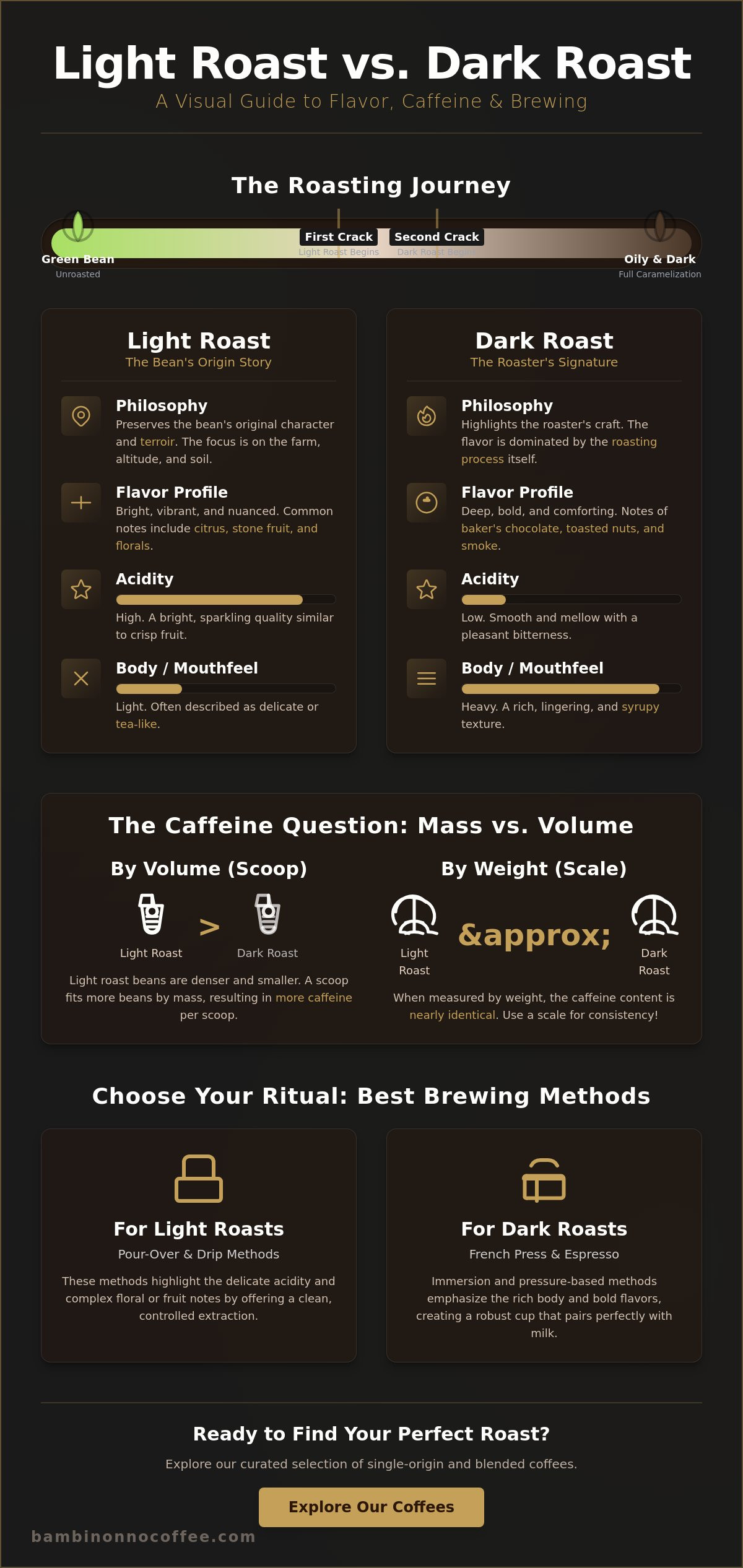
Every cup begins as a dense, green seed holding the potential for hundreds of aromatic compounds. When these seeds enter the heat, they undergo a complex physical and chemical transformation. The coffee roasting process is the bridge between the raw potential of the farm and the sensory experience in your mug. A roast profile is the specific balance between time and temperature that determines which of those flavors take center stage. Understanding the nuances of light roast vs dark roast coffee starts with the "cracks"—audible markers in the roasting drum that signal when the bean's structure is changing.
Light Roast: Preserving the Terroir
Light roasts are often called the storytellers of the coffee world because they prioritize the bean's origin over the roasting process itself. By pulling the beans shortly after the "first crack," we preserve the delicate organic acids and floral notes that reflect the soil and altitude of the farm. You can expect a tea-like body and bright acidity that shines in single-origins like our Guatemala. Whether the beans are washed or natural processed, this level of roasting respects the unique character of the harvest, offering a cup that feels vibrant and exploratory.
Dark Roast: The Roaster's Signature
As the roast continues toward the "second crack," the bean's internal sugars fully caramelize and natural oils begin to surface. This shift moves the flavor profile away from the raw fruit and toward the roaster's signature, highlighting notes of baker's chocolate and toasted nuts. This style focuses on a heavy, syrupy mouthfeel and lower acidity, creating a bold and comforting experience. It is a profile rooted in the quiet daily habit and personal connections that define our love for the craft, offering a sense of warmth and reliability in every sip.
Flavor Profiles & The Great Caffeine Debate
When you sit down with your morning cup, the flavors you perceive are a direct result of how long those beans danced with the heat. Light roasts often carry the vibrant, playful notes of citrus or stone fruit, offering a crispness that wakes up the senses. Dark roasts, on the other hand, lean into the deep, comforting embrace of molasses and smoke. The mouthfeel, or the physical weight of the liquid on your tongue, also shifts significantly. While a light roast might feel as delicate as a high mountain tea, a dark roast provides a syrupy, heavy texture that lingers long after the last sip.
The conversation around light roast vs dark roast coffee often turns to caffeine, and there's a fascinating bit of science here that most people miss. Because light beans are denser, a scoop of light roast actually contains more caffeine than a scoop of dark. It's a matter of mass versus volume. As beans roast longer, they lose water weight but expand in size, meaning a single dark roasted bean is larger but lighter than its less-toasted counterpart.
Acidity vs. Bitterness: Understanding Extraction
It's vital to distinguish between flavor acidity and stomach acidity. In the world of specialty coffee, acidity refers to a bright, sparkling quality similar to a Granny Smith apple. According to UC Davis coffee research, the roasting profile is the primary driver of these perceived chemical changes. Darker roasts move away from this brightness, instead developing a pleasant bitterness that mirrors the rich profile of high-percentage dark chocolate. If you're unsure which profile suits your palate, you can always reach out for a personal recommendation from our team.
The Science of Caffeine Density
During the roasting journey, beans lose approximately 15% to 20% of their mass. This loss of moisture makes dark roasts brittle and porous. If you measure your coffee by volume, using a standard scoop, you'll fit fewer dark beans into the space, resulting in less caffeine. For a truly consistent ritual, I recommend using a digital scale. Measuring by weight rather than volume ensures your extraction remains perfect, giving you total control over your morning energy levels.
Choosing Your Ritual: Which Roast Fits Your Morning?
Finding the right bean is about more than just flavor; it's about the moment you want to create. Your morning ritual is a personal story that shifts with the rhythm of your day. When you're deciding between light roast vs dark roast coffee, consider the tools on your counter and the energy in your home. Some mornings call for a bright spark of curiosity, while others require a warm, familiar embrace. If you prefer adding milk or sugar, dark roasts like our Italian Roast act as the perfect partner, providing a bold backbone that isn't overshadowed by dairy.
The Best Brewing Methods for Each Level
If you enjoy the slow, methodical process of a pour-over, light roasts like our Peru are your best match. The paper filter captures fine sediments, allowing the delicate extraction and floral clarity to shine through. For those who prefer a heavy, syrupy cup, the immersion of a French press is ideal. It highlights the natural oils and bold body found in a French Roast, creating a textured experience that lingers on the palate.
Bambi Nonno Coffee’s Perspective: A Roast for Every Story
At Bambi Nonno Coffee, we believe every cup is a bridge between the past and the present. Our Breakfast Blend bridges the gap for those who want a bright start without the "grassiness" sometimes found in ultra-light roasts. It's a balanced profile that honors the quiet habits we've built through years of travel and connection. Whether you prefer a modern light roast or a nostalgic dark cup, you're participating in a ritual that connects you to a global heritage and the people you love.
Try a side-by-side tasting this weekend to see how your senses react. Brew one light and one dark cup, then notice how the flavors evolve as the coffee cools. It's the simplest way to discover which roast truly speaks to your soul and fits your unique morning rhythm.
Crafting Your Next Morning Story
Every morning is an opportunity to slow down and appreciate the journey from high-altitude forests to your favorite mug. By understanding the science behind light roast vs dark roast coffee, you've moved beyond simple caffeine myths to a deeper appreciation of extraction and terroir. Whether you choose the bright clarity of a single-origin or the comforting weight of a bold blend, your choice reflects a personal connection to the craft and the quiet moments that matter most.
At Bambi Nonno Coffee, we honor this connection by small-batch roasting every order for peak freshness and ensuring responsible sourcing from the world's most vibrant growing regions. We make the journey even simpler with free shipping on all US orders, so you can focus on the ritual itself rather than the logistics. If you're ready to refine your palate or need help choosing your next bag, reach out to our team today. Your next favorite morning story is waiting to be brewed.
Frequently Asked Questions
Does dark roast coffee have more caffeine than light roast?
Light roast beans actually contain slightly more caffeine when measured by volume. Because they're denser and haven't expanded as much in the roaster, more beans fit into a single scoop. If you weigh your coffee on a scale, the caffeine content is nearly identical between the two. The bold, smoky flavor of a dark roast is often mistaken for "strength," but the physical caffeine molecule remains remarkably stable throughout the light roast vs dark roast coffee journey.
Which roast is better for people with a sensitive stomach?
Darker roasts are generally gentler on the stomach due to a specific chemical change during roasting. A 2010 study presented at the American Chemical Society revealed that dark roasted beans produce a compound called N-methylpyridinium, which helps reduce the production of stomach acid. While the bright acidity of a light roast is beautiful for flavor, it can be more taxing on your digestion. Choosing a darker profile allows you to keep your morning ritual comfortable and soothing.
Is espresso a light or dark roast?
Espresso is a brewing method, not a specific roast level, though dark roasts are the traditional choice for this style. Darker beans provide the heavy oils and rich crema that many enthusiasts look for in a concentrated shot. However, modern specialty coffee has embraced using light roast single-origin beans for espresso to highlight unique floral notes. You can use any roast you like; just be sure to adjust your extraction variables to balance the intensity of the pressure.
Why does light roast coffee sometimes taste sour?
Sourness in a light roast is typically a sign of under-extraction during the brewing process. Because light roasts are denser and less porous, they require more energy to release their sugars. If your water isn't hot enough or your grind is too coarse, you'll only pull out the organic acids, leaving the sweetness behind. In the light roast vs dark roast coffee comparison, light roasts are naturally more acidic, but a well-extracted cup should taste bright and juicy rather than sharp or vinegary.