

Single Origin vs Blend Coffee: Finding Your Perfect Daily Ritual
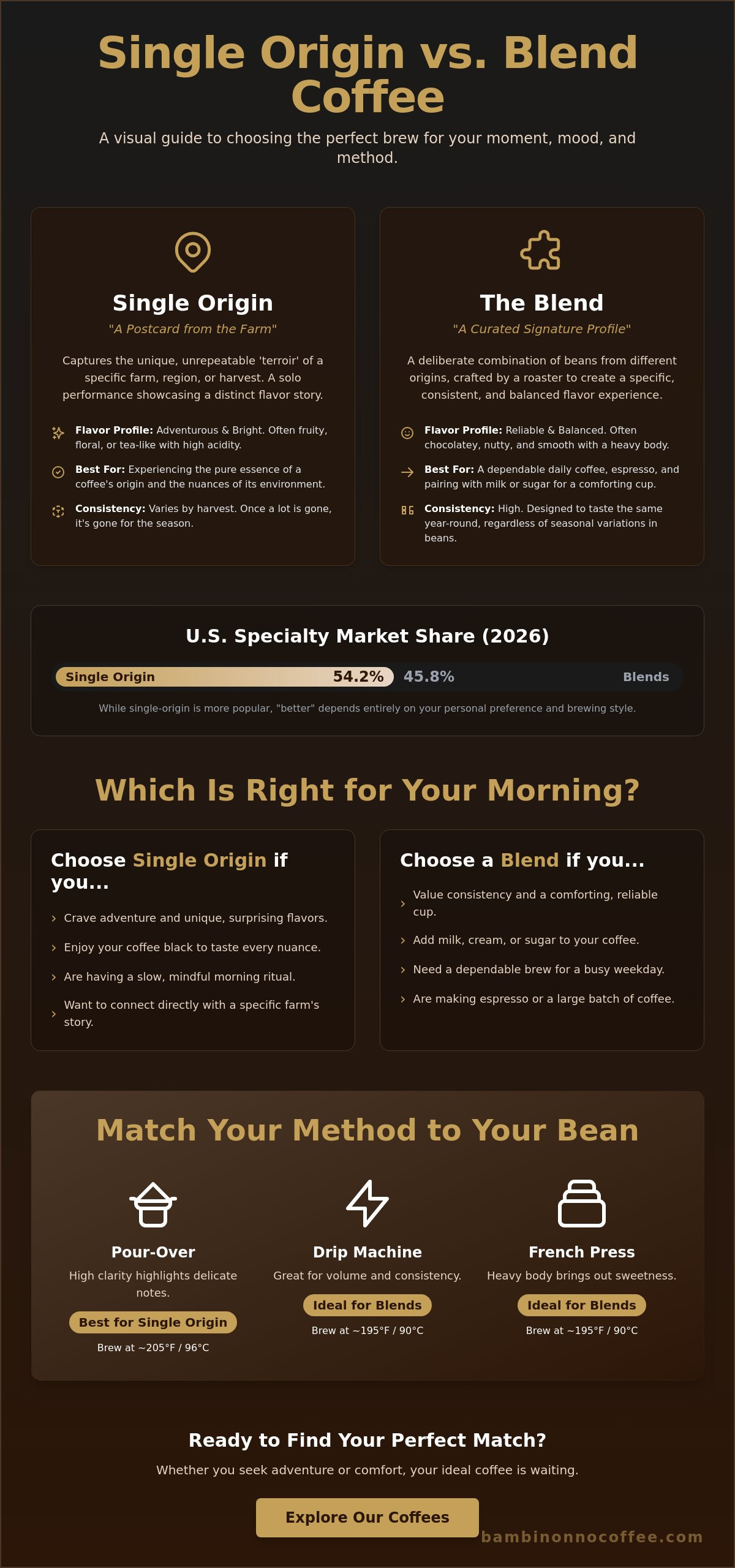
The most expensive bag of single-origin beans on the shelf might actually be the wrong choice for your Tuesday morning ritual. While single-origin coffee accounts for 54.2% of the U.S. specialty market as of 2026, higher popularity doesn't always mean it's the right fit for your specific brewer or your mood. When you're standing there comparing single origin vs blend coffee, the "better" option isn't a matter of prestige; it's about the story you want your cup to tell. You've likely felt that hesitation before, worried that a misunderstood label leads to a wasted bag of beans and a sour start to your day.
It's frustrating when technical jargon gets in the way of a simple, quiet pleasure. We believe your morning coffee should be a moment of grounding, not a source of confusion. This guide will help you decode the distinct personalities of these beans so you can choose with total confidence. We'll explore how single origins celebrate a specific farm's unique harvest while blends curate a consistent, emotional experience you can rely on, ensuring your next brew matches your personal rhythm perfectly.
Key Takeaways
- Learn how single origin beans capture the unique terroir of a specific farm, while blends offer a harmonious, intentional flavor profile designed for consistency.
- Identify whether your palate craves the adventurous, fruity notes of a single origin vs blend coffee that provides deep, chocolatey comfort for your morning routine.
- Discover why your choice of brewing equipment, like a delicate pour-over or a reliable drip machine, should dictate the specific type of bean you reach for each day.
- Master the side-by-side tasting method to sharpen your palate and see how a fresh bloom reveals the hidden stories within every cup.
Understanding the Soul of the Bean: Single Origin vs. Coffee Blends
Think of your coffee cup as a window. When you choose a single origin, you're looking at one specific hillside in a place like Sidamo or Huehuetenango. If you pick a blend, you're tasting a story written by a roaster who spent weeks balancing different beans to hit a specific emotional note. Understanding What is Single-Origin Coffee? helps you realize that the primary difference in the single origin vs blend coffee debate is focus. One is a solo performance; the other is a symphony.
There's an old rumor that blends are just a way for roasters to hide cheap, leftover beans. That might have been true for mass-market cans in the 1980s, but in the specialty world of 2026, a blend is a deliberate craft. Roasters use high-quality components to ensure that if a specific harvest in Colombia is delayed by climate instability, your morning cup still tastes like the chocolatey hug you expect. While single origins are tied to the unpredictable cycles of nature, blends offer a steady hand.
To better understand the nuances of these two styles, watch this helpful breakdown:
Single Origin: A Postcard from the Farm
Terroir is the unique thumbprint of the earth. It's the combination of volcanic soil, high altitude, and the 2026 harvest weather that makes our Ethiopia Natural taste like a handful of fresh blueberries. These beans are wild and often unrepeatable. Because they come from one place, they're tied to the seasons. Once a specific lot is gone, it's gone until the next harvest cycle. This transparency lets you know exactly where your coffee comes from, creating a direct connection between your kitchen and a specific farming community.
The Art of the Blend: Creating a Signature Profile
If a single origin is a postcard, a blend is a destination. The roaster acts as a conductor, pulling the bright acidity from one bean and the heavy body from another to create a harmonious signature profile. You choose a blend when you want a reliable ritual. Whether it's January or July, that specific flavor profile remains steady. This complexity isn't about hiding flaws. It's about building a layered experience that a single bean simply can't achieve on its own, providing a consistent comfort you can count on every single morning.
Choosing Your Morning Companion: When to Reach for Each
Deciding between single origin vs blend coffee isn't about which is "better" in a vacuum. It's about what your morning needs. If you're looking for a quiet, slow-motion Saturday where you can taste every nuance of a high-altitude harvest, a single origin is your best friend. On a busy Tuesday when you just need a reliable, comforting cup before the first meeting, a blend offers the stability you crave. Your choice also depends on how you take your coffee. If you enjoy a splash of milk or sugar, blends are often crafted to hold their own. The World Coffee Research Sensory Lexicon identifies hundreds of flavor attributes, and while single origins often feature delicate, floral notes that milk can mask, blends usually lean into the chocolate and nut categories that pair beautifully with additives.
Matching Your Method to Your Bean
Your brewing equipment acts as a magnifying glass. A pour-over setup offers high clarity, which is perfect for highlighting the bright, tea-like qualities found in our single origin selections. If you prefer the heavy, mouth-coating texture of a French press or the volume of a standard drip machine, blends are usually the superior choice. These immersion and high-volume methods bring out the sweetness and body of the beans. For the best results, try brewing light-roasted single origins at a higher temperature, around 205 degrees Fahrenheit, to ensure full extraction of those complex acids. Darker blends often shine at a slightly cooler 195 degrees to avoid over-extracting bitter notes.
The Palate Test: Adventure vs. Comfort
African single origins are famous for their bright and floral profiles, often reminding drinkers of jasmine or citrus. In contrast, many Latin American blends focus on being nutty and smooth, providing a predictable "classic coffee" experience. We encourage you to reflect on your own coffee story. Do you want your ritual to feel like an adventure or a warm blanket? There's no wrong answer, only the joy of discovery. If you ever feel stuck on which profile fits your mood, you can always reach out to the community to see what others are brewing.
Beyond the Label: How to Experiment with Your Daily Brew
The only way to truly understand the single origin vs blend coffee dynamic is through the ritual of tasting. Set aside twenty minutes on a quiet morning to brew two small cups side by side. One should be a reliable, balanced blend; the other, a vibrant single origin from a specific lot. This direct comparison reveals the nuances that descriptions on a bag can't fully capture. You'll notice how the blend provides a steady foundation while the single origin offers a fleeting, specific peak of flavor that reflects its unique soil.
Freshness is your most important ingredient in this journey. Whether you're brewing a complex blend or a rare microlot, the "bloom" is the indicator of life. When hot water hits fresh grounds, they swell and release carbon dioxide. This isn't just a visual treat; it's a sign that the delicate oils are ready for extraction. As of May 8, 2026, with Arabica futures at $2.7480 per pound, every bean represents a significant investment in quality. You don't want that value to go to waste by using stale beans that have lost their voice.
Developing Your Palate at Home
Extraction is the process of using water to pull soluble flavors, oils, and aromas out of your coffee grounds, and it's where the nuances of single origin vs blend coffee truly diverge. To taste everything, try slurping your coffee from a spoon. This aerates the liquid, spreading it across your entire palate and allowing your sense of smell to join the experience. If a single origin tastes too sharp or sour, try lowering your water temperature by five degrees. Small shifts in heat can transform a bright acidity into a sweet, balanced finish that lingers on the tongue.
Finding Your Perfect Match
Your favorite bean will likely change as you explore different regions and seasons. A fruity Ethiopian might be your summer staple, while a rich Nicaraguan blend feels right for the colder months. Keep a small journal to track what you love about our single origin collections. There aren't any wrong answers here, only personal preferences that evolve as you brew. If you're still feeling stuck between the two, we'd love to help you find your path. Reach out to us for a personalized recommendation and let's find your next favorite cup together.
Refining Your Morning Rhythm
The choice of single origin vs blend coffee ultimately comes down to the feeling you want to create in your kitchen. You now understand how single origins act as a window to a specific farm's unique harvest, while blends provide the reliable, chocolatey comfort that grounds a busy workday. Every bag we offer is small-batch roasted for peak freshness, ensuring the delicate oils and aromas are preserved until they reach your cup. We source our beans from high-altitude forests where the slow growth creates a denser, more flavorful seed. To make your journey of discovery easier, we offer free shipping on all US coffee orders.
Finding your perfect match is a personal journey, and you don't have to navigate it alone. If you're still debating which bag belongs in your grinder, ask our roasters for a personal recommendation. We're always here to share our passion and help you find the bean that matches your ritual. As a final tip, try letting your coffee cool for exactly four minutes after brewing. As the temperature drops, the hidden sweetness in a blend deepens, while the vibrant acidity of a single origin often makes its most beautiful appearance.
Frequently Asked Questions
Is single-origin coffee more expensive than blended coffee?
Single-origin coffee often carries a higher price because it represents a smaller, more exclusive lot from a specific farm or cooperative. While the commodity market price for Arabica sat at $2.7480 per pound in May 2026, specialty single origins often trade at significantly higher premiums to reward farmers for meticulous processing and traceability. Blends can sometimes be more accessible because roasters balance the cost by sourcing from multiple regions while maintaining a high quality standard.
Which is better for espresso: single origin or a blend?
Blends are the traditional choice for espresso because they're engineered to provide a thick crema and a balanced flavor that cuts through milk. However, many enthusiasts now enjoy "SOE" (Single Origin Espresso) to experience the intense, bright characteristics of a specific terroir. When comparing single origin vs blend coffee for your home machine, choose a blend if you want a reliable, chocolatey shot and a single origin if you enjoy experimenting with high acidity.
Does single-origin coffee have more caffeine?
No, the origin of the bean doesn't determine its caffeine content. Caffeine levels are primarily influenced by the coffee species, with Arabica generally containing about 1.2% to 1.5% caffeine, and the specific variety of the plant. Whether you choose a single origin vs blend coffee, the energy boost you feel is more about the weight of the grounds you use and your extraction time rather than whether the beans came from one farm or three.
Can I use a blend for pour-over brewing?
You can certainly use a blend for pour-over brewing to create a deeply complex and comforting cup. While pour-overs are famous for highlighting the delicate, tea-like notes of single origins, they also excel at revealing the layered sweetness of a well-crafted blend. If you're using a blend for this method, try a slightly coarser grind than you'd use for a single origin. This helps ensure a clean, balanced extraction that doesn't become overly heavy or muddy as it filters.