

Small Batch Roasted Coffee Beans: The Definitive Guide to Craft Quality
What if the bitter, burnt notes in your morning mug aren't a result of your brewing technique, but a side effect of an industrial machine roasting thousands of pounds at once? It's a valid concern for the 25% of U.S. coffee drinkers who have shifted to the specialty market in search of something better. You've likely felt the frustration of inconsistent flavor and vague labels that hide the true age of your coffee. Opting for small batch roasted coffee beans isn't just a trend; it's a return to a tradition where quality and care come before volume.
I agree that finding a truly smooth cup shouldn't feel like a gamble every time you open a new bag. This guide will show you why small-batch roasting is the secret to unlocking the most vibrant flavors and how it provides the precision needed for an authentic Italian-style profile. You'll learn how to identify fresh beans and understand the craft that goes into every roast. We'll walk through the nuances of origin and process so you can finally master your morning ritual with confidence and joy.
Key Takeaways
- Learn why roasting in quantities under 50lbs is a technical necessity that preserves the soul and chemical integrity of small batch roasted coffee beans.
- Explore how the roast master uses the Maillard reaction and precise heat control to eliminate bitter scorching, ensuring every sip is smooth and harmonious.
- Master the connoisseur’s checklist by prioritizing "Roasted On" dates over vague shelf-life labels to guarantee the freshest possible cup for your ritual.
- Gain the confidence to choose between vibrant single-origins and intentional blends, finding the story and flavor profile that best fits your unique palate.
What Are Small Batch Roasted Coffee Beans? Beyond the Marketing Hype
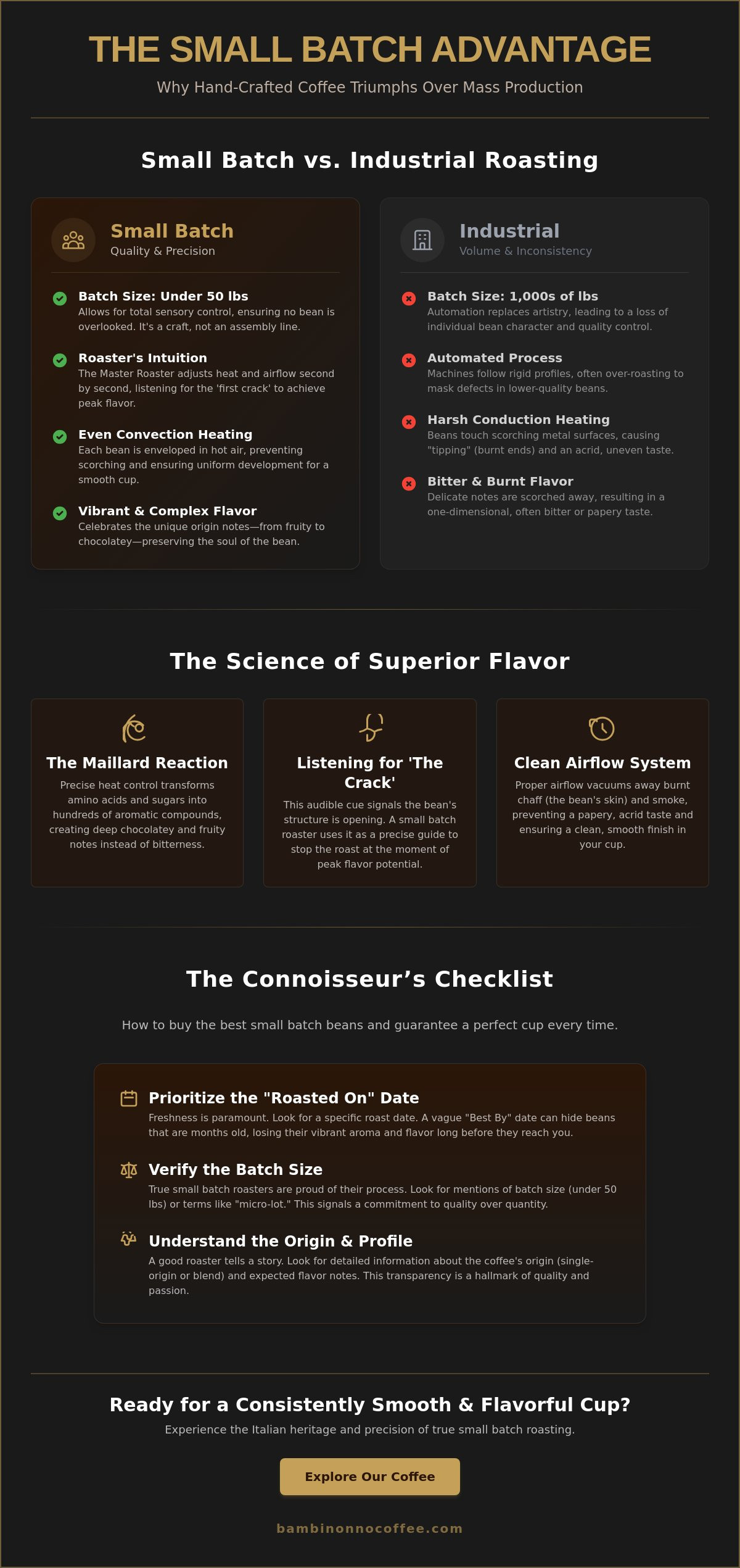
In the specialty coffee world, quality lives in the details of the drum rather than the scale of the factory. We define small-batch as roasting in quantities under 50 pounds. This isn't an arbitrary number; it's the threshold where every bean remains under the total sensory control of the roaster. The history of coffee roasting shows that before industrialization, every batch was a personal affair. When you're working with small batch roasted coffee beans, the process shifts from automation to intuition, ensuring the heat is managed with a level of care that massive industrial silos can't replicate.
The Master Roaster acts as the guardian of this process. It's a dance of fire and timing. They monitor the roast cycle second by second, listening for the first crack and adjusting the airflow to preserve the delicate characteristics of the origin. This level of quality control is why small batch roasted coffee beans offer a complexity that mass-produced bags often lose. It ensures that the specific notes of a high-altitude crop are celebrated, not scorched away by indifferent machinery.
Small Batch vs. Micro-Roasting: What is the Difference?
Terminology matters if you want to avoid "craft-washing." Micro-roasting usually refers to tiny, experimental batches of 5 to 10 pounds, often used for testing rare microlots. While exciting, it can lead to inconsistencies between bags. Small-batch roasting is the preferred middle ground at Bambi Nonno Coffee. It allows for artisanal care while ensuring the flavor profile stays consistent for your daily ritual. It's the perfect balance of curiosity and reliability.
The Italian Connection: A Heritage of Precision
Our approach is rooted in the deep-seated traditions of the Old World. Long before modern tech, Italian village roasters relied on their senses to find the perfect harmony in the bean. Bambi Nonno Coffee carries this legacy forward by combining grandfatherly wisdom with modern precision. It's about taking the time to do things right. You can Discover the story behind our Italian heritage and see how our family values shape every bag we seal. We believe that the best things in life require patience and a gentle hand.
The Roasting Science: Why Smaller Batches Unlock Superior Flavor Profiles
The magic of small batch roasted coffee beans isn't just in the name; it's in the physics of the drum. When we roast in small quantities, we manage two types of heat: conduction from the hot metal and convection from the moving air. In large industrial machines, beans often spend too much time touching scorching metal, leading to "tipping" or burnt ends. Small batches allow for a higher ratio of convection, ensuring each bean is enveloped in heat like a warm embrace. This precision is vital for the Maillard reaction, the chemical process that creates those deep, chocolatey, or fruity notes we love. Recent UC Davis Coffee Center research highlights that the rate at which heat is applied directly dictates the final acidity and body of the brew.
Thermal Control and Bean Integrity
Roasting is a sensory experience. We listen for "The Crack," a sharp sound that signals the bean's structure is opening. While industrial giants often over-roast to mask low-quality defects or unevenness, we use the crack as a guide to stop at the exact moment of peak flavor. Thermal stability in small drums is the key to repeating a perfect roast bag after bag. It ensures that every single bean reaches the same internal temperature, preventing the bitter surprises found in mass-produced coffee.
Airflow and Cleanliness in the Roast
Airflow is the secret to a clean finish. In a small drum, we can precisely vacuum out the chaff, the thin skin that falls off during roasting. If chaff stays too long, it burns and creates a papery, acrid taste. Proper airflow also whisks away smoke, preventing it from tainting the delicate oils responsible for a complex aroma. This level of care preserves the stable flavor compounds that develop during the degassing phase, giving you a smooth cup that lingers on the palate. If you're curious about how we dial in these profiles for our specific origins, feel free to reach out to our roasting team.
The Connoisseur’s Checklist: How to Buy the Best Small Batch Beans in 2026
Choosing the right bag is more than a simple purchase; it's a commitment to your morning ritual. By 2026, savvy drinkers have learned to look past flashy labels and focus on the hard data of the roast. When you seek out small batch roasted coffee beans, you're looking for a level of transparency that big-box brands simply don't provide. Quality is found in the details that mass production ignores. Use this checklist to ensure your beans are worthy of your favorite mug:
- The "Roasted On" Date: Never settle for a "Best By" date. Freshness peaks shortly after the degassing phase, and you deserve to know exactly when the heat met the bean.
- One-Way Degassing Valves: These are non-negotiable for 2026 standards. They allow CO2 to escape without letting oxygen in to stale the delicate oils.
- Sourcing Transparency: High-quality roasters share the story of the farm. Look for high-altitude forest origins that prioritize forest health and direct trade relationships.
Decoding Roast Dates and Sourcing Labels
The sweet spot for most brewing methods is 7 to 14 days post-roast. This window allows the beans to settle, ensuring a more stable extraction and a vibrant bloom. Understanding terroir is equally vital. A single origin tells a specific story of the soil and climate. You can explore our single-origin Guatemala beans for a classic profile that highlights the volcanic richness of the region. This level of detail is a core part of the Specialty Coffee Association's Roasting module, which sets the professional standard for the craft we love.
Matching Your Brew Method to the Right Roast
Your choice of bean should dance perfectly with your equipment. At Bambi Nonno Coffee, our signature blends are often the ultimate choice for espresso lovers because they provide the reliable body needed for a thick crema. If you prefer a French Press or Drip Coffee, look for high-altitude beans from Peru. These beans grow at elevations often exceeding 1,500 meters. This height creates a denser bean with a more complex flavor profile that stands up well to longer immersion times. Take a moment tomorrow morning to slow down. Notice the aroma as the water hits the grounds, and remember that the best things in life always take a little more time and care.
Elevate Your Morning Ritual with Artisanal Care
You now understand that choosing the right bag is about more than just caffeine; it's about the precision of the roast and the freshness of the source. By focusing on the science of thermal control and the transparency of roast dates, you've gained the tools to transform your daily brew. Opting for small batch roasted coffee beans ensures that every cup reflects the care and heritage that mass production simply can't offer.
At Bambi Nonno Coffee, we take this responsibility personally, blending our award-winning Italian heritage with a modern commitment to quality. Every bag we send is roasted in small batches for peak flavor, and we're happy to offer free shipping on all US coffee orders to support your journey. Join our coffee family and find your perfect roast today. Take a breath, enjoy the aroma, and savor the connection that only a truly great cup can provide.
Frequently Asked Questions
Is small batch coffee really worth the higher price?
Yes, the value lies in the meticulous attention to detail and the superior quality of the green beans. Industrial roasts prioritize volume, but small-batch methods focus on the master roaster’s ability to prevent scorching. You're paying for a cup that tastes of chocolate or berries rather than burnt bitterness. It's an investment in a daily ritual that brings genuine comfort and connection to your morning.
How long do small batch coffee beans stay fresh after opening?
Your beans are at their absolute peak between 7 and 21 days after the roast date. Once the bag is opened, oxygen begins to break down the delicate oils responsible for that rich aroma. To fully enjoy your small batch roasted coffee beans, aim to brew them within 4 weeks. After 30 days, the vibrant flavor notes will start to fade into a more muted, flat profile.
What is the difference between small-batch and specialty coffee?
Specialty coffee is a grade of quality, specifically beans that score 80 points or higher on the 100-point scale. Small-batch refers to the artisanal roasting process itself, usually in quantities under 50 pounds. While small batch roasted coffee beans are almost always specialty grade, the term highlights the hands-on care and precision used during the roast. It's the difference between a premium ingredient and a masterfully prepared meal.
How should I store my small-batch roasted beans to keep them fresh?
Store your beans in a cool, dark place inside an airtight container, preferably one with a one-way degassing valve. You should avoid the refrigerator or freezer because the beans are porous and easily absorb moisture and kitchen odors. Light and heat are the primary enemies of freshness. Keeping them in a cupboard away from your stove ensures that the volatile aromatics stay trapped inside the bean until you're ready to grind.
Why does small-batch coffee have a Roasted On date instead of an expiration date?
A "Roasted On" date is a promise of transparency that tells you exactly when the beans reached their peak. Coffee doesn't spoil like dairy, but its flavor profile declines as it loses carbon dioxide. Knowing the roast date allows you to time your extraction for the ideal 7 to 14-day window. This ensures you experience the full harmony of the bean's origin before the flavors begin to stale over time.