

The Best Coffee for Pour Over: A Guide to Nuance and Ritual in 2026
Last Tuesday, I sat in the quiet dawn watching the first few drops of a Nicaragua single-origin hit my carafe, a ritual I first learned during my travels years ago. You know that feeling when you've prepared everything perfectly, but the result is just muddled and bitter. It's a common frustration when generic blends fail to survive the transparency of manual brewing. Finding the best coffee for pour over is less about the equipment and more about honoring the bean's journey from high-altitude soil to your kitchen. With the average price of specialty coffee reaching $32.75 per pound in May 2026, you deserve a cup that reflects that value through clarity and vibrant flavor.
You likely already appreciate the patience this craft requires. We're going to help you choose beans that highlight the complex nuances of your brew, from climate-resilient hybrids like Starmaya to our favorite small-batch roasts like Ethiopia Natural. We'll explore the updated 2026 SCA standards, including the 1:16 brewing ratio and the 45-second bloom technique. This guide covers everything from origin selection to water chemistry, giving you the confidence to brew a cup that truly connects you to the craft.
Key Takeaways
- Learn why high-altitude beans develop the necessary density to highlight the clarity and nuanced acidity that manual brewing rewards.
- Discover why light and medium roasts serve as the best coffee for pour over by preserving the delicate floral and fruity notes often lost in darker roasts.
- Explore how a Guatemala single-origin provides a perfectly balanced, chocolatey profile that anchors your morning V60 ritual.
- Master the 45-second bloom to properly degas your grounds, ensuring a more even extraction and a cleaner final cup.
- Understand the critical role of water temperature and chemistry in unlocking the complex flavors hidden within artisanal small-batch beans.
What Makes a Coffee the 'Best' for Pour Over?
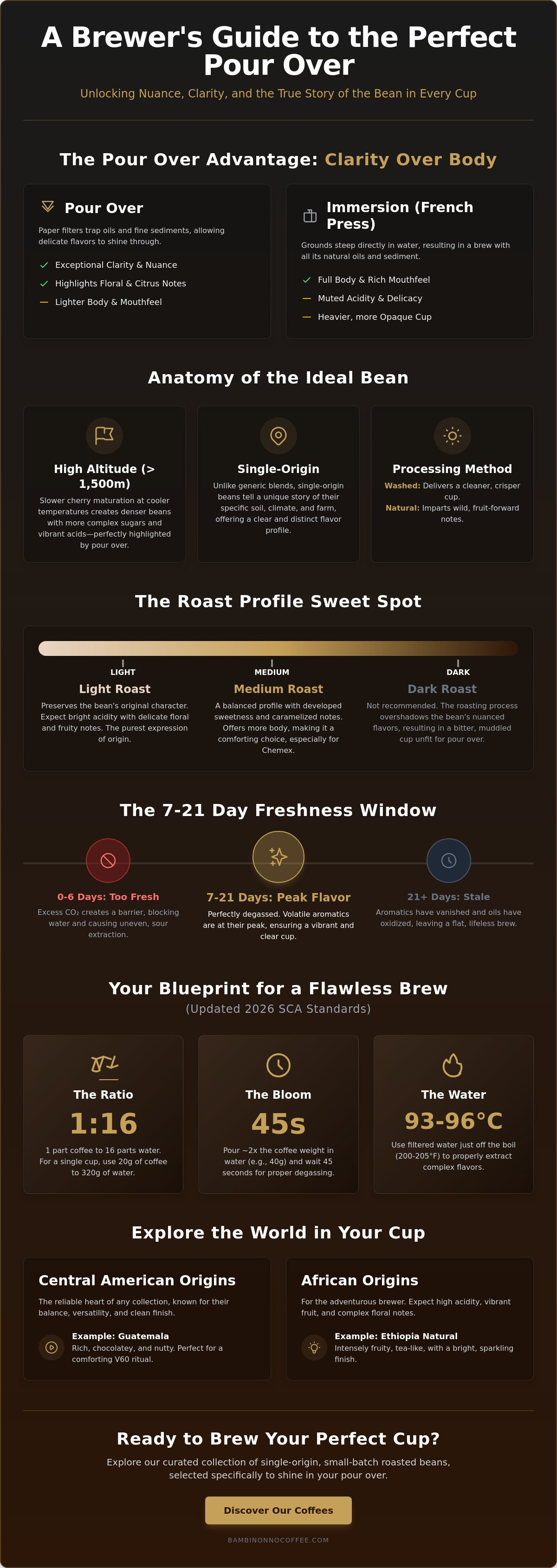
Pour-over isn't just about the caffeine; it's a window into the bean's history. Unlike immersion methods, pour-over coffee relies on gravity and a paper filter to reveal a bean’s true character. This is why choosing the best coffee for pour over requires looking for high-altitude single origins. At elevations above 1,500 meters, the cooler air slows down the coffee cherry's growth. This slower pace creates a denser bean packed with more complex acids and sugars, which the pour-over method is uniquely qualified to highlight.
Our obsession with these details grew from a simple daily habit between a "baby" and a "grandpa." That nickname, Bambi Nonno Coffee, represents the personal relationships and exploration that define our craft. We've spent years traveling to find beans that don't just taste good, but actually tell a story of the soil they grew in. When you brew manually, you aren't just making a drink; you're participating in that journey of discovery.
To see how these variables come together in your cup, watch this refined technique for a single-cup brew:
Clarity vs. Body: The Manual Brewing Trade-off
The magic happens in the filter. Paper filters catch most of the oils and fine sediment, which allows delicate floral and citrus notes to shine. It's a deliberate trade-off. You lose some of that heavy mouthfeel found in a French press, but you gain a tea-like elegance and incredible clarity. High-density beans from volcanic regions are ideal here. They possess the structural integrity to withstand the steady stream of water without collapsing into a muddled flavor profile.
The Freshness Factor in Small-Batch Roasting
Your roast date is the most honest number on the bag. For a vibrant, active bloom, you want beans roasted within the last 7 to 21 days. This specific window allows for proper degassing while keeping the volatile aromatics intact. If the coffee is too fresh, the escaping CO2 creates a barrier that blocks water from entering the grounds. If it's too old, those bright, travel-inspired flavors simply vanish, leaving you with a flat cup that lacks the soul of the original harvest.
Roast Profiles and Origins: Choosing Your Perfect Match
Picking the right roast is where your morning ritual truly begins. While many purists argue that light roasts are the only way to experience The Art and Science of Pour-Over, the truth is much more personal. Your choice of the best coffee for pour over depends on whether you crave the crisp, tea-like acidity of a light roast or the comforting, caramelized sweetness of a medium one. Both have a place on your shelf, depending on the mood of the morning.
For those who love a balanced, chocolatey finish that anchors the start of the day, our Guatemala Single Origin is a staple for the V60. If you prefer something brighter and cleaner, the Peru Single Origin offers a sparkling profile that shines in a manual dripper. Pay attention to the processing method on the label, too. Washed coffees usually offer a cleaner, more true-to-origin taste. Natural processes bring out wilder, fruit-forward notes that can surprise your palate with every sip.
The Medium Roast Renaissance
There's a common myth that pour-overs must be ultra-light. We've discovered that a careful medium roast is often the best coffee for pour over for those using a Chemex. Because the thicker paper filter strips away many oils, the slightly more developed sugars in a medium roast provide a silky mouthfeel that a light roast might lack. It turns your coffee from a simple beverage into a comforting, nostalgic experience that lingers.
Single-Origin Spotlight: Regional Characteristics
- Central American beans: These are the reliable heart of our collection. They're known for their balance, versatility, and clean finish.
- African origins: These are for the adventurous brewer. Expect high acidity, vibrant citrus, and tea-like floral notes that dance in the cup.
This human connection to the land and the farmers is something we cherish deeply, as you'll see on our Our Story page. We invite you to experiment with these regions to find what resonates with your own palate. If you have questions about which bean fits your specific brewing gear, feel free to reach out to us for a recommendation.
Brewing for Discovery: Tips to Elevate Your Pour Over
Once you've selected the best coffee for pour over, the real magic begins in your kitchen. Brewing is a quiet, daily habit that honors the years of travel and hard work behind every bean. It isn't about achieving laboratory perfection. Instead, it's about being present in the moment while the aroma fills the room. Even the most artisanal small-batch roast requires a steady hand and a curious mind to reach its full potential.
The Ritual of the Bloom
The bloom is the rapid release of carbon dioxide that occurs when hot water first hits the grounds, clearing the way for water to extract the coffee's true flavors. A healthy bloom looks like a gentle rise of bubbles and foam. If your coffee stays flat, it's a sign the beans have lost their volatile gases, likely because they were roasted more than 30 days ago. This first 30 second pour is your chance to see exactly how fresh your selection really is.
Water temperature is another variable you can easily control. While many people use water straight off the boil, this can sometimes scorch the delicate notes of a single origin. Following the 2026 SCA guidelines, aiming for 195 to 205°F ensures you extract the sweetness without the bitterness. Consistency in your grind size is equally vital. If your cup tastes muddy, your grind is likely too fine; if it's sour, try a finer setting next time. Changing just one variable at a time is the secret to finding your best coffee for pour over experience.
Dialing In Your Palate
Think of your brewing process as a conversation with the roaster. If the result is too bitter, your extraction went too far; if it's too thin or salty, you didn't go far enough. Use this quick checklist to troubleshoot your morning cup:
- Too Bitter? Use a coarser grind or slightly cooler water.
- Too Sour? Use a finer grind or hotter water.
- Muddled Flavors? Check your water chemistry or rinse your filter more thoroughly.
The quiet everyday moment while the coffee drips is a gift. We suggest starting a simple brew journal to track your favorite origins from our collection. Write down the date, the temperature, and what you tasted. Over time, you'll build a personal map of your preferences, turning a simple drink into a lifelong journey of discovery.
Begin Your Daily Ritual of Discovery
Your journey through origin and extraction is more than a technical exercise; it's a way to reclaim your morning. We've explored how high-altitude density and precise 2026 brewing standards transform a simple bean into a complex story. Finding the best coffee for pour over is an ongoing exploration that rewards your patience with every clean, vibrant sip. Each bag we offer is small-batch roasted in 2026 to ensure peak freshness when it reaches your door.
Our beans are responsibly sourced from high-altitude forests, honoring the land and the people who nurture them. To make your discovery even easier, we provide free shipping on all US coffee orders. If you ever feel stuck or have questions about finding your perfect roast, reach out to us here. We'd love to help you find a flavor that resonates with your own story. Keep experimenting, lead with curiosity, and remember that the best cup is the one that brings you a genuine moment of peace.
Frequently Asked Questions
Is light roast or dark roast better for pour over coffee?
Light and medium roasts are typically the best coffee for pour over because they preserve the delicate acids and floral notes that manual brewing highlights. While a dark roast provides a bold body, the paper filter and longer extraction time can often pull out charred, bitter flavors that mask the bean's origin. Choosing a medium roast allows you to enjoy a silky mouthfeel without losing the travel-inspired profile of a single-origin bean.
Can I use pre-ground coffee for pour over?
You can use pre-ground coffee, but you'll miss the vibrant bloom that defines a great manual brew. Once coffee is ground, its surface area increases, causing volatile aromatics to dissipate within 30 minutes. To experience the full potential of your beans, grind them just before you pour. If you must buy pre-ground, look for small-batch options sealed in nitrogen-flushed bags to slow down the inevitable oxidation process.
Why does my pour over coffee taste bitter?
Bitter flavors are a clear sign of over-extraction, meaning the water pulled too much from the grounds. This usually happens if your water temperature exceeds 205°F or if your grind size is too fine, causing the water to drain too slowly. To fix this, try coarsening your grind slightly or lowering your water temperature to 195°F. Small adjustments like these can turn a harsh cup into a balanced, sweet ritual.
What is the best water-to-coffee ratio for pour over?
A ratio of 1:16 or 1:17 is the gold standard for achieving a balanced extraction in most drippers. For every 1 gram of coffee, use 16 or 17 grams of water to ensure the best coffee for pour over results. Following the 2026 SCA guidelines, this ratio provides enough solvent to pull out the desirable sugars and acids without over-diluting the cup or causing the "muddy" flavors often found in stronger brews.