

The Best Coffee for Pour Over: A Guide to Nuance and Ritual in 2026
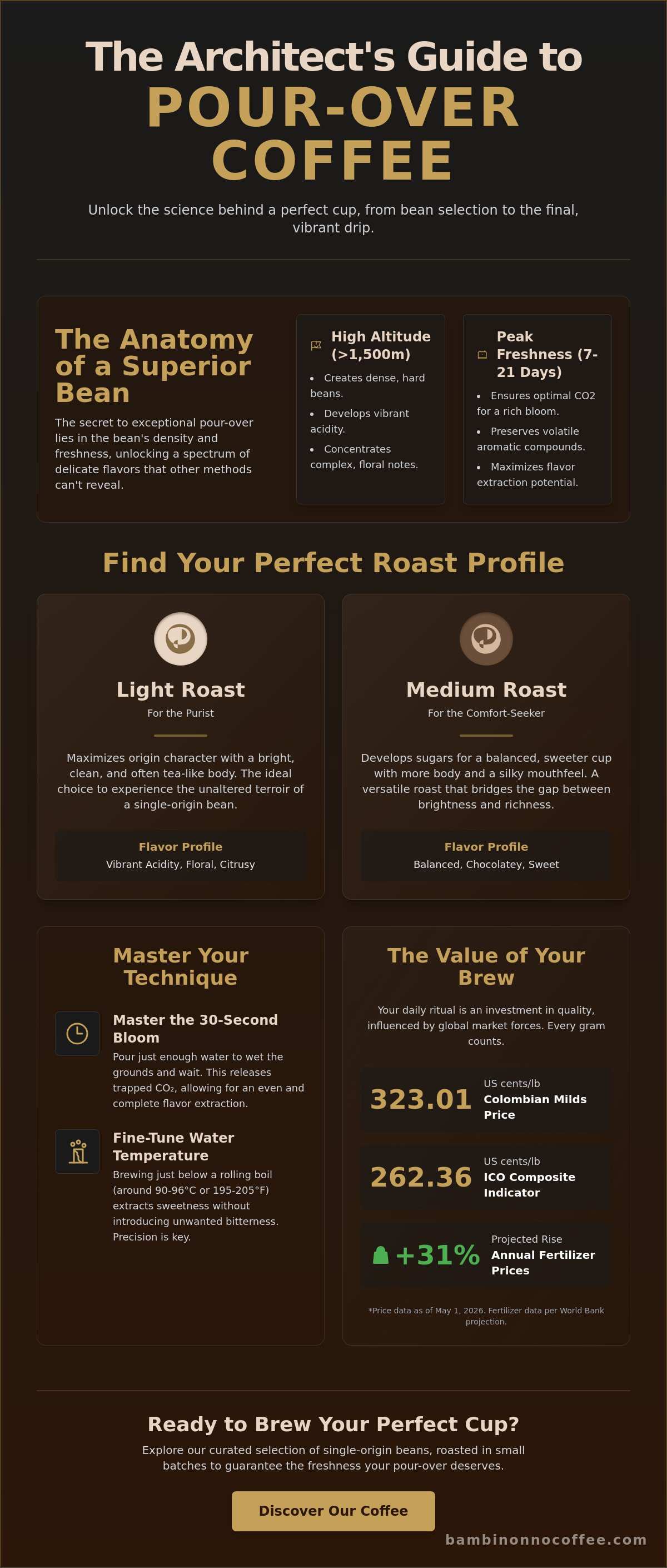
Imagine standing in your kitchen on a quiet morning, watching the steam rise as you carefully pour water over your grounds, only to take that first sip and find it's either unpleasantly bitter or frustratingly flat. You've likely felt that sting of disappointment when a premium bag doesn't deliver the clarity you expected. Finding the best coffee for pour over isn't just about grabbing the most expensive bag; it's about understanding how high-altitude beans and specific roast profiles interact with your manual dripper. With Colombian Milds reaching 323.01 US cents/lb as of May 1, 2026, and fertilizer prices projected by the World Bank to rise 31% this year, every gram you brew represents a meaningful investment in your daily ritual.
It's easy to feel overwhelmed by muddled flavors or inconsistent extractions that hide the true character of the bean. You'll discover how to select beans that highlight the vibrant acidity and complex notes of single origins, from the citrusy heights of Ethiopia to the balanced sweetness of Guatemala. This guide explores the science of the bloom, the impact of rising production costs, and why small-batch roasts are the key to mastering your morning cup. By the end, you'll have the confidence to choose beans that match your palate and finally unlock the true potential of your manual brewer.
Key Takeaways
- Understand why high-altitude beans provide the density needed to highlight the delicate floral notes and bright acidity characteristic of manual brewing.
- Learn how to choose the best coffee for pour over by pairing light and medium roast profiles with your unique palate and preferred morning ritual.
- Master the 30-second bloom to release trapped carbon dioxide, ensuring your water can fully extract the complex flavors hidden within the grounds.
- Discover how fine-tuning your water temperature below a rolling boil can eliminate unwanted bitterness and produce a cleaner, more vibrant cup.
What Makes a Coffee the 'Best' for Pour Over?
Pouring water over a bed of freshly ground coffee is a quiet act of patience. It's a ritual that rewards the curious. To find the best coffee for pour over, you have to look at the bean's history. With the ICO Composite Indicator Price reaching 262.36 US cents/lb as of May 1, 2026, choosing a high-quality bean is a commitment to both value and craft. Unlike immersion methods that hide flaws in a heavy body, manual brewing is transparent. It highlights the delicate acidity and floral notes that make a cup memorable. This clarity is why we've spent years traveling, learning that the most vibrant flavors often come from the hardest working trees.
Understanding the history of pour-over helps you appreciate why certain beans shine. It's a method built on precision. Our own journey, detailed in our story, began with the simple bond between a "baby" and "grandpa" sharing a quiet daily habit. We've learned that finding the right bean isn't just about a label; it's about the altitude and the care taken during the harvest. Single-origin coffees are the gold standard here because they tell the story of one specific place, one climate, and one dedicated farmer.
To better understand this concept, watch this helpful video:
Clarity vs. Body: The Manual Brewing Trade-off
Most pour-over drippers use a paper filter. This filter is your best friend because it traps oils and sediment, allowing the nuanced high notes to dance on your tongue. To get this right, you need high-density beans. Coffee grown in high-altitude volcanic regions, often above 1,500 meters, develops a tighter cellular structure. These dense beans withstand the longer contact time of manual brewing without becoming muddy. They offer a clean finish that reflects the specific soil they were grown in, rather than just the taste of the roast itself.
The Freshness Factor in Small-Batch Roasting
The roast date is the most critical number on your bag. For a successful bloom, your coffee needs to be fresh, ideally within 7 to 21 days of roasting. During the first 30 seconds of brewing, you'll see the coffee rise and bubble. This is degassing, a process where carbon dioxide escapes to make room for water. If your beans are old, they won't bloom, and the water can't penetrate the grounds to extract the soul of the coffee. We roast in small batches to ensure those volatile aromatics stay trapped until the moment you pour. Experiment with different beans to see which story resonates with you today.
Roast Profiles and Origins: Choosing Your Perfect Match
You might hear that light roasts are the only choice for manual brewing. It's a common belief, but it limits your experience. Choosing the best coffee for pour over really comes down to how you want your morning to feel. While 70% of Americans drink coffee weekly, the ritual of pour-over invites you to slow down and notice the details. If you love a crisp, tea-like clarity, a light roast is your path. However, if you crave something more comforting, a medium roast offers a "renaissance" of flavor that shouldn't be ignored. With Colombian Milds priced at 323.01 US cents/lb as of May 1, 2026, every bean in your dripper represents a high-quality, premium selection.
Take our Guatemala Single Origin. When brewed in a V60, it reveals a balanced, chocolatey profile that feels like a steady start to the day. It's approachable and rich. On the other hand, if you prefer a brighter, cleaner cup that wakes up your senses, our Peru Single Origin is a perfect match. Pay attention to the process on the label too. Washed coffees usually offer that sparkling cleanliness, while natural processes lean into a funky, fruit-forward sweetness. Experimenting with these variables is the best way to find what truly resonates with your palate.
The Medium Roast Renaissance
There's a myth that pour-over must be thin or "tea-like." While clarity is great, a careful medium roast develops sugars that provide a silky mouthfeel, especially in a thick-walled brewer like a Chemex. According to National Coffee Association's brewing tips, maintaining the right coffee-to-water ratio is key to letting these developed sugars shine without overwhelming the delicate notes. This balance creates a cup that's both complex and deeply satisfying.
Single-Origin Spotlight: Regional Characteristics
Your choice of origin is a passport to a specific landscape. Every bean we source comes from a place we've visited or a relationship we've built over years of travel.
- Central American beans: These are your reliable friends. They offer balance and are perfect for an everyday pour-over ritual.
- African origins: These are for the adventurous. Expect high acidity and floral notes that challenge your palate in the best way.
Brewing for Discovery: Tips to Elevate Your Pour Over
The best coffee for pour over deserves a process that honors the hands that grew it. With the World Bank projecting a 31% rise in fertilizer prices in 2026, every bean represents a greater investment from the farmer and a more precious resource in your kitchen. Manual brewing isn't about chasing a rigid standard of perfection. It's a conversation. When you lead with curiosity and change just one variable at a time, you transform a simple caffeine fix into a personal discovery. Whether you're using our Peru Single Origin or another favorite, the magic happens in the small adjustments.
Temperature and grind size are your primary tools for exploration. While many suggest "off the boil," using water that is too hot can scald delicate light roasts, leading to a dry, ashy finish. Aim for a range between 195°F and 205°F to keep the flavors vibrant. Consistency in your grind is equally vital. You don't need the most expensive equipment on the market, but you do need a grind that looks like sea salt. If your grounds are uneven, the water will flow through the gaps too quickly, leaving you with a cup that tastes both bitter and sour at the same time.
The Ritual of the Bloom
During the bloom, hot water hits the grounds and forces out trapped carbon dioxide, clearing the way for water to extract the coffee’s true personality. A healthy bloom looks like a slow, rhythmic expansion of the coffee bed. If you see active bubbling and a rich aroma fills the room, your beans are fresh and full of life. If the bed stays flat and silent, the volatile oils have likely faded, and it might be time to check your roast date.
Dialing In Your Palate
Learning to taste is the most rewarding part of the journey. If your cup tastes unpleasantly sharp or sour, try a slightly finer grind next time. If it leaves a lingering bitterness on the back of your tongue, coarsen the grind to speed up the flow.
- Too Sour? Increase your water temperature or grind finer.
- Too Bitter? Decrease your water temperature or grind coarser.
- Just Right? Savor the quiet everyday moment while the coffee drips.
Embrace the Ritual of Your Next Cup
Finding the best coffee for pour over is a journey that begins in high-altitude forests and ends in your favorite mug. You've seen how bean density and roast dates impact the bloom. You've learned how a simple grind adjustment can turn a sour morning into a vibrant one. Our beans are responsibly sourced and small-batch roasted in 2026 to ensure you taste every nuance we discovered during our travels. This ritual is a bridge between generations. It's a quiet moment to slow down and connect. To make your discovery even easier, we offer free shipping on all US coffee orders.
If you're still deciding between a chocolatey Guatemala or a bright Peru, we'd love to help you choose. Have questions about finding your perfect roast? Reach out to us here. Take a breath, watch the steam, and let your curiosity guide your next pour. The perfect cup isn't just a destination; it's the joy found in the steady, patient act of brewing. Let the aroma remind you that the best things in life simply take a little time and a lot of heart.
Frequently Asked Questions
Is light roast or dark roast better for pour over coffee?
Light to medium roasts are generally preferred for this method to preserve the delicate acidity and floral notes of the bean. Because high-altitude beans are denser, they require the gentle extraction of a lighter roast to fully reveal their character. Dark roasts can sometimes mask these unique characteristics with smoky or charred flavors. Choosing a light or medium roast ensures you have the best coffee for pour over to experience the bean's true origin and history.
Can I use pre-ground coffee for pour over?
To truly enjoy the best coffee for pour over, grinding your beans just before you brew is the most effective way to keep those delicate flavors alive. Freshness is everything in this ritual. Coffee starts to lose its complexity within 15 minutes of grinding as the volatile oils begin to oxidize. By grinding just before you brew, you preserve the aromatics that create a vibrant cup. It's a small step that makes a massive difference in the clarity of your final brew.
Why does my pour over coffee taste bitter?
Bitterness is usually a sign of over-extraction, which happens when your water is too hot or your grind is too fine. If your water temperature is above 205°F, it can pull harsh, dry notes from the grounds that overwhelm the sweetness. Try coarsening your grind size to allow the water to flow through the bed more quickly. This adjustment helps you avoid a muddy taste and brings back the clean, sweet finish that makes manual brewing so special.
What is the best water-to-coffee ratio for pour over?
A ratio of 1:16, or one gram of coffee for every 16 grams of water, is the ideal starting point for a balanced cup. For a standard 350ml brew, this means using about 22 grams of coffee grounds. If you find the taste too weak for your palate, try a 1:15 ratio for more intensity. Using a digital scale to track these specific numbers helps you replicate your favorite results every single morning without any frustrating guesswork.