

The Best Coffee for Pour Over: A Guide to Nuance and Ritual in 2026
Your pour-over setup is a lie detector for your coffee beans. Because this method uses a paper filter to strip away oils and sediment, every flaw in the roast or origin is laid bare. You've likely felt the sting of a muddled, bitter cup after spending ten minutes perfecting your technique. We understand that frustration. Finding the best coffee for pour over requires moving beyond generic blends to find high-altitude beans that thrive under the spotlight of manual brewing.
By February 2026, the average price for a bag of specialty coffee reached $22.40, making every choice a meaningful investment in your morning ritual. At Bambi Nonno Coffee, we believe this investment should lead to discovery rather than disappointment. This guide will show you how to identify single-origin profiles that highlight the clarity you crave. You'll learn how to master the bloom to unlock hidden notes and gain the confidence to choose beans that match your specific palate. We're exploring the science of extraction and the quiet joy of the Fourth Wave movement to ensure your next cup is as vibrant as the travels and stories that inspired our own journey.
Key Takeaways
- Discover why high-altitude beans possess the specific density required to produce the clarity and complex acidity that manual brewing methods celebrate.
- Learn to identify the best coffee for pour over by navigating the subtle flavor differences between light and medium roast profiles.
- Explore how a single-origin Guatemala offers a balanced, chocolatey foundation that serves as the perfect starting point for your flavor discovery.
- Master the art of the bloom to unlock trapped gases and ensure every drop of water contributes to a vibrant, even extraction.
- Understand why adjusting your water temperature away from a rolling boil can prevent over-extraction and protect delicate floral notes.
What Makes a Coffee the 'Best' for Pour Over?
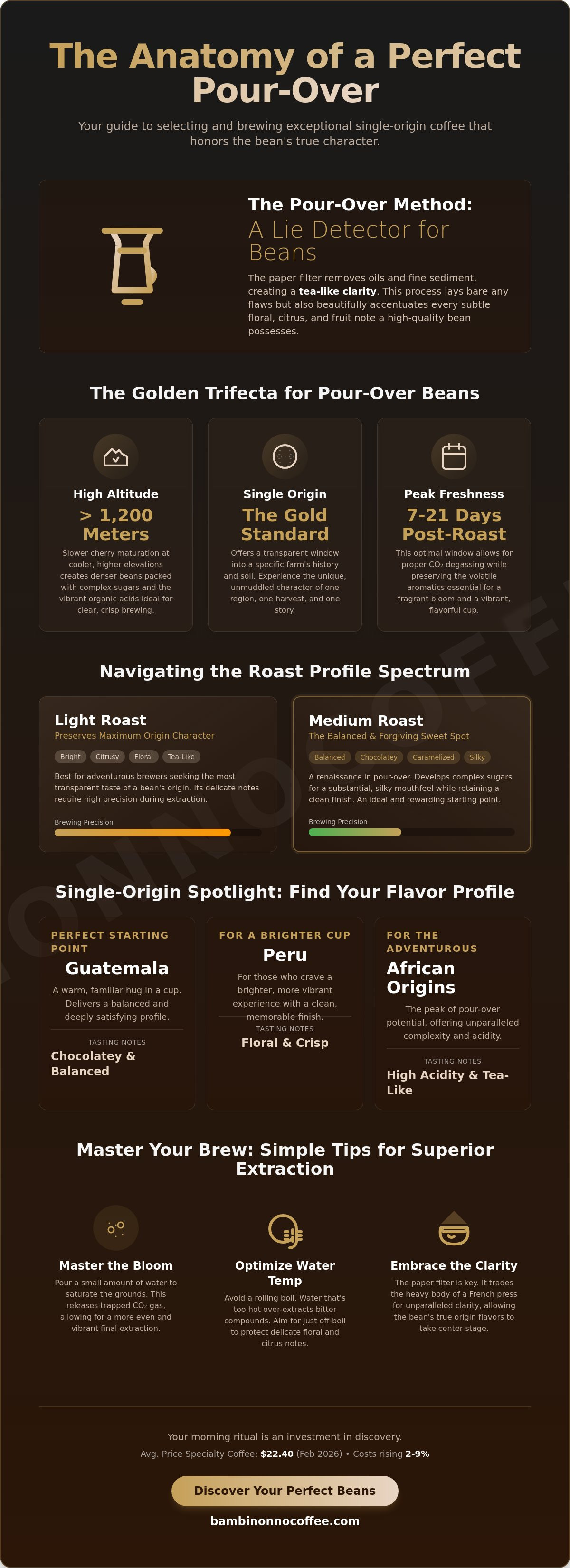
Pour-over brewing is much more than a morning caffeine fix; it's a quiet ritual that demands the right raw material. When you explore What is Pour Over Coffee?, you'll find it's a method defined by flavor separation. The best coffee for pour over typically comes from high-altitude forests, often situated above 1,200 meters. These cooler climates slow the maturation of the coffee cherry. This delay allows the plant to produce denser beans packed with complex sugars and vibrant organic acids that shine in a clean cup.
Our obsession with these beans grew from years of travel and the personal relationships we built along the way. The name Bambi Nonno Coffee is rooted in a Korean nickname meaning "baby" and "grandpa," representing a simple daily habit that bridges generations through shared discovery. We believe single-origin beans are the gold standard for this ritual because they offer a transparent window into a specific farm's history and soil. Choosing a single-origin allows you to experience the unique characteristics of a region without the muddled profile of a mass-market blend.
To better understand how to handle these delicate beans during the brewing process, watch this helpful video:
Clarity vs. Body: The Manual Brewing Trade-off
The paper filter in most manual drippers acts as a gatekeeper. It removes the heavy oils and fine sediment that usually provide body in a French press. This trade-off results in a tea-like clarity that accentuates floral and citrus notes. High-density beans from volcanic regions have the structural integrity to handle the 3 to 4 minute extraction time required. They release their flavors slowly, ensuring your cup stays vibrant rather than becoming over-extracted and bitter.
The Freshness Factor in Small-Batch Roasting
Freshness is the most critical metric for a successful brew. We prioritize small-batch roasting because the roast date dictates how your coffee behaves during the bloom. Ideally, you want beans roasted within the last 7 to 21 days. This window allows for proper degassing while preserving volatile aromatics. When you pour that first bit of water over a fresh Guatemala single-origin, the active bubbling tells you the flavor is still locked inside, waiting to be discovered.
Roast Profiles and Origins: Choosing Your Perfect Match
Choosing the best coffee for pour over often feels like picking a path on a map. Your morning ritual might call for the bright, citrusy acidity of a light roast or the comforting, caramelized sweetness of a medium roast. While light roasts preserve the most origin-specific flavors, they require high precision during extraction. Medium roasts offer a forgiving, balanced experience that many hobbyists overlook in favor of trendier, ultra-light beans. With retail prices for specialty coffee rising between 2% and 9% as of May 1, 2026, selecting a roast that matches your skill level ensures you don't waste a single gram of your investment.
The Medium Roast Renaissance
There's a common myth that manual brewing only suits tea-like, light roasts. We believe in a medium roast renaissance. A thoughtful medium roast develops complex sugars that provide a silky mouthfeel, particularly in a Chemex. It creates a cup that feels substantial yet remains clean. Understanding Roast Profiles and Origins is the first step in matching a bean to your specific palate and brewing equipment.
Single-Origin Spotlight: Regional Characteristics
Central American beans are our reliable choice for a balanced, everyday pour-over. Our Guatemala Single Origin shines in a V60, offering a chocolatey profile that feels like a warm, familiar hug. For those who crave a brighter, floral cup, our Peru Single Origin provides the crisp finish you're looking for. African origins remain the peak for adventurous brewers seeking high acidity and tea-like floral notes. We've spent years traveling to these regions, building the human connections you can read about on the Bambi Nonno Coffee Our Story page.
When you're browsing labels, look for the processing method. Washed coffees offer a clean, classic taste that highlights the bean's inherent quality. Natural processes lean into fruity, experimental flavors that can be more polarizing. If you're unsure which direction to head next, feel free to reach out and share your flavor preferences with us. We love helping fellow enthusiasts find their next favorite discovery.
Brewing for Discovery: Tips to Elevate Your Pour Over
Brewing is where the bean's history finally meets your own daily rhythm. Even when you've sourced the best coffee for pour over, the final cup depends on how you handle those first few moments of heat and water. We view this process as a conversation. If you lead with curiosity and change only one variable at a time, you'll soon find the exact profile that resonates with your palate. Our small-batch roasting process ensures that the beans you receive are at their peak potential for extraction, but the final transformation happens in your kitchen.
Temperature control is your most powerful tool for unlocking nuance. While many suggest using water "off the boil," this can often scorch delicate light roasts or over-extract medium ones. Aim for a specific range between 198°F and 205°F (92°C to 96°C). Lower temperatures can highlight sweetness, while the higher end of the scale helps extract the complex acids in denser, high-altitude beans. Consistency in your grind size is equally vital; aim for a texture similar to kosher sea salt to avoid the muddy bitterness of a too-fine grind or the sour thinness of one that's too coarse.
The Ritual of the Bloom
The bloom is the degassing process where trapped carbon dioxide escapes the bean to allow water to penetrate and extract flavor. During those first 30 seconds, watch for a vibrant, bubbling rise. A healthy bloom is a direct indicator of freshness and meticulous small-batch roasting. If the coffee remains flat, the beans may have lost the volatile aromatics that define a truly premium cup.
Dialing In Your Palate
Finding your perfect cup is a journey of small adjustments. If your coffee tastes unpleasantly sharp or sour, try a slightly finer grind next time. If it leaves a dry, lingering bitterness on your tongue, coarsen the grind to speed up the flow. We encourage you to embrace the quiet everyday moment while the coffee drips. Start a simple brew journal to track which origins and temperatures you prefer. Over time, this record becomes a map of your own evolving taste, much like the travel stories we share at Bambi Nonno Coffee. Tomorrow morning, try adjusting your water temperature by just two degrees and see what new flavors emerge from the steam.
Start Your Ritual of Discovery
Manual brewing is more than a technique; it's a way to slow down and connect with the hands that harvested the crop. Finding the best coffee for pour over is a journey that rewards your patience with every clean, vibrant sip. We've explored how dense, high-altitude beans provide the necessary structure for clarity and how a thoughtful bloom reveals the bean's true character. Whether you choose the chocolatey notes of a Guatemala or the bright finish of a Peru, your morning ritual is an opportunity to explore the world from your kitchen.
Our collection is small-batch roasted in 2026 to ensure you receive peak freshness during that critical window of flavor. Every bean is responsibly sourced from high-altitude forests where slow maturation creates the complex sugars we love. We believe in making this discovery accessible, which is why we provide free shipping on all US coffee orders. Have questions about finding your perfect roast? Reach out to us here. We're always happy to chat about origins, grind sizes, or the stories behind our favorite travels. Enjoy the quiet moments of your next brew.
Frequently Asked Questions
Is light roast or dark roast better for pour over coffee?
Light and medium roasts are generally the superior choice for this method because they preserve the bean's unique origin character. The pour over process uses a paper filter to strip away oils and sediment, which allows the delicate floral and fruity notes of a lighter roast to shine through. Dark roasts often mask these nuances with smoky, roasty flavors that can become overwhelming in such a clean, transparent cup. We suggest a medium roast for a perfect balance of caramelized sweetness and clarity.
Can I use pre-ground coffee for pour over?
You can use pre-ground coffee, but grinding whole beans right before brewing is the best way to ensure peak flavor. Once coffee is ground, it begins to lose its volatile aromatics within 15 to 20 minutes due to oxidation. Freshly ground beans are essential for achieving a healthy bloom, which is the bubbling reaction that tells you the coffee is fresh. If you're searching for the best coffee for pour over, starting with whole beans will always result in a more vibrant and aromatic experience.
Why does my pour over coffee taste bitter?
Bitterness usually indicates over-extraction, which happens when you've pulled too much from the coffee grounds. This often occurs if your water temperature is too high, specifically above 205°F, or if your grind size is too fine. A fine grind slows down the flow, causing the water to stay in contact with the beans for too long. Try coarsening your grind or lowering your water temperature by 2 or 3 degrees to find a smoother, more balanced profile.
What is the best water-to-coffee ratio for pour over?
A ratio of 1:16, which is 1 gram of coffee for every 16 grams of water, is the ideal starting point for most enthusiasts. This balance provides enough strength while maintaining the clarity that makes manual brewing special. If you prefer a richer cup, try a 1:15 ratio. For a lighter, more tea-like consistency, move toward 1:17. Using a digital scale to measure these variables will help you achieve a consistent ritual every single morning.