

The Checklist for Finding the Best Italian Roast Coffee Beans in 2026
That heavy, smoky aroma of a dark roast should feel like a warm hug from an old friend, not like you're licking the bottom of a charcoal grill. You've likely felt the disappointment of opening a fresh bag only to find beans so oily they clog your grinder or taste like nothing but burnt carbon. Finding the best italian roast coffee beans in 2026 is about more than just a label. It's about finding that perfect balance where the fire meets the fruit.
You probably love the deep intensity of a dark roast, but you're tired of the lack of transparency in how these beans are sourced. I promise that finding a rich, sweet, and robust cup is possible without sacrificing the health of your equipment or your palate. We'll walk through a practical checklist to help you evaluate coffee quality online and identify roasts that deliver bold flavor without the ash. Let's look at how to improve your morning ritual by choosing beans that prioritize integrity over high heat.
Key Takeaways
- Learn how to identify a technical roast profile that balances deep smoky notes with a lingering toasted caramel sweetness.
- Discover the checklist for finding the best italian roast coffee beans, focusing on roast date transparency to keep those beautiful oils from going rancid.
- Understand why using slightly cooler water during extraction is the key to unlocking a heavy body without the unpleasant bite of bitterness.
- Find out how to use the bloom phase as a visual guide to verify the freshness and soul of your coffee before the first sip.
Understanding the Profile: What Defines the Best Italian Roast Beans?
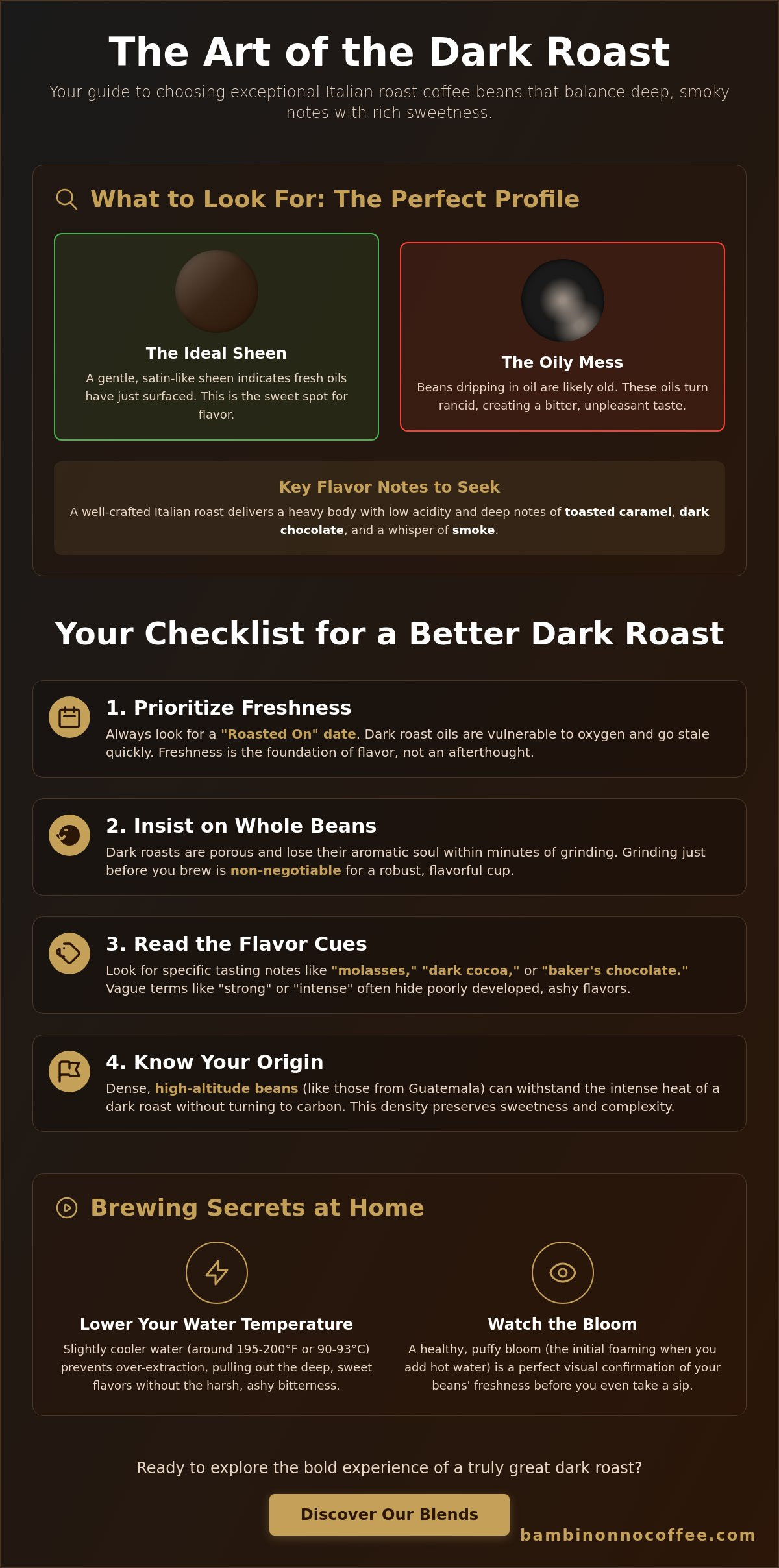
There is a quiet, steady comfort in a truly dark cup of coffee. When you're searching for the best italian roast coffee beans, you aren't just looking for something strong; you're looking for a specific technical profile where the roaster has guided the beans well into the second crack. This is the point where the internal structure of the bean begins to fracture, allowing natural oils to migrate to the surface. It results in a cup defined by low acidity, a heavy body, and deeply nostalgic notes of toasted caramel, dark chocolate, and a whisper of smoke.
To better understand how different roasts are perceived and ranked, watch this helpful video:
It's easy to mistake "burnt" for "dark," but specialty roasting is about developing sweetness rather than masking defects. High-quality beans should have a gentle, satin-like sheen. If the beans look like they're dripping in oil, they've likely been sitting on a shelf too long, as those oils can quickly turn rancid and ruin your morning ritual. Finding the best italian roast coffee beans means looking for that perfect balance where the fire enhances the bean's soul rather than erasing it.
The Science of the Second Crack
During the coffee roasting process, the beans undergo a dramatic physical transformation as they expand and lose moisture. The roaster must listen closely for the audible "snaps" that signal the beans have reached the proper development level. The Maillard reaction, which is responsible for those delicious browning flavors, reaches its peak just before the sugars begin to carbonize completely.
Texture and Body: The Ritual of the Heavy Cup
A well-executed dark roast feels substantial on the tongue, almost like a piece of velvet. It's a far cry from the tea-like, bright acidity of lighter roasts. This heavy mouthfeel is why many of us return to this profile day after day; it provides a sense of grounding and continuity in our busy lives. If you're looking for that classic, bold experience, exploring our collection of blends is a great place to start your journey of discovery.
The Ultimate Checklist for Buying Italian Roast Coffee Online
Searching for the best italian roast coffee beans online requires a bit of detective work. You can't rely on generic labels alone. First, check for a "roasted on" date. High-heat roasting pushes oils to the surface, making them vulnerable to oxygen. If a bag has been sitting in a warehouse for months, those oils will taste like old rubber rather than the rich, smoky profile you're after. Freshness is the foundation of every great morning ritual.
Small-batch roasters are your best allies here. They have the precision to pull beans at the exact moment they reach the second crack. Industrial plants often overshoot, leaving you with beans that taste like ash. According to the National Coffee Association’s guide on dark roast coffee profiles, a true dark roast should be oily but not burnt. Always choose whole beans. Dark roasts are more porous and lose their aromatic soul within minutes of grinding, so grinding fresh is non-negotiable for a robust cup.
Quality Markers Beyond the Label
Look for specific tasting notes like "molasses" or "dark cocoa" instead of vague words like "strong" or "intense." These descriptors show the roaster has preserved the bean's character through the heat. It signifies a focus on flavor development rather than just charred intensity. For a deeper dive into making the right choice, you might enjoy exploring our latest stories on roast selection and quality.
Altitude and Density: Why it Matters for Dark Roasts
Altitude plays a huge role in how a bean handles the fire. Beans grown at high elevations, like our Guatemala, are incredibly dense. This density allows them to withstand the high temperatures of an Italian roast without falling apart. Lower altitude beans are softer. They often turn to carbon before they even reach the proper roast level. If you have questions about which origin suits your palate, feel free to reach out to us for a personal recommendation.
Maximizing the Bold: Brewing Your Dark Roast Beans at Home
Once you've brought home the best italian roast coffee beans, the brewing process becomes a quiet exercise in patience. Because dark roasts are more soluble, they release their oils and flavors much quicker than lighter beans. If your water is too hot, you'll likely pull out unwanted bitterness. Keeping your water between 195°F and 200°F is a simple trick that aligns with scientific brewing principles to ensure a smooth, chocolatey extraction.
Watching the bloom is one of the most rewarding parts of the morning. When you first pour, a fresh dark roast will expand and bubble with life. It's a visual promise that the beans are still vibrant. While many think this profile is only for espresso, the best italian roast coffee beans can be remarkably versatile. A Moka pot brings out a heavy, bold intensity, while a pour-over can reveal a surprising clarity in the dark cocoa notes.
Dialing in the Extraction
If you find your cup a bit too sharp, try coarsening your grind. This is especially helpful if you're using a French Press, where a longer steep time benefits from a larger particle size. You're looking for a rich, mahogany color and a thick, hazelnut-hued crema that signals a well-balanced brew. It's all about finding that sweet spot where the strength feels substantial but not overwhelming.
Preserving the Shine: Storage Tips
The glossy oils that define a dark roast are also what make it sensitive to the air. Oxygen is the enemy of flavor, so keep your beans in an airtight container away from direct sunlight. This simple step keeps the Bambi Nonno Coffee freshness alive for every cup. Try changing just one variable in your brew tomorrow; it's the best way to find your own perfect balance without the pressure of being an expert.
Refining Your Daily Brew Ritual
Finding the best italian roast coffee beans is more than a simple purchase; it's an investment in your morning peace. You now have the tools to look beyond the surface, identifying the technical precision of the second crack and the inherent density of high-altitude beans. By focusing on roast date transparency and small-batch quality, you ensure that every cup delivers the deep, sweet intensity you deserve without the bitterness of an over-roasted bean.
At Bambi Nonno Coffee, we source our beans from high-altitude forests and roast them in small batches to preserve their distinct soul. We offer free shipping on all US orders, making it easier for you to bring this ritual home. If you're ready to start your journey of discovery, explore our small-batch Dark Roast and Signature Blends today. We're here to help you find that perfect balance that grounds your day.
Try brewing your next pot just a little slower. Sometimes the most robust flavors are found when we simply take our time.
Frequently Asked Questions
Is Italian roast coffee stronger than regular coffee?
Italian roast is stronger in terms of body and flavor intensity, but it actually has slightly less caffeine than regular, lighter roasts. When you're looking for the best italian roast coffee beans, you're seeking that heavy, smoky mouthfeel rather than a high caffeine kick. The prolonged heat breaks down the caffeine content, resulting in a bold taste that is surprisingly mellow on the nerves.
What is the difference between French roast and Italian roast beans?
Roast depth is the main factor here. While French roast is quite dark, the best italian roast coffee beans are taken even further until they reach a nearly black, oily appearance. This extra time in the roaster removes almost all acidity. It creates a bittersweet, toasted profile that is much more intense and heavy-bodied than the smoky but slightly lighter French roast profile.
Why do Italian roast beans look oily?
That oily surface is a physical sign that the bean has reached a high internal temperature. During the roast, the bean's structure becomes more porous, which forces natural lipids to the surface. It is a hallmark of the style. These oils carry much of the aroma we love, but they also react quickly to air, which is why fresh storage is so important for dark roasts.
Can I use Italian roast beans for drip coffee makers?
You can certainly use these beans in your drip machine, but a few small tweaks make a big difference. Because dark roasts are more porous, they extract faster than lighter beans. Using a slightly coarser grind helps balance the intensity. It allows the water to flow through without pulling out too much bitterness, resulting in a cup that is robust yet remarkably smooth for your morning ritual.