

The Enthusiast’s Guide to Costa Rican Coffee Beans: Brewing the Perfect Daily Ritual
Imagine a quiet morning where the only sound is the gentle pour of water over fresh grounds. You've likely stood in the coffee aisle feeling overwhelmed by regional names like Tarrazú or West Valley, wondering why your home brew often tastes sharp or flat instead of the balanced, honeyed cup you crave. Choosing the right costa rican coffee beans isn't just about picking a bag off a shelf. It's about connecting with a tradition maintained by over 24,000 dedicated growers who are currently meeting strict new environmental standards to ensure their land thrives for the next generation.
I know how frustrating it is to invest in specialty beans only to struggle with managing that vibrant acidity during your morning ritual. You want a cup that feels like a warm embrace, not a technical headache. This guide will show you how to unlock the bright, complex flavors hidden within these beans so your daily ritual becomes a moment of genuine discovery. We'll explore the unique volcanic terroir of Costa Rica and master the specific brew methods that transform high-altitude acidity into a smooth, lingering sweetness.
Key Takeaways
- Understand how high-altitude volcanic soil and the "Strictly Hard Bean" classification create the dense structure required for complex flavor development.
- Learn why a medium-fine grind is the secret to balancing the vibrant acidity and honeyed sweetness of costa rican coffee beans.
- Discover how to prioritize roast dates over expiration dates to ensure your morning ritual uses beans at their peak extraction potential.
- Explore the benefits of small-batch roasting in preserving the delicate, single-origin characteristics that define a premium, balanced cup.
- Gain the confidence to experiment with your home brewing setup to better manage acidity and body for a more consistent and rewarding daily experience.
The Terroir of Costa Rican Coffee Beans: Why Geography Defines Your Daily Cup
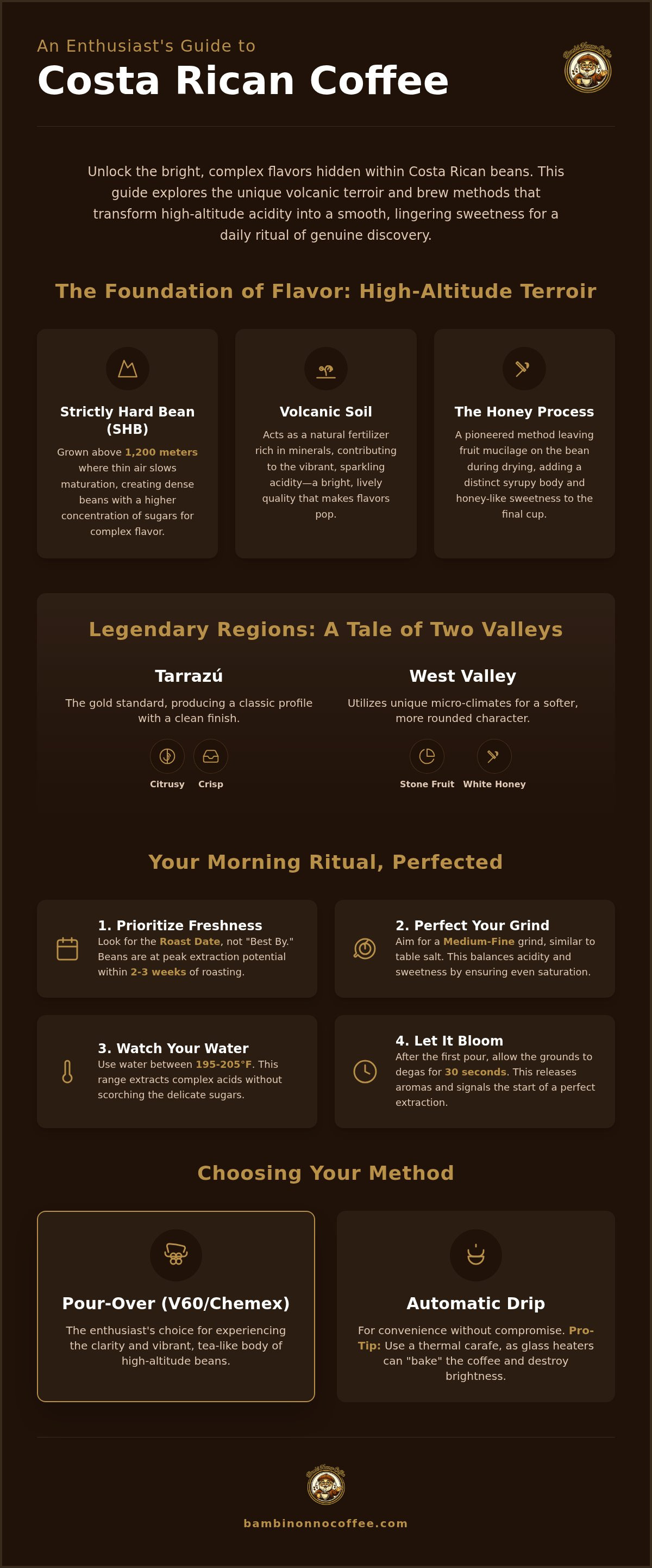
Terroir isn't just a technical term used by professionals; it's a sensory map that guides you through the high-altitude slopes of Central America. When you brew costa rican coffee beans, you're tasting the specific combination of air, earth, and tradition. The history of coffee production in Costa Rica is built on a foundation of quality. This legacy is most evident in the "SHB" or Strictly Hard Bean classification. This label ensures the coffee was grown at altitudes above 1,200 meters. The thin air at these heights forces the cherries to mature slowly, resulting in a dense bean that holds a higher concentration of sugars and nutrients.
The volcanic soil found across the primary growing regions acts as a natural fertilizer. It's rich in minerals like potassium and magnesium, which contribute to the vibrant, sparkling acidity that specialty coffee lovers crave. This isn't a sharp or sour sensation. It's a bright, lively quality that makes the flavors pop. To better understand how this geography shapes the bean, watch this helpful video:
Costa Rica is also the pioneer of the "honey process," a method that sits between washed and natural processing. By leaving a specific amount of the fruit's mucilage on the bean during drying, farmers can manipulate the final flavor profile. This technique adds a distinct syrupy body and a honey-like sweetness that perfectly complements the bean's natural brightness. It's a labor-intensive ritual that requires constant attention, but the depth of flavor it produces is worth every second of the wait.
Legendary Regions: Tarrazú and the West Valley
The Tarrazú region is widely considered the gold standard for those who love a crisp, citrusy profile. Its high-altitude farms produce coffee with a clean finish and notes of lemon or orange zest. It's a classic profile that represents the peak of Costa Rican excellence. In contrast, the West Valley utilizes its unique micro-climates to produce beans with a softer, more rounded character. Here, you'll often discover notes of stone fruit and white honey. The West Valley is a testament to how even a small shift in geography can completely transform your morning ritual.
Selecting and Brewing Your Costa Rican Beans for Maximum Brightness
Selecting your costa rican coffee beans is a quiet act of trust. When you hold a new bag, ignore the "best by" date. It's often a ghost of a timeline. Instead, look for the roast date. Freshness is the heartbeat of this ritual. Within the first two to three weeks after roasting, the beans are alive with gases that create the "bloom." This gentle swelling of the grounds during your first pour releases the scent of caramelized brown sugar and bright citrus. It's a clear signal that the extraction is beginning just as it should.
Precision is everything. For a pour-over using costa rican coffee beans, aim for a medium-fine grind, similar to table salt. If it's too coarse, the water rushes through, leaving the sweetness behind. Too fine, and you'll find a bitter edge that masks the honeyed profile. Your water temperature is equally vital. Stay between 195°F and 205°F. This range is hot enough to pull out those complex acids but gentle enough to protect the delicate sugars from scorching.
- Grind Size: Medium-fine, resembling table salt, to ensure even saturation.
- Water Temperature: 195-205°F to balance acidity and sweetness.
- The Bloom: Allow 30 seconds for the grounds to degas before the main pour.
The Best Brew Methods: Pour-Over vs. Drip
To truly experience the clarity of specialty coffee, a V60 or Chemex is the enthusiast's choice. These methods highlight the vibrant, tea-like body often found in high-altitude harvests. If you prefer the convenience of drip coffee, ensure your machine uses a thermal carafe. Glass heaters can bake the coffee, destroying the very brightness you worked so hard to find.
Decoding Tasting Notes: Citrus, Chocolate, and Honey
Training your palate takes time. In a medium roast, look for the transition from a citrusy start to a smooth, chocolatey finish. It's a balance that makes these beans a wonderful entry point for anyone exploring single origin coffee delivery. The joy is in the discovery, not the label. If you ever find yourself struggling to name a specific flavor, don't worry. You can always reach out to us for a personal recommendation to help guide your next cup.
The Bambi Nonno Coffee Ritual: Small-Batch Roasting Meets Single-Origin Excellence
At Bambi Nonno Coffee, we believe the best things in life aren't rushed. They require patience and a steady hand. While large commercial roasters process thousands of pounds at a time, our small-batch approach allows us to monitor every second of the roast. This precision is vital for costa rican coffee beans. If the heat is too high or the roast goes a few seconds too long, those bright, citrusy notes we love disappear into a generic char. We roast in limited quantities here in the USA to ensure we preserve the inherent brightness and honeyed sweetness of our Costa Rica single-origin.
The peak flavor window is a fleeting thing. Most store-bought coffee has sat on a shelf for months, losing its soul before you even open the bag. By shipping directly to your door, we ensure your beans arrive just as they reach their aromatic peak. It's the difference between a faded memory and a vivid conversation. This freshness allows you to experience the bean exactly as the farmer intended, with all its high-altitude complexity intact.
Brewing a cup is more than a caffeine delivery system; it's a ritual of discovery. It's that quiet fifteen minutes before the house wakes up, where the steam rises and the world feels still. These high-altitude beans offer a premium experience for those who value the craft behind the cup. When you slow down and focus on the extraction, you're not just making coffee. You're honoring the generations of knowledge that brought that bean from a volcanic slope to your kitchen.
Building Your Single-Origin Collection
To truly understand terroir, try rotating your costa rican coffee beans with other origins. For instance, our single-origin Peru offers a deeper, earthier profile that provides a beautiful contrast to the bright Costa Rican acidity. This rotation helps you develop a more nuanced palate and a deeper appreciation for the diversity of the craft. As a final tip, always store your beans in an airtight container in a cool, dark place. Light and oxygen are the enemies of those delicate oils; protecting them ensures every cup is as vibrant as the first.
Next time you pour your water, try to notice the exact moment the aroma changes as it hits the grounds. It's a small detail, but it's where the magic of the ritual truly lives.
Your Journey into Costa Rican Flavor Starts Here
The ritual of a perfect cup is more than just a morning habit; it's a connection to the volcanic slopes and the dedicated hands that tend to them. By understanding the SHB classification and mastering your brew technique, you've already taken the first steps toward unlocking the true potential of costa rican coffee beans. You now know that the bright acidity and honeyed body you crave are the results of high-altitude forests and the precision of a careful roast.
At Bambi Nonno Coffee, we bring this experience directly to your kitchen. Our beans are responsibly sourced from high-altitude forests and small-batch roasted for peak freshness. With free shipping on all coffee orders, it's easier than ever to slow down and savor the quiet joy of a single-origin brew. If you're ready to transform your daily ritual, explore our small-batch Costa Rica single-origin beans and discover the difference that craft makes.
May your next brew be a moment of stillness and genuine discovery.
Frequently Asked Questions
What makes Costa Rican coffee beans unique compared to Colombian beans?
Costa Rican coffee beans often stand out for their sparkling, citrusy acidity and honeyed sweetness, while Colombian beans typically offer a fuller body with deeper nutty and chocolatey undertones. The distinction lies in the processing. Costa Rica's signature honey process leaves more fruit on the bean during drying. This creates a syrupy mouthfeel that you won't usually find in a standard Colombian washed coffee.
Is Costa Rican coffee naturally high in acidity?
These beans are celebrated for their bright, lively acidity, which is a direct result of the mineral-rich volcanic soil and high-altitude growing conditions. This isn't a sharp or unpleasant sourness. Instead, it feels like a crisp snap of green apple or citrus that cleanses the palate. It's the hallmark of high-quality costa rican coffee beans grown in the thin mountain air where cherries mature slowly and develop complex sugars.
How should I store my Costa Rican coffee beans to keep them fresh?
Store your coffee in an opaque, airtight container placed in a cool, dark corner of your kitchen to protect it from light, heat, and oxygen. Avoid the refrigerator or freezer. The moisture inside can damage the delicate oils and aromatics that make your daily ritual so special. Keeping them at room temperature in a sealed jar ensures every extraction remains as vibrant as the day the beans were roasted.
What is the best roast level for Costa Rican coffee?
A light to medium roast is the ideal choice for preserving the intricate origin characteristics of these beans. If the roast is too dark, you risk losing the delicate floral and honeyed notes to the smoky flavors of the roasting process. A careful medium roast balances the natural brightness with a smooth, chocolatey finish. It offers a much more complex alternative to standard dark commercial blends.