

What is Specialty Coffee? A Guide to the Craft, Flavor, and Ritual
What if the bag of beans on your kitchen counter isn't just a morning necessity, but a certified masterpiece that survived a rigorous 100-point inspection? You've likely stood in a shop or scrolled online, feeling that familiar sting of confusion while staring at labels filled with altitude numbers and complex processing methods. It's easy to feel overwhelmed when every brand claims to be premium, yet your home brew still lacks that quiet magic you discovered during your travels. This guide clears the fog around what is specialty coffee by tracing the journey from the soil to your favorite mug, stripping away the jargon to reveal the heart of the craft.
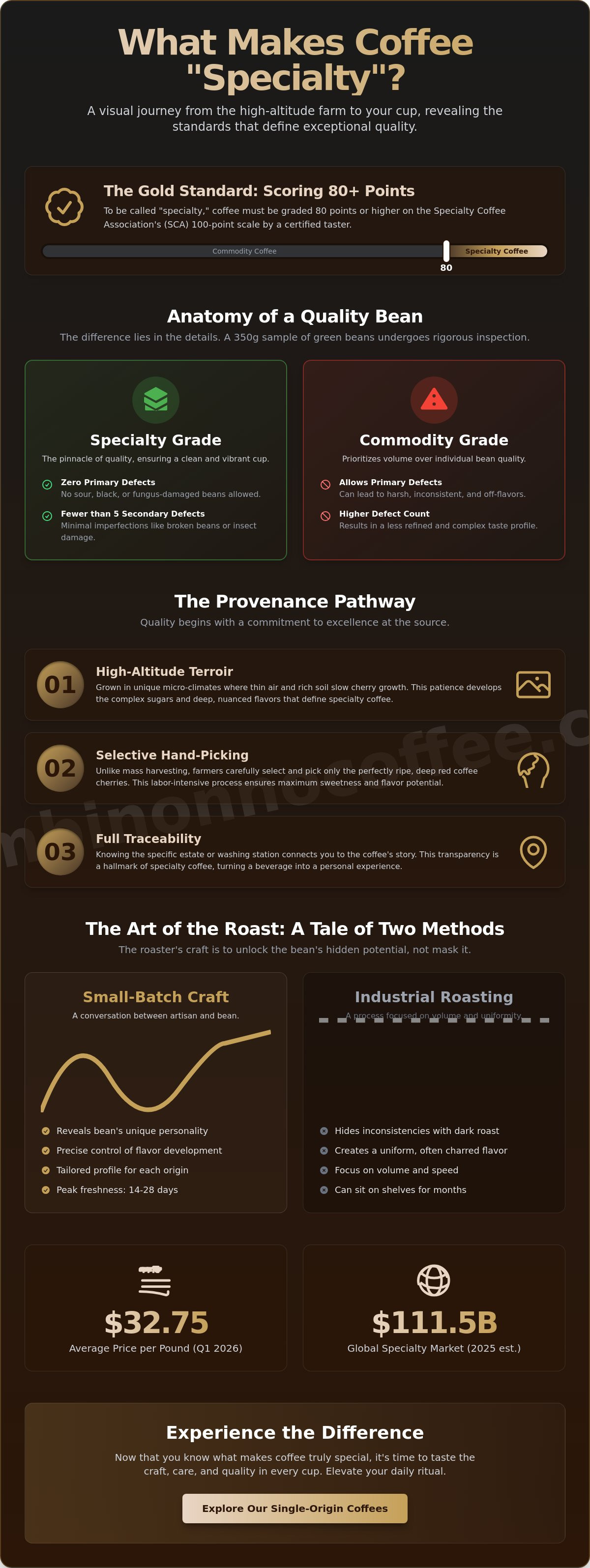
The global specialty market grew to an estimated $111.5 billion in 2025, yet the true value remains in the personal connection to the bean. You'll learn exactly how a coffee earns its title by scoring 80 points or higher on the SCA scale and why the average price for these exceptional roasts reached $32.75 per pound in the first quarter of 2026. We'll explore how to identify quality beans and refine your daily extraction. By the end, you'll have the confidence to choose beans that truly resonate, turning a simple habit into a soulful ritual of discovery.
Key Takeaways
- Discover why a score of 80 or higher on the SCA scale is the gold standard for quality and how high-altitude terroir shapes those unique flavors.
- Learn how small-batch roasting preserves the delicate, individual voice of the bean, unlike the uniform taste of industrial, high-volume production.
- Understand exactly what is specialty coffee by looking past the marketing jargon to the rigorous standards of bean grading and defect counts.
- Transform your morning habit into a meaningful ritual by mastering the bloom and focusing on consistent extraction to honor the craft in every cup.
Defining the Standard: The 80-Point Journey of Specialty Coffee
Imagine sitting across from a trusted friend who has traveled the world, sharing a cup that tastes like more than just caffeine. It tastes like a specific hillside in Guatemala or a high-altitude forest in Ethiopia. To truly understand what is specialty coffee, we have to look at the numbers that back up the passion. Every bag that earns this title has been graded by a certified expert and scored at least 80 points on the Specialty Coffee Association’s 100-point scale. This isn't just a marketing label; it's a rigorous technical standard that separates the exceptional from the ordinary.
The grading process is incredibly strict. A 350g sample of green beans must have zero primary defects, such as black or sour beans, and fewer than five secondary defects to pass the test. This level of scrutiny ensures a clean, vibrant cup every time you brew at home. The journey begins long before the beans reach our roaster. It starts with the terroir, those unique micro-climates where the air is thin and the soil is rich. These high-altitude environments slow down the growth of the coffee cherry. This patience allows complex sugars and deep flavors to develop within the seed. Ultimately, specialty coffee is a holistic commitment to excellence that connects the hands of the farmer directly to the soul of the roaster.
The Human Element: Sourcing with Integrity
Quality isn't accidental. It’s born from the farmer’s dedication to selective hand-picking, where only the deep red, perfectly ripe cherries are chosen. This labor-intensive process means the harvest happens in waves, respecting the natural rhythm of the plant rather than rushing for volume. Traceability turns a simple beverage into a story, allowing you to know the specific estate or washing station where your beans were processed. You can learn more about our dedication to quality and the relationships that drive us in Our Story. When you know where your coffee comes from, the ritual of your morning cup feels a little more personal and a lot more meaningful.
The Art of the Roast: How Small-Batch Craft Unlocks Flavor
Industrial roasting is built on the idea of mass production. It prioritizes volume and uses high heat to create a uniform, often charred flavor that hides bean inconsistencies. In contrast, when we talk about what is specialty coffee, the roasting process becomes a quiet conversation between the artisan and the bean. We aren't looking for uniformity; we're looking for the bean's individual personality and hidden potential.
Small-batch roasting is where this personality is truly found. It gives us precise control over the Maillard reaction, that critical window when sugars and amino acids transform into the complex flavors you love. We monitor the development time down to the second. A few degrees of difference in the drum can be the gap between a cup that tastes like fresh berries and one that just tastes like burnt toast. This level of care is why specialty roasters work with smaller quantities; you can't listen to the beans if you're roasting thousands of pounds at once.
Freshness is the next part of the equation. While grocery store coffee might sit on a shelf for months, specialty beans are at their peak for about 14 to 28 days after roasting. Every origin demands a tailored approach to stay vibrant. For example, our bright Guatemala requires a delicate touch to preserve its crisp acidity, while a smooth Peru benefits from a profile that highlights its creamy body and sweetness. If you're unsure which profile fits your morning ritual, feel free to ask us about our current favorites.
Flavor Profiles and the Joy of Discovery
Specialty coffee invites you to taste the world without any artificial additives. You might find notes of jasmine, stone fruit, or rich dark chocolate naturally occurring in the bean. This appreciation is the heart of the "Third Wave" movement, which treats coffee with the same reverence as fine wine. It’s a global shift in specialty coffee culture that celebrates regionality and specific processing methods. Single-origin beans offer a beautiful snapshot of a specific farm and season, giving you a way to explore the globe from your own kitchen.
Elevating Your Ritual: Bringing Specialty Quality to Your Kitchen
The transition from a professional roastery to your kitchen counter is where the story of what is specialty coffee truly concludes. You aren't just making a drink; you're honoring the labor of farmers and the precision of the roast. This final stage requires a bit of intention. Respecting the craft means paying attention to the bloom, that brief moment where hot water meets fresh grounds and releases trapped gases. It’s a sensory signal that your beans are alive with flavor. Consistent extraction ensures you aren't leaving sweetness behind or pulling out bitter notes that can ruin a delicate cup.
While the Specialty Coffee Association's definition gives us a technical baseline of 80 points, your palate remains the ultimate authority. Don't be afraid to experiment with your grind size or water temperature. Your morning coffee is a quiet invitation to embrace a moment of slow-living before the day demands your attention. It's a time to notice the steam, the aroma, and the warmth of the mug in your hands.
The Tools of the Trade
You don't need a lab full of equipment to enjoy high-scoring beans, but two things are non-negotiable: a burr grinder and filtered water. Since water makes up about 98.5% of your final cup according to industry standards, using a filtered source removes minerals and chlorine that can mask delicate notes. A burr grinder ensures your grounds are uniform, which is the secret to that balanced clarity found in a great pour-over or French press. Whether you prefer the bright acidity of a light roast or the deep comfort of a darker profile, the goal is always balance. You can find your next favorite roast and start your own journey at Bambi Nonno Coffee. Every cup is a chance to discover something new and connect with the global community of growers who made it possible.
Your Journey into the World of Better Brewing
Understanding what is specialty coffee is more than just learning about technical 80-point scores or the chemistry of a roast. It's about discovering a deeper connection to the hands that grew the cherries and the care that went into every small-batch roast. You've seen how quality starts with high-altitude terroir and ends with the quiet intention you bring to your morning extraction. This ritual isn't just a way to wake up; it's a way to slow down and appreciate the craftsmanship that spans across continents.
We invite you to bring this experience into your own home. Our beans are responsibly sourced from high-altitude estates and small-batch roasted right here in the USA to ensure every bag arrives at its peak. With free shipping on all coffee orders, it's never been easier to start your own exploration of flavor. If you're ready to find your next favorite origin, discover our small-batch roasted specialty blends and single-origin favorites. The perfect cup is a journey, and we're honored to walk it with you.
Frequently Asked Questions
Is specialty coffee the same as gourmet coffee?
Gourmet is often a label used to make coffee sound high-end, but it lacks any official technical definition or oversight. To understand what is specialty coffee, you have to look at the rigorous certifications required. Specialty coffee must meet the strict standards of the Specialty Coffee Association, scoring 80 points or higher. It's the difference between a label that simply sounds fancy and a product verified by certified experts for its excellence.
What does an 80-point score actually mean for the taste?
An 80-point score is the threshold that ensures your coffee is free from primary defects and offers a clean, vibrant taste. For your morning ritual, this means you'll experience a balanced cup with distinct flavor notes rather than the flat or bitter profile common in lower-grade beans. While an 80-84 score is considered "Very Good," coffees reaching the 90-point mark are "Outstanding," providing rare and complex sensory experiences that tell a story of their specific origin.
Why is specialty coffee usually more expensive than grocery store brands?
The price reflects the intensive care and ethical standards required from the soil to the bag. In the first quarter of 2026, the average price for a pound of roasted specialty coffee was $32.75, which accounts for selective hand-picking and fair compensation for farmers. You're investing in a product where quality is prioritized over volume, ensuring that the people and environments behind your cup are treated with respect. It's a commitment to a sustainable future.
How can I tell if the coffee I'm buying is actually specialty grade?
You can identify genuine quality by looking for specific transparency markers on the packaging. A true specialty bag will list the roast date, the specific farm or estate, and the processing method rather than just a country of origin. Identifying what is specialty coffee becomes much easier when you see descriptors like "stone fruit" or "jasmine" instead of vague marketing terms. If the coffee was roasted within the last 30 days and provides clear traceability, you're holding a specialty-grade bean.