

Coffee Pods vs Fresh Brewed Taste: Elevating Your Morning Ritual
What if your fast morning shortcut is quietly stealing the most comforting part of your day? When you compare coffee pods vs fresh brewed taste, the difference often comes down to a missing sense of wonder in the cup. You press a button, a machine whirs, and you get a convenient drink that can feel a bit flat, lacking the vibrant, complex aroma you crave.
It's completely natural to choose ease when mornings get hectic, and you shouldn't have to compromise on quality for the sake of time. This guide uncovers the scientific and sensory differences between coffee pods and fresh brewing to elevate your daily coffee ritual. You'll explore how extraction impacts flavor profiles and learn simple ways to enjoy a deeply satisfying, cafe-quality cup every single morning.
Key Takeaways
- Learn how oxidation impacts the aromatic complexity of your cup and why freshly brewed coffee preserves the delicate volatile compounds that define a great morning.
- Explore the mechanical differences in extraction and why the absence of a bloom stage impacts the flavor balance of coffee pods vs fresh brewed taste.
- Understand how to use precise water temperatures and contact times to reveal the unique terroir and sensory notes of single-origin beans.
- Find out how specialty single-serve capsules can bridge the gap between a busy schedule and the high-quality, meaningful ritual you deserve.
The Sensory Divide Between Coffee Pods and Fresh Brewed Taste
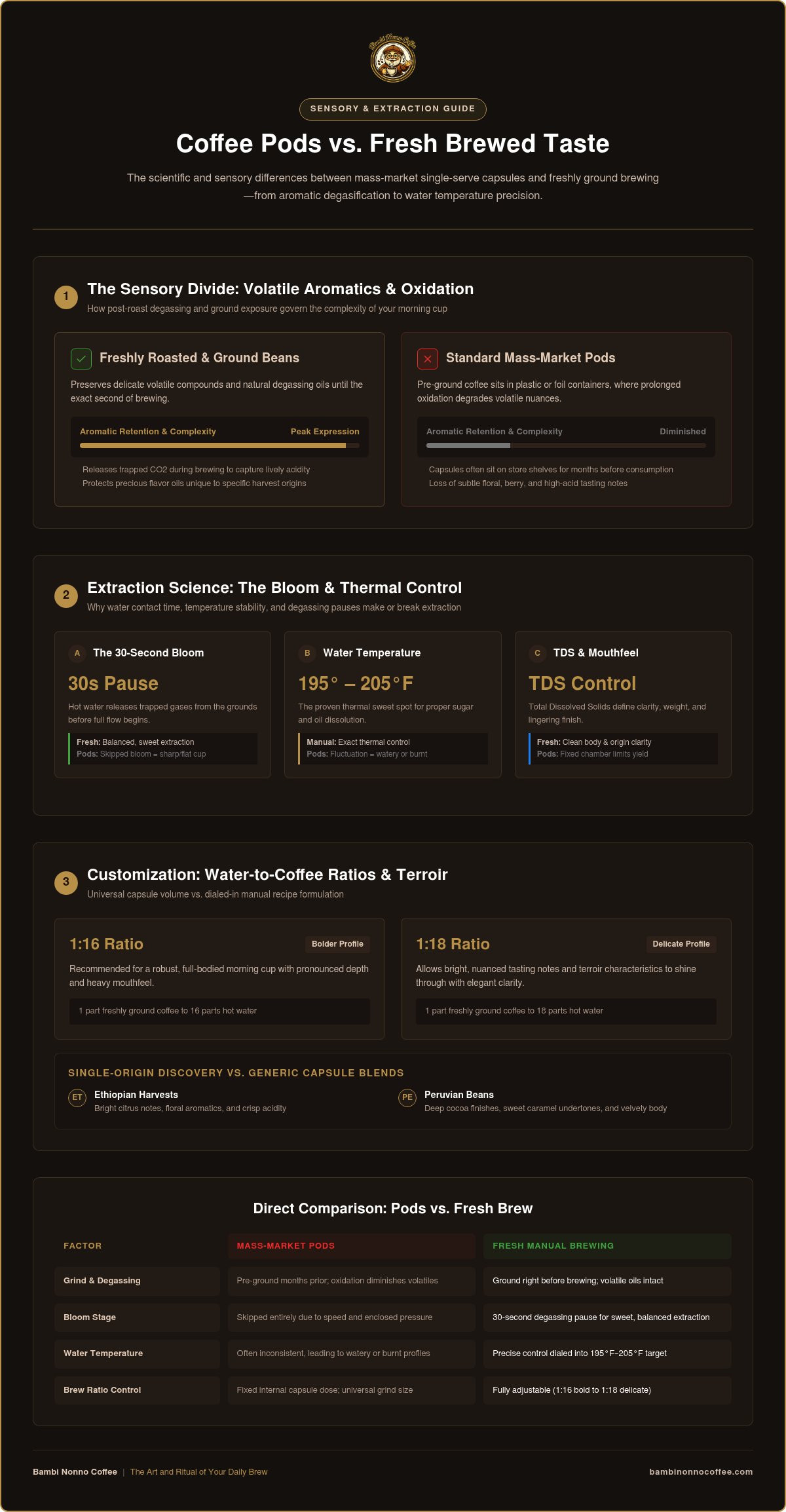
There is a distinct quietness to a morning spent with a manual brewer. Shifting from pushing plastic buttons to an intentional craft fundamentally changes how you start your day. It's an upgrade to your entire routine. The core of the coffee pods vs fresh brewed taste debate lies in the immediate sensory experience, specifically the rich aroma that fills your kitchen. Freshly brewed coffee retains delicate volatile compounds that create a complex, multi-layered fragrance. Mass-market alternatives frequently trade this aromatic depth for speed, leaving you with a cup that feels functional rather than experiential.
To better understand how these methods compare in daily life, watch this helpful breakdown:
Why Pre-Ground Pods Lose Their Delicate Volatile Aromatics
Once coffee beans leave the roaster, they undergo a natural degassing process, releasing carbon dioxide while locking in precious flavor oils. When beans are ground and packed into a standard single-serve coffee container, oxidation begins immediately. This exposure to oxygen rapidly robs mass-market pods of their vibrant character, leaving the grounds flat. In contrast, choosing freshly roasted coffee beans protects those volatile aromatics until the exact moment of extraction. The difference is clear in the cup. Mass-produced capsules often sit on store shelves for months, losing the lively acidity and distinct tasting notes that make single-origin coffees so remarkable. When you brew fresh, you capture the peak expression of the harvest.
Evaluating Extraction and Flavor Profiles Across Brewing Methods
The mechanical difference in how water meets the bean defines the gap in coffee pods vs fresh brewed taste. Most commercial machines prioritize speed, pushing water through a small capsule under high pressure. This efficiency often forces the machine to skip the bloom, a quiet 30-second pause where hot water releases trapped gases from the grounds. Without this step, your cup might taste sharp or underdeveloped. In contrast, traditional brewing methods respect this chemical release, allowing for a more balanced and sweet extraction.
Total dissolved solids (TDS) also vary wildly between these methods, impacting the mouthfeel and clarity of your cup. A manual pour-over allows you to control the flow rate and water temperature, typically aiming for that 195 to 205 degree Fahrenheit sweet spot. Pod machines often struggle with temperature consistency, leading to either a watery body or a harsh, burnt finish that masks the bean's origin. When you brew manually, you're the one deciding how the final story of the bean is told.
The Critical Role of Grind Size and Contact Time
Understanding extraction is about finding the right balance between how fine you grind and how long the water stays in contact with the coffee. While pods use a universal grind, drip coffee gives you the freedom to optimize your yield naturally. This control is why many enthusiasts notice a stark change in coffee pods vs fresh brewed taste when they switch to manual methods. We encourage you to experiment with your water-to-coffee ratios; try a 1:16 ratio for a bolder morning or a 1:18 for something more delicate. Finding that perfect harmony is a journey. If you're looking for a specific profile for your home setup, feel free to reach out through the Bambi Nonno Coffee Contact Page to chat about your ritual.
Balancing Daily Convenience with a Premium Fresh Coffee Experience
Mornings are often a race against the clock. It's easy to assume that speed requires settling for the flat, metallic profile of mass-market plastic. However, you don't have to sacrifice your entire morning schedule to enjoy excellent coffee. The reality of coffee pods vs fresh brewed taste is evolving. By choosing options that prioritize sourcing and roasting over purely industrial scale, you can reclaim those quiet moments without needing a full laboratory on your counter. Convenience should support your lifestyle, not dictate the quality of your experience.
Embracing the joy of discovery is what makes a ritual truly meaningful. Instead of repeating the same generic blend every day, exploring distinct single-origin profiles allows you to travel through your cup. Whether it's the bright citrus notes of an Ethiopian harvest or the deep cocoa finish of a Peruvian bean, these nuances add a layer of personal connection to your daily routine. It turns a simple caffeine fix into a moment of genuine curiosity and sensory delight.
Upgrading to Small-Batch Specialty Coffee Capsules
Small-batch production is the secret to keeping specialty coffee vibrant even in single-serve formats. Unlike industrial operations that roast by the ton, smaller roasters focus on preserving the volatile aromatics discussed earlier. Specialty single-serve capsules bridge the gap by sealing this freshness inside the pod immediately after roasting. To experience this yourself, try a curated single origin coffee delivery. It lets you taste the difference terroir makes, even on your busiest days. To keep your coffee at its peak, always store your capsules or beans in a cool, dark place away from direct sunlight and moisture.
Reclaiming Your Morning Moment
Understanding the nuances of coffee pods vs fresh brewed taste is the first step toward a more intentional morning. While convenience often leads to flat, oxidized flavors, the secret lies in preserving volatile aromatics and respecting the extraction process. By choosing small-batch roasted options that preserve delicate origin character, you ensure every cup reflects the story of its high-altitude forest home. You don't have to choose between your schedule and your soul. Whether you're grinding whole beans or opting for premium specialty capsules, the goal is discovery and connection. If you're ready to refine your home brewing process, you can elevate your morning ritual with expert guidance on the Bambi Nonno Coffee Contact Page. Your perfect cup is a journey worth taking, one slow sip at a time.
Frequently Asked Questions
Why does pod coffee often taste bitter or flat compared to fresh brew?
Pod coffee often tastes flat because the grounds are exposed to oxygen long before they reach your cup. This oxidation strips away the lively acidity found in fresh brew. Bitterness usually stems from the high pressure and inconsistent water temperature of standard machines, which over-extract the oils. When comparing coffee pods vs fresh brewed taste, the lack of freshness is the primary culprit for a dull profile.
Can I get a true specialty coffee experience using single-serve capsules?
You absolutely can enjoy a specialty experience with capsules if they are filled with small-batch, responsibly sourced beans. Unlike mass-produced rounds, specialty capsules like Bali Coffee Pods or Peru Coffee Pods are designed to lock in the distinct terroir of high-altitude forests. These curated options bridge the gap by providing the convenience you need without sacrificing the vibrant extraction of a manual brew.
How does the coffee bloom affect the final taste of my cup?
The bloom is a short pause where hot water releases trapped carbon dioxide from the grounds. This degassing prevents the gas from repelling water, ensuring every drop can penetrate the coffee particles for a balanced extraction. Skipping this stage, as many pod machines do, often results in a sour or uneven flavor. A proper bloom unlocks the sweetness and clarity hidden within the bean.
What is the best way to transition from standard pods to fresh brewing?
Start by exploring high-quality single-origin beans through a simple pour-over setup or a French press. This allows you to control the variables that define coffee pods vs fresh brewed taste, like temperature and ratio. If you aren't ready to give up the machine, try upgrading your pods to specialty 12 pack single serve coffee capsules. It's a gentle way to discover the joy of craft coffee.