

Coffee Tasting Notes for Beginners: A Guide to Finding the Soul of Your Brew
Have you ever held a bag of coffee, read the words “notes of stone fruit, milk chocolate, and almond,” and thought to yourself, “This just tastes like… coffee”? If so, you’re not alone. It's a common struggle to spend $32.75 on a pound of specialty beans, the average retail price in March 2026, only to feel like an outsider because you can't find the 'jasmine' everyone else raves about. This guide to coffee tasting notes for beginners helps you stop wasting money on beans you can't differentiate and starts your journey into the soul of the brew.
We agree that the world of specialty coffee often feels like an exclusive club where you don't know the secret password. Since 70% of us are now brewing our daily cups at home, it's time to master the ritual and trust your own palate. I promise you'll learn how to unlock the hidden flavors in your morning cup and finally understand what those notes on the bag actually mean. We'll explore how to slow down during the bloom, identify your first distinct flavor note, and confidently choose single-origin beans you'll actually enjoy based on their unique story.
Key Takeaways
- Understand that those subtle hints of fruit or chocolate are the result of high-altitude terroir, not artificial syrups or added flavorings.
- Master the "slurp" method to aerate your brew, an essential step in this guide to coffee tasting notes for beginners to ensure full flavor extraction.
- Learn the 4-step ritual to train your palate, starting with a clean bloom and tasting your coffee black to truly find its soul.
- Categorize your preferences into "Comfort" or "Adventure" families to make shopping for single-origin beans a more personal and rewarding experience.
- Discover why medium roasts offer the clearest window into a bean’s natural character, making them the ideal choice for your next tasting session.
Table of Contents
- Decoding the Mystery: What Coffee Tasting Notes Actually Are
- A Beginner’s Ritual: How to Train Your Palate in 4 Steps
- Choosing Your Story: How to Shop Using Tasting Notes
Decoding the Mystery: What Coffee Tasting Notes Actually Are
Let's clear up the biggest myth right away: coffee tasting notes are not added syrups or artificial flavorings. When we talk about notes of blueberry in an Ethiopian coffee or hints of walnut in a Peruvian one, we’re describing the natural, inherent flavors of the bean itself. It's a common misconception in coffee tasting notes for beginners that these descriptions imply artificial flavorings.
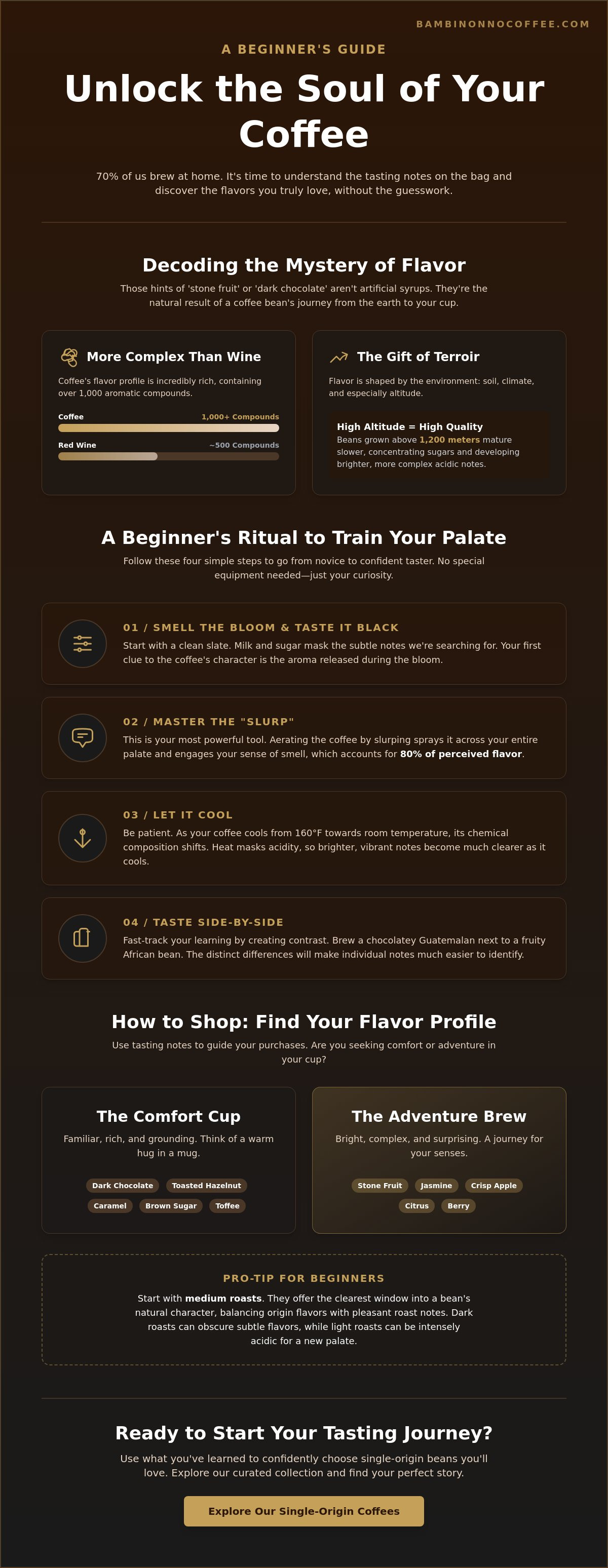
Think of coffee like a fine wine. Just as grapes pick up characteristics from their environment, coffee cherries are shaped by "terroir." This includes the mineral content of the soil, the rainfall, and the high-altitude air. For instance, beans grown at elevations above 1,200 meters tend to develop brighter, more acidic notes because the fruit matures slower in the cooler air. This slow growth allows the sugars to concentrate, leading to the distinct profiles you find in our Peru single-origin beans.
To better understand how these flavors are identified, watch this helpful video:
According to the Specialty Coffee Association, roasted coffee contains over 1,000 aromatic compounds. To identify these flavors with precision, professionals use a standardized practice known as Coffee cupping. This method removes the variables of different brewing techniques so the raw potential of the bean can shine. We use familiar words like "nutty" or "citrusy" because our brains need a bridge to recognize those complex organic compounds. It's not a test you have to pass; it's about finding a shared language for the joy of discovery in your morning ritual.
The Journey from Bean to Cup
The magic happens during the roasting process through the Maillard reaction. This chemical interaction between amino acids and reducing sugars is what transforms a green, grassy seed into a fragrant bean. It's the same process that browns a perfect loaf of bread, unlocking aromatic oils and deep sweetness. Understanding coffee tasting notes for beginners starts with recognizing that single-origin beans often provide a clearer, more readable story of their home than generic blends.
Our approach is rooted in a deep obsession with this craft, built through years of travel and quiet morning habits. We believe every cup should feel like a connection between generations. You can learn more about how we honor these traditions in Our Story. Whether it's a bright citrus note from a high-elevation farm or the deep cocoa finish of a traditional roast, these flavors are the soul of the brew. They're waiting for you to find them.
A Beginner’s Ritual: How to Train Your Palate in 4 Steps
Professional cupping is a vital industry standard, but you don't need a lab to appreciate the soul of your brew. Training your palate is a quiet daily habit, a ritual that turns a simple caffeine fix into a moment of discovery. While professional environments might feel stiff, your kitchen table is the perfect place to explore coffee tasting notes for beginners without the pressure of getting it right. It's about curiosity, not perfection.
Start by observing the bloom. When hot water first hits the grounds, watch the gases escape and take a deep breath. This is your first introduction to the bean's personality. Before you reach for the cream or sugar, take three sips of the black coffee. To truly unlock the profile, use the slurp method. By drawing the coffee into your mouth with a quick, audible spray, you aerate the liquid. This spreads the coffee across your entire tongue and sends aromatic compounds to your olfactory system. It might feel silly at first, but this technique is the foundation of the Coffee Taster's Flavor Wheel, helping you map sensations to specific words.
Patience is your best tool. As your coffee cools from its brewing temperature of roughly 94°C to a lukewarm 50°C, the flavor profile shifts dramatically. High heat often masks acidity and subtle sweetness. As the cup reaches room temperature, you might suddenly notice a bright citrus spark that was hidden before. If you ever feel stuck, try a side-by-side comparison. Tasting a chocolatey Guatemala next to a fruity Ethiopia Natural makes the differences impossible to miss. If you're looking for more ways to experiment with your home setup, feel free to reach out to our team for personalized tips.
The Sensory Checklist
- Aroma: Focus on the scent during the bloom and after brewing. Is it floral like jasmine, or does it remind you of toasted nuts?
- Acidity vs. Bitterness: Acidity is the pleasant "spark" or "zing" on the sides of your tongue, similar to a squeeze of lemon. Bitterness is the deep, heavy sensation at the back of your throat, like dark cocoa or grapefruit peel.
- Body and Mouthfeel: Focus on the weight. Does the coffee feel light and tea-like, or is it heavy and syrupy?
If you're curious about a specific origin or want to share a discovery from your latest tasting, we'd love to hear about your journey. Every palate is unique, and your personal connection to the brew is what matters most.
Choosing Your Story: How to Shop Using Tasting Notes
Once you understand the basics, the real joy begins. Shopping for your next bag isn't just a transaction; it's choosing the mood for your next few mornings. If you're just starting out with coffee tasting notes for beginners, think in terms of "Flavor Families." Most beans fall into two camps: the Comfort family and the Adventure family. Comfort beans offer those familiar, hug-in-a-mug sensations like toasted hazelnut or brown sugar. Adventure beans are for the curious, offering bright sparks of hibiscus or the tart sweetness of green apple.. Identifying which family you prefer is the first step toward a more rewarding daily ritual.
Medium roasts are often the sweet spot for this exploration. While a dark roast might emphasize the roasting master’s influence through smoky, toasted notes, a medium roast preserves enough of the bean's origin to let those specific tasting notes shine. It’s the perfect balance for a hobbyist looking to identify clear, readable flavors. When you read a bag, look for the relationship between origin and expected flavor. High-altitude regions often produce that "spark" of acidity, while lower elevations or specific processing methods might lean into deep sweetness.
Finding Your Perfect Match
- The Bright and Floral: If you find yourself drawn to crisp, fruity, and floral notes, look toward Central America. Our Guatemala single-origin is a prime example, often revealing a lively acidity that rewards a careful extraction.
- The Smooth and Nutty: For those who prefer a velvety, chocolatey finish, our Peru single-origin offers a grounded experience. It’s a cup that feels like a warm conversation, emphasizing sweetness and a creamy mouthfeel.
- For the Best of Both: If you want a bit of everything, our Breakfast Blend is designed as a balanced introduction to multi-note complexity, bridging the gap between comfort and adventure.
The next time you browse our collection, don't feel pressured to find every single note listed. Pick a bag that sounds like a place you'd want to visit. Coffee is a journey built through years of travel and quiet habits. Every cup is an opportunity to slow down and listen to what the bean has to say. Grab a new bag this week and try to name just one flavor you haven't noticed before. It's the smallest discoveries that make the ritual worthwhile.
Your Journey Into the Soul of the Bean
You've moved beyond just drinking a morning cup; you're now beginning to listen to the story each bean has to tell. By understanding how high-altitude forests and precise roasting methods create natural complexity, you can stop guessing and start exploring. Your palate is a personal record of your own experiences and memories. Whether you're slurping to aerate the brew or waiting for the temperature to drop to reveal hidden sweetness, you're engaging in a ritual that connects you to farmers and traditions across the globe.
Mastering coffee tasting notes for beginners is simply about finding the language for the flavors you already love. We're here to help you refine that discovery through our small-batch roasted beans. We source responsibly from high-altitude regions to ensure every bag captures the unique soul of its origin. To make your exploration even easier, we offer free shipping on all U.S. coffee orders so your beans arrive at peak freshness.
Ready to take the next step in your flavor discovery? Explore our small-batch roasts and find your new favorite flavor profile. Trust your senses and keep experimenting with different origins. The perfect cup isn't a destination; it's a beautiful, daily habit of discovery.
Frequently Asked Questions
Do coffee tasting notes mean the coffee is flavored?
No, tasting notes are completely different from "flavored" coffee that uses external oils or syrups. These notes are the result of the bean’s origin and the careful application of heat during the roasting process. While flavored coffees add ingredients after roasting, specialty beans rely on their natural chemistry. We use descriptive words to help you identify the 1,000 unique aromatic compounds that the soil and altitude have already provided.
Why can’t I taste the notes listed on my coffee bag?
You might not taste the notes immediately because your palate needs time to recognize specific aromatic patterns. Since 80% of flavor perception comes from your sense of smell, engaging with the aroma during the bloom is essential. If you're exploring coffee tasting notes for beginners, don't worry if you only taste "coffee" at first. Your ability to distinguish subtle hints of fruit or chocolate will sharpen with every mindful cup you brew.
Is it okay to add milk if I want to taste the notes?
You can certainly add milk, but it often masks the delicate acidity and floral notes that make a bean unique. The fats in dairy or plant milks bind to coffee's organic compounds, softening the "bright" sparks of flavor. To best understand coffee tasting notes for beginners, try tasting the first few sips black. This allows you to experience the bean's full profile before the milk creates a smoother, more uniform texture.
Does the brewing method change the tasting notes?
The way you brew your coffee acts like a lens, focusing on different parts of the bean’s personality. A paper filter removes oils and fine particles, which makes "bright" and "citrusy" notes much easier to identify. On the other hand, immersion brewing keeps more oils in the cup, emphasizing "nutty" and "earthy" finishes. Changing your method is a simple way to experiment and find which flavors speak to you most.