

Drip Coffee vs. Cold Brew Coffee: Finding Your Perfect Brewing Ritual
What if the secret to your most soulful cup of coffee isn't the origin of the bean, but the patience you show it while it brews? Whether you are reaching for a bright Ethiopia Natural or a comforting Breakfast Blend, the choice between drip coffee vs cold brew coffee changes everything about the final sip. Most of us have experienced that sharp, acidic bite from a rushed morning pot that leaves our stomachs feeling uneasy. It is a common struggle to find consistency when you are just trying to recreate a quiet, premium moment at home.
We believe that coffee is a bridge between generations and a symbol of slowing down. You will soon discover how temperature and time transform the same bean into two entirely different sensory experiences. We will explore the flavor chemistry that makes cold brew statistically less bitter and more floral than its hot counterpart. You will learn which beans work best for each style and how to refine your daily ritual for a perfect, stomach friendly cup every single time. It is time to move past the confusion and embrace the method that speaks to your senses.
Key Takeaways
- Learn how the swift extraction of hot water compares to the slow, patient immersion of cold brewing to change the soul of your cup.
- Discover why drip coffee highlights the terroir of a single-origin bean while cold brew brings out deep, comforting chocolate and nut notes.
- Understand the chemistry of drip coffee vs cold brew coffee to find a brewing method that is gentle on your stomach and consistently delicious.
- Identify which ritual fits your daily rhythm, from the sensory bloom of a morning pour-over to the quiet convenience of a prepared cold brew.
- Get tips on choosing the right beans, like our Ethiopia Natural or French Roast, to elevate each specific brewing style through better extraction.
The Science of the Sip: How Temperature and Time Shape Your Cup
Coffee is a living story, and the way you tell it depends entirely on the tools you choose. When we look at drip coffee vs cold brew coffee, we are really looking at two different speeds of conversation. Heat acts as a violent but beautiful catalyst. It forces the bean to give up its secrets in minutes. Without that heat, we must rely on the slow, gentle passage of time to coax those same flavors into the water.
Hot Extraction: The 5-Minute Morning Ritual
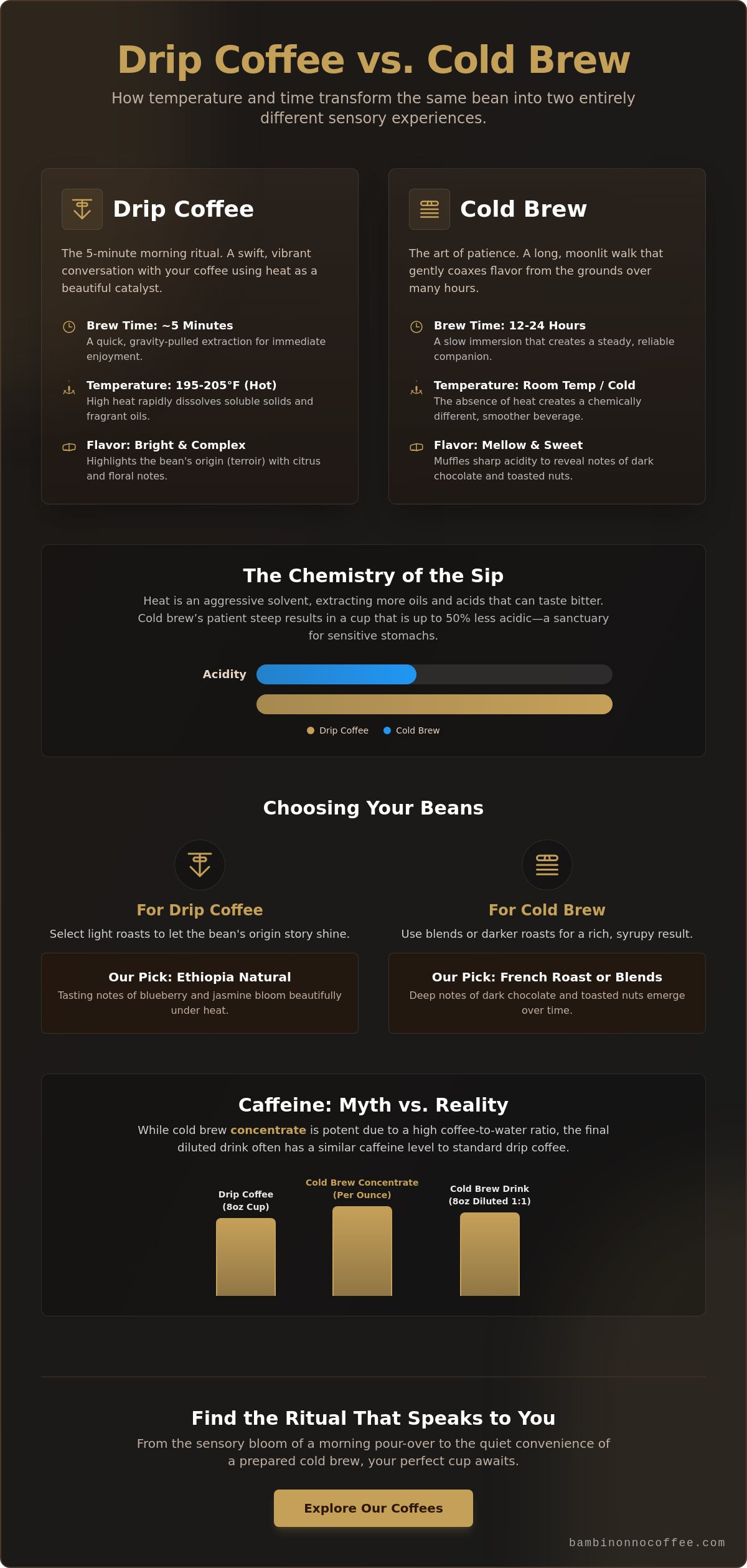
In a traditional drip setup, water heated between 195 and 205 degrees Fahrenheit washes over the grounds. This high temperature quickly dissolves the soluble solids and oils that give coffee its soul. You have likely noticed the bloom, that moment when hot water first hits the bed of coffee and causes a quiet hiss of steam. This is the release of carbon dioxide, a necessary step that clears the way for water to extract flavor with absolute clarity. Drip coffee is a brewing method where gravity pulls hot water through a bed of grounds for immediate enjoyment.
Cold Immersion: The Art of Patience
If heat is a spark, then cold immersion is a long, moonlit walk. Because the water is cold, it cannot shock the acids out of the bean. Instead, we allow the grounds to steep for 12 to 24 hours. This creates a chemically different beverage. To understand the history and reach of this method, you might ask, What is Cold Brew Coffee? and how did it become so beloved? The answer lies in its low acidity. By removing heat from the equation, we avoid the extraction of certain bitter oils. This results in a cup that is often 50 percent less acidic than hot coffee, making it a sanctuary for those with stomach sensitivities.
This obsession with the quiet, daily habits of brewing is at the heart of Our Story. We have spent years exploring how these subtle shifts in chemistry affect your morning. While drip coffee begins to oxidize and degrade as soon as it cools, cold brew remains stable and smooth for days in your refrigerator. One is a fleeting, vibrant moment; the other is a steady, reliable companion.
Flavor Profiles: Bright Acidity vs. Mellow Sweetness
Comparing drip coffee vs cold brew coffee is like choosing between the story of the land and the story of the roast. Drip coffee acts as a window into the terroir. It highlights the specific minerals in the soil and the high-altitude air where the bean grew. If you love the citrus snap or floral whispers of an African bean, hot water is your best friend. It releases the delicate aromatics that define a truly complex cup.
Cold brew tells a more grounded tale. It muffles that sharp acidity to create a different kind of balance. While some miss the sparkle of a hot brew, many find peace in the mellow sweetness that emerges over time. The slow extraction emphasizes the bean's natural sugars, leaning into notes of dark chocolate and toasted nuts. These chemical differences result in a cup that is statistically less bitter and more floral than chilled hot coffee, offering a syrupy texture that feels like a quiet moment in a busy day.
Which Beans Should You Choose?
Not all beans are created equal for every method. Our Ethiopia Natural is a revelation when brewed hot. Its blueberry and jasmine notes bloom beautifully under the heat. For a rich, syrupy cold brew, look toward our Blends or a darker roast. Small-batch roasting is the secret to ensuring both methods produce a clean, vibrant cup. By roasting in tiny quantities, we protect the fragile oils and sugars that mass-produced beans often lose. If you want to discover more about these daily rituals, you can join our newsletter for deep dives into coffee culture.
Caffeine Concentration: Myth vs. Reality
There is a common belief that cold brew will always give you a bigger jolt. In reality, it depends on your ritual. Cold brew concentrate is often higher in caffeine per ounce because of the high coffee-to-water ratio used during the long steep. However, once you dilute it with milk or water, the final caffeine count often sits close to a standard drip coffee. It's all about how you balance the strength. You can find more guides on quality extraction by visiting our blog.
Choosing Your Ritual: From Morning Steams to Afternoon Ice
Your coffee choice is a reflection of your mood and your day's tempo. Choosing between drip coffee vs cold brew coffee is less about finding a winner and more about honoring your current needs. Sometimes you need the immediate comfort of a steaming mug. Other times, you need a chilled, ready-made companion that waits for you in the fridge. This choice is part of the joy of discovery. There is no wrong way to brew; there are only different perspectives on the same beautiful bean.
When to Reach for the Drip Pot
There is nothing quite like the sensory alarm clock of a drip pot. The aroma fills the kitchen, pulling you into the present moment with every hiss of steam. This method is perfect for slow weekend mornings when you have the time to appreciate the subtle nuances of a single-origin bean. We often suggest our Guatemala for a classic, balanced drip experience. Its clean, bright profile is the ideal partner for a heavy breakfast, as the acidity helps cut through rich or sweet flavors like maple syrup and butter.
When to Prep the Cold Brew
If your weekdays are a whirlwind, batch brewing is a gift to your future self. Cold brew is the ultimate grab-and-go solution for busy mornings or warm afternoons. You can keep a jar of concentrate in your refrigerator for up to two weeks, using it as a versatile base for iced lattes or even coffee cocktails. A scientific comparison of hot and cold brew reveals how temperature dictates the extraction of chemical compounds. This explains why the same bean can taste completely different depending on the clock.
We see coffee as a multicultural journey that connects us through these small, shared moments. Try brewing your favorite bean both ways this week to see how it transforms. You might find that a bean you once found too sharp becomes your favorite mellow treat when steeped in cold water. Let your curiosity lead the way and allow the coffee to tell you its story in its own time.
Try using a slightly coarser grind for your next cold brew batch to see how it improves the clarity of the final cup.
Embrace the Art of Your Own Coffee Story
Your morning ritual is more than just a quick caffeine fix; it is a quiet moment of connection before the world starts its rush. Choosing between drip coffee vs cold brew coffee isn't about following a rigid set of rules. It is about listening to what your body and your schedule need in the moment. Whether you crave the bright, aromatic bloom of a hot pour-over or the syrupy, low-acid comfort of a cold immersion, you are participating in a tradition that spans generations and cultures.
We take pride in our small-batch roasting process to ensure every bean reaches you at its peak freshness. Our beans are responsibly sourced from high-altitude forests to protect the land and the people who nurture it. We also provide free shipping on all US coffee orders so you can focus on the joy of discovery. Every cup is an opportunity to slow down and savor the craft that went into every single roast.
Ready to transform your daily routine into a meaningful ritual? Explore our small-batch beans and find your perfect brew today. Let your curiosity be your guide as you find the flavor that feels like home.
Frequently Asked Questions
Is cold brew coffee stronger than drip coffee?
Cold brew concentrate is typically stronger because it uses a much higher coffee-to-water ratio during the long immersion process. However, the strength of your final cup depends entirely on how you choose to dilute it with water or milk. Most people find that a ready-to-drink glass has a caffeine count similar to a standard hot cup. It is the syrupy texture and bold flavor that often make it feel more intense on your palate.
Can I use the same coffee beans for both drip and cold brew?
You can absolutely use the same beans for both, but the different temperatures will reveal different parts of the bean's story. A single-origin roast might taste like bright citrus when brewed hot, while the same bean in a cold brew might highlight deeper cocoa undertones. Experimenting with the same roast in drip coffee vs cold brew coffee is a great way to discover the hidden versatility of your favorite small-batch beans.
Why is cold brew coffee less acidic than hot drip coffee?
Cold brew is less acidic because the extraction process relies on time rather than the shock of heat. Hot water pulls out volatile acids and oils from the grounds very quickly. Without that high temperature, many of those acidic compounds never make it into your cup. This results in a brew that is much smoother and gentler on the stomach, which is a relief for many coffee lovers who struggle with sensitivity.
Do I need special equipment to make cold brew at home?
You don't need any fancy gadgets to make high-quality cold brew; a simple glass jar and a fine-mesh strainer or cheesecloth work perfectly. Just mix your coarsely ground beans with cold water and let them rest on your counter or in the fridge for 12 to 24 hours. While drip coffee often requires a specific machine or pour-over kit, the cold method is incredibly forgiving and rewards your patience with a reliable, delicious concentrate.