

Guatemala Coffee Beans: A Journey Through Volcanic Terroir and Morning Rituals
Imagine a quiet morning where the steam rising from your mug carries the scent of dark cocoa and a faint, floral sweetness that feels like a secret shared across continents. You've likely felt that frustration when a bag of beans smells incredible but tastes flat in the cup, or perhaps you've stared at labels like Antigua and Huehuetenango wondering which one actually suits your palate. Finding truly fresh, small-batch guatemala coffee beans shouldn't feel like a guessing game. We all want that perfect balance of body and acidity that honors the craft. This guide will help you bridge the gap between the rich, volcanic soil of Central America and your favorite ceramic mug. We'll explore how high-altitude forests and mineral-packed terroir shape every sip, giving you the confidence to master your extraction and transform your daily brew into a deeply personal ritual.
Key Takeaways
- Learn how the unique volcanic terroir and high-altitude microclimates of regions like Antigua and Huehuetenango define the soul of your coffee.
- Master the art of manual brewing to highlight complex acidity and experience the mindful ritual of a perfect bloom.
- Gain the confidence to select premium guatemala coffee beans by decoding labels and understanding the importance of small-batch roasting for freshness.
- Discover how to preserve the delicate oils and aromatics of single-origin coffee to ensure every sip is as vibrant as the day it was roasted.
Understanding the Soul of Guatemala Coffee Beans
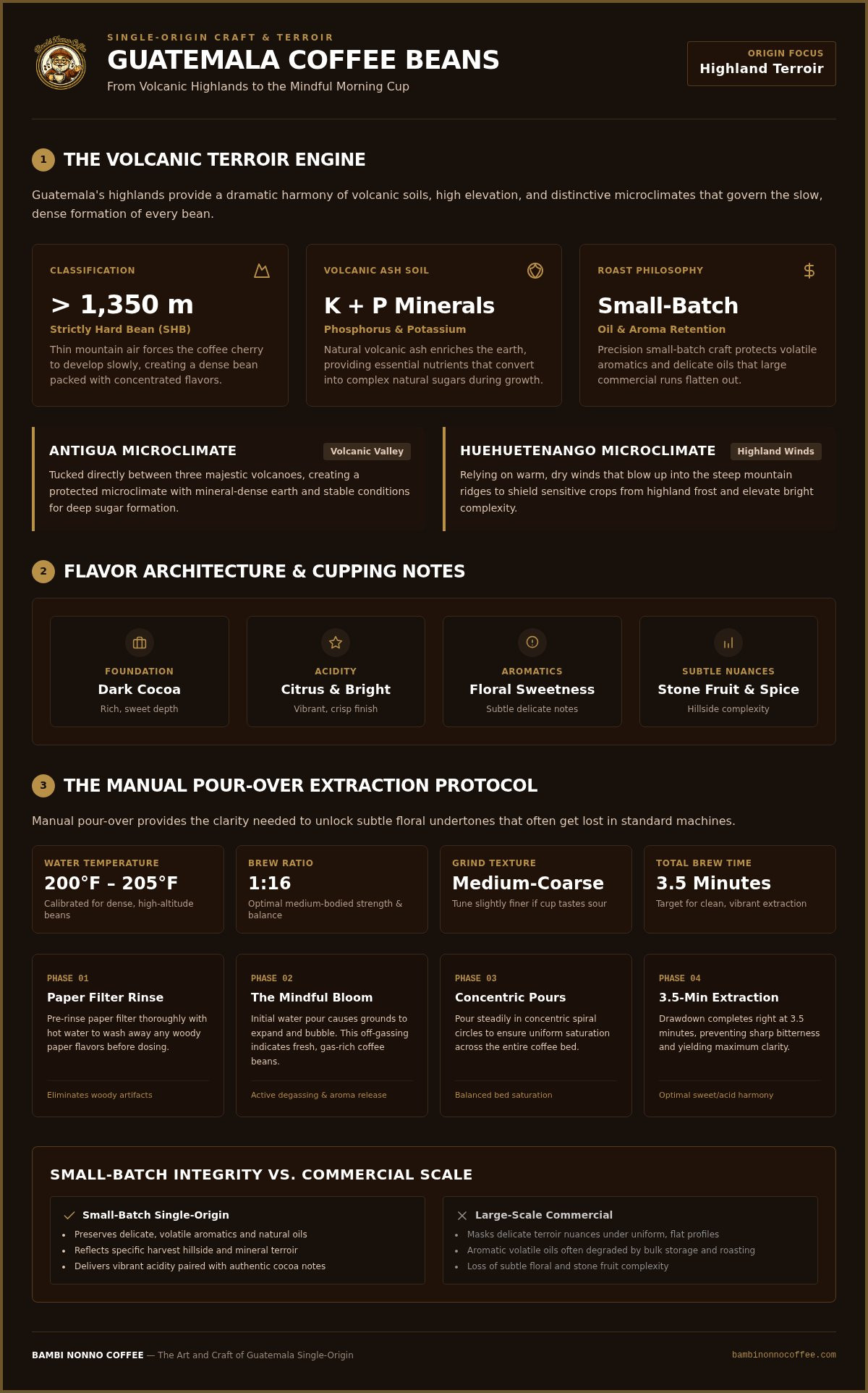
To understand the character of guatemala coffee beans, you have to look toward the horizon. The country's landscape is a dramatic tapestry of towering peaks and lush valleys, each creating its own distinct microclimate. In the Guatemalan highlands, terroir is the unique harmony of volcanic soil, high altitude, and shifting microclimates that dictates the slow, dense development of every coffee bean. This environment creates a classic profile that many enthusiasts cherish: a vibrant, clean acidity balanced by deep cocoa sweetness and delicate floral undertones. You'll often find notes of stone fruit or even a hint of spice in the finish, depending on the specific hillside where the trees were planted.
While regions like Antigua sit tucked between three majestic volcanoes, others like Huehuetenango rely on dry winds to protect the crops from frost. These variations mean that a bean from one hillside can taste remarkably different from its neighbor just a few miles away. This diversity is exactly why we focus on small-batch roasting to preserve those specific, nuanced notes that tell the story of the land.
To better understand this concept, watch this helpful video:
The Volcanic Influence: Why Soil and Altitude Matter
Volcanic ash acts as a natural fertilizer, enriching the earth with minerals like phosphorus and potassium. This nutrient-dense soil allows guatemala coffee beans to develop complex sugars during their growth cycle. Because these farms often sit above 1,350 meters, the beans are classified as Strictly Hard Bean (SHB). This high altitude causes the fruit to grow slowly, creating a much denser bean with more concentrated flavors. You can explore these unique profiles further in our single-origin coffee collection. When you hold these dense beans, you're feeling the results of years of volcanic history and thin mountain air.
Mastering the Ritual: How to Brew Guatemalan Beans for Maximum Flavor
Brewing guatemala coffee beans is an invitation to slow down and appreciate the craftsmanship behind the cup. To unlock the layers of cocoa and citrus, manual methods like the pour-over are your best friends. These techniques provide the clarity needed to taste subtle floral undertones that often get lost in standard machines. It's about finding a quiet moment to focus on the process before the day begins.
The bloom is the most captivating part of the morning ritual. As you pour the first bit of water, watch the grounds expand and bubble. This off-gassing is a sign of fresh guatemala coffee beans, and breathing in the aroma is a simple way to practice mindfulness. Once the bloom is complete, you're ready to continue the extraction and watch the coffee slowly fill your carafe.
Adjusting your grind and temperature helps find the sweet spot between body and brightness. A medium-coarse setting balances a rich chocolatey body with a crisp finish. Since these are dense, high-altitude beans, try using water between 200°F and 205°F. If the coffee tastes too sour, a slightly finer grind will increase the surface area and deepen the flavor profile.
From Bloom to Extraction: The Perfect Pour-Over Technique
Proper extraction prevents your coffee from tasting sharp or thin. When using Guatemala single-origin beans, follow these simple steps for a balanced, cafe-quality cup at home:
- Rinse your paper filter with hot water to remove any woody taste.
- Use a 1:16 coffee-to-water ratio for a medium-bodied strength.
- Pour in steady, concentric circles for even saturation.
- Target a 3.5-minute total brew time to ensure a clean, vibrant extraction.
Every setup is unique, so don't be afraid to experiment with your technique. If you have questions about your specific equipment, feel free to reach out for a quick chat.
Finding Your Perfect Match: Sourcing Quality and Single-Origin Integrity
Choosing the right guatemala coffee beans is a journey that begins long before the water hits the grounds. It's a choice to support responsible sourcing and the meticulous craft of farmers who work in harmony with the volcanic highlands. When you buy single-origin beans, you're investing in a specific harvest and a unique story. Small-batch roasting is essential here. It's the only way to preserve the delicate oils and volatile aromatics that give these beans their signature cocoa and floral notes. Large-scale commercial roasting often masks these nuances under a uniform, flat flavor profile.
Learning to read a coffee label is your best tool for ensuring quality. Look for a clear roast date; coffee is a fresh agricultural product, not a shelf-stable commodity. Check for the processing method, as a washed Guatemalan bean will offer a cleaner, more acidic profile compared to a natural or honey-processed lot. It's also fun to see how these beans compare to other favorites. While Peru might offer a smooth, nutty sweetness and Nicaragua brings a heavier chocolate body, Guatemalan crops often provide that perfect, bright middle ground.
The Bambi Nonno Approach: Small-Batch Roasting for the Curious Palate
Our small-batch process respects the individual story of every harvest. We don't believe in rushing the beans. Instead, we wait for the perfect moment in the roast to highlight what makes that specific lot special. This philosophy is rooted in our baby/grandpa nickname. It represents the beautiful bridge between the fresh curiosity of a beginner and the steady, quiet wisdom of a long-time enthusiast. We invite you to explore our Single Origin collection and start your own tradition. It's about more than just caffeine; it's about passing down the ritual of a slow, mindful morning to the next generation.
Your Next Great Morning Ritual
The journey from the volcanic highlands to your kitchen is one of patience and craft. You've seen how the mineral-rich soil and high-altitude forests of Central America create a bean that's as complex as it is comforting. By focusing on the bloom and refining your extraction, you're not just making a drink; you're honoring a tradition of quality. Choosing fresh guatemala coffee beans means choosing a slower, more mindful start to your day. We take pride in our responsible sourcing and small-batch roasting to ensure every bag arrives at your door with its delicate aromatics intact. We even offer free shipping on all coffee orders within the United States to make your discovery even easier. If you're ready to find your new favorite roast, reach out to us today. We can't wait to help you brew something truly special.
Frequently Asked Questions
What are the typical tasting notes of Guatemala coffee beans?
Guatemala coffee beans are prized for their balanced profile of deep cocoa sweetness and delicate floral undertones. You'll often find notes of red apple, stone fruit, or even a hint of smoky spice in certain varieties. These flavors are a direct result of the mineral-rich volcanic soil and high-altitude microclimates where the cherries slowly mature to their peak potential.
Is Guatemalan coffee high in acidity?
Yes, Guatemalan coffee typically features a bright, clean acidity that coffee enthusiasts describe as sparkling. This acidity is usually malic, similar to the crispness of a fresh apple, rather than being unpleasantly sharp. It works in harmony with the natural sweetness of the bean to provide a refreshing finish that makes these single-origin crops stand out in a morning pour-over ritual.
What is the best roast level for Guatemalan coffee beans?
A medium roast is widely considered the sweet spot for guatemala coffee beans because it preserves the delicate regional characteristics. This roast level allows the bright acidity to shine while developing the rich, chocolatey body that fans of Central American coffee love. While dark roasts offer a bolder experience, they often mask the floral and citrus notes that make high-altitude harvests so unique.
How should I store my single-origin Guatemala beans to keep them fresh?
To keep your beans at peak freshness, store them in an airtight container in a cool, dark place like a pantry. Avoid the refrigerator or freezer, as moisture and fluctuating temperatures can damage the delicate oils and aromatics. Since we roast in small batches to ensure quality, keeping your coffee away from direct sunlight and oxygen helps maintain that vibrant flavor from the first cup to the last.