

The Best Coffee for French Press: A Guide to Choosing Your Perfect Brew
Imagine standing in your kitchen on a quiet Tuesday morning while the water sits just off the boil. You press the plunger down, expecting a velvety treat, but you're met with a bitter, muddy cup that tastes like burnt toast. It's a common frustration that usually starts with the wrong beans. Finding the best coffee for french press isn't just about grabbing the prettiest bag on the shelf; it's about understanding how immersion brewing interacts with the very soul of the bean.
You likely want a heavy body that feels like a warm hug, not a gritty mess that leaves you reaching for the cream to hide the flavor. Given the investment you make in specialty coffee, you deserve a brew that honors your time and your palate. This guide will show you how to select the ideal roast and origin to transform your French press ritual into a rich, full-bodied experience. We'll explore why specific origins like Colombia or Ethiopia Natural excel in a press, the importance of the bloom, and how to master extraction for a cleaner, more intentional morning.
Key Takeaways
- Learn why immersion brewing thrives with medium-to-dark roasts that provide the heavy, velvety body a mesh filter is designed to showcase.
- Discover how origins from Central and South America deliver the chocolatey and nutty profiles that define a classic, comforting brew.
- Master the 15-minute rule to ensure your beans retain their aromatic oils and complex flavors right up until they hit the water.
- Explore how choosing the best coffee for french press involves looking for naturally processed beans that add a syrupy, lingering sweetness to your cup.
- Understand the difference small-batch roasting makes in preserving the unique story and character of every single-origin bean.
Understanding the Best Roast Profiles for Immersion Brewing
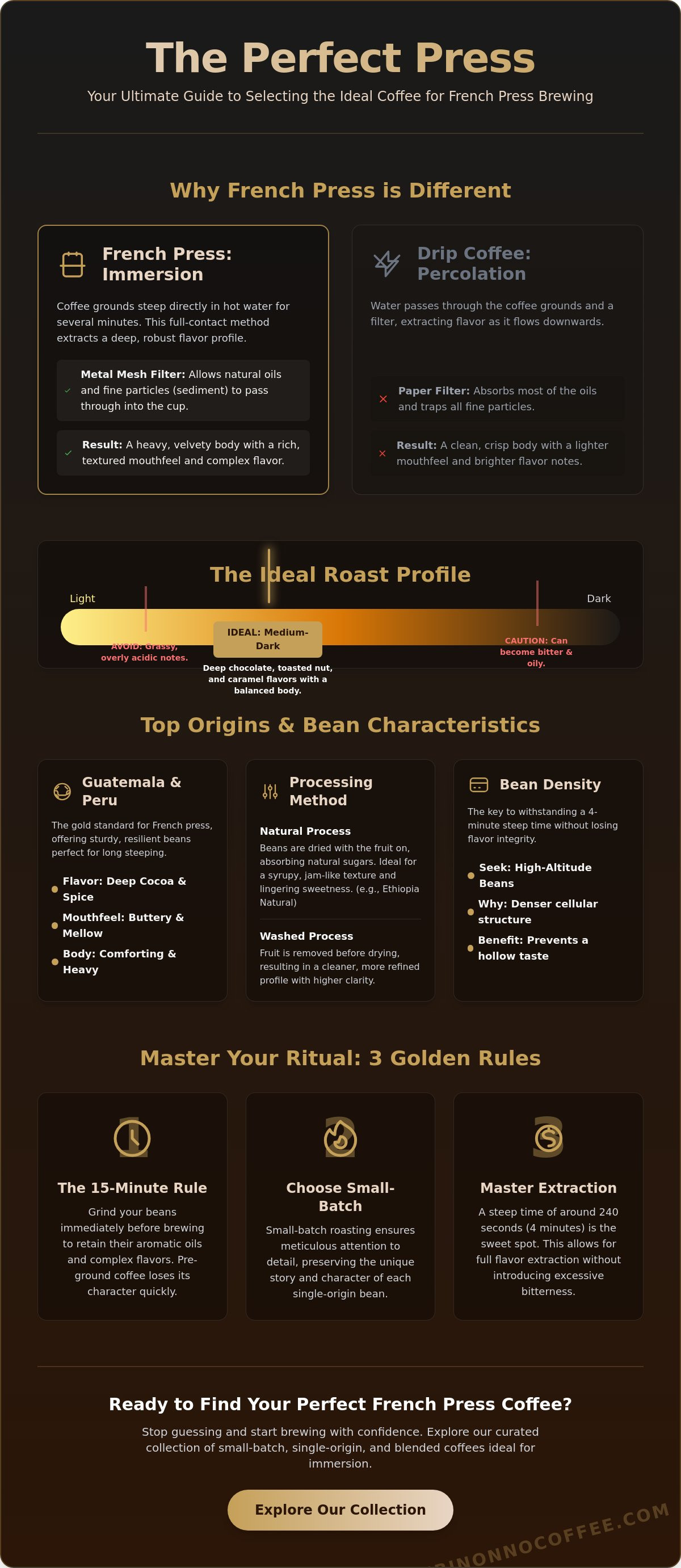
Immersion brewing is a patient dance. Unlike drip methods that use paper filters to strip away natural oils, the French press lets the coffee grounds sit directly in the water for several minutes. This results in a heavy, textured mouthfeel that captures the full spectrum of the bean. To find the best coffee for french press, you need a roast that can stand up to this intense contact without becoming overwhelming.
While some suggest pre-ground grocery store options, those often lead to a muddy experience. A metal mesh filter allows fine particles and oils through, which is why roast level is so critical. If a bean is roasted too light, the long immersion time can extract grassy or overly acidic notes. If it's too dark and oily, it can turn the cup bitter. Finding the right balance is the key to a clean but heavy-bodied cup.
To better understand how technique influences these flavors, watch this helpful video:
Why Medium-Dark Roasts Excel
During the roasting process, sugars within the bean caramelize and transform. Medium-dark roasts develop the deep chocolate and toasted nut notes that thrive in a plunger pot. These roasts balance the natural acidity of the bean, ensuring your morning cup feels substantial rather than thin. With specialty coffee prices reaching an average of $22.40 per bag in 2026, choosing a balanced blend ensures you get the most value from every gram. It's about finding that sweet spot where the roast profile complements the immersion method's ability to highlight body and sweetness.
The Importance of Bean Density
The environment where a coffee tree grows changes the bean itself. High-altitude beans, often found in single-origin selections from volcanic regions, are denser and more resilient. This density allows the bean to withstand a 240-second steep time without losing its flavor profile. High-altitude beans provide a sturdy cellular structure that prevents a hollow-tasting cup and ensures a vibrant experience from the first sip to the last.
Top Coffee Origins and Blends for Your French Press
Finding the best coffee for french press often leads us to the high-altitude farms of Central and South America. These regions are the gold standard for immersion brewing because they naturally lean toward chocolatey, nutty, and caramel-rich profiles. Unlike light-bodied beans that might feel lost in the heavy texture of a press, these origins provide a sturdy foundation for extraction. They possess the inherent sweetness required to balance the robust nature of the method.
The way a bean is processed also plays a huge role in your morning ritual. If you enjoy a syrupy, almost jam-like texture, naturally processed beans are your best bet. These beans are dried with the fruit still attached, which allows the coffee to absorb more natural sugars. In contrast, washed beans offer a cleaner, more refined profile. You can explore our single-origin collection to see how these different methods change the character of your cup. As the National Coffee Association's French press overview suggests, the immersion method is forgiving but truly shines when you match the bean to the process.
The Heavy-Bodied Favorites: Guatemala and Peru
Our Guatemala coffee is a favorite for those who love complexity. It brings deep cocoa and subtle spice notes that stand up beautifully to the long steep times required by the press. For a smoother experience, our Peru coffee offers a buttery mouthfeel and a mellow sweetness that makes for a comforting start to the day. These beans are resilient enough to maintain their identity even through the intense extraction of the mesh filter.
Blends vs. Single-Origin in a Press
Choosing between a single-origin and a blend depends on your mood. A single-origin bean, like our Ethiopia Natural, lets you taste the specific terroir and unique processing of one specific farm. It's a discovery in every cup. However, our signature blends are crafted for balance. They combine beans from different regions to ensure that you get a consistent and rich extraction every single morning. If you're unsure which profile fits your routine, you can ask our team for a recommendation based on your favorite flavors.
Elevating the Ritual: Freshness and Small-Batch Quality
Many guides claim that store-bought ground coffee is a worthy shortcut. In reality, the best coffee for french press is only as good as its freshness. Once a bean is ground, it begins to oxidize within minutes, losing the very oils that create a velvety mouthfeel. Following the 15-minute rule, which means grinding your beans just before the water hits them, is the single most effective way to preserve those delicate aromatics. It’s the difference between a flat, dull cup and one that feels alive with flavor.
Industrial roasters often prioritize volume and speed, which can lead to uneven pales and burnt edges. Small-batch roasting allows for more precise flavor development by monitoring every degree of change during the roast. At Bambi Nonno Coffee, we believe coffee is a bridge between quiet morning habits and the busy world outside. It’s about the story behind the bean and the care taken to bring it to your kitchen. To ensure you never run out of peak-freshness beans, you can subscribe to our newsletter for updates on our latest roasts.
The Impact of Freshly Roasted Beans
When you pour hot water over fresh grounds, you'll see a thick, bubbly "crust" form at the top of your press. This is the bloom, a sign of degassing that proves your beans are still packed with natural carbon dioxide and flavor. If your beans have sat on a grocery shelf for 60 days, this reaction won't happen. Small-batch roasting ensures that the beans you receive were likely in the cooling tray just days before they arrived at your door.
Finding Your Personal Perfect Cup
Don't be afraid to experiment with your variables. While a standard 4-minute steep is common, you might find that certain beans shine with a slightly longer 6-minute wait to pull out more of those deep, chocolatey notes. Adjust your water temperature or your grind size until the cup tastes exactly how you want it to. The joy of discovery is the most rewarding part of the process.
Coffee isn’t just a caffeine delivery system; it is a ritual of patience and care. Try changing only one variable at a time, like your steep time or water temperature, to see how it transforms the final character of your brew.
Mastering Your Morning Ritual
Your morning cup is more than just a routine; it's a quiet moment of connection before the day begins. Finding the best coffee for french press is a personal journey that rewards curiosity and patience. You now know that choosing a medium-dark roast provides the structure needed for immersion, while high-altitude origins offer the chocolatey notes that make a morning feel complete. Remember that the 15-minute rule for grinding is your best tool for preserving the oils that a metal filter was designed to highlight.
At Bambi Nonno Coffee, we focus on high-altitude, responsibly sourced beans that we roast in small batches right here in the USA. We want your ritual to be effortless, so we provide free shipping on all coffee orders to ensure you always have fresh beans on hand. If you're ready to explore new flavors or need a hand choosing your next bag, we're here to help. Find your next favorite French press beans by contacting our roasting team. There is a world of flavor waiting in your kitchen; enjoy the slow, steady process of finding your perfect cup.
Frequently Asked Questions
Do I need a specific grind size for French press coffee?
You definitely need a coarse grind that resembles kosher sea salt for the best results. A coarse grind ensures that the metal mesh filter can effectively separate the grounds from your brew without creating a muddy or silty texture. If you use a fine grind intended for drip machines, the water will extract too much too quickly, and the particles will slip right through the filter. Using the right grind size is just as important as selecting the best coffee for french press to achieve that signature heavy body.
Can I use light roast coffee in a French press?
You can use light roast coffee, but it often requires higher water temperatures and a bit more patience to shine. Light roasts are denser than dark roasts and release their flavors more slowly during the immersion process. While medium-dark roasts provide that classic chocolatey profile, a light roast can offer bright, floral notes if you extend your steep time by an extra 60 to 90 seconds. It’s a wonderful way to experiment with the versatility of your brewer if you prefer a more tea-like clarity.
How long should I let my coffee steep in a French press?
The standard steep time is 4 minutes, which is exactly 240 seconds, though many enthusiasts prefer a longer 6 to 8-minute process for better clarity. After the initial 4-minute wait, breaking the bloom and letting the silt settle for another few minutes can significantly improve the mouthfeel. This extra time allows the finer particles to fall to the bottom of the carafe naturally. This ensures your last sip is just as smooth as the first one you poured.
Why does my French press coffee taste bitter?
Bitterness usually comes from over-extraction or water that is too hot, typically exceeding 205°F. If your grind is too fine, the water extracts more than just the pleasant oils and sugars, leading to a harsh and dry taste. Another common mistake is leaving the coffee in the press after you have pushed the plunger down. Once your timer hits the 4-minute mark, you should decant your brew into a mug or carafe immediately to stop the extraction and keep the flavors balanced.