

The Enthusiast’s Guide to Choosing Your Perfect Single Origin Coffee
Imagine standing before a quiet shelf, staring at a dozen bags of coffee that each promise a unique journey but leave you paralyzed by the price tag. You want that perfect cup to start your day, but instead, you've likely spent ten dollars on a bag that tasted like a sour lemon when you really wanted something smooth and comforting. It's a common frustration for anyone who values their morning ritual. You know that single origin coffee represents the soul of a specific farm, yet the labels often feel like they're written for someone else.
With retail prices for a small bag now often reaching ten dollars, you deserve to feel confident in your choice. I'm going to help you turn that overwhelming wall of options into a clear map for your palate. You'll learn how to identify the regional flavors you actually enjoy, ensuring every cup becomes a meaningful moment of discovery rather than a gamble. We will explore how different growing regions shape your brew, what those processing terms really mean for your taste buds, and how to pick a bean that perfectly complements your favorite brewing method.
Key Takeaways
- Understand how single origin beans capture the unique soul of a specific farm and why they offer a more diverse experience than traditional blends.
- Map out your flavor preferences by exploring the chocolatey balance of Latin American beans versus the vibrant, floral notes found in African regions.
- Identify the best beans for your morning ritual, whether you prefer the berry-forward complexity of Ethiopia Natural or the familiar comfort of Guatemala.
- Learn to decode bag labels and tasting notes so you can confidently invest in high-quality coffee that matches your favorite brewing method.
What is Single Origin Coffee and Why Does it Matter?
Choosing a bag of coffee is often like choosing a memory from a trip you haven't taken yet. When we talk about single origin coffee, we're describing beans that come from one singular geographic location. This could be an entire country, a specific high-altitude region, or even a single family-run farm. If you've ever wondered what is single-origin coffee exactly, it's essentially the purest expression of a place. While blends are crafted for a consistent, reliable flavor profile year after year, these beans celebrate the beautiful unpredictability of nature.
This uniqueness comes down to terroir. It's a term we use to describe how the environment shapes what you taste. The volcanic soil in Guatemala, the staggering altitudes in Ethiopia, and the specific rainfall patterns of a harvest season all leave their fingerprints on the bean. You aren't just drinking caffeine; you're tasting the history of a specific hillside. It's a way to travel through your morning cup, connecting your quiet kitchen ritual to a farmer halfway across the globe.
To better understand the value and complexity behind these specific beans, watch this helpful video:
The Transparency Advantage
Knowing exactly where your coffee began its journey changes how you feel about it. This level of transparency means we can trace every bean back to the hands that picked it. It's not just about a label; it's about a commitment to quality and responsible sourcing. When a farm's name is on the bag, there's a natural pride that leads to higher standards in the wash and dry process. You're supporting a specific community, not a faceless commodity, which often results in a cleaner and more vibrant cup.
Ritual Over Convenience
For many of us, the morning coffee isn't just a fuel stop. It's a moment of pause before the world gets loud. Choosing a specific origin is an invitation to slow down and notice the details. Does this cup remind you of a berry harvest, or does it carry the warmth of toasted nuts? If you're ready to move beyond the ordinary, you can explore our full collection of single-origin beans to find the one that speaks to your personal story.
How to Choose Your Perfect Origin: A Regional Flavor Map
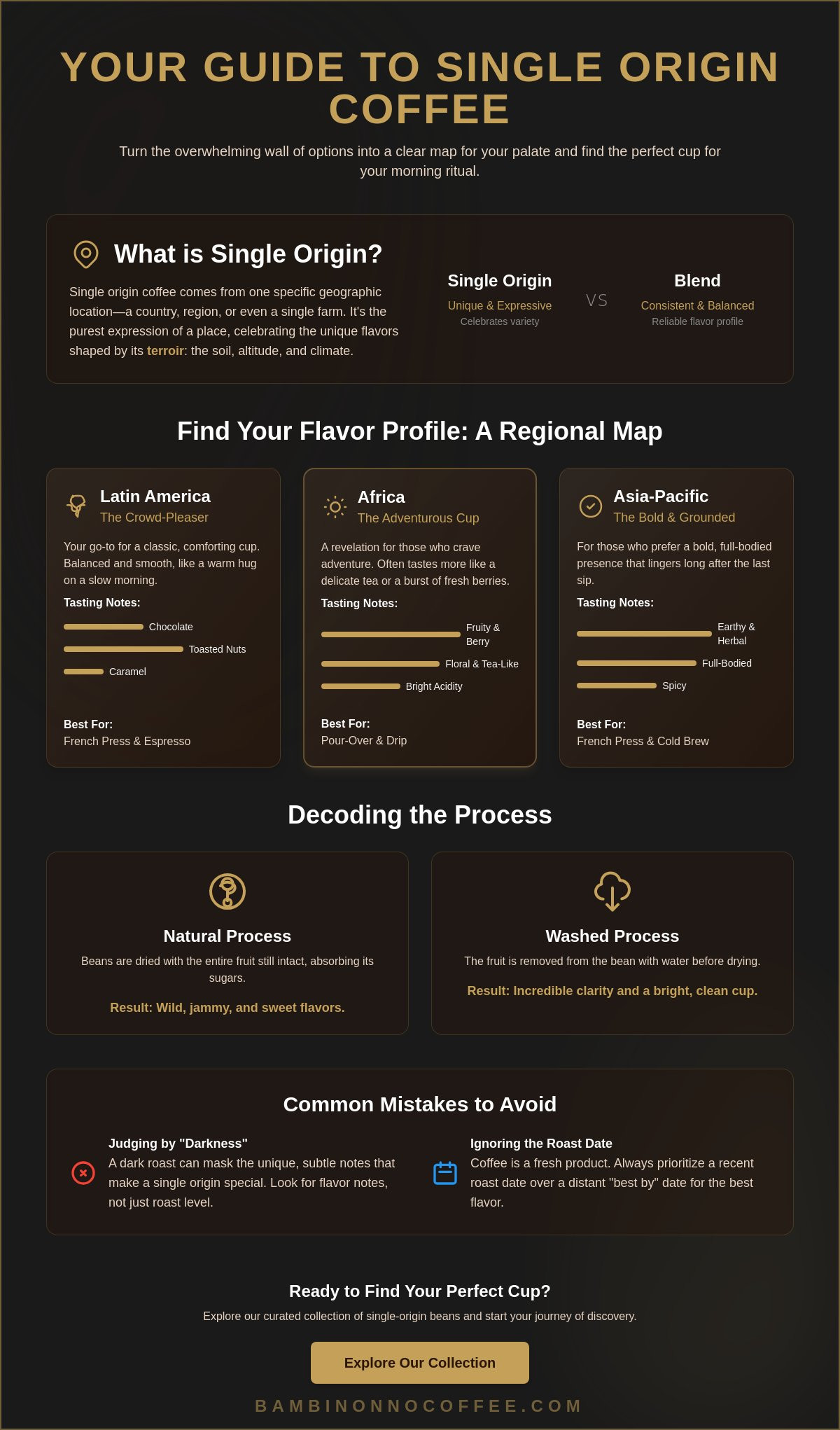
Finding your favorite bean is a lot like discovering a new favorite book; you have to know which genre speaks to your soul. Every single origin coffee tells a story through its flavor profile. If you're looking for a classic, comforting cup, Latin American beans from places like Peru or Colombia are your best friends. They usually offer a balanced, "crowd-pleaser" profile with notes of smooth chocolate and toasted nuts. It's the kind of coffee that feels like a warm hug on a slow Sunday morning.
For those who crave adventure, African coffees are a revelation. Beans from Ethiopia are often floral and fruity, tasting more like a delicate tea or a burst of fresh berries than a traditional dark roast. If you prefer something bold and grounded, look toward the Asia-Pacific region. Beans from Bali or Sumatra are known for their earthy, full-bodied presence that lingers long after the last sip. The processing method also plays a huge role. Natural process beans are dried with the fruit still on, which gives them a wild, jammy sweetness. Washed coffees are cleaned before drying, resulting in a cup with incredible clarity and brightness.
Matching Origin to Your Brewing Method
The way you brew can either hide or highlight the personality of your beans. I suggest using bright, acidic African beans for pour-over or drip methods. These techniques allow the delicate floral notes to bloom and shine. If you love a French Press or a rich espresso, go for full-bodied Latin American or Asian beans. The immersion and pressure help these beans stand up and deliver their deep, chocolatey structure. You can learn more about how geography influences your cup in our guide to exploring terroir at home.
Common Mistakes to Avoid
Many people make the mistake of buying coffee based only on "strength" or "darkness." This often masks the very things that make a single origin special. A dark roast might hide the subtle citrus of a Costa Rican bean under a layer of smoke. Also, always prioritize the roast date over a "best by" date. Coffee is a fresh agricultural product. Those nuanced flavors are most vibrant within the first few weeks after roasting. If you're unsure where to start, feel free to join our community and reach out for more tips on finding your perfect match.
Standout Single Origins: Finding Your Bambi Nonno Coffee Favorite
Now that you have a map of the world's coffee regions, it's time to find the specific bean that resonates with your daily life. Every single origin bag at Bambi Nonno Coffee is a snapshot of a specific place and time. Your palate will naturally evolve as you experiment with different regions; what tastes "too fruity" today might become your favorite morning bright spot next month. Finding your favorite is part of the joy, so don't be afraid to try something that feels slightly outside your comfort zone.
If you love a berry-forward, aromatic cup that feels like a discovery, our Ethiopia Natural is a journey in itself. Because it's processed naturally, the coffee cherry stays on the bean while it dries in the sun. This creates a jammy, vibrant sweetness that surprises you with every sip. It's a far cry from the flat, bitter coffee many of us grew up with, and it's a perfect example of how specific geography impacts flavor.
For those who want to step away from traditional blends but still crave familiar comfort, our Guatemala is the perfect bridge. It offers elevated quality with notes that feel like home. Think rich cocoa, a hint of spice, and a smooth, clean finish. If your palate leans toward something deeper and more intense, look for the Bali Blue in our single origin collection. It's bold, syrupy, and carries a deep complexity that demands you sit and stay for a while.
The Small-Batch Difference
Your morning ritual deserves the attention to detail that only small-batch roasting can provide. At Bambi Nonno Coffee, we roast in limited quantities to ensure the specific characteristics of each origin are preserved. We don't hide the bean's story behind a generic roast profile; we let the soil and climate speak for themselves. This careful process ensures that when you bloom your grounds, the aromas that fill your kitchen are exactly what the farmer intended.
Start Your Exploration Today
You can browse our full Single Origin Collection to find your first, or next, favorite. Every bag is an invitation to slow down and appreciate the hands that grew it. Coffee is a journey that starts in a high-altitude forest and ends in your favorite mug. Where will you go tomorrow morning?
Start Your Morning Journey Today
Choosing the right single origin coffee is more than just a purchase; it's a commitment to your own morning ritual. You now understand how the soil of a high-altitude forest in Ethiopia or the volcanic slopes of Guatemala creates a unique story in your cup. Whether you prefer the bright clarity of a washed process or the jammy sweetness of a natural bean, the right choice turns a simple habit into a moment of genuine discovery. We take this journey seriously. Our beans are small-batch roasted in the USA and sourced from high-altitude forests to preserve every nuance. To make your exploration even easier, we provide free shipping on all coffee orders.
Your palate will continue to grow as you experiment with different regions and brewing methods. If you have questions about which bean fits your specific setup or ritual, please reach out to us today. Every cup is an opportunity to slow down and appreciate the craftsmanship that spans across continents. We can't wait to hear which origin becomes your new favorite companion for those quiet, early hours.
Frequently Asked Questions
Is single-origin coffee always better than a blend?
Not necessarily; it's about the experience you want for your morning ritual. Single-origin coffee celebrates the unique, seasonal identity of one specific place, while a blend focuses on a harmonious and repeatable balance. If you're in the mood for a reliable, comforting cup that tastes the same every morning, a blend is a beautiful choice. If you're ready to explore how a specific altitude or soil type changes your brew, you'll find that adventure in a single bag.
How should I store my beans to keep them fresh?
Store your beans in an airtight, opaque container in a cool and dry place like a pantry. Light, heat, and oxygen are the enemies of freshness; they'll quickly strip away the nuanced floral or nutty notes that make a specific bean special. Don't put your coffee in the fridge or freezer, as the moisture can damage the beans' cell structure. For the best flavor, try to use your beans within four weeks of the roast date.
Why does single-origin coffee usually cost more?
The higher cost comes from the meticulous traceability and higher quality standards required at the farm level. In 2026, factors like climate volatility in key growing regions and lower global inventories have pushed prices for premium Arabica stocks higher. When you buy single origin beans, you're supporting smaller lots that require more labor to harvest and process. It's a way of ensuring that the farmers who grow these exceptional crops are fairly compensated for their craft.
Can I use these beans for cold brew or espresso?
You can use single origin beans for any method, but be prepared for a more distinct flavor profile. Using them for espresso can produce a vibrant, punchy shot that highlights a specific fruit or spice note rather than a generic bitterness. For cold brew, a bean from Ethiopia or Colombia can create a refreshing drink that feels lighter and more complex than a standard dark roast. Just keep in mind that these specialized beans often have more acidity than traditional blends.