

The Enthusiast’s Guide to Guatemalan Coffee Beans: A Volcanic Ritual
The most complex cup you’ll ever drink wasn’t born in a laboratory, but in the shadow of a smoke-capped volcano. When you hold a bag of guatemalan coffee beans, you’re holding a piece of a landscape where 345,000 hectares of high-altitude soil create something truly singular. There’s a quiet magic in the way a single-origin bean connects us to a specific patch of earth and the hands that tended it. You’ve likely felt that frustration when a bag promises deep chocolate but delivers a smoky bitterness that masks the bean’s true character. It’s a common hurdle for any enthusiast who wants to honor the craft without getting lost in confusing labels.
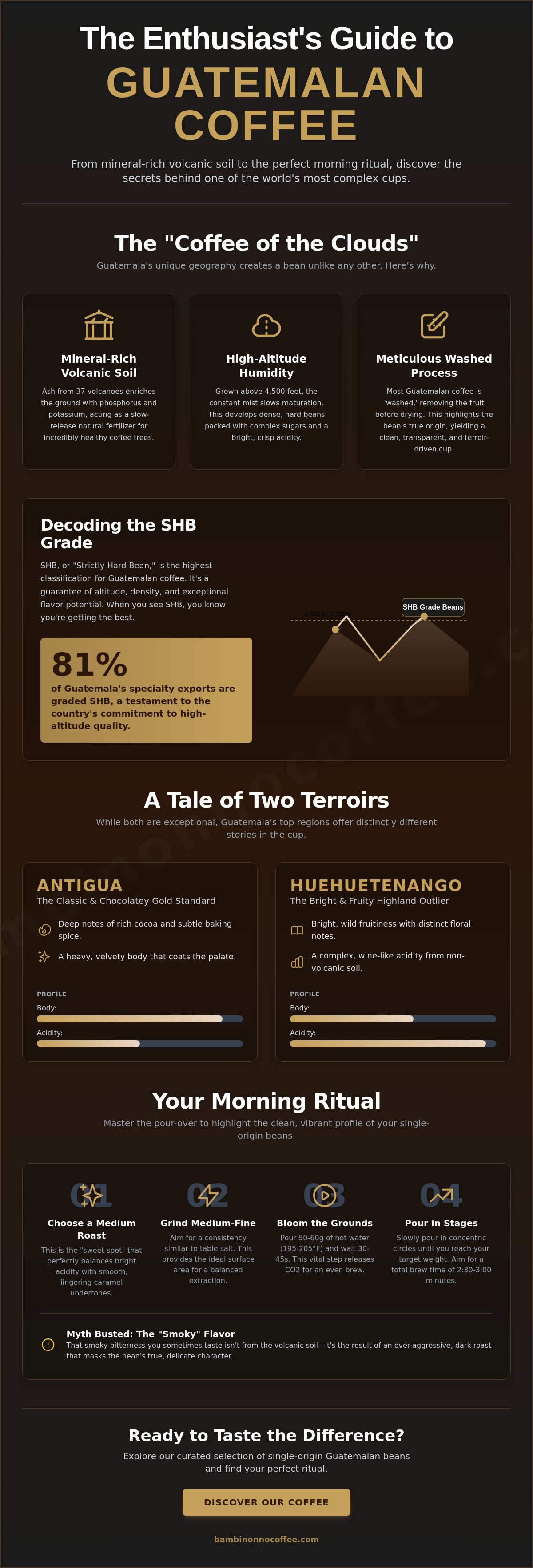
I want to help you move past those over-roasted disappointments and reclaim the ritual of your morning cup. You’ll learn how to distinguish the elegant sweetness of Antigua from the bright, wild fruitiness of Huehuetenango. We’ll also decode the SHB grading system, which accounts for 81 percent of the country's specialty exports, so you know exactly what’s in your brewer. This guide reveals the specific extraction secrets that highlight the floral notes often hidden by poor technique. It’s about slowing down and finding the joy in discovery, one carefully bloomed cup at a time.
Key Takeaways
- Learn why mineral-rich volcanic soil and high-altitude humidity earn these crops the title of "Coffee of the Clouds."
- Discover the distinct flavor profiles of the top growing regions, from the chocolatey depths of Antigua to the bright, fruity notes of Huehuetenango.
- Understand the SHB grading system and how it identifies the densest, most flavor-packed guatemalan coffee beans available for your morning ritual.
- Master the pour-over method to achieve perfect extraction and highlight the clean, washed profile of your single-origin cup.
- Find your brewing "sweet spot" with medium roasts that balance vibrant acidity with smooth, lingering caramel undertones.
The Volcanic Legacy: Why Guatemalan Coffee Beans Stand Alone
Imagine standing at the base of the Agua or Fuego volcanoes, where the air is thin and the soil is thick with the legacy of ancient eruptions. This isn't just a scenic backdrop; it's the very foundation of what makes guatemalan coffee beans some of the most sought-after in the world. Unlike other origins that rely on generic tropical climates, Guatemala is a patchwork of over 300 microclimates. This diversity means that a bean grown on one side of a mountain can taste entirely different from its neighbor just a few miles away. It's a quiet, complex world that rewards anyone willing to look closer at their morning cup.
The History of coffee production in Guatemala reveals a deep connection between the land and the families who have tended these heirloom varietals for generations. You'll often hear these crops called "Coffee of the Clouds." This isn't just poetic marketing. In high-altitude regions, the heavy mist and consistent humidity create a natural greenhouse. This slows down the growth of the coffee cherry, allowing the bean to become incredibly dense. When you brew guatemalan coffee beans, you're tasting that concentrated energy and the patience required to harvest it.
To better understand this concept, watch this helpful video:
There's a persistent myth that these beans carry a "smoky" flavor because they grow in volcanic soil. In reality, that smokiness usually comes from an over-aggressive roast rather than the earth itself. Authentic Guatemalan coffee is prized for its clarity and balance. At Bambi Nonno Coffee, we've always found beauty in the steady, consistent quality of these beans. They don't need to shout to be noticed. Instead, they offer a grounded passion that reflects years of travel and a genuine obsession with the craft.
The Influence of Mineral-Rich Soil and Altitude
Volcanic ash is a natural powerhouse, packed with phosphorus, potassium, and magnesium. These minerals act as a slow-release fertilizer that fuels the tree's health. When you combine this rich diet with altitudes above 4,500 feet, something special happens. The maturation process slows to a crawl, which allows the sugars within the bean to develop a more sophisticated structure. You'll notice this as a bright, crisp acidity that feels refreshing on the palate, a direct result of the bean's struggle to grow in the thin mountain air.
The Tradition of the Washed Process
Most farmers in Guatemala utilize the washed process, where the fruit is removed from the seed before drying. This method is a favorite for those of us obsessed with specialty coffee because it highlights the bean's inherent terroir. It strips away the potential "funk" of natural processing, leaving you with a clean, transparent cup. It’s a tradition that demands meticulous attention to detail, ensuring that every sip is a pure reflection of the volcanic earth and the quiet ritual of a well-made brew.
Mapping the Flavor: From Antigua Chocolate to Huehuetenango Fruit
To truly appreciate guatemalan coffee beans, you have to look beyond the national border and zoom into the specific valleys and mountain ranges. It’s a bit like wine; the terroir dictates the story in your cup. If you’re looking to buy specialty coffee online, knowing these regional signatures helps you find a ritual that matches your mood. Guatemala isn't a monolith of flavor, but a collection of distinct personalities shaped by the earth.
Antigua vs. Huehuetenango: A Study in Contrast
Antigua is perhaps the most famous name in the country. Nestled between three volcanoes, this valley produces a classic profile that many enthusiasts consider the gold standard. It's characterized by deep notes of cocoa and subtle spice, wrapped in a heavy, velvety body. In contrast, a guide to Guatemala's coffee regions highlights Huehuetenango as a vibrant outlier. Located in a non-volcanic highland range, these beans are surprisingly bright and floral. You'll often find citrusy acidity here that feels much closer to an East African profile than a typical Central American one. It's a wonderful choice for those mornings when you want something light and refreshing.
Understanding SHB and EP Grades
When you're scanning a label, you'll likely see the acronyms SHB and EP. These aren't just industry jargon; they’re markers of care and quality. SHB stands for Strictly Hard Bean, meaning the coffee grew at an altitude of at least 1,350 meters. As we discussed earlier, this altitude creates the density needed for complex flavor and a more refined sugar structure. EP stands for European Preparation. This tells you the beans were hand-sorted with extreme precision to remove any defects, ensuring that only the best seeds make it into your bag.
Our own Guatemala single-origin selection is chosen to showcase this incredible balance of regional nuance and high-altitude density. Whether you prefer the comforting chocolate of the valleys or the adventurous fruit of the highlands, there's always something new to discover. If you're curious about how these profiles compare to other regions, you might enjoy joining our community newsletter for more stories from the farm.
The Morning Ritual: Brewing the Perfect Guatemalan Cup
The final step in honoring the volcanic earth and the hands that tended it is the ritual you perform in your own kitchen. Brewing guatemalan coffee beans is an exercise in patience and presence. To truly taste the clarity of the washed process we explored earlier, I always advocate for the pour-over method. This technique allows you to control every variable, ensuring the delicate floral notes and deep caramel undertones aren't lost in a muddy extraction. It’s about more than just caffeine; it’s about the slow, steady stream of water meeting the grounds and the aroma that fills the room.
A medium roast is often the "sweet spot" for this origin. It provides enough development to bring out the rich, cocoa-heavy body while preserving the vibrant acidity that Guatemala's National Coffee Association (Anacafé) works so hard to protect through its quality standards. If you want to see how this chocolatey profile compares to something more fruit-forward, try tasting it alongside an Ethiopia Natural coffee. The contrast between the two is a beautiful lesson in terroir and processing.
A Step-by-Step Pour-Over Guide
- The Ratio: Use a 1:16 brew ratio. For every 20 grams of coffee, use 320 grams of water to achieve a balanced, approachable cup.
- The Water: Maintain a water temperature between 195°F and 205°F to extract the complex sugars without scorching the delicate oils.
- The Bloom: Pour just enough water to saturate the grounds and wait 30 seconds. Watch the "bloom" as the coffee releases gases, filling your kitchen with the scent of toasted nuts and spice.
Embracing the Quiet Everyday Moment
At Bambinonno, we believe that coffee is a bridge between cultures and a way to anchor yourself in the present. You can learn more about the story behind our beans and how our years of travel shaped this philosophy of quiet, daily habits. Don't be afraid to experiment with your grind size. If the cup tastes a bit too tart, try a finer setting; if it’s bitter, go coarser. Finding your personal "sweet spot" is part of the joy of discovery.
For those ready to explore even further, our single origin coffee delivery guide offers more tips on bringing these global flavors into your home. Take a moment today to sit with your cup, feel the warmth in your hands, and appreciate the journey these beans took to reach you.
Try recording your tasting notes in a simple journal to see how the flavors shift as the coffee cools; you'll often find hidden notes of plum or honey that only emerge at lower temperatures.
Begin Your Own Volcanic Ritual
The journey from the misty peaks of the Sierra de los Cuchumatanes to your favorite mug is a long one, filled with history and dedication. You now understand how the unique microclimates and mineral-rich soils shape the soul of guatemalan coffee beans, offering a balance that few other origins can match. Whether you’re reaching for the deep cocoa notes of a classic Antigua or the bright citrus of the highlands, the secret lies in slowing down and respecting the extraction process. Every cup is an opportunity to honor the "Coffee of the Clouds" through a mindful brewing habit.
We take this responsibility seriously at Bambinonno. Our selection is sourced exclusively from high-altitude volcanic regions and small-batch roasted to ensure peak freshness when it reaches your door. We even offer free shipping on all US coffee orders to make your journey of discovery a little simpler. If you’re still unsure which regional profile best fits your morning habit, connect with us to find your perfect Guatemalan roast. We’d love to share more about our obsession and help you find a bean that feels like home.
Next time you pour your water, take an extra second to watch the bloom and think about the clouds over the mountains; that small moment of presence is where the best coffee truly begins.
Frequently Asked Questions
What are the main characteristics of Guatemalan coffee beans?
Most guatemalan coffee beans are known for their exceptional balance and deep, chocolatey profile. You'll often find notes of sweet cocoa and subtle spice, like cinnamon or nutmeg, paired with a medium to full body. While the volcanic regions offer a velvety richness, the highland varieties can surprise you with a crisp, apple-like acidity. It’s this versatility that makes them a staple for anyone who appreciates a complex yet comforting cup.
Is Guatemalan coffee low in acidity?
Guatemalan coffee typically features a bright, pleasant acidity rather than being strictly low acid. This acidity is a hallmark of high-altitude Arabica beans grown in mineral-rich soil. If you prefer a smoother, less tart experience, choosing a medium-dark roast can help balance those vibrant notes with deeper caramel sweetness. It’s all about finding the right roast level to suit your palate while respecting the bean's natural character.
What does SHB stand for in Guatemalan coffee?
SHB stands for Strictly Hard Bean, a quality grade indicating the coffee was grown at altitudes above 1,350 meters. At these heights, the cooler temperatures slow the maturation of the coffee cherry, resulting in a denser, harder bean with more concentrated sugars. This density is exactly what gives guatemalan coffee beans their complex flavor profiles. When you see SHB on a label, it’s a sign of a high-quality, high-altitude crop.
What is the best way to brew Guatemalan single-origin coffee?
A pour-over method is widely considered the best way to highlight the clean, washed profile of a Guatemalan single-origin. Using a tool like a V60 or Chemex allows for a precise extraction that brings out the delicate floral and citrus notes often hidden in heavier brew methods. This approach rewards your patience with a clear, vibrant cup that tells the story of the specific region where the beans were harvested.