

Why Is My Coffee Bitter? A Guide to Finding Balance in Your Brew
You've spent years traveling and tasting, chasing that one perfect cup you had once in a quiet corner of the world. But this morning, your kitchen feels less like a sanctuary and more like a chemistry experiment gone wrong. You've carefully measured your beans, but that first sip is a harsh, drying disappointment instead of the sweet, complex ritual you crave. You're left staring at your mug, wondering why is my coffee bitter when you've done everything by the book.
It's a frustrating way to start the day, especially when you've invested in beautiful specialty beans. We believe coffee should be a moment of connection and peace, not a source of confusion. You shouldn't have to settle for a ruined morning or wasted coffee because of a few hidden variables that feel just out of reach.
This guide will help you identify the causes of over-extraction and show you how to adjust your brewing ritual to achieve a perfectly balanced cup. We'll explore how simple shifts in grind size and water temperature, specifically staying within the SCA standard of 195°F to 205°F, can transform your morning routine into the smooth, sweet experience you deserve.
Key Takeaways
- Understand the extraction timeline to capture the sugars and fats at their peak before the harsh plant fibers begin to dissolve.
- Discover why is my coffee bitter by adjusting just one variable at a time, such as your grind size or water temperature, to find your personal sweet spot.
- Master the ritual of the bloom to release trapped gases and ensure every drop of water extracts flavor evenly across the grounds.
- Learn how to choose beans with processing methods like natural or honey process that naturally lean into fruity sweetness to balance your palate.
Understanding Extraction: Why Your Coffee Tastes Bitter
Brewing coffee is a quiet conversation between you and the beans. To understand why is my coffee bitter, we need to explore the science of coffee extraction. This is the process where water dissolves the flavors, oils, and solids that live inside the ground coffee. It's a delicate balance of time and temperature.
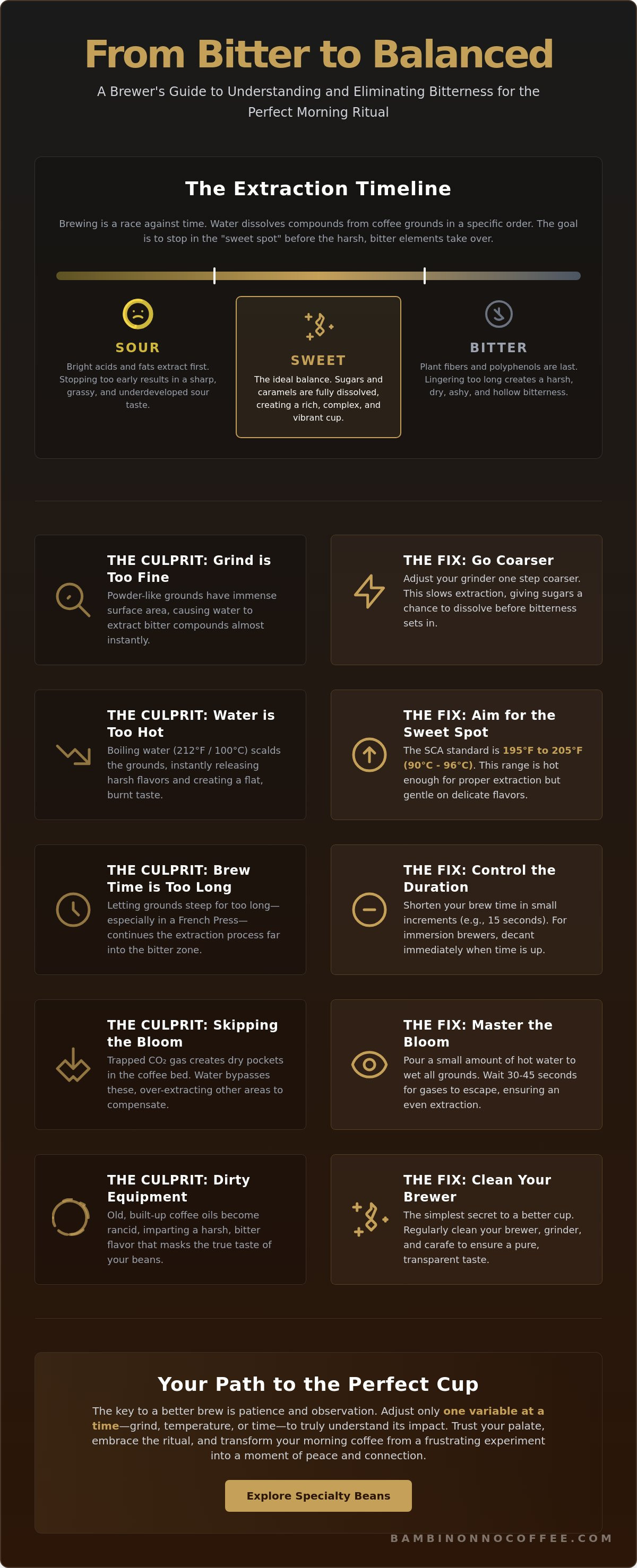
Think of extraction as a timeline. First come the bright acids and fats, which can taste sour if you stop too early. Then the sugars emerge, creating that sweet, balanced middle ground we all love. Finally, if the water lingers too long, it begins to pull out plant fibers and polyphenols. These are the heavy compounds that leave you wondering why is my coffee bitter.
Over-extraction is the moment water begins to pull harsh, ashy flavors from the organic structures of the bean. It happens when the water works too hard or stays in contact with the coffee for too long, overstaying its welcome.
Over-Extraction: When Water Takes Too Much
You'll know you've over-extracted when your cup leaves a dry, sandpaper feeling on your tongue. It's a lingering, ashy aftertaste that masks the bean's true character. This is very different from the intentional, pleasant bitterness you might find in a complex 6 bean blend, where dark chocolate notes provide a sturdy backbone. Learning these signs isn't about gatekeeping; it's about giving you the confidence to trust your own palate as you brew.
The Role of Roast Level and Bean Quality
Sometimes, the bitterness isn't a result of your brewing technique at all. Industrial dark roasts often use high heat to hide low-quality beans behind a uniform, burnt flavor profile. This makes a harsh finish almost inevitable. True specialty coffee takes a different path, prioritizing sweetness and clarity over raw intensity. Beans grown in high-altitude forests are denser and more resilient. They can handle the heat of a roaster without becoming muddy, preserving the delicate stories of the soil they call home.
Simple Fixes to Rescue Your Morning Cup
When you're staring at a dark, heavy mug and wondering why is my coffee bitter, the temptation is to start over from scratch. Instead, take a breath. The most successful brewing rituals are built on one small adjustment at a time. If you change your grind size, water temperature, and bean amount all at once, you'll never know which one actually saved your morning.
Start with the bloom. This initial pour of hot water releases trapped carbon dioxide. Without it, the gas creates bubbles that prevent water from reaching all the grounds evenly. This leads to channeling, where some grounds are ignored while others are punished with too much water. Research into the chemical compounds that make coffee bitter suggests that controlling this speed of extraction is key to a balanced cup.
Cleanliness is just as vital as technique. Old coffee oils stick to the walls of your brewer, turning rancid and mimicking the harshness of over-extraction. A cleaner brewer is the simplest, often overlooked secret to a vibrant, transparent cup of coffee.
Mastering Grind Size and Contact Time
Think of grind size as a speed bump for your water. Smaller grounds have more surface area, which means water dissolves flavors much faster. If you're still asking why is my coffee bitter, try a coarser grind. This slows down the water's ability to pull those heavy, ashy compounds. Timing is also critical. If you use a French Press, pour your coffee into a separate carafe immediately after brewing. Leaving it to sit in the press allows the extraction to continue, turning a sweet cup into a bitter one within minutes.
The Impact of Water Temperature and Quality
Boiling water at 212°F is often too aggressive for the delicate sugars in light and medium roasts. It can scald the bean, leaving behind a flat, burnt taste. Aim for a target range of 195°F to 205°F for a smoother extraction. Your water quality plays a role here too. High mineral content, or hard water, can over-extract certain compounds and lead to a heavy, chalky bitterness. If you've tried these fixes and still feel stuck, you can always reach out to us for a little extra guidance on your specific setup.
The Ritual of Choice: Selecting Beans for a Smoother Experience
Sometimes the answer to why is my coffee bitter isn't found in your kettle or your timer. It's found in the bean itself. We often treat bitterness as a technical error to be fixed, but it's more helpful to think of your coffee as a partner. If the relationship feels harsh, you might just be looking for a different personality. Selecting beans with a natural inclination toward sweetness can change your entire morning ritual.
Processing methods play a huge role in the final flavor. Natural or honey process coffees are dried with some or all of the coffee cherry's fruit still attached to the bean. This allows the sugars to ferment and soak into the seed, creating a deep, jammy sweetness that masks inherent bitterness. If you're sensitive to those sharp, ashy notes, exploring our single origin coffee delivery options can lead you to beans that are naturally softer on the palate.
Origins That Prioritize Sweetness
Certain lands simply breathe sweetness into their crops. Beans from Guatemala often carry a smooth, chocolatey profile that feels like a warm embrace. Similarly, coffee from Peru is known for its nutty clarity and gentle finish. These origins are remarkably forgiving. They offer a wider sweet spot, making them perfect for those still refining their technique. Experimenting with different terroirs helps you discover your own bitterness threshold, that fine line where strength meets comfort.
Embracing the Process of Discovery
Coffee is a living product. Every bag you open is a new story, shaped by the soil of a distant forest and the hands of a dedicated farmer. At Bambi Nonno Coffee, we believe the joy isn't in achieving a mythical perfect cup. It's in the quiet, daily habit of the brew itself. It's about the curiosity that keeps you asking why is my coffee bitter and the patience to find the answer. Don't let a harsh sip ruin your morning. Use it as a reason to slow down and try again.
Keep a simple brew journal by your coffee station. Track your grind size, the water temperature, and how the cup made you feel. This small act of mindfulness turns a routine task into a cherished ritual of discovery, a core part of the Bambi Nonno Coffee philosophy.
Refining Your Daily Brew Ritual
Finding the balance in your morning cup is less about technical perfection and more about the joy of the process. You've learned that extraction is a timeline where patience is rewarded with sweetness. By mastering the bloom and keeping your equipment pristine, you've already taken the biggest steps toward solving the mystery of why is my coffee bitter. Every small adjustment to your grind or water temperature is a way to honor the journey of the bean from the high-altitude forests where it began.
We carry that same dedication into our roasting ritual. Our beans are small-batch roasted for peak sweetness and ethically sourced to ensure every sip tells a story of quality. To help you find your perfect match, we provide free shipping on all US orders. If you're ready to transform your morning routine, discover our curated collection of smooth, small-batch blends and start your next chapter of discovery.
Trust your palate and stay curious. The most rewarding cup of coffee is the one that brings you a moment of stillness before the day begins.
Common Questions About Brewing Balance
Why does my coffee taste bitter even with expensive specialty beans?
High quality beans are more delicate and require a precise ritual to shine, as their complex flavors are easily overshadowed by over-extraction. Even if you've invested in a premium single origin, using water that is too hot or a grind that is too fine will lead you to ask why is my coffee bitter. Specialty beans have more cellular structure to give, but they also have more to lose if the brewing variables aren't handled with care.
Can I fix a bitter cup of coffee after it has already been brewed?
You can neutralize a bitter cup by adding a tiny pinch of salt, which works by physically blocking the bitter receptors on your tongue. While this won't bring back the delicate floral or fruity notes lost during a poor brew, it can significantly smooth out a harsh, ashy aftertaste. Another simple fix is to dilute the cup with a small amount of hot water to spread out the heavy polyphenols and lighten the mouthfeel.
Is dark roast always more bitter than light roast coffee?
Dark roasts aren't inherently bitter, but the longer roasting process makes the bean more porous and easier for water to over-extract. Because the plant fibers are more broken down, these beans surrender their oils and heavy compounds much faster than a dense light roast. If you prefer a darker profile, using slightly cooler water around 195°F can help prevent those deep notes from turning into a burnt or medicinal flavor.
How does the bloom phase affect the bitterness of my coffee?
The bloom phase prevents bitterness by ensuring that carbon dioxide gas doesn't block the water from reaching every coffee ground evenly. If you skip this step, gas bubbles create "channels" where water flows too quickly through some areas while over-working others. This localized over-extraction is a common reason why is my coffee bitter even when the overall brew time seems correct. Taking thirty seconds to let the coffee breathe ensures a balanced, sweet extraction.