

Why Is My Coffee Bitter? Understanding and Fixing Your Brew
You've carefully selected a bag of single-origin beans, perhaps a bright Guatemala or a delicate Ethiopia Natural, and waited for that quiet morning moment to finally enjoy it. But as you take that first sip, instead of the sweet, floral notes you expected, you're met with a harsh, drying sensation that lingers on your tongue. You find yourself asking, why is my coffee bitter? and wondering where the ritual went wrong. It's a frustrating experience, especially when you've invested in quality beans and want to honor the craft behind them. We've all been there, staring at a mug that tastes more like charcoal than comfort, feeling the weight of wasted potential.
Bitterness isn't a failure, it's simply a signal that your brewing ritual is out of sync with your beans. With coffee prices reaching historic highs of over $3.20 per pound in 2026, every gram is precious, and you deserve a cup that rewards your patience. I'll help you decode the mystery of extraction and show you how to restore those smooth, nuanced flavors. We'll look at how to adjust your grind and hit the SCA-recommended temperature of 195 to 205 degrees Fahrenheit for a perfect balance. You'll walk away with the confidence to master your variables and turn every morning brew into a sweet, consistent joy.
Key Takeaways
- Master the extraction timeline to catch the sweet spot before those harsh, woody fibers take over your mug.
- Discover how to adjust your grind size to solve the riddle of why is my coffee bitter and find a smoother balance.
- Learn why lowering your water temperature can act as a gentle brake on over-extraction for a more nuanced flavor.
- Understand the relationship between roast depth and bean freshness to better manage the final character of your brew.
- Build the confidence to experiment with simple variables that turn a daily habit into a rewarding ritual.
The Fine Balance of Extraction: When Good Coffee Goes Bitter
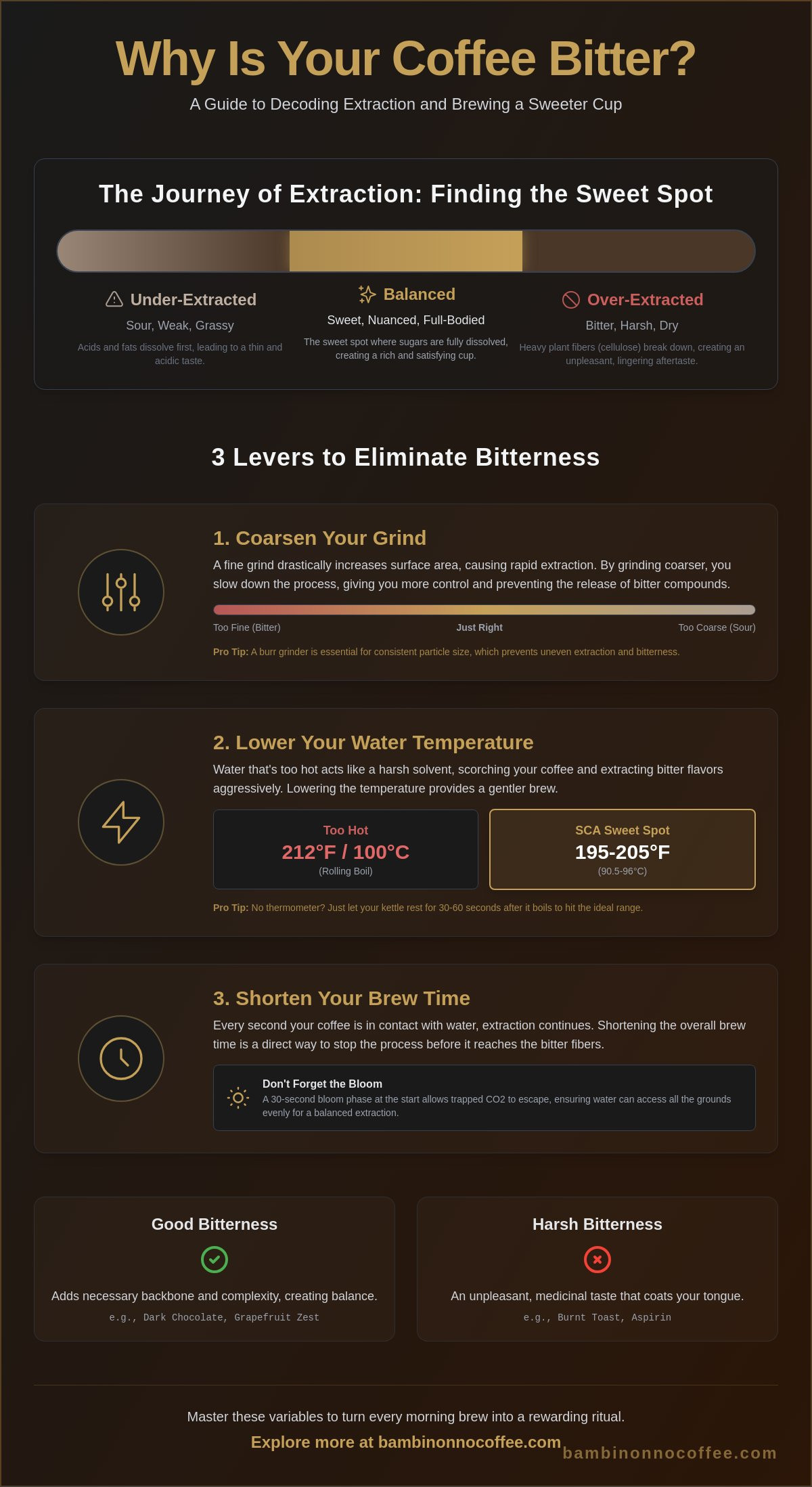
Brewing coffee is a quiet ritual, a slow conversation between water and bean. When we talk about coffee extraction, we're simply describing how water pulls the soul of the coffee into your cup. This process follows a very specific rhythm. First, the water dissolves the bright acids and delicate fats. Next, it pulls out the sugars that give your brew its body and sweetness. Finally, if the water lingers too long, it starts to break down the heavy plant fibers.
If you've ever wondered why is my coffee bitter, the answer usually lies in that final stage. Over-extraction isn't just a technical term; it's a physical sensation. You'll feel it as a dry, scratchy coating on the back of your tongue that won't go away. Understanding this timeline is the first step toward finding the sweet spot in your daily brew.
The Role of Cellulose and Plant Fibers
Every coffee bean is a complex organic structure made largely of cellulose. These fibers provide the bones of the bean, and they aren't meant to be part of your flavor profile. However, heat and time are powerful forces. When hot water stays in contact with your grounds for too long, it eventually breaks down these structural elements. Over-extraction is the point where water begins to dissolve the bean's structural bitterness.
Good Bitterness vs. Harsh Bitterness
Not all bitterness is a mistake. A touch of it provides the necessary backbone for other flavors to shine, much like the snap of dark chocolate or the zest of a grapefruit. The problem is harshness. This is the sharp, medicinal taste reminiscent of aspirin or burnt toast. At Bambinonno, we believe in leading with curiosity during every tasting. We focus on sourcing balanced, high-altitude beans that naturally resist these harsh notes, a philosophy you can read more about in Our Story.
Three Steps to Fix Your Bitter Coffee Today
If you've been wondering why is my coffee bitter, the good news is that the solution is usually found in a few gentle adjustments to your morning ritual. Think of brewing as a dialogue. If the coffee is shouting back at you with harshness, you simply need to change how you're asking the question. By managing how water interacts with your beans, you can steer the flavor back toward the sweetness you crave.
There are three primary levers you can pull right now to improve your cup:
- Step 1: Coarsen your grind. Think of your coffee grounds as a landscape. A fine grind creates a massive surface area for water to touch, which speeds up extraction. By going coarser, you reduce that surface area and slow the process down.
- Step 2: Lower your water temperature. Heat is an accelerator. If your water is too hot, it aggressively pulls out bitter compounds. Dropping the temperature gives you more control.
- Step 3: Shorten your brew time. Every second matters. If the water stays in contact with the grounds for too long, it will eventually move past the sugars and start dissolving the woodier plant fibers.
Don't forget the importance of the bloom phase. This initial 30-second soak with a small amount of water releases trapped gases. It sets the stage, ensuring that when you finish the pour, the water can reach every grain evenly for a balanced extraction.
The Grind Size and Surface Area Connection
Consistency is the heart of a good cup. While a blade grinder chops beans into uneven shards, a burr grinder ensures every piece is the same size. This prevents tiny "fines" from over-extracting and causing bitterness while the larger bits are still waking up. If your grind is too fine, you might also experience "channeling," where water forced through the bed of coffee finds a path of least resistance and over-brews that specific area. For specific tips on matching your grind to your equipment, explore our Drip Coffee Guide.
Temperature: Why Boiling Water is Too Hot
The Specialty Coffee Association (SCA) identifies 195°F to 205°F as the sweet spot for brewing. If your water is at a rolling boil (212°F), it can actually scorch the grounds and accelerate the release of harsh tannins. If you don't have a thermometer, use the "off-the-boil" method. Simply wait 30 to 60 seconds after your kettle whistles. This brief pause allows the water to settle into a friendlier temperature range that respects the delicate oils of your beans.
If you're still finding the balance elusive or have a specific question about your setup, feel free to reach out to us for a bit of friendly advice.
Beyond the Brew: How Beans and Equipment Influence Bitterness
Sometimes, you've adjusted your grind and watched your timer with care, yet the cup still bites back. If you're still asking why is my coffee bitter, it's time to look at the variables that exist before you even pour the water. The beans you choose and the state of your equipment are the foundation of your ritual. When these aren't in harmony, even the most precise technique can't save the flavor.
Roast Levels and Extraction Sensitivity
Darker roasts are naturally more porous because they've spent more time in the roaster. This means they're eager to give up their soluble compounds, making them much more sensitive to heat and contact time. If you treat a dark roast with the same aggression as a light roast, you'll likely end up with a harsh cup. To explore a different path, try our Single Origin Beans. These beans highlight terroir-driven sweetness rather than roast-driven bitterness. Understanding these nuances is part of the journey, and you can learn more in our Specialty Coffee Guide.
The Importance of a Clean Setup
There's an unseen cause of bitterness that often hides in plain sight. Coffee contains lipids, or oils, that stick to your equipment. Over time, these oils oxidize and turn rancid. If you don't clean your gear, that old, stale bitterness will haunt every new pot you brew. A clean ritual is a respectful ritual. Follow this simple checklist to keep your flavors pure:
- Scrub your carafe with warm, soapy water after every use.
- Rinse your filter basket to remove trapped fines.
- Wipe down your grinder's hopper and burrs to prevent oil buildup.
Water quality also plays a role. Hard water can be too efficient, pulling out flavors so aggressively that it leads to over-extraction regardless of your technique. If you've ever wondered why is my coffee bitter even with fresh beans, the mineral content in your tap might be the culprit. Sometimes, the most profound change comes from a simple shift in the water you use or the care you give your tools.
Mastering the Art of the Balanced Cup
Finding the harmony in your brew is a journey of patience and curiosity. You've learned that the answer to why is my coffee bitter usually comes down to the simple mechanics of time, temperature, and texture. By coarsening your grind or cooling your water just a few degrees, you're not just fixing a drink; you're refining a personal ritual that rewards you with every sip.
The next time you stand over your kettle, try changing only one variable at a time. If you adjust your grind size and your water temperature simultaneously, you'll never truly know which one brought the sweetness back to your cup. It's in these quiet, deliberate experiments that the best flavors are found. Small shifts lead to the most profound discoveries in your mug.
Think of your morning coffee as a living thing, shaped by the high-altitude forests where it grew and the care you put into the pour. A great cup isn't about chasing technical perfection; it's about the connection you feel to the process and the slow, steady discovery of what you enjoy most. Tomorrow morning, take a second longer to smell the bloom and notice how a single, thoughtful change can transform the character of your entire day.
Frequently Asked Questions
Can I fix a cup of coffee that is already too bitter?
You can salvage a bitter cup by adding a tiny pinch of salt to your mug. Sodium ions interfere with the way your taste buds perceive bitter compounds, effectively canceling out the harshness. While it won't fix the underlying extraction issues, it's a helpful trick for those quiet mornings when you've already poured your coffee and don't want to start the ritual over from scratch.
Why does my coffee taste bitter even when I use a medium roast?
Bitterness in medium roasts usually happens when your water is too hot or your grind is too fine. Even with a balanced roast, brewing with water above 205 degrees Fahrenheit will aggressively pull out the organic plant fibers. This is a common reason why is my coffee bitter even when you've chosen a high-quality bean. Adjusting your technique ensures you're extracting sugars rather than structural bitterness.
Does the type of water I use affect bitterness?
The minerals in your water play a significant role in how flavors are pulled from the grounds. Hard water contains high levels of calcium and magnesium, which can act like a magnet for bitter compounds and lead to over-extraction. Switching to filtered water creates a neutral foundation. It allows the delicate, terroir-driven notes of the bean to emerge without being overshadowed by the harshness of tap water.
Is bitterness the same thing as coffee strength?
Bitterness and strength are two different concepts, though they are often confused. Strength refers to the concentration of dissolved coffee solids in your cup, while bitterness is a specific flavor profile caused by over-extraction. You can brew a very strong, bold cup that remains sweet and smooth. Learning this distinction is key to understanding why is my coffee bitter and helps you adjust your ratio without ruining the flavor.