

Cold Brew Coffee: Mastering the Art of the Slow Steep at Home
Last summer, I spent weeks trying to replicate the velvety texture of a professional cold brew, only to end up with a sink full of watery, bitter experiments. It is a common frustration for many coffee lovers who want that smooth, chocolatey finish but find themselves lost in a sea of conflicting ratios and acidic results. It's discouraging when you've invested in quality beans and the outcome doesn't match your effort. With the median price of a cold brew reaching $5.58 as of April 2026, there's never been a better time to reclaim your morning ritual and master the craft in your own kitchen.
You don't need expensive equipment to master the art of the slow steep. You just need patience and a bit of guidance on the variables that matter. This guide will show you how to transform simple beans and water into a rich, low-acid concentrate that elevates your daily routine. We'll explore how different bean origins impact your final flavor and provide a consistent, foolproof recipe that stays fresh in your fridge all week long. From understanding extraction to perfecting your ratio, you'll learn everything required to create a professional-grade brew that honors the beans you love.
Key Takeaways
- Understand how replacing heat with time prevents the "cooking" of oils, resulting in a naturally sweeter, low-acid cup.
- Learn the golden ratio of 1:4 or 1:5 to create a versatile cold brew concentrate that serves as a perfect base for any drink.
- Discover why a coarse, sea salt grind is the secret to a clean extraction without the muddy sediment often found in home brews.
- Explore why choosing single-origin beans like Guatemala or Ethiopia Natural can bring out nuanced, fruity, or chocolatey notes in your slow steep.
- Find out if the "bloom" technique is necessary for cold extraction and how it helps ensure even saturation for a more balanced flavor.
Why Cold Brew? The Alchemy of Time Over Temperature
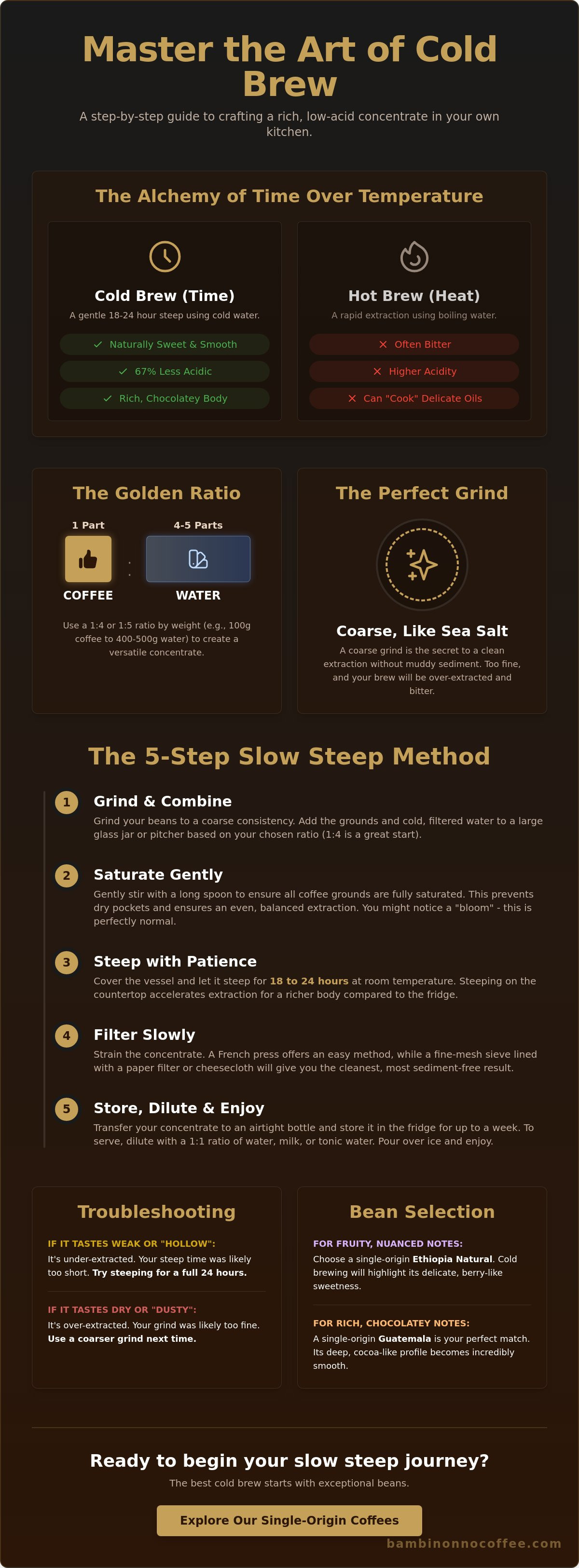
Most of us are used to the quick hiss of a machine or the rapid pour of a kettle. However, cold brew coffee is a different story entirely. It is a process where we trade the aggression of heat for the gentle passage of time. When you use boiling water, you essentially cook the coffee grounds. This heat acts as a harsh catalyst, pulling out acidic compounds and bitter oils that can mask the bean's true character. By using cold water, you avoid this chemical reaction, resulting in a concentrate that is naturally sweet and remarkably smooth.
To better understand this concept, watch this helpful video:
The sensory profile of a cold brew is distinct and comforting. You'll notice a heavy, chocolatey body and a rounded finish that lacks the sharp bite of a standard iced coffee. For those with sensitive stomachs, this method is a revelation. Because the cold extraction process leaves behind many of the oils and acids that cause digestive discomfort, it is much kinder to your body. It allows you to enjoy your daily cup without the unwanted side effects of high acidity.
At Bambi Nonno Coffee, this 12 to 24 hour wait is central to our philosophy. We see it as a quiet ritual of care. It’s a reminder that the most meaningful things in life, like a perfect cup of coffee or a deep conversation with a friend, require patience. It’s about slowing down and appreciating the transformation that happens when we don't rush the process. It is about the anticipation and the reward of planning for tomorrow’s joy.
Heat vs. Time: The Extraction Debate
Extraction is simply the process of dissolving the flavors from the coffee bean into water. While heat is the most common way to do this, time is a much more delicate tool. Cool water extracts flavor slowly and selectively. This preserves the unique characteristics of single-origin beans, ensuring the subtle notes of the origin and processing stay front and center. You aren't just making a drink; you're preserving a story that began on a hillside thousands of miles away. Time performs the job of heat, but with far more precision and grace.
The Step-by-Step Guide: Brewing Your Concentrate Like a Pro
Creating a batch of cold brew at home is less about precision chemistry and more about finding a rhythm that fits your life. It begins with the ratio. For a concentrate that stands up to milk or a splash of sparkling water, I recommend a 1:4 or 1:5 ratio by weight. This means for every ounce of coffee, you'll use four or five ounces of water. This concentrated base is the secret to a versatile fridge staple that lasts all week.
The texture of your grounds is your next priority. You want a coarse grind that resembles sea salt. If the grind is too fine, you'll end up with a muddy, over-extracted mess that is difficult to filter. Once you have your grounds, place them in a glass vessel and gently pour in filtered water. If you're looking for a reliable step-by-step guide to help visualize the volumes, many enthusiasts find that simple glass jars work best for this immersion. When you're ready to separate the liquid, using a French press makes the process effortless, though a paper filter will give you the cleanest, most tea-like clarity.
The 24-Hour Steep: A Lesson in Patience
Time is the ingredient you can't rush. While some recipes suggest 12 hours, the specialty sweet spot for deep, chocolatey development is between 18 and 24 hours. Leaving your vessel on the countertop at room temperature will speed up extraction slightly, while the fridge offers a slower, more controlled environment. I prefer the countertop for those first 20 hours to ensure the body is rich and full. If you have questions about which vessel works best for your space, feel free to reach out to us for a few personal recommendations.
Troubleshooting Your Brew
If your first batch of cold brew tastes "hollow" or thin, you likely pulled it too early. It's under-extracted. If it feels "dusty" or leaves a dry sensation on your tongue, it might be over-extracted or your grind was too fine. Always use filtered water. Tap water contains minerals and chlorine that can cloud the bright notes of a bean’s origin. Pure water acts as a blank canvas, allowing the coffee's natural story to be told without interference.
Beyond the Basics: Selecting Beans and Mastering the Serve
While you can technically use any bean, the magic of a cold brew truly unfolds when you select high-quality single-origin options. Our Guatemala beans offer a clean, cocoa-heavy foundation, while the Ethiopia Natural brings a surprising berry-like brightness that survives the long steep. Many people overlook the "bloom" in cold extraction. By wetting the grounds with a small amount of water first, you ensure even saturation. This small step prevents dry pockets and ensures every gram of coffee contributes to the final flavor.
Once your concentrate is ready, the fun begins. You can keep your cold brew in an airtight glass bottle in the fridge for up to two weeks. It's a versatile companion for busy mornings. Try diluting it with creamy oat milk for a silky treat, or mix it with tonic water and a twist of citrus for a refreshing afternoon pick-me-up. It even works beautifully as a base for coffee-inspired cocktails during weekend gatherings.
The Best Beans for Cold Extraction
Natural process beans are particularly delightful for this method. Because they are dried with the fruit still attached, they retain a jammy sweetness that pairs perfectly with the low acidity of cold extraction. If you prefer a more traditional profile, a medium-dark roast provides those classic toasted nut and dark chocolate notes that many of us associate with a great morning cup.
The Ritual of the First Sip
Before you add milk or ice, take a moment to taste the concentrate neat. It’s a small act of mindfulness. Notice the texture and the subtle sweetness you've created over the last 24 hours. This ritual of preparation is just as rewarding as the drink itself. It is a quiet celebration of patience and the joy of creating something beautiful with your own hands.
Try freezing a small amount of your concentrate in an ice cube tray to use in your next glass. It prevents your drink from becoming watery as the ice melts.
Embrace the Ritual of the Slow Steep
Mastering the art of cold brew is a journey that rewards patience with every velvety sip. By trading the harshness of heat for the gentle passage of time, you've unlocked a way to enjoy coffee that is kind to your stomach and rich in natural sweetness. You now understand that the secret lies in the simple harmony of a coarse grind, a steady ratio, and the character of a well-chosen bean. It’s a ritual that turns a daily habit into a moment of genuine connection with the craft.
We’re here to support your exploration of flavor. Our beans are responsibly sourced from high-altitude forests and small-batch roasted to ensure they arrive at your home at their peak. To help you get started, we provide free shipping on all US coffee orders. If you need a personal recommendation for your next batch, find your perfect cold brew bean in our Single Origin Collection by reaching out to us today. There’s a world of nuanced flavor waiting in your fridge; all it takes is a little time and the right beans to bring it to life.
Take a breath, pour a glass, and savor the quiet reward of a brew made with care. Enjoy the slow steep.
Frequently Asked Questions
How much caffeine is in cold brew compared to regular coffee?
Cold brew typically has a higher caffeine concentration than regular drip coffee. This happens because the brewing process uses a much higher coffee-to-water ratio. While a standard cup might use a 1:16 ratio, our concentrate method uses 1:4. This means you're getting more caffeine per ounce. Just remember that diluting your drink with milk or water will bring that level back down to a more familiar range.
Can I use regular pre-ground coffee for cold brew?
You can use pre-ground coffee in a pinch, but it often leads to a less than perfect cup. Most store bought bags are ground for drip brewers, which is too fine for this method. This fine texture can cause over-extraction and leave you with a cloudy, sediment heavy drink. For the best results, stick with a coarse grind that allows the water to flow freely and preserves clarity.
How long does cold brew concentrate stay fresh in the refrigerator?
Your cold brew concentrate will stay fresh and delicious for up to two weeks in the refrigerator. It's best to store it in an airtight glass vessel to prevent it from absorbing other scents in your kitchen. To maintain the best flavor, only dilute the portion you plan to drink immediately. Keeping the base concentrate pure ensures every glass tastes as vibrant as the first day you strained it.
Why does my cold brew taste bitter even though I used cold water?
Bitterness is often a sign of over-extraction or using a grind that's too fine for the long steep. If your cold brew tastes sharp, try coarsening your grind or reducing the steep time by two or three hours. Also, check your bean quality. Using old or low quality beans can introduce bitter notes that even the gentlest cold extraction can't hide. Sometimes, a subtle adjustment makes all the difference.