

Mastering the French Press: A Guide to the Ultimate Slow Coffee Ritual
The most beautiful things in life often require us to slow down and pay attention. While modern gadgets promise speed, the french press remains a beloved bridge between generations because it rewards patience with a texture that no paper filter can replicate. It's a tactile, grounding ritual that turns a simple morning into a moment of genuine connection with the craft. You've likely experienced the disappointment of a cup that ends in a mouthful of grit or a flavor that feels unpleasantly sharp and over-extracted.
It's frustrating when your coffee tastes different every day despite your best intentions. We're going to change that by helping you master the nuances of immersion extraction and bean selection. You'll discover how to choose the right beans, like a vibrant Ethiopia Natural or a deep French Roast, to ensure a heavy-bodied, flavorful result every time. This guide provides the steps to build a repeatable routine that brings out the best in every bean, turning your kitchen into a sanctuary of quiet discovery and consistent quality.
Key Takeaways
- Understand why the slow, tactile nature of immersion brewing creates a deeper connection to your coffee and a richer mouthfeel.
- Learn the importance of a coarse, sea-salt-like grind to prevent over-extraction and keep your cup free from unwanted sediment.
- Master the golden 1:15 coffee-to-water ratio to ensure your morning ritual delivers a perfectly balanced cup every time.
- Explore how to select beans for your french press that honor tradition while leaving room for the curiosity of light, single-origin flavors.
The Immersion Ritual: Why French Press Coffee Still Rules
Brewing coffee isn't just about the caffeine; it's about the few minutes where the world stops. The french press stands apart because it uses immersion brewing. Unlike drip methods where water passes through the grounds, immersion means the coffee and water stay in constant contact for the entire duration. This long, intimate soak extracts flavors that are often lost in faster methods. Looking back at the history of the French press, we see a design that hasn't changed much because it works. It's a simple tool that demands your presence.
To better understand this concept, watch this helpful video:
Immersion vs. Percolation
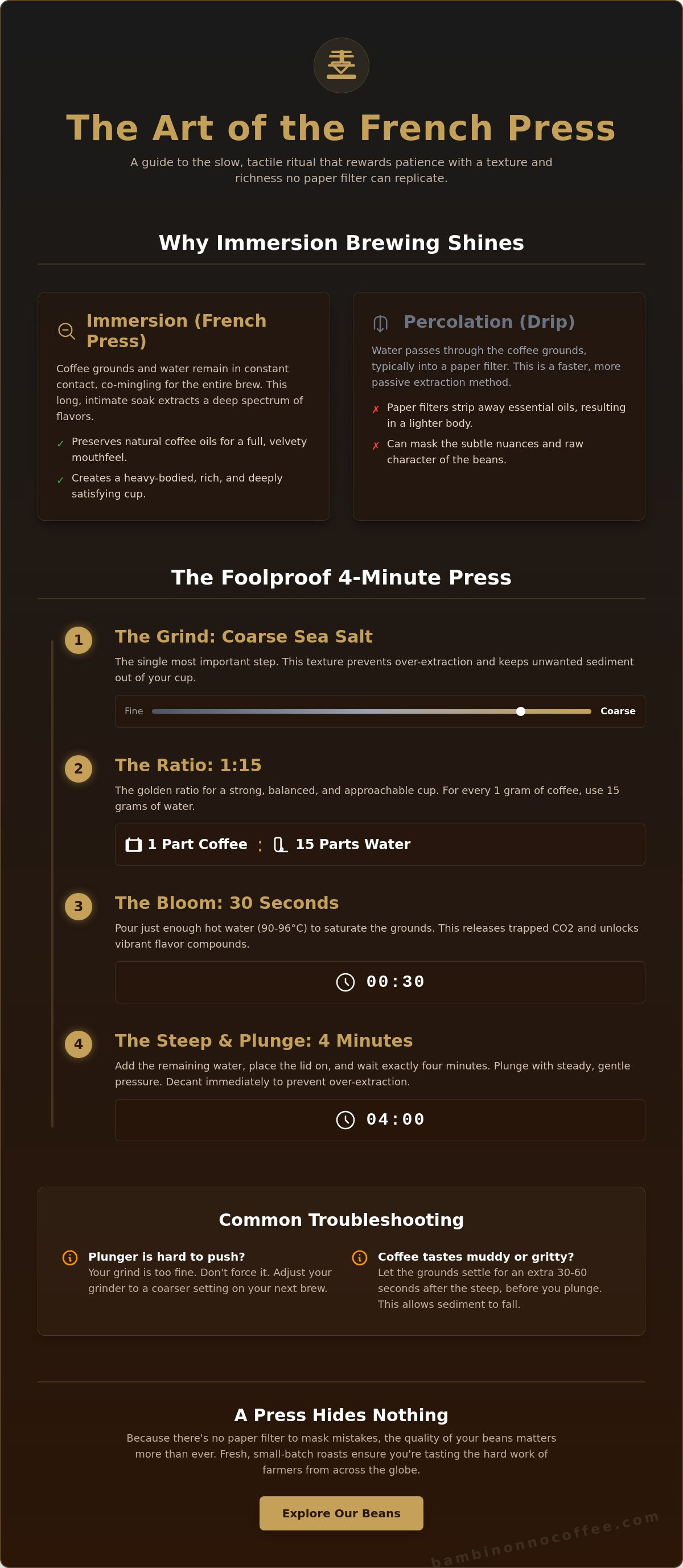
Most home brewers use percolation, like a standard drip machine. These systems use paper filters that strip away the natural oils found in the bean. Immersion brewing preserves these oils. The metal mesh filter in a press allows them to pass into your cup, creating a heavy, velvety mouthfeel. It's a stark contrast to the concentrated intensity of espresso coffee. While espresso is a quick, sharp burst, the press is a slow, unfolding story. This method is a cornerstone of specialty coffee because it highlights the raw character of the roast.
The Bambi Nonno Coffee Perspective
Our philosophy, rooted in the baby-grandpa balance, finds its home in this ritual. We believe in respecting the old-world habits that taught us to wait for quality, while maintaining a modern curiosity for better beans. A french press hides nothing. Because there's no paper filter to mask mistakes, the quality of your beans matters more than ever. At Bambi Nonno Coffee, we focus on fresh, small-batch roasting to ensure that when you take that first sip, you're tasting the hard work of farmers from across the globe. It's about honesty in a cup.
The Foolproof 4-Minute Press: A Step-by-Step Guide
Precision doesn't have to feel like a science experiment. It's more like a quiet conversation between you and the beans, where each step is a gesture of respect for the craft. To achieve The Foolproof 4-Minute Press, you only need a few simple rules and a bit of patience to transform your morning routine.
- Step 1: The Grind. Your coffee should look like coarse sea salt. This texture is non-negotiable for clarity. If the grind is too fine, you'll end up with a muddy cup and a plunger that's nearly impossible to push.
- Step 2: The Ratio. We recommend a 1:15 coffee-to-water ratio. This creates a balanced, approachable cup that's strong enough to stand on its own but smooth enough to enjoy slowly.
- Step 3: The Bloom. Pour just enough hot water to saturate the grounds and wait 30 seconds. This step allows the coffee to degas, ensuring every particle is ready for full extraction.
- Step 4: The Steep and Plunge. Pour the rest of your water, place the lid on, and wait exactly four minutes. When the time is up, press the plunger down with steady, gentle pressure.
Mastering the Bloom and Extraction
The bloom is often skipped in home brewing, but it's the secret to a vibrant cup. Freshly roasted beans carry CO2 gas from the roasting process. If you don't let this gas escape during those first 30 seconds, it acts as a barrier, preventing water from fully reaching the flavor compounds. Extraction is the goal, but over-extraction is the enemy. Once you plunge, decant your coffee immediately into a carafe or mug. Leaving it in the french press means it keeps brewing, which quickly leads to a bitter, dry aftertaste that masks the bean's natural sweetness.
Common Troubleshooting Tips
If you find the plunger is pushing back or feels stuck, your grind is likely too fine. Don't force it; next time, adjust your grinder to a coarser setting to allow for better flow. If your coffee feels 'muddy' despite a coarse grind, try letting the grounds settle for an extra minute after the four-minute steep before you plunge. This extra moment of stillness helps the sediment fall to the bottom. If you ever have questions about matching your gear to our specific beans, feel free to reach out to us for a chat about your setup.
Beyond the Brew: Selecting Beans That Shine in a Press
While your technique provides the structure, the beans provide the soul of the cup. Choosing the right coffee for your french press is an act of exploration that rewards both the traditionalist and the curious. Medium and dark roasts are the historical favorites for this method. Their deep, caramelized sugars and natural oils pair perfectly with the heavy, velvety texture that immersion brewing creates. However, light roasts shouldn't be ignored. They offer a surprising clarity that can reveal delicate fruit notes often hidden by paper filters.
Single Origin vs. Blends for Immersion
Your choice depends on the story you want your morning to tell. If you seek a reliable, comforting ritual with notes of chocolate and toasted nuts, our Signature Blends are designed for that exact consistency. They provide a sturdy foundation for your daily habit. For the more adventurous palates, our Single Origin Collection allows you to taste the specific terroir of a single farm or region.
- For a bright, berry-forward experience, we recommend our Ethiopia Natural. Its floral aromatics bloom beautifully during the steep.
- If you prefer something balanced and sweet, a bean from Guatemala or Peru can offer a crisp finish even in a full-bodied press.
The Ritual of the First Sip
Our obsession with these nuances is rooted in the Bambi Nonno Coffee Story. It's a narrative built on years of travel and a deep respect for the quiet moments that connect us across different cultures. The french press is the perfect vessel for this lifestyle because it doesn't rush you. The sensory experience of that first sip, taken in a still kitchen before the day begins, is a small but significant luxury. It's a reminder that there's no wrong way to enjoy your coffee, only different expressions of the bean waiting to be found.
Try brewing the same bean at two different water temperatures this week. You'll be surprised how a slight change in heat can reveal entirely new layers of flavor in your favorite roast.
Embracing the Art of the Slow Brew
Mastering the french press is about more than just a cup of coffee; it's about reclaiming your quiet morning moments. You now have the tools to control your extraction through a proper bloom and a coarse grind. These small, intentional steps transform a basic routine into a ritual of discovery. Whether you prefer the deep notes of a dark roast or the bright complexity of a single-origin bean, the power to brew a better cup is finally in your hands.
We're here to support your journey with coffee that is small-batch roasted in the USA and sourced from high-altitude forests. To make your morning even more seamless, we provide free shipping on all coffee orders. If you're ready to elevate your daily habit, explore our small-batch roasted beans to find your perfect French press match. Don't be afraid to trust your senses and experiment with your technique. The most rewarding cup is the one that makes you want to stay in the moment just a little bit longer.
Frequently Asked Questions
Why is my French press coffee so muddy or silty?
Muddy coffee is almost always the result of a grind that's too fine or inconsistent. Small particles slip through the metal mesh filter and settle at the bottom of your mug. Using a high-quality burr grinder helps ensure a uniform, coarse texture similar to sea salt. You can also try letting the grounds settle naturally for an extra minute after the steep before gently pushing the filter just below the surface.
What is the best coffee-to-water ratio for a French press?
A 1:15 coffee-to-water ratio is the ideal starting point for a balanced, full-bodied cup. This means using about 30 grams of coffee for every 450 grams of water. It's a forgiving ratio that allows the natural oils and terroir of the beans to shine without becoming overwhelming. If you prefer a heavier mouthfeel, you can experiment with a 1:14 ratio, but 1:15 remains the standard for most daily rituals.
Can I use regular pre-ground coffee in a French press?
You can use pre-ground coffee, but most grocery store options are ground for drip machines and are far too fine for a french press. This fine texture leads to over-extraction and a bitter, silty cup. For the best experience, we always recommend buying whole beans and grinding them fresh just before brewing. If you must use pre-ground, look for "coarse grind" labels to protect the clarity of your brew.
How long should I let my French press coffee steep for the best flavor?
Four minutes is the sweet spot for achieving a rich extraction without introducing unwanted bitterness. This total time includes a 30-second bloom followed by a three-and-a-half-minute steep. If you're using a lighter roast and find the flavor a bit too thin, you might extend the time to five or six minutes. Always decant your coffee immediately after plunging to stop the brewing process and preserve those delicate, hard-earned tasting notes.