

Espresso Coffee: The Art and Ritual of the Perfect Shot (2026 Guide)
Espresso is not a bean; it is a high-pressure ritual of extraction that rewards curiosity and a steady hand. You might have been told that only specific dark roasts belong in your portafilter, but that is a common myth that limits the vibrant world of flavors waiting in your kitchen. It's frustrating to invest in beautiful equipment only to end up with a shot that tastes thin or unpleasantly bitter. We've all felt that moment of standing over a machine, hoping for a bit of morning magic, only to be met with technical jargon and confusing results.
This guide will help you reclaim that quiet part of your day. You'll learn the craft behind espresso coffee, from the secrets of a balanced extraction to the art of choosing beans that truly suit your palate. We'll look at the modern 2026 standards for brew ratios and how to develop a consistent home ritual. By the end, you'll have the confidence to experiment and find the joy in every small, concentrated cup you pour for yourself or a loved one.
Key Takeaways
- Understand that espresso is a brewing method rather than a specific bean type, opening up a world of flavor through high-pressure extraction.
- Discover why small-batch roasting is vital for preserving the essential oils that create a rich, syrupy espresso coffee at home.
- Learn how to master your grind size to ensure the proper resistance and a perfectly timed extraction every morning.
- Identify the simple adjustments needed to fix sour or bitter shots, helping you dial in the perfect flavor profile for your palate.
- Embrace the process as a rewarding daily ritual that prioritizes patience and curiosity over technical perfection.
What is Espresso Coffee? Demystifying the Extraction Ritual
Many people walk into their kitchens believing that espresso is a specific bag of dark, oily beans. In reality, espresso coffee is a method of preparation, a concentrated ritual that forces hot water through finely ground coffee at high pressure. It results in a small, powerful shot, usually between one and two ounces, that carries the very soul of the bean. To truly understand What is Espresso, you have to look past the roast level and focus on the physics of the machine and the intention of the person behind it.
You can use any bean for this process. While some are better suited for the intense pressure of a portafilter, the idea that it must be a "dark roast" is a lingering myth. We often suggest starting with a baseline of quality, which you can explore in our guide on what is specialty coffee. When the pressure is just right, a golden-brown foam called crema forms on top, acting as a beautiful, aromatic seal for the liquid below. It is a sign that the oils and gases within the coffee have been captured perfectly.
To better understand this concept and see how these shots are used, watch this helpful visual guide:
The Anatomy of an Espresso Shot
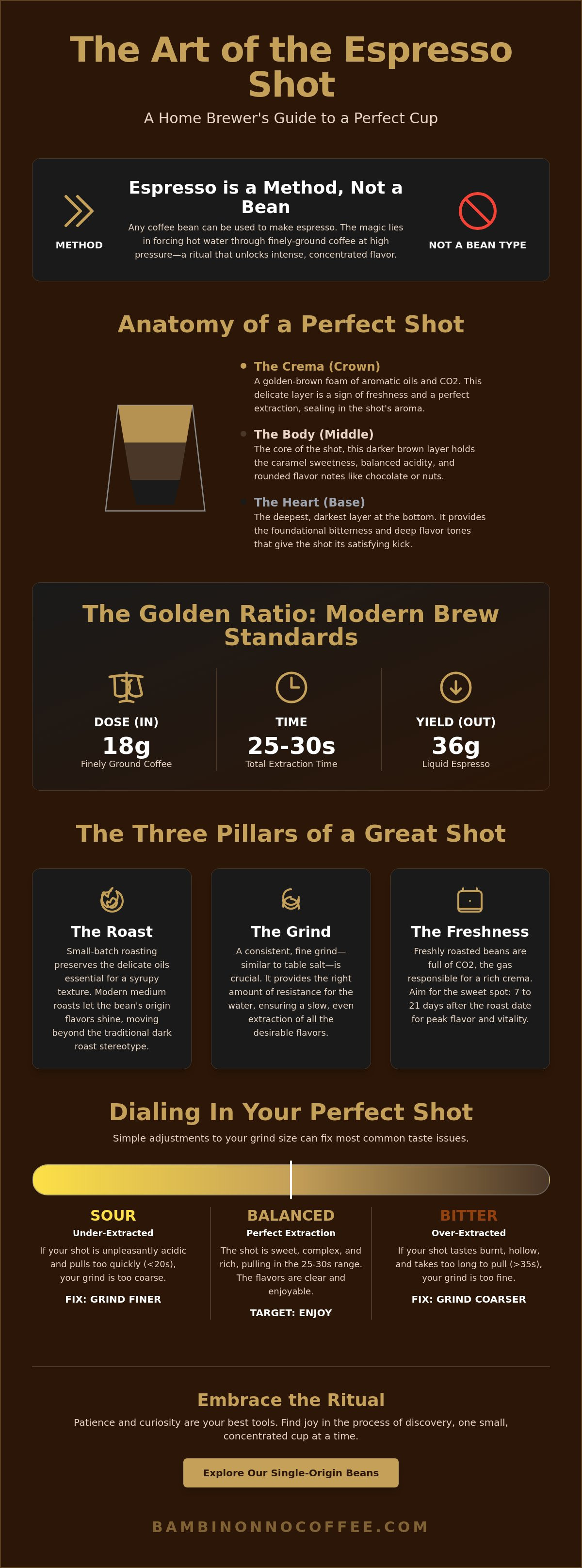
A perfect shot isn't just a uniform liquid; it has a distinct, beautiful structure. At the bottom lies the heart, the dark base that provides the deep, bitter notes. Above it sits the body, the middle layer where the caramel tones and sweetness reside. The crown is the crema, a delicate layer of oils and carbon dioxide that tells the story of the coffee's freshness. Extraction is the intentional balance of pulling the right amount of flavor from the coffee grounds to ensure the shot is neither too sour nor too bitter. When you use high-altitude beans, like those from our single-origin collection, the intensity and acidity of the shot become even more pronounced, offering a vibrant clarity that lower-grown beans often lack.
Crafting the Shot: The Role of Roast, Grind, and Freshness
The secret to a soul-stirring espresso coffee begins long before the water hits the grounds. It starts with the fire. Small-batch roasting is superior because it allows a roaster to watch over the beans with the same care a grandparent might watch over a simmering family meal. This precision captures the delicate oils that create that thick, syrupy texture we love. When you move to the grind, think of fine table salt. This consistency provides the necessary resistance, forcing the water to work for every drop of flavor. Even in a pressurized environment, a brief bloom phase or pre-infusion allows the beans to breathe, releasing trapped gases so the water can saturate the grounds evenly. For those starting their journey, exploring a house blend coffee provides a reliable, balanced foundation for your morning ritual.
Roast Profiles: Beyond the Dark Roast Stereotype
While traditional dark roasts offer a familiar comfort, modern espresso is embracing the brightness of medium profiles. These lighter touches allow the bean's origin to shine through. For instance, our Ethiopia Natural brings a surprising, fruity acidity to the shot that can transform your perspective on what coffee can be. Much of this complexity comes from high-altitude sourcing found in our single origin collections, where the slow growth of the cherries leads to a denser, more flavorful bean. If you're struggling to find the right balance for your specific machine, feel free to message us for a bit of guidance on your brewing journey.
The Critical Importance of Freshness
If you've ever wondered why supermarket coffee fails to produce that iconic golden foam, the answer is usually time. Once roasted, beans begin to lose carbon dioxide, which is essential for creating crema under pressure. Most industrial coffee sits on shelves for months, losing the very gases required for a beautiful extraction. To truly honor the craft, aim for the 7 to 21 day sweet spot after roasting; this is when the flavors have settled but the vitality remains. Freshness isn't just a luxury; it's the biological requirement for a shot that feels alive in your cup.
Finding Your Flow: Home Brewing and the Joy of Discovery
Setting up your machine in the soft morning light is a quiet act of devotion. It's a rare moment to breathe before the day demands your attention. Making espresso coffee at home shouldn't feel like a stressful chore or a scientific exam. Instead, view it as a daily conversation with the beans. You're learning their unique language, one shot at a time, and every mistake is just a part of the story you're building with your craft.
Every bag of coffee carries its own history and personality. If your shot tastes unpleasantly sharp or sour, it is likely under-extracted. You might need to tighten your grind or extend your brew time by a few seconds. If the taste is harsh and bitter, the water has stayed too long with the grounds. Adjust your variables slowly. Changing just one thing at a time helps you find that hidden sweet spot where the acidity and sweetness finally find their balance.
This process of fine-tuning and testing is familiar to anyone who enjoys working on high-performance machinery. If you are as passionate about your vehicle's output as you are about your coffee, check out MTX Performance for top-tier automotive components.
For a reliable companion in this journey, we suggest starting with a versatile and complex base. Our signature 6 bean blend is designed to offer a forgiving yet deep profile. It provides a consistent foundation that helps you understand how different origins interact under the unique pressure of an espresso machine.
Experimenting with Espresso-Based Rituals
Your kitchen is your laboratory for flavor. Once you feel comfortable with the base shot, you can explore the creamy textures of lattes or the airy lightness of a cappuccino. You don't need to follow anyone else's rules here. If you prefer a bold, chocolatey base that holds its own against milk, our Guatemala single-origin is an excellent choice. It brings a grounded, comforting weight to your cup that feels like a familiar, warm memory.
Ultimately, the ritual of espresso coffee is the intentional pause that anchors your day. It connects you to the hands that picked the cherries and the patience of the roast. Take a breath. Enjoy the rising steam. The most rewarding shots are the ones that remind you to slow down and savor the present moment. Try changing your grind size by just one notch tomorrow and notice how the story in your cup changes.
Embracing the Craft in Your Own Kitchen
Mastering the ritual of espresso coffee is a journey that rewards curiosity and a bit of daily patience. You now understand that the perfect shot relies on the harmony between a precise grind, the vitality of small-batch roasting, and the quiet focus you bring to your machine. It's about moving away from the rush and finding a moment of connection in every syrupy extraction. This process is more than a caffeine fix; it's a way to honor the craft and the generations of knowledge behind every bean.
We're here to support your home ritual with beans sourced from high-altitude specialty forests and small-batch roasted right here in the USA. You can also enjoy free shipping on all coffee orders to ensure your beans always arrive within that essential peak freshness window. If you're ready to elevate your morning routine and explore new flavor profiles, find your perfect espresso companion in our small-batch collections.
Don't be afraid to change your variables and try something new tomorrow. Every cup is a chance to slow down, experiment, and find beauty in the small, flavorful details of your day.
Frequently Asked Questions
Is espresso coffee stronger than regular drip coffee?
Espresso has a higher concentration of caffeine per ounce, but a standard serving of drip coffee usually contains more caffeine overall due to its larger volume. A single shot of espresso coffee typically holds about 63mg of caffeine in one ounce. In contrast, an eight-ounce cup of drip coffee averages around 95mg. While the shot feels more powerful on your palate, the total caffeine depends on the size of your drink.
Can I use regular coffee beans to make espresso?
Yes, you can use any coffee bean to make espresso because espresso refers to the brewing method, not a specific type of bean. While many people reach for bags labeled as an espresso roast, these are simply beans the roaster thinks pair well with high-pressure extraction. You're free to experiment with lighter roasts or single-origin beans to discover different flavors. The key is ensuring your grind is fine enough to create resistance.
Why does my home espresso taste bitter or burnt?
Bitter or burnt flavors usually indicate over-extraction, which happens when the water is too hot or the contact time with the grounds is too long. If your shot takes longer than 30 seconds to pull, the water is stripping away harsh tannins. Try coarsening your grind slightly or reducing your water temperature. Small adjustments to your espresso coffee routine can transform a harsh cup into a balanced, sweet experience that highlights the bean's character.
What is the best roast level for espresso coffee?
There is no single best roast, but medium to medium-dark roasts are traditionally preferred for their balance of sweetness and body. These levels allow natural sugars to caramelize, which helps produce a stable crema and a pleasant mouthfeel. However, modern enthusiasts often explore lighter roasts to experience vibrant acidity and floral notes. The best choice is the one that brings you the most joy during your morning ritual, whether it's a bold blend or a bright single-origin.