

Finding Your Pour: How to Enjoy Fruity Coffee Without Bitterness
You finally treated yourself to a bag of single-origin Ethiopia Natural, lured in by the promise of wild berry and jasmine. You set up your morning ritual with care, yet the first sip is a jagged disappointment of ash and dry wood rather than the vibrant harvest you expected. It's a common heartbreak for anyone chasing a clean, fruity coffee without bitterness. We've all been there, staring at a bag of expensive beans and wondering where the extraction went wrong.
The truth is that those delicate, tea-like notes are shy. They require a specific kind of patience and a few simple adjustments to your technique to truly shine. You'll discover how to identify high-altitude beans that hold the most flavor potential. We will explore the nuances of the bloom and the precise variables that transform a muddy cup into a clear, vibrant experience. Let's find your perfect pour together.
Key Takeaways
- Understand how high-altitude forests produce denser beans rich in the organic compounds that create naturally vibrant, berry-like flavors.
- Learn to enjoy fruity coffee without bitterness by mastering the bloom and stopping your extraction before woody tannins overshadow the sweet notes.
- Discover why choosing single-origin beans is the best way to experience the pure, unblended terroir and unique character of a specific region.
- Identify why light to medium roasts are essential for preserving the delicate acidity and clarity that define an exceptional, fruit-forward cup.
The Alchemy of Acidity: Why Some Coffees Taste Like Fruit
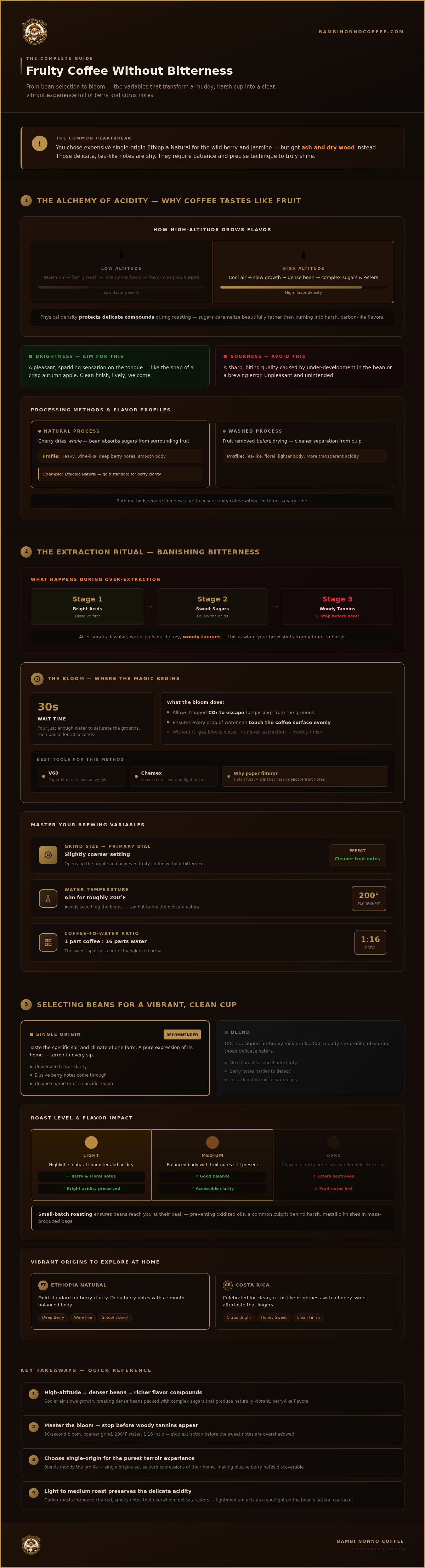
When you taste a hint of wild blueberry or bright citrus in your mug, you aren't tasting flavored syrups or additives. These vibrant notes are born from organic compounds called esters. They develop naturally as the coffee cherry matures on the branch. In high-altitude forests, the cooler air slows down this growth. This results in a denser bean packed with complex sugars. It's the essential secret to finding fruity coffee without bitterness; the physical density protects those delicate compounds during the coffee roasting process. This protection ensures the sugars caramelize beautifully rather than burning into harsh, carbon-like flavors.
It helps to distinguish between brightness and sourness. When you source high-grown single-origin coffees, you're looking for a lively acidity that finishes clean. Here's how to tell the difference:
- Brightness: A pleasant, sparkling sensation on the tongue, much like the snap of a crisp autumn apple.
- Sourness: A sharp, biting quality often caused by under-development in the bean or a brewing error.
The Role of Processing in Flavor Clarity
Processing acts as the final stage of flavor development before the beans reach the roaster. In the natural process, the coffee cherry dries whole, allowing the bean to absorb sugars from the surrounding fruit. This often creates heavy, wine-like profiles. Our Ethiopia Natural is a gold standard. It offers a stunning clarity of flavor, highlighting deep berry notes while maintaining a smooth, balanced body. Washed processes, where the fruit is removed before drying, generally produce a more tea-like and floral cup. Both methods require immense care to ensure you enjoy a fruity coffee without bitterness every time.
The Extraction Ritual: Banishing Bitterness at the Source
Bitterness often feels like an unwelcome guest at a quiet morning table. It usually arrives when the extraction process goes a step too far. After the bright acids and sweet sugars have dissolved, the water begins to pull out heavier, woody tannins from the bean's structure. This is the moment your brew shifts from vibrant to harsh. To keep that fruity coffee without bitterness, you must respect the timing of the ritual and the temperature of your water.
The bloom is where the magic begins. By pouring just enough water to saturate the grounds and waiting thirty seconds, you allow trapped carbon dioxide to escape. This degassing ensures that every subsequent drop of water can touch the coffee's surface evenly. Without this pause, the gas blocks the water, leading to uneven pockets of extraction and a muddy finish. Tools like the V60 or Chemex are perfect for this. Their paper filters catch the heavy oils that can mask delicate fruit notes, leaving you with a cup as clear and light as tea.
Mastering Your Brewing Variables
Your grind size is the primary dial for flavor. Try a slightly coarser setting to open up the profile and achieve a fruity coffee without bitterness. Aim for a water temperature of roughly 200 degrees to avoid scorching the beans. For a perfectly balanced brew, use a ratio of 1 part coffee to 16 parts water. If you want to know more about our sourcing and the passion behind every bean, read our story.
Selecting Beans for a Vibrant and Clean Cup
Finding the right bean is the foundation of your experience. If you start with a blend designed for heavy milk drinks, you'll struggle to find those elusive berry notes. Choosing Single-Origin Coffees allows you to taste the specific soil and climate of one farm. This clarity is vital for anyone seeking a fruity coffee without bitterness. Blends can sometimes muddy the profile, while a single origin acts as a pure expression of its home.
Roast level is just as important as the source. Light to medium roasts act like a spotlight, highlighting the bean's natural character and acidity. Darker roasts often introduce charred, smoky notes that overwhelm delicate esters. Our commitment to small-batch roasting ensures that the beans reach you at their peak. This prevents the development of oxidized oils, which are a common culprit behind that harsh, metallic finish found in mass-produced bags.
Vibrant Origins to Explore at Home
If you're looking for a place to start, we highly recommend Costa Rica. These beans are celebrated for a clean, citrus-like brightness and a finish that lingers with a honey-sweet aftertaste. For those who want to dive deeper into how geography shapes every sip, our Single Origin Terroir Guide explores these regional differences in detail.
We encourage you to embrace the ritual of the Slow Sip. As your coffee cools, the perceived acidity and sweetness change. You might find that the vibrant notes become even more pronounced at room temperature. This patience is the final step in mastering a fruity coffee without bitterness, turning a simple drink into a moment of genuine discovery.
Find Your Perfect Morning Ritual
You've seen that the secret to a vibrant cup begins in high-altitude forests and ends with a mindful brewing ritual. By choosing small-batch roasted beans and mastering the bloom, you can finally enjoy fruity coffee without bitterness every single morning. Like a story shared between friends, the best coffee requires patience and attention to detail. We source our beans with a deep passion for the craft, ensuring peak freshness through our dedicated roasting process. Plus, we offer free shipping on all orders within the United States to make your discovery even easier. If you're ready to explore these unique profiles, start your journey of discovery with our Single Origin Collection. There's a world of flavor waiting in your next cup; we can't wait for you to find it.
Frequently Asked Questions
Why does my fruity coffee taste sour instead of sweet?
Sourness is usually a sign of under-extraction. If your water isn't hot enough or your grind is too coarse, the water can't pull out the sugars needed to balance the natural acids. You're left with a sharp, vinegar-like bite instead of sweetness. Try using water closer to 200 degrees or refining your grind to find that elusive fruity coffee without bitterness.
Is light roast coffee more acidic than dark roast?
Light roasts do contain more organic acids because they aren't subjected to the intense heat that breaks those compounds down. While dark roasts offer smoky, chocolatey depths, they often lose the vibrant, citrus-like clarity found in lighter beans. If you want a cup that celebrates the natural terroir of a high-altitude forest, a light to medium roast is always your best choice.
Can I make fruity coffee in a French Press without it getting bitter?
You can certainly use a French Press, but you must be mindful of the immersion time. Since the grounds stay in contact with water for the entire brew, it's easy to pull out heavy, woody tannins. Use a coarse grind and decant the coffee immediately after the four-minute mark. This prevents over-extraction and helps you maintain a clean, fruity coffee without bitterness.