

Low Bitterness Filter Coffee: A Guide to a Smoother Morning Ritual
That bold, soul-warming cup you crave doesn't have to leave a dry, burnt aftertaste lingering on your tongue. It's a common struggle to find the perfect low bitterness filter coffee, and many of us have spent mornings frustrated as expensive beans turn into an extraction that's more harsh than rewarding. You shouldn't have to settle for a biting finish just because you want a coffee with depth and character.
Reclaiming your morning ritual is about returning to the simple joy of the craft and understanding how to treat the bean with care. I'll show you how to select origins that naturally lean toward sweetness and how to make small brewing adjustments that protect those delicate flavors. We'll look at why roast levels and water temperature matter, giving you the confidence to create a cup that's consistently clean. It's time to enjoy a brew that's as smooth and inviting as the quiet moments you've been looking forward to.
Key Takeaways
- Understand why beans sourced from high-altitude forests offer more natural sugars and how to tell the difference between a bright acidity and harsh bitterness.
- Fine-tune your extraction process and use the bloom phase to release gases that often mask the sweet, delicate notes of your brew.
- Identify the best ways to select and prepare low bitterness filter coffee to ensure every cup you pour is consistently smooth and vibrant.
- Gain confidence in choosing specific profiles like the Breakfast Blend or single-origin Peru to enjoy a naturally mild, nutty, and clean finish.
The Foundation of Smoothness: Choosing Beans with Naturally Low Bitterness
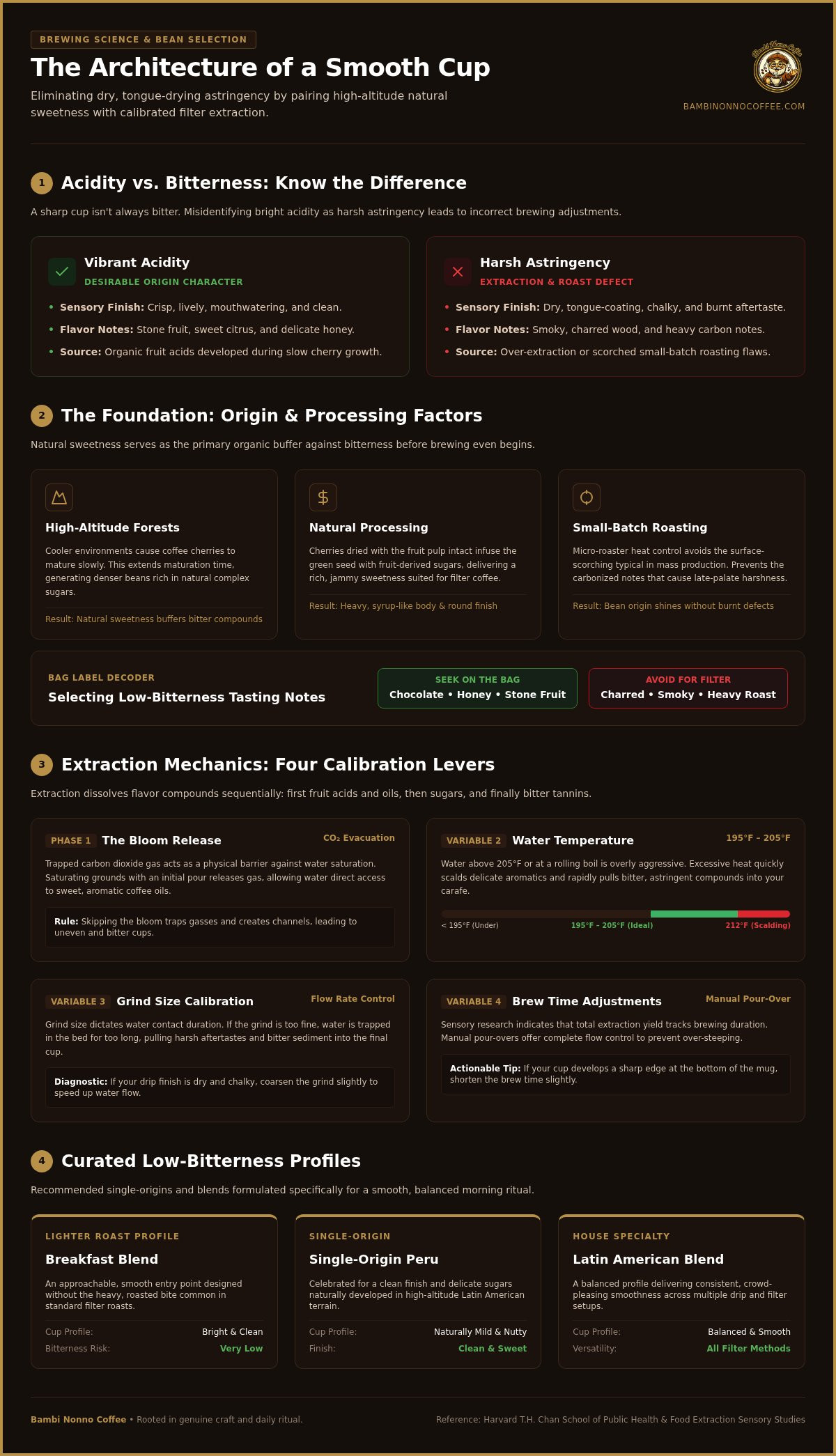
Finding a low bitterness filter coffee starts long before you pick up your kettle. It's about recognizing the difference between a coffee's natural bite, which is often just a bright, vibrant acidity, and that harsh, tongue-drying astringency. That unpleasant bitterness often stems from poor sourcing or roasting errors rather than the bean itself. Look for tasting notes that promise sweetness, like chocolate, honey, or stone fruit. If you see words like smoky or charred, you're likely heading toward a more bitter experience that can mask the true character of the origin.
To help you distinguish between these flavors and fix your brew, watch this helpful breakdown:
Terroir and Altitude: Why Where the Coffee Grows Matters
The secret to a smooth cup often lies in the thin air of high-altitude forests. In these cooler environments, coffee cherries mature slowly, allowing the plant to develop denser beans packed with complex sugars. This natural sweetness acts as a buffer against bitterness. High standards in sourcing ensure the beans are picked at peak ripeness, when sugar content is highest. Processing also plays a role; natural-processed beans, dried with the fruit still on, often carry a heavy, jammy sweetness that pairs beautifully with a slow morning.
Precision in the roast is just as vital. Small-batch roasting allows for a level of control that mass-produced coffee simply can't match, which is essential for creating a low bitterness filter coffee that feels truly premium. This precision prevents the burnt flavors that lead to a bitter finish. Understanding the science of coffee extraction and over-extraction helps you realize that a great cup isn't just about the beans, but how they were nurtured from the soil to the roaster. It's about giving the coffee the time and attention it deserves to shine.
Refining Your Ritual: Brewing Techniques to Reduce Bitterness
Brewing is a delicate dance between water and bean. If you've ever wondered why your morning cup has a sharp edge, the answer usually lies in extraction. This is simply the process of water dissolving the flavors within the grounds. When you over-extract, you pull out the heavy, astringent compounds that ruin a smooth profile. Research from the Harvard T.H. Chan School of Public Health highlights how roasting and brewing choices impact the concentration of these bitter compounds. To achieve a low bitterness filter coffee, you must start with the bloom.
This initial pour releases trapped carbon dioxide. Without it, those gases act as a barrier, preventing the water from reaching the sweet, desirable oils. Grind size is your most powerful tool for adjusting drip coffee. If your grind is too fine, the water struggles to pass through, staying in contact with the coffee for too long. This leads to a harsh finish that masks the bean's origin.
The Temperature and Time Balance
Temperature matters just as much as time. Boiling water is often too aggressive. It can scald the grounds and extract bitterness instantly. Keep your water between 195 and 205F for a balanced result. If your cup still tastes a bit sharp, try a slightly shorter brew time. This focus on timing is essential for crafting a low bitterness filter coffee every single day. Using a pour-over method gives you the manual control needed to perfect this ritual and ensure a clean finish. If you're still dialing in your technique, you can always reach out to us for a few extra tips.
Discovering Your Smooth Cup: Curated Selections for the Filter Enthusiast
Choosing the right bean is the final piece of the puzzle. For a bright, clean start to your day, the Breakfast Blend is an ideal entry point for low bitterness filter coffee. It offers a classic profile without the heavy, roasted bite often found in darker roasts. This aligns with sensory research on drip coffee extraction, which shows that flavor perception is heavily tied to brew strength and extraction yield. If you prefer a balanced, reliable cup that everyone at the table will love, the Latin American Blend delivers a consistent, crowd-pleasing smoothness.
If you want to explore single origins, Peru is a standout choice. It's cherished for its mild, nutty character and naturally low-acid profile, making it incredibly gentle on the palate. For those who enjoy a bit of fruitiness, Ethiopia Natural provides a different experience. Its berry-like sweetness creates a natural buffer, ensuring a clean finish that feels vibrant rather than bitter.
Matching the Blend to Your Morning Moment
Your choice should match the energy of your ritual. A bright Ethiopian might suit a crisp morning, while the mellow notes of Nicaragua are perfect for a slow afternoon. Part of the joy is in the discovery; don't be afraid to experiment with different regions to see how they react to your unique brewing style. Always remember that fresh roasting is the ultimate defense against the stale, flat bitterness found in grocery store beans. Precision in small batches keeps the sugars intact, ensuring your low bitterness filter coffee is always as smooth as the first time you tasted it.
Embracing the Art of a Smooth Brew
Your daily ritual shouldn't be a battle against a harsh aftertaste. By selecting high-altitude beans and refining your extraction through precise water temperature and grind size, you can consistently enjoy a low bitterness filter coffee. This journey toward a cleaner finish is about respecting the bean and the time it takes to brew it right. It's a simple shift that transforms a quick caffeine fix into a moment of genuine discovery and connection with the craft.
We source our beans with care and use small-batch roasting to preserve the delicate, sweet notes you crave. We also provide free shipping on all US orders to make your next morning favorite even more accessible. If you're ready to trade bitterness for a vibrant, nutty profile, find your new favorite smooth ritual in our coffee collection and reach out if you need help choosing your next origin. Enjoy the quiet beauty of your next perfect cup.
Frequently Asked Questions
Why does my coffee taste bitter even with expensive beans?
Expensive beans are only the start of the journey. Even the finest high-altitude coffee can turn harsh if your water is boiling or your grind is too fine. These factors lead to over-extraction, where the water pulls out heavy, astringent compounds instead of the sweet oils. It's often a matter of dialing in your technique to match the precision of the roast.
Is light roast coffee less bitter than dark roast?
Generally, yes. Lighter roasts preserve the natural sugars and organic acids of the bean, while darker profiles can introduce charred, smoky notes through prolonged heat. However, a light roast can still taste sharp if under-extracted. For a reliable low bitterness filter coffee, many enthusiasts start with a balanced medium roast like our Breakfast Blend to find that perfect middle ground of sweetness and clarity.
Can I fix a bitter cup of coffee after it is brewed?
You can't remove the bitter compounds once they're in the cup, but you can balance them. Adding a tiny pinch of salt can neutralize your tongue's perception of bitterness, making the coffee taste smoother. For those who prefer a hint of sweetness to mask any lingering harshness, a natural whole-fruit alternative like MONKS provides a clean way to balance the cup without added sugar. Alternatively, a small splash of hot water might open up the flavors if the brew is too concentrated. It's a quick fix that helps you save a cup while you refine your next ritual.
What is the best grind size for low bitterness filter coffee?
Aim for a medium to medium-coarse grind that looks similar to kosher salt or coarse sand. If your grind is too fine, the water stays in contact with the coffee for too long, causing the over-extraction that creates a biting finish. Moving to a coarser setting allows the water to flow through more freely, resulting in a cleaner, sweeter cup that highlights the bean's origin.