

Why Freshly Roasted Coffee Beans Are a Total Game Changer for Your Morning Ritual
You have likely stood in your kitchen, waiting for that first sip of the day, only to find the flavor is a shadow of the rich aroma you smelled in the bag. It is a common letdown that many coffee lovers accept as the norm. But the truth is that your morning ritual deserves more than just a caffeine kick; it deserves the full expression of the bean's origin. Choosing freshly roasted coffee beans is the single most effective way to bridge the gap between a dull cup and a vibrant experience that wakes up your senses.
In the following sections, we will explore why the clock starts ticking the moment the roast ends and how you can identify the exact window where flavor is at its peak. We will look at the science of the bloom and share practical ways to store your beans so that every morning feels like a new discovery. By the time you finish reading, you will understand how to source and handle your coffee to ensure your daily habit remains the highlight of your day.
Key Takeaways
- Learn how to distinguish between "sleeping" grocery store coffee and beans at the height of their aromatic potential.
- Understand why the magic window for brewing freshly roasted coffee beans falls between 7 and 21 days after the roast date.
- Discover how the degassing process and the resulting bloom are the true indicators of a healthy, flavorful extraction.
- See why grinding whole beans just before brewing is the most effective way to protect delicate oils from oxidation.
- Master simple storage techniques that keep your coffee in a cool, dark place while avoiding the flavor-ruining moisture of the fridge.
The Invisible Difference: Why Your Grocery Store Coffee is "Sleeping"
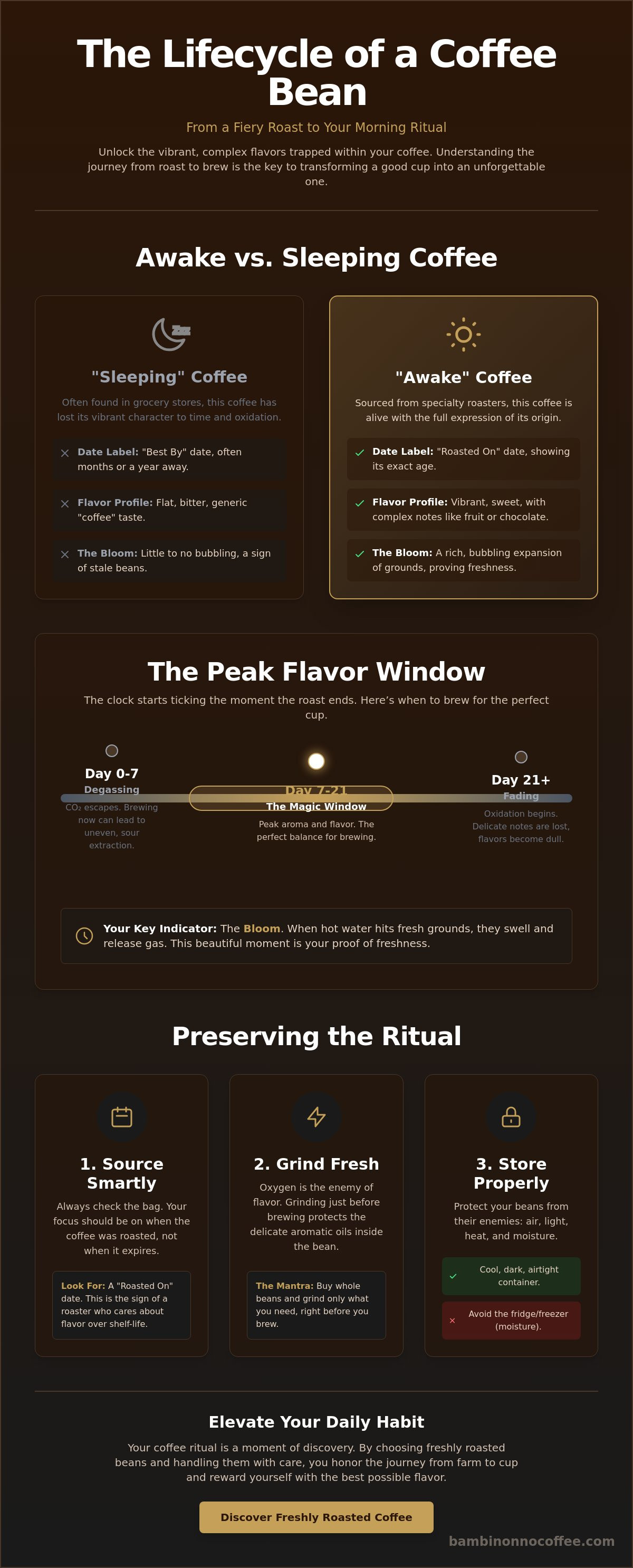
Most coffee you find on a supermarket shelf is essentially in a state of deep hibernation. When we talk about freshly roasted coffee beans, we are looking at a narrow window of time, usually days or weeks after the roasting process, rather than the months or years common in commodity trade. This is where the Maillard reaction—the chemical magic that transforms green seeds into aromatic brown beans—is still fresh and expressive. Commodity coffee often sits in massive distribution centers where it loses the volatile aromatics that make a morning cup so memorable. This is what we call "sleeping" coffee. It has lost its soul to the passage of time, leaving behind a flavor profile that is often just bitter and flat.
By contrast, a small batch roast highlights the vibrant acidity and natural sweetness found in the original fruit. It is the difference between a fresh loaf of bread and a stale cracker. While the supermarket bag might have a "best by" date a year away, the true character of the bean begins to fade long before that. At Bambi Nonno Coffee, we believe that coffee should be awake when it hits your grinder, carrying the energy of the high-altitude forests where it was grown.
Oxidation and the Loss of Aromatics
Oxygen is the primary enemy of the delicate oils found inside every bean. Once the roast is finished, those oils begin to break down, leading to a generic, dull taste that many people mistake for "strong" coffee. High-altitude beans, like those featured in our specialty coffee collection, are particularly vulnerable because they contain complex sugars that need protection. These sugars are what create the notes of stone fruit or chocolate you crave. When beans are left to oxidize on a shelf, those sugars degrade, leaving you with a cup that smells good in the bag but tastes like cardboard in the mug.
The Peak Flavor Window: Understanding Degassing and the Bloom
You might think the best time to brew is the moment the beans leave the roaster. Surprisingly, coffee needs a little time to settle. During the roast, carbon dioxide gets trapped inside the bean. If you brew immediately, this gas interferes with the water's ability to extract flavor. The science behind coffee degassing shows that beans need about 3 to 7 days to release this excess gas. This resting period is essential for the flavors to clarify and reach their full potential.
Once that initial rest is over, you enter the "Magic Window." Between 7 and 21 days post-roast, the terroir and the roast profile find a perfect, harmonious balance. This is when your freshly roasted coffee beans are at their most expressive. After the 21-day mark, the delicate notes begin to fade as oxidation takes over. Always look for a "Roasted On" date on the bag. A "Best By" date is often a sign of mass-produced coffee that prioritizes shelf life over actual taste.
You'll know your beans are in their prime when you see the bloom. As you pour hot water over the grounds, they'll bubble and swell like they're breathing. This is the CO2 escaping, paving the way for a clean and sweet extraction. It's a beautiful, quiet moment in the morning ritual that proves your coffee is still alive with flavor. If you're curious about how a specific origin behaves during the bloom, you might enjoy experimenting with our Ethiopia Natural beans.
How to Identify Truly Fresh Beans at Home
You can often tell if beans are fresh just by looking at them. Freshly roasted coffee beans usually have a matte finish or a slight oily sheen, depending on how dark the roast is. If they look dusty or grey, they've likely been sitting too long. Your nose is another great tool. Fresh beans should hit you with distinct aromas like stone fruit, jasmine, or rich chocolate. If it just smells like generic "burnt coffee," the volatile aromatics have already vanished. Degassing is the essential rest period where trapped carbon dioxide escapes to allow for better flavor development and a more balanced cup.
Preserving the Ritual: Sourcing and Storing Your Beans
Once you've brought home a bag of freshly roasted coffee beans, the next step is protecting that fleeting magic. It's about more than just convenience; it's about honoring the journey the bean took to reach your kitchen. The most effective way to do this is by following the "Whole Bean Mantra." By grinding your coffee just seconds before the water hits the grounds, you lock in the aromatics that would otherwise drift away. This simple habit ensures that the vibrant acidity and sweetness we've discussed remain intact for every cup.
Understanding the science of coffee freshness helps you realize that air, light, and moisture are the constant enemies of flavor. You should keep your beans in a cool, dark place within an airtight container. Please avoid the fridge. While some online forums suggest freezing, the moisture and odors from other foods can easily seep into the porous beans, ruining the profile you're trying to preserve. Choosing small batch roasted coffee beans ensures you aren't stuck with a massive bag that goes stale before you can finish it.
Whole Bean vs. Pre-Ground: A Quick Comparison
Ground coffee has significantly more surface area exposed to the air. This exposure accelerates oxidation by nearly ten times compared to whole beans. There's a certain peace in the ritual of using a hand grinder. It connects you to the physical process of brewing, making the first sip feel earned. It's a small investment in time that pays off in a much more expressive cup.
The Bambinonno Sourcing Story
Our approach is rooted in years of travel and a quiet obsession with the daily habit of a good cup. We look for beans grown in high-altitude forests where the climate allows for slow, thoughtful development. Take our Ethiopia Natural as an example. When these beans are fresh, they carry delicate floral notes that would simply vanish in a commodity-grade roast. We see coffee as a way to slow down and connect, whether you're sharing a pot with family or enjoying a solitary moment before the world wakes up. Try keeping your beans in the same cupboard as your favorite mugs; it's a small way to keep the ritual close at hand.
Bring the Bloom to Your Kitchen
Your morning coffee is more than just a drink; it's a quiet promise you make to yourself before the world gets loud. By choosing freshly roasted coffee beans, you're ensuring that the vibrant stories of high-altitude farms are present in every sip. We've seen how the simple act of checking a roast date and waiting for the peak flavor window can transform a flat cup into an extraordinary experience. It's about slowing down, grinding your beans by hand, and watching the bloom rise as a sign of life.
At Bambinonno, we source our beans from responsible, high-altitude farms and roast them in small batches right here in the USA. We believe these small details create the moments that matter most. With free shipping on all coffee orders, it's easier than ever to bring this craft into your home. We're here to help you rediscover the joy of a slow, thoughtful brew that honors the journey from soil to cup.
Explore our small-batch roasts and find your new morning ritual.
Take a moment tomorrow to really smell the grounds before you brew. That fleeting aroma is the heart of the journey, and you've earned the right to enjoy it fully.
Common Questions About Coffee Freshness
How long do freshly roasted coffee beans stay fresh?
Freshly roasted coffee beans stay at their peak for about seven to twenty one days after the roast date. While they remain safe to drink for several months, the delicate oils and volatile aromatics that define a high quality roast begin to fade significantly after the first thirty days. You'll find that the most vibrant and sweet flavors are present during that three week window when the bean is most expressive.
Can I use coffee beans the same day they are roasted?
You can brew beans on the day they are roasted, but the flavor will likely be sharp and unbalanced. Coffee needs a resting period of at least three to seven days to release trapped carbon dioxide through the degassing process. If you brew too early, this gas creates a barrier that prevents water from fully extracting the sugars, often resulting in a cup that tastes sour or overly acidic.
Is it better to buy whole bean or ground coffee for freshness?
Buying whole bean is always the superior choice because it preserves the integrity of the bean's internal oils. Once coffee is ground, the increased surface area causes it to oxidize and lose its aromatic soul within minutes. By keeping freshly roasted coffee beans whole until the moment you brew, you ensure that every cup captures the full range of flavors intended by the roaster.
How should I store my coffee beans to keep them fresh longer?
The ideal way to store your beans is in an airtight, opaque container kept in a cool, dark place like a pantry. Please avoid the refrigerator or freezer, as these environments introduce moisture and odors that can easily seep into the porous beans and ruin their profile. A simple ceramic or stainless steel canister provides the best protection against light and oxygen, keeping your daily ritual tasting its best for as long as possible.