

Why Is My Coffee Bitter? How to Fix Your Brew and Restore the Ritual
Bitterness isn’t a badge of strength or a necessary trait of a dark roast. It’s actually a quiet signal that your brewing process has drifted away from the beans' true potential. If you find yourself wondering why is my coffee bitter even when using premium beans, you aren't alone. In early 2026, nearly half of American adults reported drinking specialty coffee daily, yet many still struggle to capture that perfect, balanced flavor at home. Your morning ritual should be a moment of comfort, not a chore that leaves a harsh, ashy taste in your mouth.
It’s deeply frustrating to open a fresh bag of single-origin beans and be met with a sharp, unpleasant finish instead of the vibrant tasting notes you expected. We believe that coffee should be a moment of slowing down and connecting with the craft, not a source of confusion over variables like extraction or grind size. You deserve a cup that rewards your patience and curiosity every single morning. This guide will help you transform those disappointing brews into a balanced, flavorful experience by explaining the science behind flavor imbalances in plain language.
You’ll learn how to diagnose specific issues and gain the confidence to adjust your brewing variables to suit your palate. We will cover everything from the nuances of water chemistry to the importance of the bloom, ensuring your next cup is the reliable, delicious ritual you’ve been looking for. It is time to stop wasting expensive beans and start enjoying the nuanced flavors that a well-prepared brew can offer.
Key Takeaways
- Master the delicate sequence of extraction to stop bitterness before it starts by capturing the perfect balance of sweetness and acidity.
- Discover why is my coffee bitter and how adjusting your grind size to be slightly coarser can immediately restore the clarity of your favorite roast.
- Fine-tune your water temperature to the 195°F to 205°F range to prevent scorching those precious oils and delicate flavors.
- Uncover the role of water chemistry and equipment hygiene in protecting the integrity of your daily morning ritual.
Understanding Extraction: The Fine Line Between Bold and Bitter
Every morning, a quiet transformation happens in your kitchen. Water meets ground beans; it's a slow, purposeful dance that determines how your day begins. Understanding Extraction is the key to mastering this moment. In its simplest form, extraction is the process of water dissolving the flavorful solids from your coffee grounds and carrying them into your cup. It's a delicate balance that requires patience and a bit of curiosity.
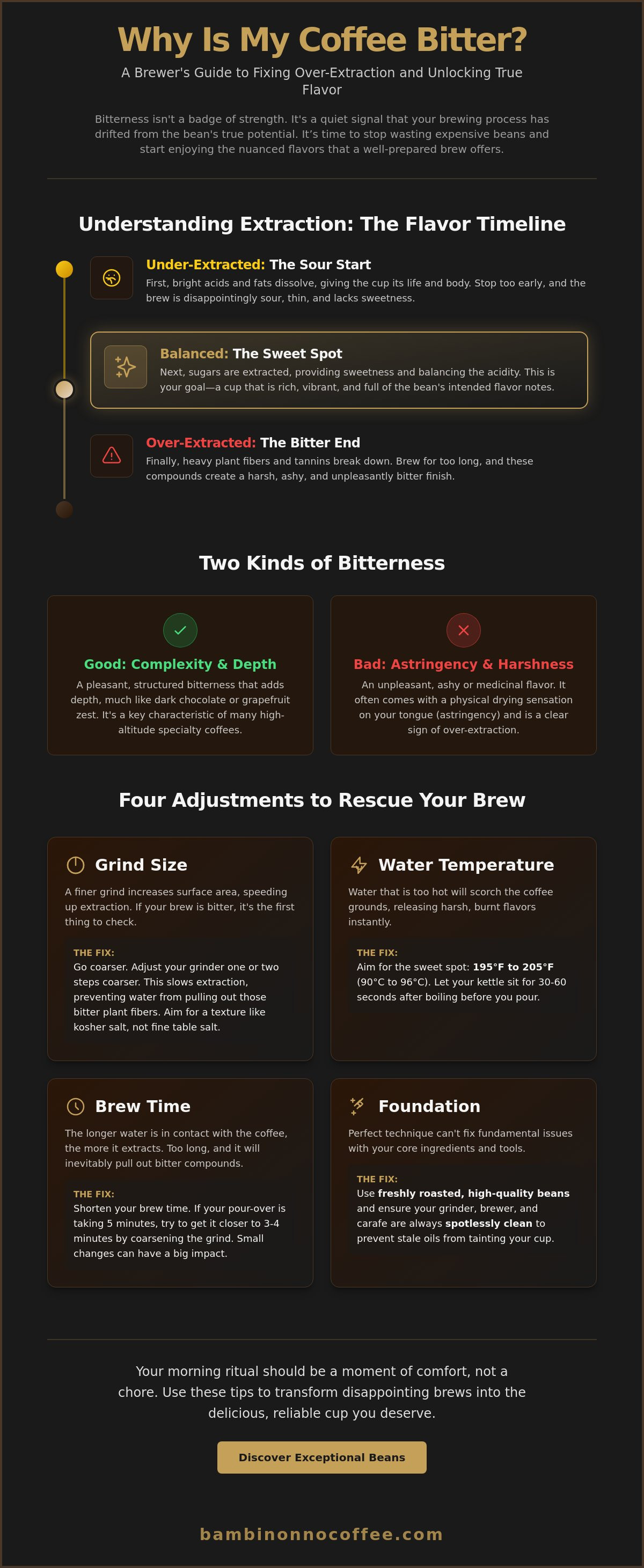
The flavors don't all arrive at once. They follow a specific, beautiful sequence. First, the bright acids and silky fats dissolve, giving the cup its life and body. Next come the sugars, providing that much-needed sweetness. If the water stays in contact with the grounds for too long, it begins to pull out the heavy, bitter plant fibers. Diagnosing why is my coffee bitter starts with recognizing this natural chemical sequence and knowing when to stop the clock.
To better understand this concept, watch this helpful video:
Over-extraction is the point where water begins to break down the harsh, astringent organic matter of the bean. It's the moment the brew crosses the line from a rich, bold experience into something that feels like a mistake. This usually happens when the water is too hot, the grind is too fine, or the brewing time is simply too long.
Not all bitterness is a flaw. High-altitude specialty coffee often carries a pleasant, structured bitterness akin to dark chocolate or a zest of grapefruit. This "good" bitterness adds depth and complexity, much like the tannins in a fine wine. In contrast, "bad" bitterness feels ashy, medicinal, or unpleasantly sharp, leaving you reaching for the cream or sugar to hide the taste.
The Anatomy of a Bitter Cup
A truly over-extracted cup doesn't just taste bad; it feels different. You might notice a dry, sandpaper-like sensation on your tongue known as astringency. It's a physical reaction to the tannins being pulled from the bean. If you're wondering why is my coffee bitter even with a light roast, it's often this physical over-extraction at play. You should also distinguish between bitterness from the roast and bitterness from the brew. A dark roast naturally has more charred notes, but poor technique can make even the gentlest roast taste burnt.
Why Your Beans Matter
Sometimes the trouble starts long before the water hits the kettle. Low-grade beans or coffee that has sat in a cupboard for months can develop stale, metallic flavors. Even the most careful brewing can't save a bean that has lost its soul. For example, an Ethiopia Natural should sing with notes of berries and wine. If it tastes like ash instead, you're likely over-extracting those delicate, sun-dried flavors and missing the fruit-forward profile that makes this origin so special.
Four Practical Adjustments to Rescue Your Morning Cup
Fixing a bitter brew doesn't require a laboratory or a degree in chemistry. It simply requires a few thoughtful tweaks to your daily routine. If you have been left wondering why is my coffee bitter after following the same steps for months, it is likely that one of your brewing variables has slipped out of balance. By making small, intentional adjustments, you can steer your cup away from harshness and back toward the sweetness you deserve.
The Grind Size Solution
Think of your coffee grounds as a doorway. The finer you grind, the more "doors" you open for water to enter and pull out flavor. While a fine grind is excellent for a quick extraction, it often leads to bitterness in longer brewing methods. If your morning cup tastes like ash, try moving your grind setting from the texture of fine table salt toward the crunchier feel of kosher salt. A coarser grind reduces the total surface area, slowing down the extraction and keeping those heavy, bitter plant fibers trapped inside the grounds. In pour-over methods, this also increases the flow rate, ensuring the water doesn't linger long enough to overstay its welcome.
Managing Brew Time and Temperature
Water temperature is often the silent culprit behind a ruined ritual. While it is tempting to use water straight from a rolling boil, 212°F is often too aggressive for specialty beans. This high heat can "scorch" the grounds, triggering the molecular biology of taste receptors that identify sharp, unpleasant compounds. Aim for a range between 195°F and 205°F instead. If you are brewing a dark roast, you might even drop as low as 190°F to avoid highlighting those intense carbon notes. Consistency is your best friend here; using a simple kitchen timer will help you maintain a steady rhythm, especially when perfecting your drip coffee routine.
Time and movement also play vital roles. In immersion methods, even thirty extra seconds of contact can push a brew into over-extraction. Similarly, be gentle during the bloom. While a quick stir helps saturate the grounds, excessive agitation creates turbulence that forces bitter compounds out too quickly. Treat your coffee with a bit of tenderness, and it will reward you with a much cleaner finish. If you ever feel stuck or want to talk through your specific setup, feel free to reach out to us for a friendly chat about your brewing journey.
The Unseen Elements: Water Quality and a Clean Slate
Sometimes the reason why is my coffee bitter isn't found in the bean or the grind, but in the medium and the vessel. Your morning cup is a quiet agreement between you and your tools. If that sharp, unpleasant edge remains despite your best efforts with temperature and time, it is likely that an invisible variable is at play. Understanding these hidden factors is part of the joy of discovery that defines a true coffee enthusiast's journey.
Is Your Water Working Against You?
Coffee is nearly 98% water, making it the most important ingredient after the beans themselves. In 2026, the SCA recommends a Total Dissolved Solids (TDS) range of 75 to 250 ppm, with 150 ppm being the ideal target for a balanced extraction. If your tap water is too hard, an excess of minerals like calcium can aggressively pull out those harsh plant fibers, leading to a chalky bitterness. On the other hand, water that is too soft lacks the "grip" needed to extract sweetness, often leaving behind a hollow, metallic taste. Aiming for a neutral pH level between 6.5 and 7.5 ensures your water provides a clean canvas for the beans to speak for themselves.
The Importance of a Clean Ritual
Hygiene is the foundation of a consistent brew. Coffee contains delicate organic oils that easily cling to glass carafes, plastic drippers, and stainless steel filters. When these oils are left behind, they oxidize and go rancid, adding a stale, metallic bitterness to your fresh cup. This residue can mask the vibrant, nuanced notes of even the most carefully roasted coffee beans. To keep your ritual pure, follow these simple steps:
- Rinse your French press mesh with hot, soapy water after every single use.
- Deep clean your drip carafe weekly to remove stubborn brown stains.
- Brush out your grinder burrs regularly to prevent old, stale dust from tainting your fresh grounds.
At Bambi Nonno Coffee, we believe that truly valuable things require patience and a bit of gentle curiosity. Our own obsession with coffee grew from years of travel and a deep respect for the quiet daily habits that connect us. When you are troubleshooting your brew, try to change only one variable at a time. Adjust your grind today; try filtered water tomorrow. This methodical approach turns a frustrating morning into a lesson in craftsmanship. It is the same dedication to detail that we share in our story and every blend we create. Next time your cup feels out of balance, take a breath and look at the water in your kettle; it might just be the missing piece of your puzzle.
Refining Your Daily Ritual
You now know that a harsh cup isn't a permanent fate. It's usually just a sign that your extraction is slightly out of sync. By coarsening your grind, lowering your water temperature, or simply filtering your water, you take back control of your morning. Understanding why is my coffee bitter is the first step toward a more mindful, rewarding experience that respects the journey of the bean.
We take this same care with every bean we select. Our small-batch roasts are sourced responsibly from high-altitude forests to ensure peak freshness in every bag. We even offer free shipping on all US coffee orders so you can focus on the flavor rather than the logistics. If you're ready to move beyond trial and error and enjoy a consistently balanced brew, explore our small-batch blends and find your perfect balance.
Try changing just one thing tomorrow morning. Perhaps it's just a deeper clean of your French press or waiting an extra minute for the kettle to cool. Truly valuable things take time, and your patience always tastes better.
Common Questions About Bitter Coffee
Is bitter coffee stronger than sour coffee?
Bitterness doesn't necessarily mean your coffee is stronger; it simply means it has been over-extracted. Strength is a measure of the ratio of coffee to water, while bitterness is a flavor issue that occurs when water dissolves too many plant fibers. A sour cup is actually the opposite, representing under-extraction where the water didn't have enough time to pull out the sweetness. Both can feel intense, but they signal different problems in your brewing process.
Can I fix a cup of coffee that is already bitter?
You can soften the blow of a bitter cup by adding a very small pinch of salt. It might sound unusual, but salt interferes with your tongue's ability to detect bitter compounds, often revealing the hidden sweetness underneath. If the flavor is just too intense, diluting the cup with a splash of hot water can also help. While it won't perfectly fix the extraction, it's a gentle way to save your morning cup from the sink.
Does the roast level affect how bitter the coffee is?
Darker roasts naturally lean toward a more bitter profile because the beans have been toasted longer, developing carbonized notes. If you're wondering why is my coffee bitter even with careful brewing, the roast itself might be the cause. Roasts like an Italian Roast are designed to be bold and smoky, whereas a single-origin bean from Ethiopia will usually be much brighter. Choosing a lighter roast can often solve the issue if you prefer a cleaner, sweeter finish.
What happens if I use boiling water on my coffee grounds?
Pouring boiling water directly onto your grounds can scorch the coffee and lead to a harsh, medicinal taste. At 212°F, water is too aggressive and pulls out the bitter compounds from the bean's structure far too quickly. This bypasses the delicate acids and sugars that give coffee its character. Simply letting your kettle rest for sixty seconds after it whistles will bring the temperature down to a safer range, protecting the integrity of your beans.