

Why Is My Coffee Bitter? Finding Balance in Your Daily Brew
You've just opened a fresh bag of single-origin Ethiopia Natural, the aroma filling your kitchen like a soft memory of a distant summer. You follow your usual routine, but the first sip is a harsh, ashy disappointment instead of the berry notes you expected. It's a heartbreaking moment when you've invested in quality beans only to find yourself wondering why is my coffee bitter. You aren't alone in this frustration; with nearly 195 million American adults drinking coffee weekly as of 2026, many of us are still searching for that perfect, quiet moment of balance in our morning cup.
We believe coffee should be a ritual of joy, not a guessing game. You'll discover the simple extraction adjustments and bean choices that turn a sharp, burnt taste into a smooth, comforting experience. We're going to look at how to master the relationship between water temperature, grind size, and time. By the end of this guide, you'll have the confidence to tweak your brew and unlock the true personality of every bean you grind.
Key Takeaways
- Understand the flavor timeline of extraction to stop brewing before harsh plant fibers overpower your coffee's natural sweetness.
- Learn how small adjustments to grind size and water temperature can finally answer why is my coffee bitter and save your morning ritual.
- Discover the "one-variable rule" for dialing in your brew, allowing you to track changes and find consistency every day.
- Explore how roast levels and carbonization affect the palate, from bright single-origins to the bold intensity of an Italian Roast.
- Gain the technical confidence to stop wasting specialty beans and start pouring a cup that truly reflects its origin and processing.
Understanding Extraction: Why Coffee Turns Bitter
Extraction is the heart of the brew. It's the quiet moment when hot water meets the grounds and coaxes out the life hidden inside. Think of it as a conversation between the water and the bean. If the conversation is too short, you miss the depth. If it goes on too long, things get unpleasant. This is usually the culprit when you find yourself asking why is my coffee bitter after a morning pour. You've simply spent too much time talking to the bean.
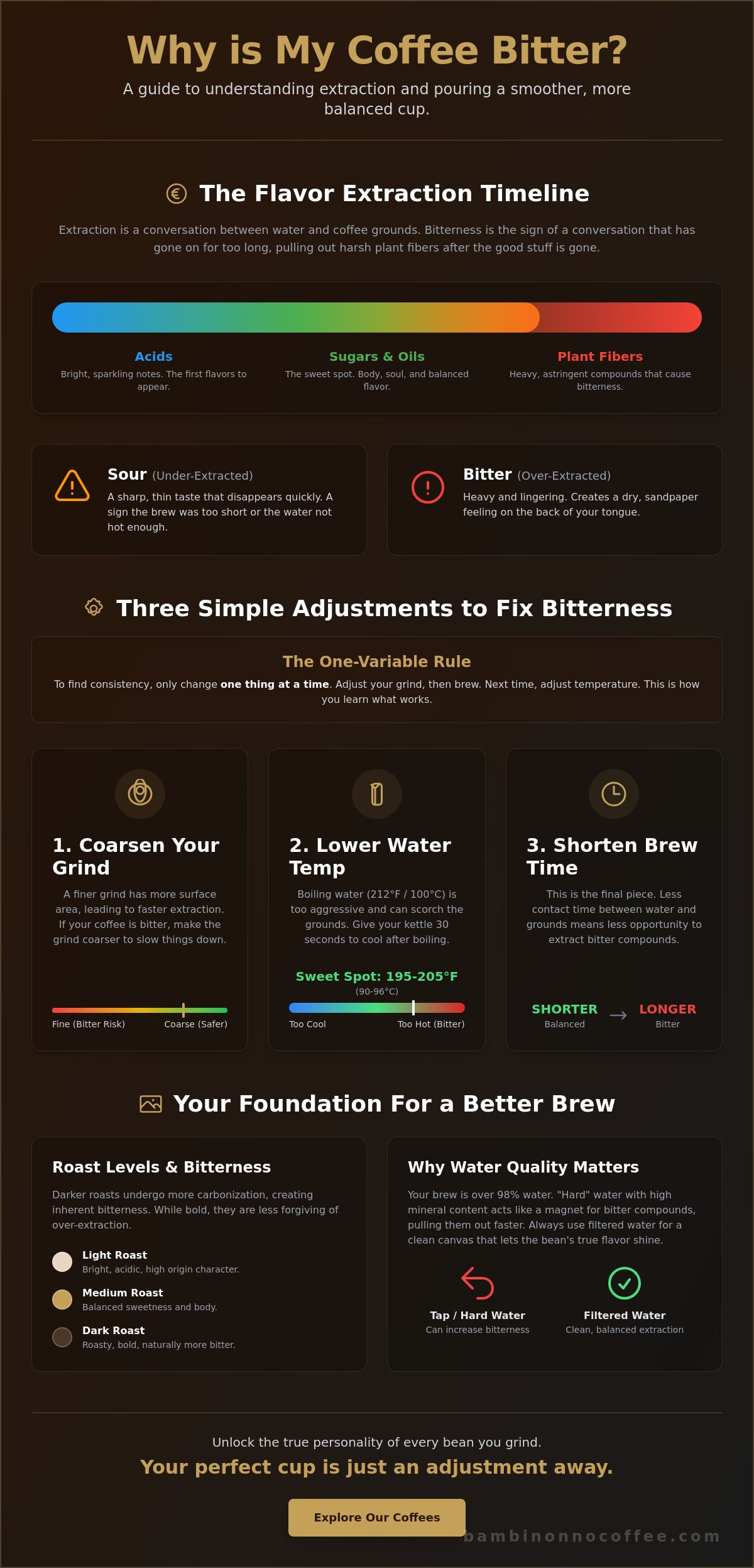
There's a specific, beautiful order to how flavors leave the coffee grounds. First come the bright, sparkling acids. Next, the water pulls out the sweet sugars and mellow oils that give your cup its body and soul. Finally, if the water lingers too long, it begins to pull out the heavy, astringent plant fibers. Over-extraction is the point where water has dissolved the desirable oils and begins breaking down the organic matter of the bean.
To better understand this concept, watch this helpful video:
When you reach the stage of over-extraction, the delicate balance of the bean is lost. Bitterness isn't always a flaw in the bean itself. Often, it's just a sign that the brewing ritual lasted a few seconds too long or the water was a touch too aggressive. Understanding this timeline gives you the power to stop the brew exactly when the sweetness peaks.
The Difference Between Bitter and Sour
It's easy to confuse these two when your palate is still waking up. Sourness is the hallmark of under-extraction; it's sharp, thin, and disappears quickly. Bitterness, however, is heavy. It leaves a dry, sandpaper feel on the back of your tongue that lingers long after you've swallowed. Try taking a small sip and letting it rest on your tongue. If it feels like the moisture is being sucked out of your mouth, you're dealing with bitterness.
Why Water Quality Matters
Your brew is mostly water, so what's in your kettle matters. High mineral content or "hard" water can act like a magnet for bitter compounds, pulling them out faster than intended. Using filtered water provides a clean canvas. This allows the subtle specialty coffee nuances to shine without being masked by harsh metallic or alkaline tones. It's a simple change that honors the work put into the beans.
Three Simple Adjustments to Fix a Bitter Brew
Fixing a harsh cup is a journey of curiosity. We've spent years exploring different cultures and quiet morning habits to find what makes a brew truly sing. If you're still wondering why is my coffee bitter, think of your brewing method as a living ritual that needs a little tuning. As we share in our story, the best results come from patience and a willingness to experiment. The most important rule is to change only one variable at a time. If you adjust the grind and the temperature at once, you'll never know which one saved your morning.
A clean brewer is your first line of defense. Old, rancid oils trapped in a filter or carafe can easily ruin even the best beans. Specific chemical compounds like chlorogenic acid lactones and phenylindanes orchestrate coffee's bitterness, and your brewing choices determine how many of them end up in your mug. Make sure your equipment is spotless before you start your ritual.
Coarsen Your Grind Size
Think of grind size as a way to control how much surface area the water touches. If your drip coffee tastes like it's attacking your palate, move your grinder one notch coarser. You're looking for a texture like coarse sea salt rather than fine table salt. This slows down the extraction process, giving the water less opportunity to pull out those harsh plant fibers. Understanding these variables helps you solve the mystery of why is my coffee bitter without losing your love for the ritual.
Lower Your Water Temperature
Boiling water is often too aggressive. When water hits 212°F, it can scorch the delicate compounds during the bloom. Aim for a range between 195°F and 205°F. If you don't have a thermometer, just let your kettle sit for about 30 seconds after it whistles. This small pause allows the heat to soften, protecting the sweetness of the bean. If you're still struggling to find that perfect balance, feel free to reach out for a chat.
Shorten the Brew Time
Time is the final piece of the puzzle. If water sits on the grounds for too long, bitterness is inevitable. For French Press users, a common mistake is leaving the coffee in the pot after pressing. Decant it into a carafe immediately. This stops the extraction and preserves the flavor profile you worked so hard to achieve.
The Foundation: Choosing Beans That Resist Bitterness
Even if your technique is perfect, the bean you choose sets the stage for the flavors that follow. Roast level is the most significant pre-brew factor for bitterness. Darker options, such as an Italian Roast, undergo more carbonization during the roasting process. This chemical change naturally creates a profile that tastes more bitter and smoky. If you find yourself constantly asking why is my coffee bitter, it might be time to look at the roast profile rather than your kettle technique.
Exploring single origin coffee delivery allows you to discover cleaner flavor profiles that haven't been masked by deep roasting. High-altitude beans, like our Guatemala, grow in thinner air and cooler temperatures. This slower growth allows the cherries to develop more natural sugars that beautifully balance any inherent bitterness in the bean. It's a simple truth of the craft: better sugar development in the field leads to less bitterness in your mug.
Roast Profile vs. Quality
A "bold" coffee doesn't have to be a bitter one. Many coffee lovers confuse intensity with bitterness, but high-quality beans should offer a rich body without a burnt aftertaste. If you're looking for a smoother transition from dark roasts, try a medium-roast Nicaragua or Peru. These origins provide a deep, satisfying flavor while maintaining their natural sweetness. Small-batch roasting ensures even heat distribution, which prevents the stray burnt beans often found in mass-produced bags.
Freshness and the Bloom
Freshness is the final secret. Old, stale beans lose their volatile oils and sweetness over time, leaving behind only the bitter structural compounds of the bean. This is why is my coffee bitter even when I follow every rule. Always check for "roast dates" on the bag rather than "best by" dates. A bean roasted within the last few weeks will still have its vibrant personality intact, allowing the sugars to shine through.
Next time you brew, try smell-testing your dry grounds before adding water. If they smell like dusty wood instead of chocolate or fruit, the beans might be past their prime. Freshness is the silent partner in every balanced cup.
Mastering Your Morning Ritual
The journey to a perfect cup is paved with small, thoughtful changes. Whether you're adjusting your grind size or lowering your water temperature, you're no longer guessing why is my coffee bitter; you're learning to orchestrate the flavor yourself. By focusing on high-altitude beans and respecting the extraction timeline, you turn a simple habit into a moment of genuine connection.
We've spent years traveling and exploring to bring you beans that are small-batch roasted for perfect balance. Sourced from high-altitude forests for natural sweetness, our collection is designed to reward your curiosity. Plus, we offer free shipping on all US orders to make your discovery even easier. Explore our small-batch Single Origin collection and start your day with a smoother, more balanced pour.
Trust your palate and keep experimenting. The most beautiful things in life take a little time and a lot of heart, and your morning coffee is no exception. Enjoy the quiet discovery of your next perfect cup.
Frequently Asked Questions
Is bitter coffee stronger in caffeine?
Bitterness isn't a reliable sign of higher caffeine levels. While caffeine is naturally bitter, the harshness you taste is usually a result of over-extracted plant matter or a very dark roast. In fact, many light roast specialty coffees contain slightly more caffeine per bean because they haven't been subjected to the high heat of a long roast. Focus on the bean's origin and variety if you're looking for a specific energy profile.
Can I fix a cup of coffee that is already bitter?
You can often rescue a bitter brew with a very small pinch of salt. Sodium is remarkably effective at neutralizing bitter compounds on your tongue, which allows the hidden sweetness of the bean to emerge. If the cup feels too heavy, try diluting it with a splash of hot water. While this doesn't undo the extraction, it can soften the intensity and turn a disappointing sip into a smooth, drinkable moment.
Why does my coffee taste bitter even with a medium roast?
Even a medium roast can turn sharp if your brewing variables are out of balance. If your water is near boiling or your grind size is too fine, the water will pull out more than just the sweet oils. This is a frequent culprit when you're left wondering why is my coffee bitter despite using high quality beans. Try coarsening your grind to the texture of sea salt to slow down the flavor release.
Does the type of coffee filter affect bitterness?
Your filter choice changes how many oils and fine particles reach your cup. Paper filters trap most of the sediment and caustic oils, resulting in a much cleaner and brighter taste. Metal filters or French presses allow more fines to pass through, which can continue to extract in your mug and increase bitterness over time. If you prefer a crisp, tea like clarity, a paper filter is your best friend.