

Why Is My Coffee Bitter? How to Fix Your Brew and Restore the Ritual
You have just opened a fresh bag of single-origin beans, the kind that smells like sun-warmed berries, only to take that first sip and feel a sharp, dry punch against your palate. It is a quiet heartbreak when your morning ritual turns into a wince. You find yourself staring at the mug, wondering why is my coffee bitter when you followed every step you thought was right.
We have all been there, watching a beautiful Ethiopia Natural or a balanced Colombia go to waste because the flavors turned harsh instead of sweet. It is frustrating to feel like you are fighting your variables rather than enjoying the slow, intentional process of brewing. You deserve a cup that rewards your patience and honors the journey of the bean.
You can reclaim that peaceful moment and transform your brew into the smooth, balanced experience it was meant to be. This guide will show you how simple adjustments to your extraction, water temperature, and grind size can help you stop over-extracting and start finding the hidden sweetness in every cup.
Key Takeaways
- Learn to identify the "sweet spot" of extraction, moving beyond harsh notes to find the natural sugars hidden in your favorite beans.
- Understand the chemical reasons behind why is my coffee bitter by seeing how over-extraction dissolves the woody structures of the bean.
- Explore how the quality and freshness of your roasted coffee beans influence flavor, proving that a great cup starts long before the water hits the grounds.
- Discover how simple maintenance, like removing oxidized coffee oils from your equipment, can instantly brighten and clean up your flavor profile.
- Master the balance of water chemistry to ensure your brew has the body and clarity needed for a truly peaceful morning ritual.
Understanding Over-Extraction: When the Brew Goes Too Far
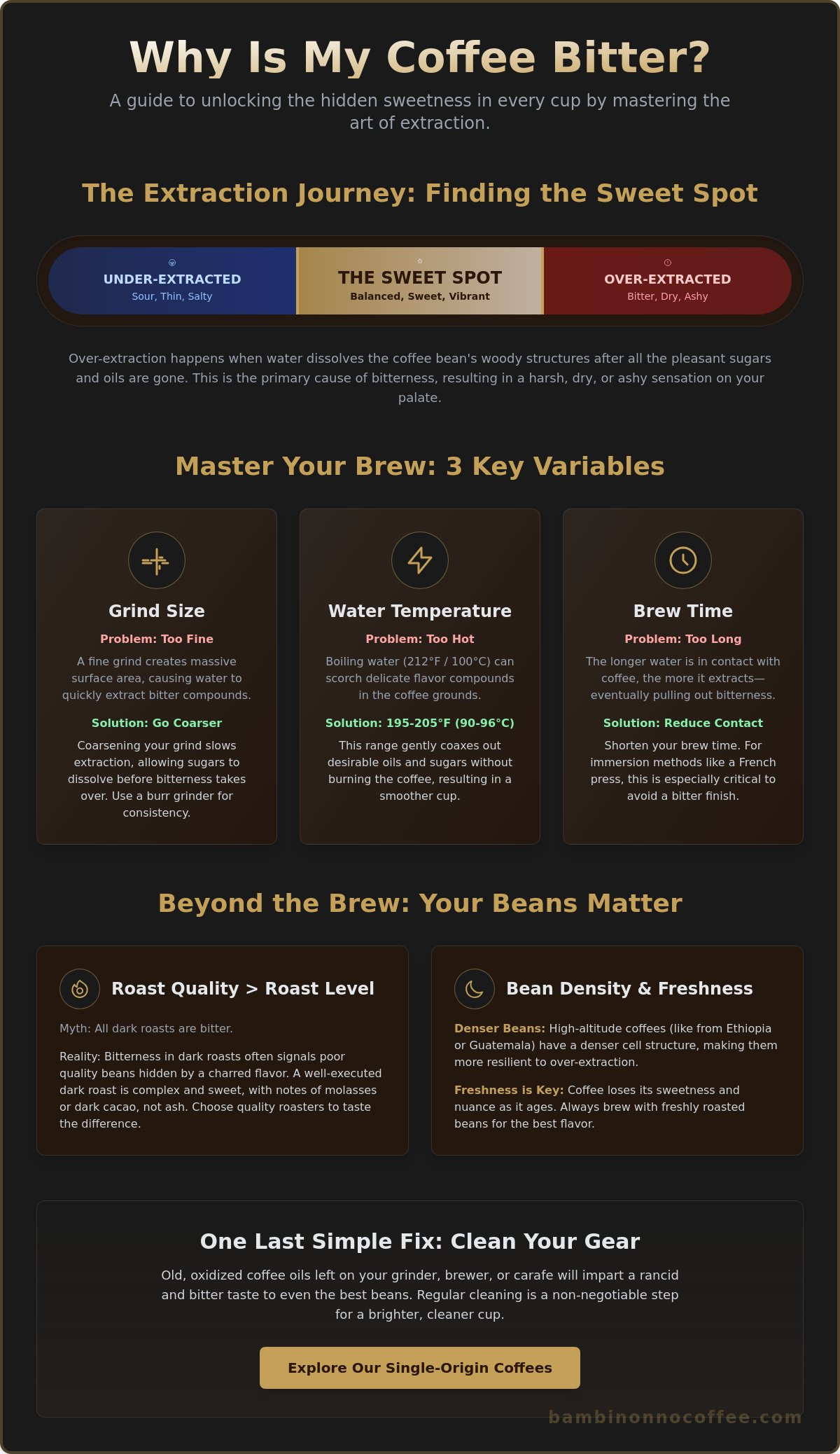
Brewing is a gentle conversation between water and bean. When everything goes right, you pull out the delicate oils and natural sugars that give your morning cup its character. However, if that conversation lasts too long or becomes too aggressive, you hit a wall called over-extraction. This is the moment where water stops extracting the pleasant flavors and begins dissolving the woody, organic structures of the coffee bean itself. This physical breakdown is the primary reason why is my coffee bitter and uninviting.
Think of extraction as a journey toward a sweet spot. If you don't brew long enough, the cup tastes sour and thin. If you brew just right, you find a balanced, vibrant sweetness. But push past that point, and the flavors turn harsh. You will know you have gone too far when you feel a distinct dryness or an ashy sensation on the back of your tongue. It is a lingering, metallic feeling that masks the bean's true origin. Finding balance is about respecting the relationship between time, temperature, and the surface area of your grounds.
To better understand this concept, watch this helpful video:
The Grind Size Culprit
Your grinder is the most important tool in your ritual. When you grind your beans too fine, you create a massive amount of surface area for the water to attack. The water moves through the bean's defenses too quickly, pulling out those heavy, bitter compounds before the sugars have a chance to shine. If your cup tastes like burnt toast or has a sharp, biting edge, try coarsening your grind. Using a burr grinder instead of a blade grinder will also help you achieve better flavor clarity by ensuring every particle of coffee is the same size.
Temperature and Time: The Silent Extractors
Water temperature acts as a catalyst for flavor. While it might seem intuitive to use boiling water at 212°F, this extreme heat can actually scorch the delicate flavor compounds in specialty coffee. For a smoother, more nuanced extraction, aim for a range between 195°F and 205°F. This allows the water to gently coax out the oils without burning the grounds. Remember that time is also working against you; the longer your coffee sits in contact with water, the more bitterness you invite into the cup, especially when using immersion methods like a French press.
Beyond the Brew: How Bean Choice Influences Bitterness
Sometimes the answer to why is my coffee bitter isn't found in your kettle or your timer. It's found in the bag itself. There's a persistent myth that all dark roasts are inherently bitter or "burnt." In reality, bitterness is often a sign of poor roast quality rather than the roast level. Commodity coffee frequently relies on a heavy, charred roast to hide defects in low-quality beans. When you choose single origin coffee, you're tasting the care of the farmer and the unique character of the land, which should never taste like ash.
Density plays a massive role in how a bean responds to hot water. High-altitude beans, like our Guatemala or Ethiopia Natural, grow slowly in cooler temperatures. This creates a dense cellular structure that acts as a natural shield. These beans are more resilient; they don't surrender their bitter compounds as easily as softer, low-grown varieties. This structural integrity allows you to explore deeper flavors without the fear of a harsh finish.
Roast Level vs. Roast Quality
A masterfully developed dark roast, like a French or Italian roast, should offer notes of molasses, toasted oak, or dark cacao. It's a delicate balance. If the roaster pushes too far, they destroy the bean's sweetness. If you've had bad experiences with darker cups, try a medium roast. It often provides the perfect bridge, offering a rich body while preserving the floral and fruity notes that keep a brew vibrant. If you're unsure which profile fits your morning, you can always ask us for a recommendation based on your favorite brewing method.
The Importance of Freshness
Coffee is a living product. Once roasted coffee beans leave the cooling tray, they begin to oxidize. Over time, the organic oils that carry flavor start to turn rancid. This creates a stale, metallic bitterness that no amount of brewing skill can fix. Understanding the flavor chemistry of your beans helps you see why freshness is vital. Small-batch roasting ensures your coffee arrives at its peak, full of the sweetness and clarity that make your daily ritual worth the time.
Practical Ritual Fixes for a Balanced Cup
Restoring your morning ritual often requires looking at the small details you might overlook. If you're still asking why is my coffee bitter after adjusting your grind, the solution might lie in your environment. These four practical steps can help you clean up your flavor profile and find the clarity you're looking for:
- Step 1: Clean your equipment. Coffee is rich in oils like caffeol that cling to your brewer. Over time, these oils oxidize and create a harsh, metallic bitterness that masks the bean's sweetness.
- Step 2: Check your water. Your brew is 98% water. Highly mineralized "hard" water can aggressively over-extract coffee, while distilled water lacks the minerals needed to pull out flavor, leaving it flat.
- Step 3: Agitate less. Stirring the bloom or the brew bed increases extraction speed. If your cup is too sharp, try a gentler pour and let the water do the work.
- Step 4: The Salt Trick. A tiny pinch of salt in your mug can chemically neutralize the perception of bitterness. It's a fascinating look at The Chemistry of Coffee, but use it as a last resort. It's always better to fix the brew than to mask the result.
Mastering the Bloom
The bloom is more than just a visual treat; it's a functional necessity. When hot water first hits the grounds, CO2 escapes in a beautiful, bubbling swell. If you rush this step, the gas blocks the water from reaching the center of the grounds. This causes "channeling," where water rushes through a few paths, over-extracting those areas until they're bitter while leaving others under-extracted and sour. For a deeper look at this technique, explore our drip coffee guide.
The Slow Sip: A Mindset Shift
Brewing coffee is a journey of curiosity. Instead of seeing a harsh cup as a failure, view it as feedback from the bean. It’s a sign that you need to slow down and listen to the variables at play. At Bambi Nonno Coffee, we believe in the power of these quiet, everyday moments. You can read Our Story to see how we prioritize exploration and the joy of a slow sip. Understanding why is my coffee bitter is just the first step in a lifelong relationship with the craft. The best cup isn't always the perfect one; it's the one that invites you to linger and learn.
Reclaiming the Sweetness of Your Morning
Finding the answer to why is my coffee bitter doesn't have to be a technical chore; it's an invitation to refine your daily ritual. By balancing your extraction time, choosing high-quality beans, and keeping your equipment clean, you can transform a harsh cup into a moment of pure clarity. Coffee is a living story that begins in high-altitude forests and ends in your favorite mug. We prioritize small-batch roasting to ensure that peak sweetness reaches you every time, and we offer free shipping on all US coffee orders to help you maintain that fresh supply.
If you're ready to escape the bitterness and discover our smooth, small-batch Single Origin collection, we're here to help you find your perfect match. Connect with us today if you have questions about your brewing setup or need a personal recommendation. Your next great cup is just a few small adjustments away. Keep exploring, keep tasting, and most importantly, enjoy the slow sip.
Frequently Asked Questions
Is bitterness in coffee always a bad thing?
Bitterness isn't your enemy; it's a necessary component that provides structure and depth to your cup. When it's balanced with sweetness and acidity, a subtle bitterness creates the classic coffee flavor we all crave. It's only a problem when it becomes overwhelming and masks the delicate notes of the bean's origin. Think of it like the tannins in a fine wine; they provide a necessary backbone for the fruitier notes to lean on.
Why does my French press coffee always taste more bitter than my drip coffee?
Your French press often tastes more intense because it uses immersion brewing and a metal mesh filter. Unlike drip coffee, which uses paper filters to trap oils and fine particles, the French press allows these elements to remain in your mug. If you're wondering why is my coffee bitter when using this method, it's usually because the grounds continue to extract even after you've plunged. Decanting your coffee into a separate carafe immediately after brewing will help stop this over-extraction.
Can I fix a cup of coffee that is already too bitter?
You can soften a bitter cup by adding a small amount of hot water to dilute the concentration. As we touched on before, a tiny pinch of salt can also work wonders to chemically block your taste buds from perceiving the harsh notes. While it won't replace the clarity of a perfectly timed brew, these quick fixes can save a wasted morning ritual. It's a helpful bridge that ensures your expensive beans don't end up down the sink.
How do I know if my coffee is bitter or just acidic?
Distinguishing between the two is key to understanding why is my coffee bitter or simply vibrant. Bitterness is a heavy, dry sensation that lingers on the back of your tongue, often feeling like ashy dark chocolate or over-steeped tea. Acidity, on the other hand, is a bright, tart spark that you feel on the sides of your tongue, much like the zing of a lemon or a fresh berry. One feels heavy and dry, while the other feels light and crisp.