

Finding Your Daily Rhythm: The Ultimate Medium Roast Coffee Buying Guide (2026)
You stand in the kitchen as the first light hits the counter, reaching for a bag of beans that promised a smooth morning but delivered nothing but an oily, bitter disappointment. It's a common frustration when the label says one thing, but the extraction tells a different, charred story. You've likely felt the sting of inconsistent grocery store brands or the confusion of choosing between a single-origin Colombia and a house blend. As retail coffee prices reach record highs in 2026, finding a reliable medium roast that honors the bean's origin is more important than ever for your daily ritual.
We agree that your coffee should be the bridge between a restful night and a productive day, offering a balance of sweetness and acidity that works across any brewing method. This guide will help you discover how to select a bean that reveals its true soul through the roasting process, ensuring your morning feels intentional rather than accidental. We'll explore how terroir affects flavor in regions like Ethiopia and Guatemala, and how to identify the subtle signs of a high-quality roast. It's time to move past the guesswork and establish a coffee routine that brings genuine joy to your table.
- Understand how a medium roast captures the peak moment between the first and second crack to preserve regional flavors.
- Identify quality by looking for a matte finish and avoiding oily beans that signal over-development or staleness.
- Learn how washed and natural processing methods drastically alter the clarity and sweetness of your daily cup.
- Choose high-altitude beans to ensure the density required for a complex flavor profile during the roasting process.
- Use the Bambinonno baby-grandpa approach to blend curiosity for new origins with the comfort of traditional habits.
Understanding the Medium Roast Profile: Why It Is the Enthusiast’s Sweet Spot
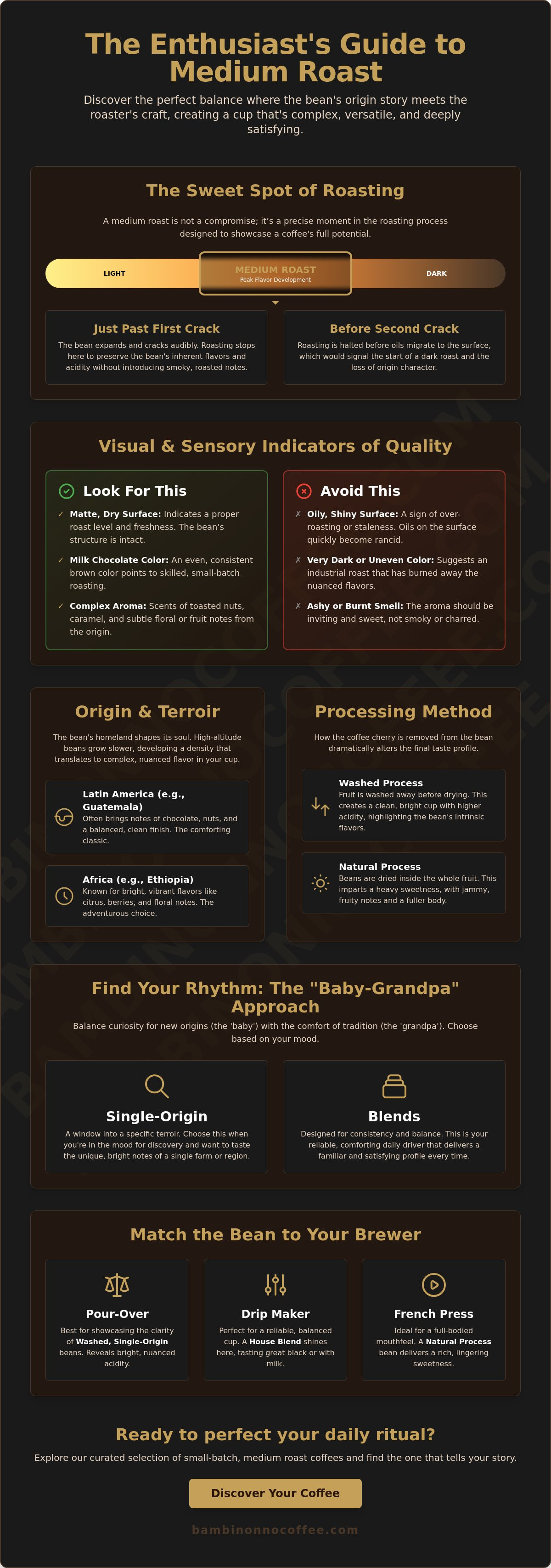
Choosing this roast level isn't about settling for a safe middle ground; it's a deliberate search for the perfect harmony between nature and craft. Our journey with coffee is built on this curiosity, blending fresh exploration with a deep respect for tradition. In the coffee roasting process, these beans are taken just past the first crack, where the internal pressure causes the bean to expand, but they're pulled from the heat before the second crack begins. This timing is everything. It allows the Maillard reaction to transform amino acids and sugars into deep, toasted flavors without incinerating the delicate acidity that tells the story of the soil.
Medium roast is the precise point where origin character meets roast development for a balanced extraction. Enthusiasts gravitate toward this profile because it offers a versatile complexity. You get the satisfying body and mouthfeel often associated with darker roasts, yet the unique flavor clarity of the bean remains the star. It's a cup that feels substantial on the palate while still tasting like a specific hillside in a far-off region. It doesn't hide behind smoke; it celebrates the bean's journey from the farm to your table.
The Visual and Sensory Indicators of Quality
When you open a fresh bag, look for a matte, milk-chocolate brown finish. A quality medium roast shouldn't have oily surfaces. Those shiny droplets are often a sign that the beans were pushed too far or have been sitting too long, which can lead to a bitter or rancid taste. As you brew, pay attention to the sensory transitions:
- Aroma: Scents shift from raw, floral notes toward toasted nuts and warm caramel.
- Visual: The beans remain dry and matte rather than shiny or dark.
- Flavor: The cup remains clean and vibrant without an ashy aftertaste.
Blend vs. Single-Origin Medium Roasts
Your choice between a blend or a single-origin bean often depends on the rhythm of your morning. Our house blend coffee selections are designed for consistency, offering a reliable and comforting profile that you can trust every single day. If you're in the mood for discovery, a single-origin bean acts as a window into a specific terroir. This is where specialty coffee truly shines, revealing bright, fruit-forward notes from high-altitude forests that would otherwise be lost to the flames of a darker roast.
Evaluating Origin and Process: How to Choose Your Perfect Daily Ritual
Finding the right bag involves more than just looking for a specific color. It's about understanding the life the bean lived before it reached your cup. According to the NCA Coffee Roast Guide, a medium roast is defined by its balanced acidity and body, but the origin and processing dictate the specific song it sings. High-altitude beans grow slowly, becoming dense and hard. This density is vital; it allows the bean to withstand the heat of the roaster long enough to develop deep complexity without falling apart into bitterness.
Processing methods also shift your experience. A washed coffee often tastes clean and bright, highlighting the bean's natural acidity. In contrast, a natural process bean, dried inside the coffee fruit, brings forward a heavy sweetness and jammy fruit notes. Because we focus on small-batch roasted coffee beans, we can monitor these delicate transitions closely. This ensures that the unique characteristics of each harvest are preserved rather than lost in an industrial roast cycle.
Matching the Roast to Your Brewing Method
Your equipment should help dictate your choice. For many, a balanced profile is the gold standard for coffee for drip makers, providing a reliable cup that tastes great with or without milk. If you prefer the clarity of a pour-over, look for single-origin beans that highlight a bright bloom. For a French Press, a slightly heavier profile offers that nostalgic, full-bodied mouthfeel that lingers long after the last sip.
Reading the Label Like a Pro
Always look for the roast date first. A medium roast typically hits its peak flavor between 7 and 21 days after it leaves the roaster. When you see "Notes of Chocolate" or "Citrus," remember these aren't added syrups. They're inherent flavors unlocked by the heat. If you're ever unsure which profile fits your morning best, feel free to reach out to our team for a personal recommendation.
The Bambi Nonno Selection: Medium Roasts for Discovery and Comfort
At Bambinonno, we believe that coffee is a bridge between generations. Our philosophy is rooted in a unique perspective we call "baby-grandpa." It represents the intersection of wide-eyed curiosity and the quiet, grounded wisdom that only comes with time and patience. We don't just source beans; we share stories of travel and exploration through every bag. Choosing a medium roast from our collection is an invitation to slow down and establish a morning ritual that feels both fresh and familiar.
Our Guatemala selection is a perfect example of this balance, offering a comforting profile of classic cocoa and crisp apple sweetness. If you prefer something more versatile, our Peru single-origin brings salted caramel undertones that work beautifully across different brewing methods. As explained by Britannica on coffee roasting, the careful management of heat and time is what allows these specific regional characteristics to shine through without being masked by the smoke of the roaster.
Standout Single Origins for the Curious Palate
- Nicaragua: This honey-processed option is a dream for those who enjoy a smooth, creamy body and a gentle sweetness.
- Costa Rica: A quintessential medium roast that balances bright citrus notes with the warmth of brown sugar.
- Ethiopia Natural: For the enthusiast ready to push boundaries, this bean offers a vibrant, berry-like acidity that surprises the palate.
Unique Blends for the Everyday Ritual
Sometimes, the best part of the day is the reliability of a favorite cup. Our Breakfast Blend is designed to be a bright, welcoming start that highlights the inherent quality of premium roasted coffee beans. For those who crave a more layered and full-bodied experience, our 6 Bean Blend provides a complex journey in every sip.
As you explore these flavors, remember that the smallest changes can make a big difference. Try experimenting with your grind size to find the "sweet spot" of extraction for your specific equipment. If the cup tastes a bit too sharp or sour, a slightly finer grind might be the key to unlocking that hidden sweetness you've been looking for.
Embracing the Balance of Your Morning Cup
Establishing a daily rhythm is about finding the point where science meets soul. Throughout this guide, we've explored how a quality medium roast acts as the perfect bridge between vibrant origin notes and the comforting sweetness developed in the roaster. You now have the tools to look past the label and understand how altitude, processing, and even the matte finish of the bean contribute to the clarity of your morning extraction.
Our small-batch roasting in the USA ensures that the nuances of high-altitude forests aren't lost in the heat. We're here to support your journey of discovery, whether you're perfecting your pour-over or simply enjoying a reliable drip brew. If you're looking for a specific recommendation or want to chat about your brewing setup, feel free to get in touch with us.
As you brew your next pot, try to catch the scent of the first bloom. That brief release of aroma is the story of the bean's travel and heritage finally reaching your kitchen. Let it be a reminder to slow down and appreciate the quiet ritual before the day truly begins.
Frequently Asked Questions
Does medium roast coffee have more caffeine than dark roast?
A medium roast generally contains slightly more caffeine than a dark roast when measured by volume. This happens because the longer roasting process for dark beans causes them to lose more mass and density. If you measure your coffee by the spoonful, you'll get a bit more of a kick from a medium profile. However, if you weigh your beans with a scale, the difference becomes almost negligible. It's the perfect choice for those who want a balanced morning without the heavy, charred finish of darker beans.
What is the best way to store medium roast coffee beans to keep them fresh?
The best way to store your beans is in an airtight, opaque container kept in a cool, dark place like a pantry. Light, heat, and moisture are the enemies of freshness; they cause the delicate oils to oxidize and turn stale. While it's tempting to use a clear glass jar for the aesthetic, it can actually degrade the flavor over time. Avoid the freezer as well. The constant temperature changes when you take the bag out can create condensation that ruins the beans' cellular structure and dampens the flavor.
Is medium roast coffee less acidic than light roast?
A medium roast is typically less acidic than a light roast. During the roasting process, the heat breaks down the organic acids found in the raw green bean. While light roasts celebrate those bright, almost tea-like acidic notes, the medium level allows those acids to mellow out. This creates a smoother, more balanced cup that is gentler on the palate while still retaining enough character to feel vibrant and alive. It's the sweet spot for those who enjoy clarity without the sharp bite.
Which brewing method is best for bringing out the flavors of a medium roast?
The pour-over method is arguably the best for highlighting the nuanced flavors of a medium roast. Using a V60 or Chemex allows you to control the extraction precisely, bringing out the subtle sweetness and origin characteristics unique to the soil. If you're looking for a more hands-off ritual, an automatic drip machine also performs beautifully with this roast level. It's the most versatile choice in our collection, working well with almost any equipment you have on your counter, from a simple French press to a modern AeroPress.